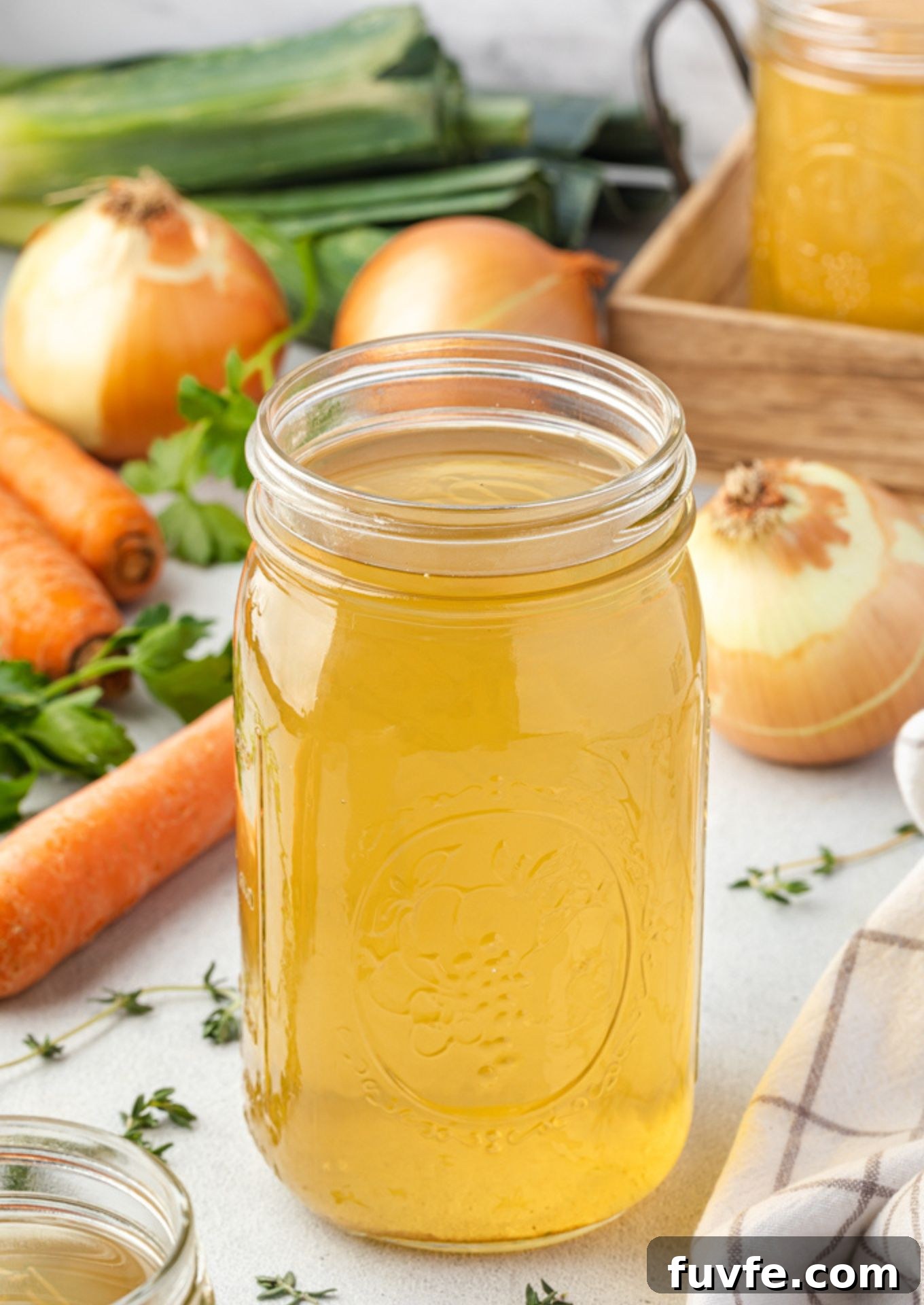
Homemade Vegetable Stock is bright, fresh, and simple to make. Once you try this, you’ll likely stop buying store-bought broth. You control the flavor and sodium, reduce food waste by using veggie scraps, and the stock freezes well. This guide includes methods for stovetop, slow cooker, and Instant Pot preparations.
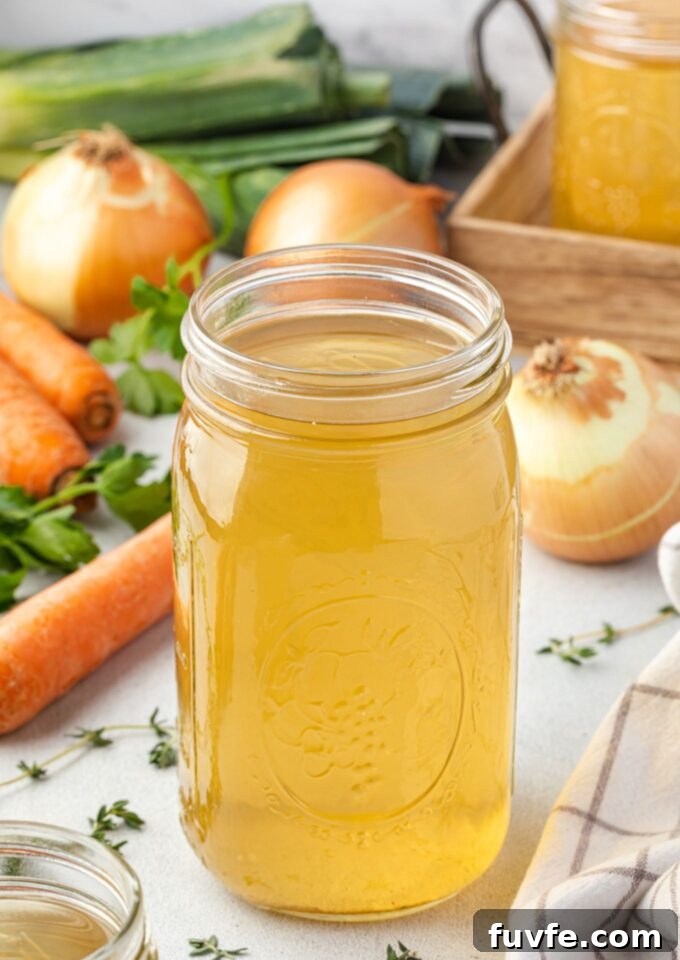
I learned early on that homemade stock elevates every dish. I keep chicken, turkey, and vegetable stocks on hand because they add depth and balance to soups, grains, risottos, and pan sauces.
Why make your own vegetable stock? Store-bought brands vary widely in flavor, color and sodium content. Making your own ensures a clean, consistent base that won’t overpower your recipes. It’s an easy way to use vegetable scraps and make a flavorful, low-sodium liquid that enhances everything you cook.
Table of contents
- Why you’ll love this recipe
- Recipe ingredients
- How to make vegetable broth
- Recipe FAQs
- Recipe notes
- Ways to use veggie stock
Why you’ll love this recipe
- Save money and reduce food waste by turning vegetable scraps into a versatile cooking liquid.
- Control the sodium and flavor profile to suit your dishes.
- Simple to prepare on the stovetop, in a slow cooker, or in an electric pressure cooker.
- Freezes well so you can make a big batch and use it whenever you need it.
Recipe ingredients
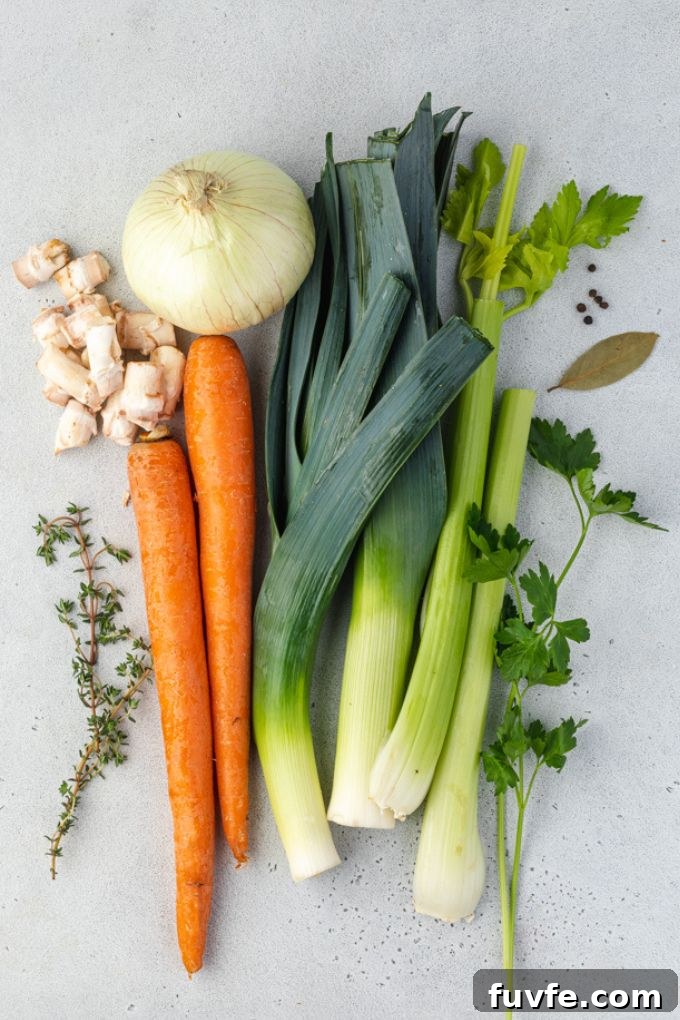
- Vegetables: Start with onions, carrots, celery and leeks. Add mushroom stems for an umami boost. These produce a clean, balanced stock.
- Herbs: Bay leaf, parsley and thyme lend a subtle herbaceous background.
- Peppercorns: Whole peppercorns add mild spice; do not omit.
- Water: Use enough to cover the vegetables (about 8–10 cups for this quantity).
- Salt: Typically omitted so the stock can be adjusted later in recipes.
How to make vegetable broth
Vegetable stock is quick and forgiving. Below are simple stovetop directions; see the notes for slow cooker and Instant Pot options.
Pro tip: Save ends and peels from carrots, onions, celery, leek tops and mushroom stems in a sealed container or bag in the freezer. When you have enough, use them to make stock.
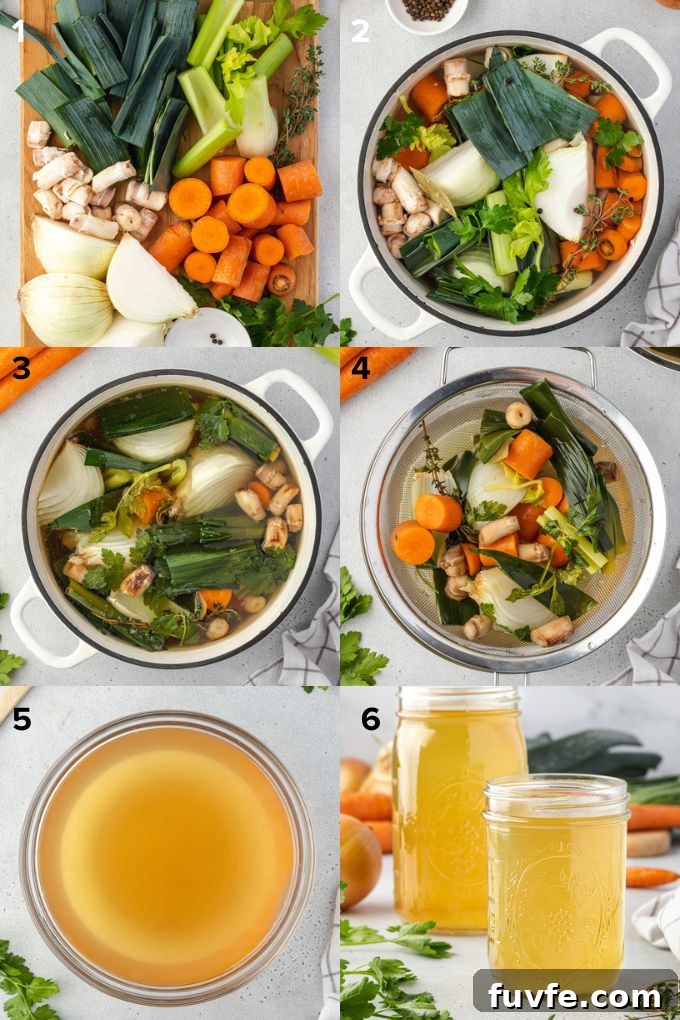
- Wash vegetables and cut into large chunks.
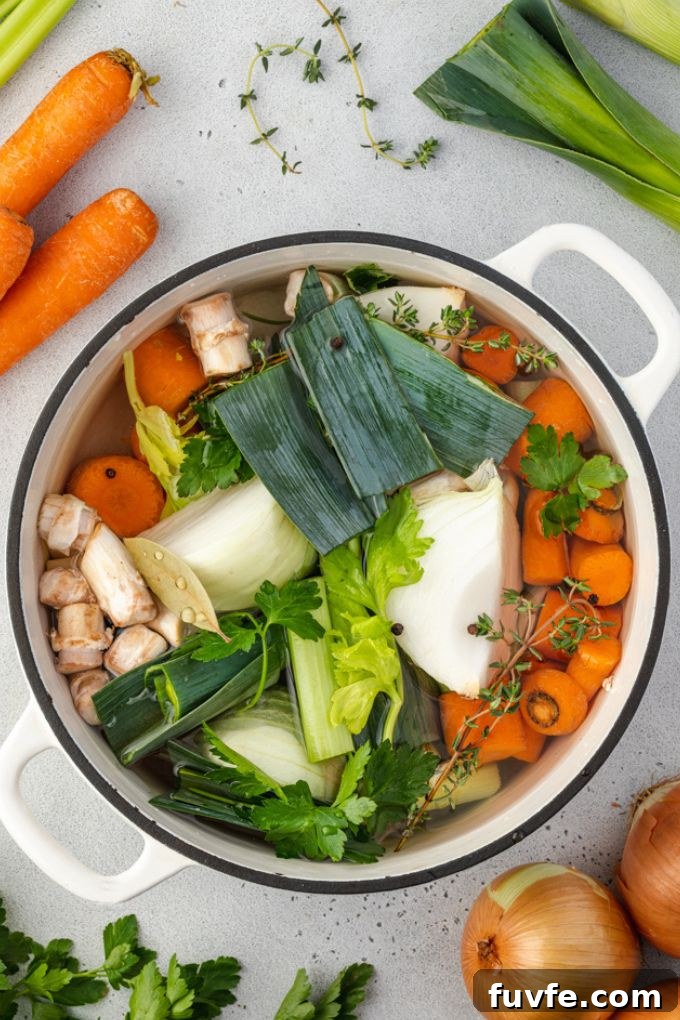
- Place vegetables, herbs, bay leaf and peppercorns in a large pot. Add 8–10 cups water to cover by about 1 inch.
- Bring to a boil over high heat, then reduce to a gentle simmer. Cook for about 1 hour.
- Strain the broth through a fine-mesh sieve into a large bowl and discard the solids.
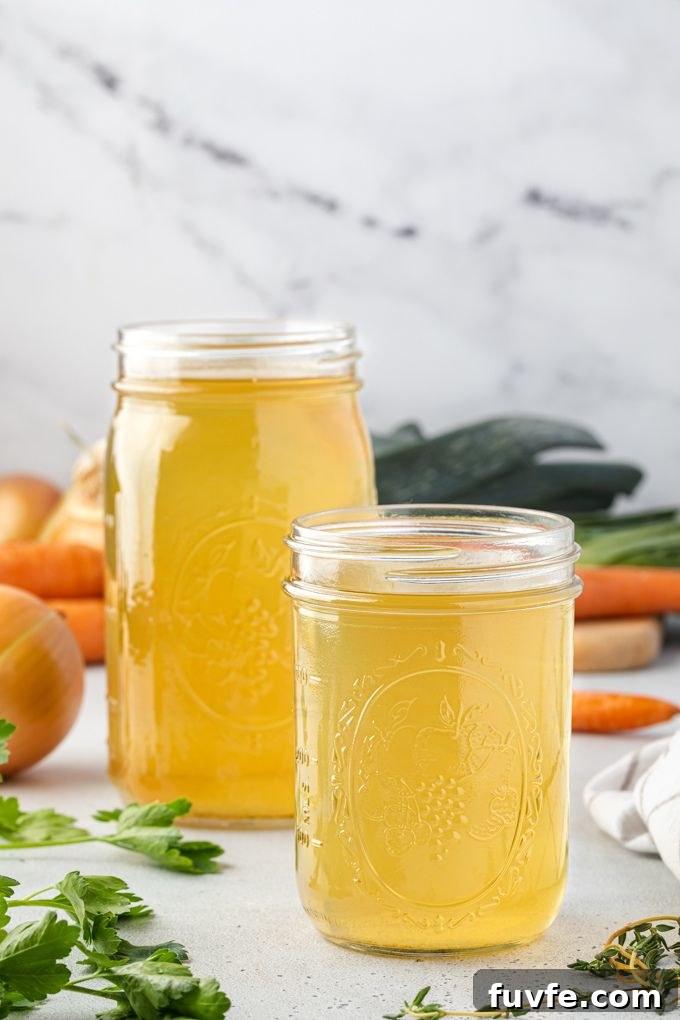
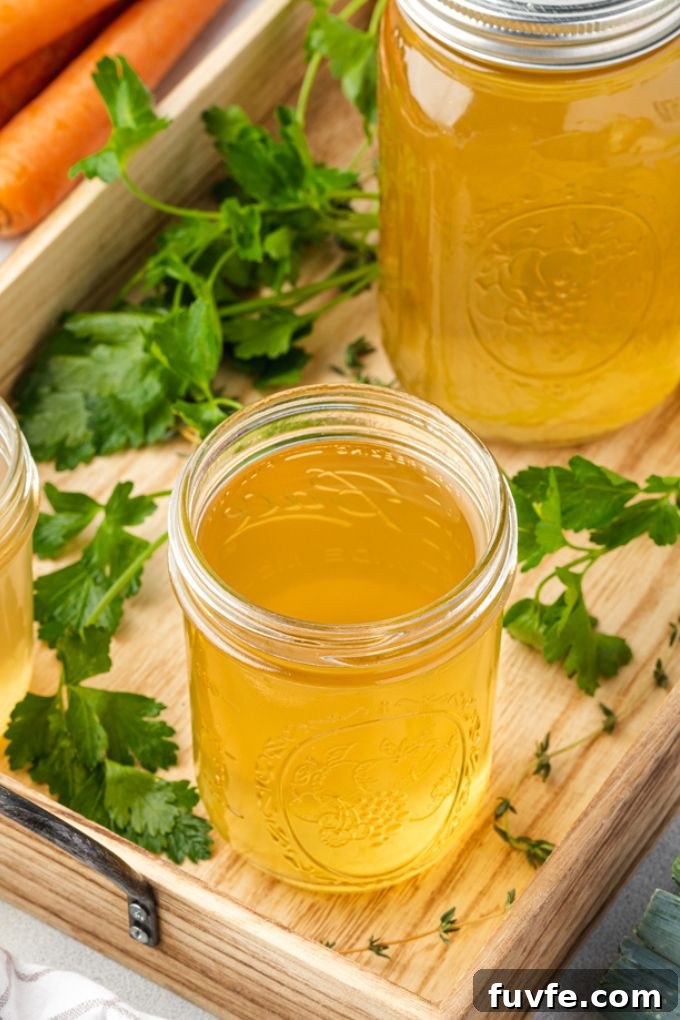
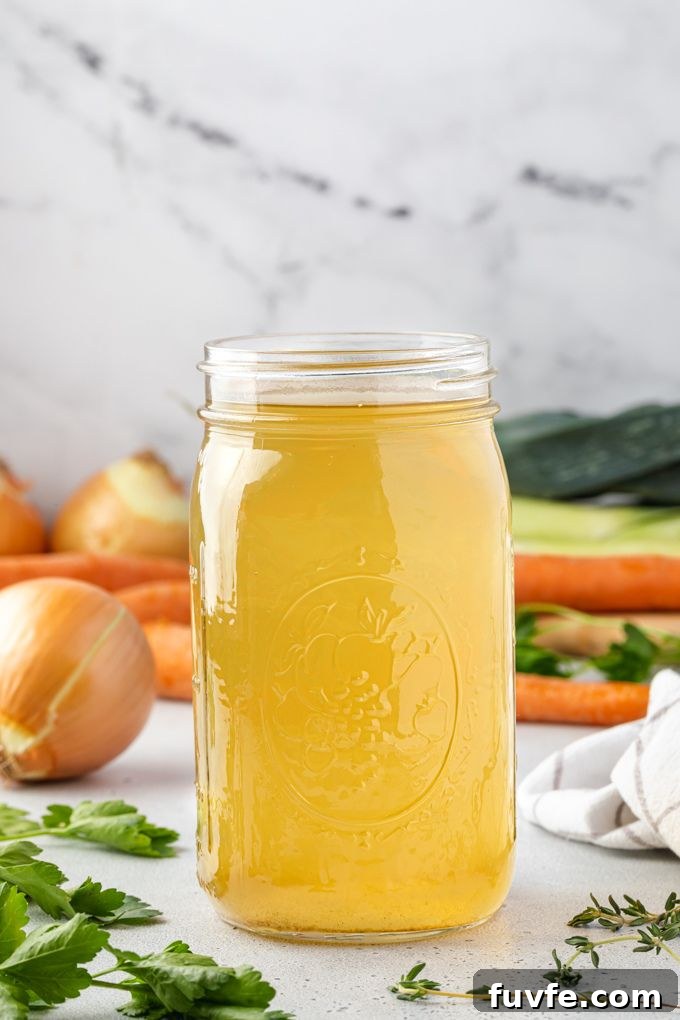
- Cool to room temperature, then transfer to airtight containers.
- Store in the refrigerator for up to 1 week or freeze for 3–6 months.
Recipe FAQs
What’s the difference between vegetable stock and broth?
Stock is usually prepared as a neutral, unseasoned base for cooking. Broth is often seasoned and intended to be served on its own. This recipe produces an unseasoned stock that enhances other dishes.
What are the best vegetables for stock?
Onions, carrots and celery (the classic mirepoix) are ideal. Leeks and mushroom stems add depth without overpowering. Parsnips, fennel or garlic can be used sparingly to vary the flavor.
What should you not put in vegetable stock?
Avoid cruciferous vegetables (broccoli, cauliflower, Brussels sprouts), cabbage, turnips, rutabaga and artichokes, which can make the stock bitter.
Can I use vegetable scraps?
Yes. Save onion peels, carrot peels, mushroom stems, leek tops and celery leaves. Do not include scraps from bitter greens or cruciferous vegetables. When ready, simmer the scraps with herbs and peppercorns for about an hour.
How long does homemade stock last?
Keep in the refrigerator up to one week, or freeze for 3–6 months. Freeze in portion sizes that suit your cooking needs.
Recipe notes
- Save vegetable scraps in an airtight bag or container and freeze until you have enough to make stock.
- This recipe is flexible: adjust vegetable quantities based on what you have available.
- Avoid strongly flavored vegetables that will dominate the stock.
- Instant Pot method: place ingredients in the pot, lock the lid, pressure cook on high for 15 minutes, then allow a natural pressure release before opening.
- Slow cooker method: cover and cook on low for 6–8 hours or on high for 3–4 hours.
Ways to use veggie stock
- Cook polenta or rice pilaf with stock instead of water for extra flavor.
- Use as a base for soups and stews, from minestrone to pureed vegetable soups.
- Replace some or all of the cooking liquid in risottos, grain bowls, and braised vegetables.
- Use in skillet pasta, one-pot grain dishes, and sauces to boost savory depth.
Did you try this recipe? If so, leave a review below and tag @flavorthemoments on social media to share your results.
Homemade Vegetable Stock
Yield: about 10 cups
Prep Time: 10 mins • Cook Time: 1 hour • Total Time: ~1 hour 10 mins
Ingredients
- 1 yellow onion, quartered
- 2 leek tops (or substitute another onion)
- 2 stalks celery, cut into large chunks (include leafy tops if available)
- 2 large carrots, cut into large chunks
- 1 cup mushroom stems (optional)
- 1 bay leaf
- 2 large sprigs flat-leaf parsley
- 2 sprigs thyme
- 6 whole peppercorns
- 8–10 cups water
Instructions
- Place all ingredients in a large pot and bring to a boil over high heat. Reduce heat to low and simmer for one hour.
- Set a strainer over a bowl and strain the stock, discarding solids. Line the strainer with cheesecloth if desired for a clearer broth.
- Cool completely, then store in airtight containers in the refrigerator for up to one week or freeze for up to six months.
Notes
- Vegetable scraps make excellent stock—save and freeze them until you’re ready to cook.
- Adjust the combination and amounts of vegetables to suit your pantry and flavor preferences.
- Do not salt the stock if you plan to reduce it or use it as an ingredient; season when you use it.
Nutrition (per 1 cup)
Calories: 18 kcal • Carbohydrates: 4 g • Protein: 1 g • Sodium: 26 mg • Fiber: 1 g • Sugar: 2 g
Note: This recipe was originally published in January 2018 and has been updated with clearer instructions and photos.