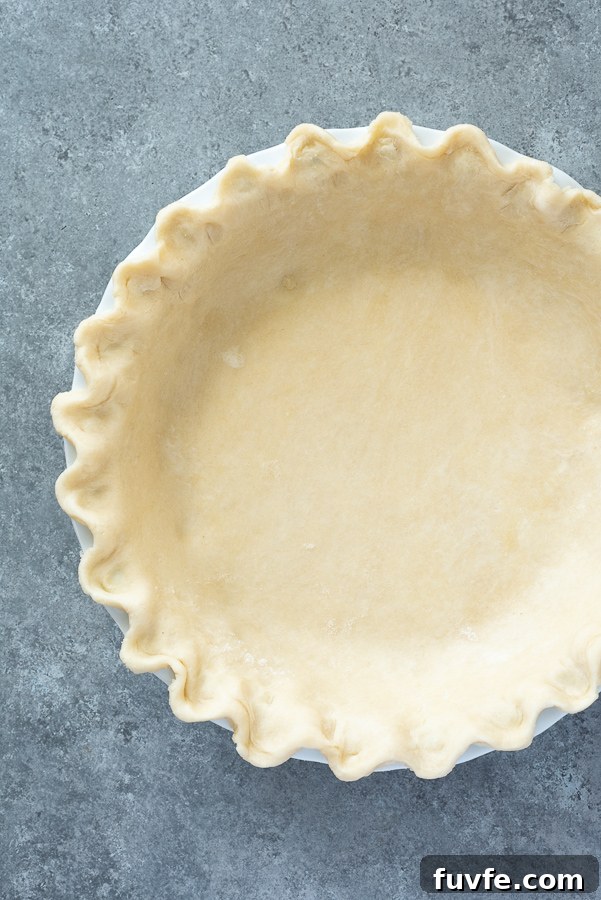
Make this Flaky Pie Crust in your food processor with just a few simple ingredients in about 15 minutes. Homemade pie crust is easier than you think, and this recipe freezes and stores well for later use.
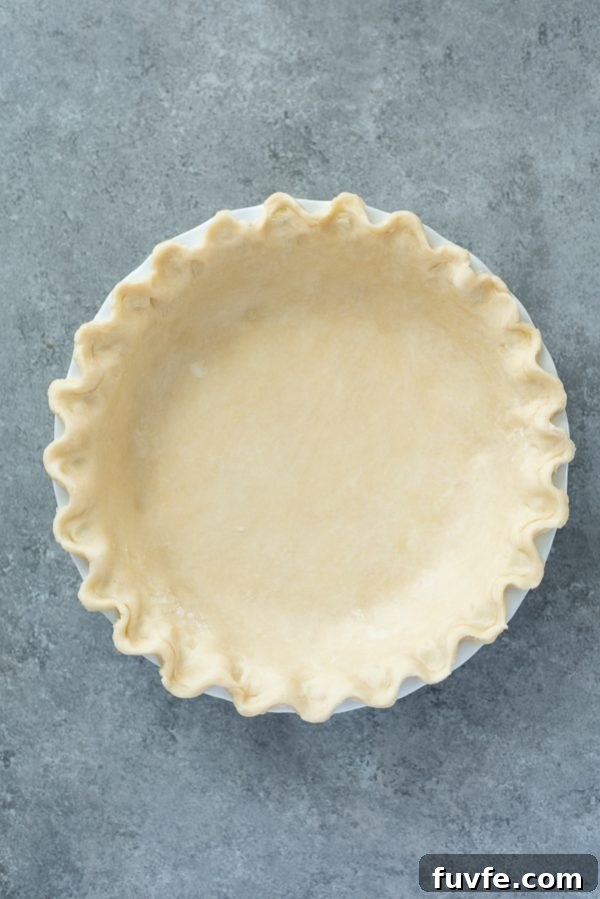
For years I avoided making pie crust at home and stuck with store-bought or graham cracker crusts. After cooking school and making crusts repeatedly, I realized it’s surprisingly simple. This method yields a buttery, flaky crust and uses a food processor so the hands-on time is minimal.
If a homemade crust intimidates you, this recipe is a great place to start: only a few ingredients, fast prep, and clear step-by-step instructions. You’ll also find tips for chilling, freezing, and troubleshooting so your first (or next) pie crust turns out beautifully.
Why you’ll love this recipe
- Buttery, flaky texture that tastes fresher than store-bought crusts.
- Made in about 15 minutes using a food processor.
- Uses just a few common ingredients.
- Includes tips for making ahead and freezing.
Pie crust ingredients
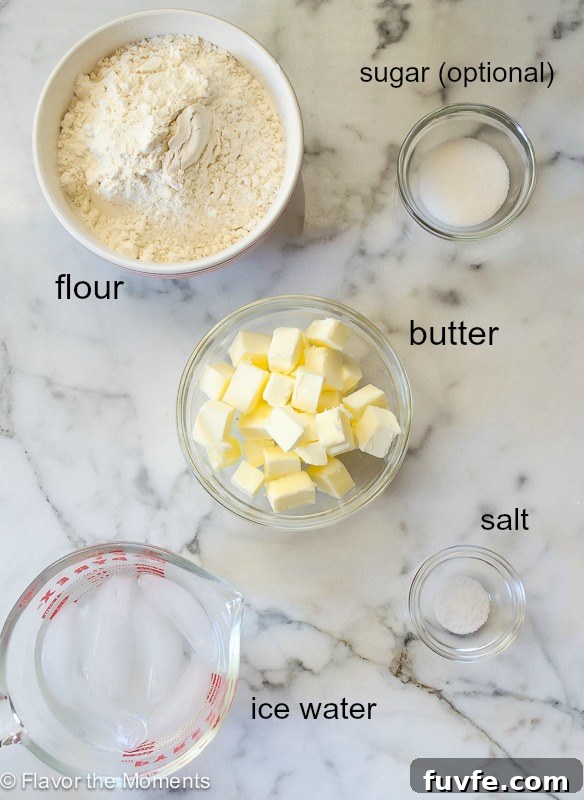
- Flour. 1 1/4 cups all-purpose flour for one 9″ pie crust.
- Sugar. 1 tablespoon granulated sugar for a slightly sweet crust; omit for savory pies.
- Salt. A pinch of sea salt (omit if using salted butter).
- Butter. 4 ounces unsalted butter, very cold and cut into small cubes. Cold butter creates flaky layers.
- Ice water. 3–5 tablespoons. Start with 3 and add a tablespoon at a time until the dough just comes together.
Quantities and full instructions are provided in the recipe section below.
How to make homemade pie crust
This quick method produces a flaky, buttery crust using a food processor. Work quickly and keep ingredients cold for the best texture.
Pro tip: Always begin with the minimum amount of ice water and add more only one tablespoon at a time until the dough holds together.
Full step-by-step instructions are in the recipe card below.
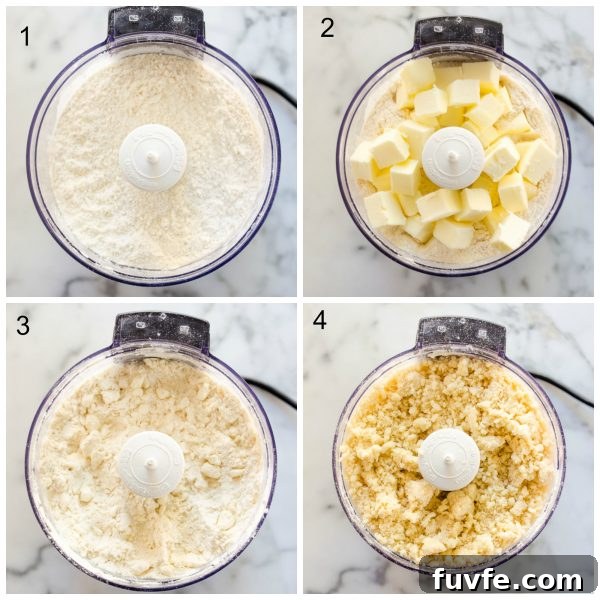
- Place the flour, sugar, and salt in the food processor and pulse about five times to combine.
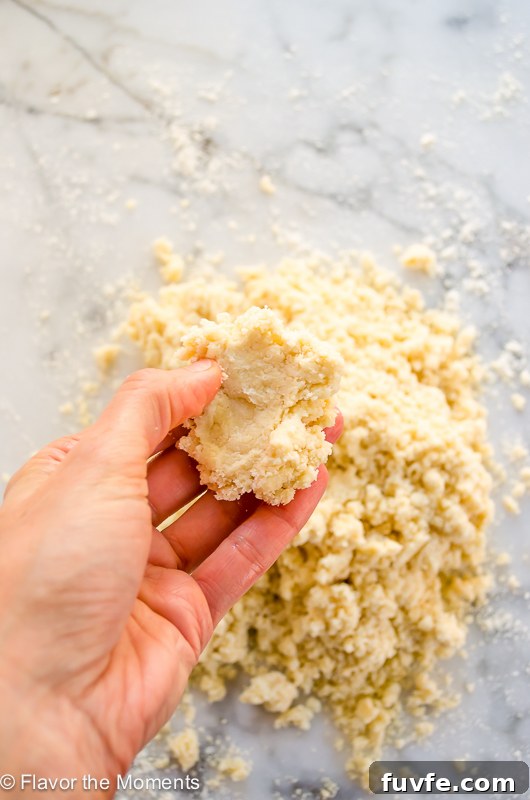
- Add the cubed, very cold butter. Pulse in short bursts until the mixture resembles coarse meal with pea-sized butter pieces—those visible clumps are key to flakiness.
- With the processor running in short pulses, add 3 tablespoons of ice water through the feed tube. Stop when the dough begins to hold together.
- Check the dough by pinching a small amount. If it doesn’t hold, add 1 tablespoon of ice water at a time, pulsing briefly after each addition, until the dough is cohesive but not wet.
When properly mixed, the dough should come together and not be too sticky or overly dry.
Form the dough into a disc and roll
Turn the mixture out onto a lightly floured surface and bring it together gently with your hands. Form it into a flattened disk, wrap it tightly in plastic, and chill for about 30 minutes. Chilling lets the gluten relax and re-firms the butter so the crust bakes flaky.
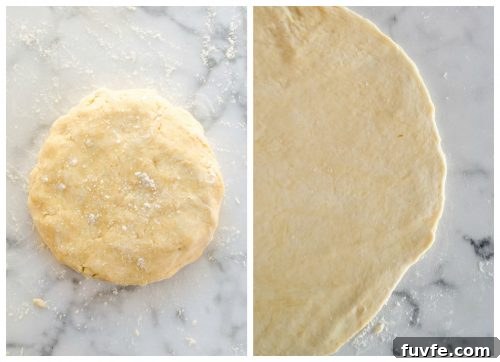
- After chilling, unwrap and place the dough on a floured surface. Lightly flour the dough and your rolling pin.
- Roll from the center outward, rotating the dough as if following the hours on a clock. Lift and flour underneath occasionally to prevent sticking. Roll until the dough extends a couple of inches beyond the edge of your pie pan.
Place the dough in the pie plate and crimp
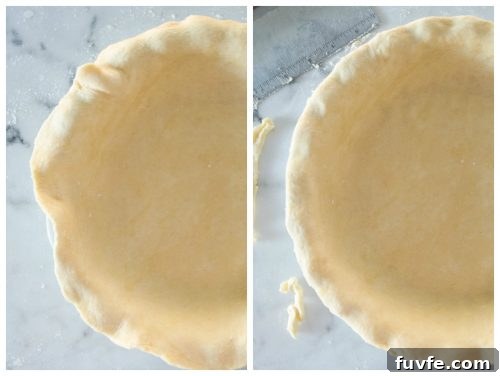
- Roll the dough gently around the pin and unroll it into the pie pan. Ease it into the pan without stretching.
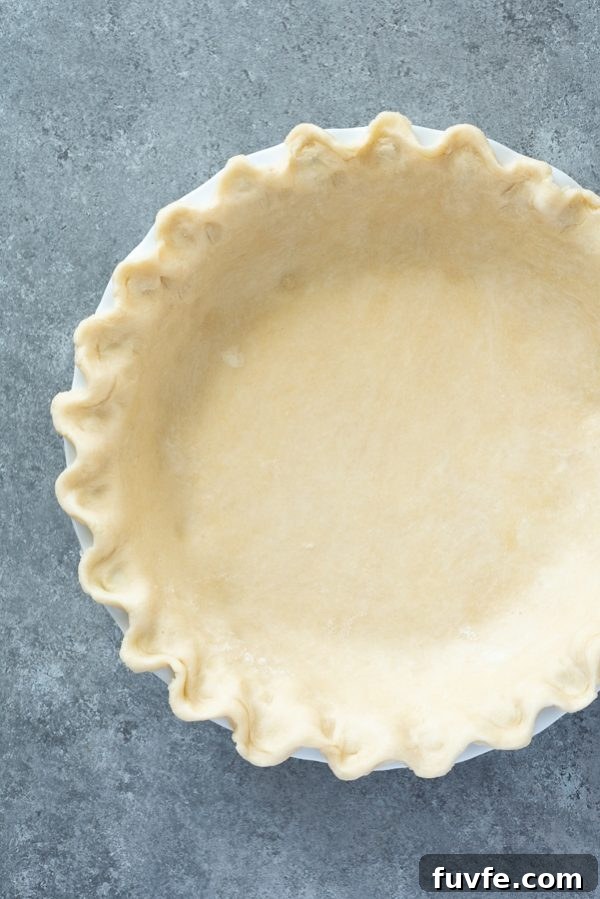
- Trim the excess, leaving about an inch overhang to account for shrinkage, then crimp or decorate the edge as desired.
Recipe FAQs
Yes. Chilling the dough relaxes the gluten and keeps the butter cold, which helps produce a flaky crust and prevents excessive shrinking.
Work on a lightly floured surface or use a silpat or parchment. Roll from the center outward, turning the dough as you go, and dust underneath to prevent sticking. Make the dough about 1–2 inches wider than the pie plate so it hangs over the edge.
If the dough is crumbly and difficult to roll, it needs more moisture. Sprinkle a little ice water over the dough and gently work it in until it holds together without overworking.
Shrinkage happens when gluten hasn’t relaxed or the dough was stretched into the pan. Chill the dough after rolling and avoid stretching the crust during placement.
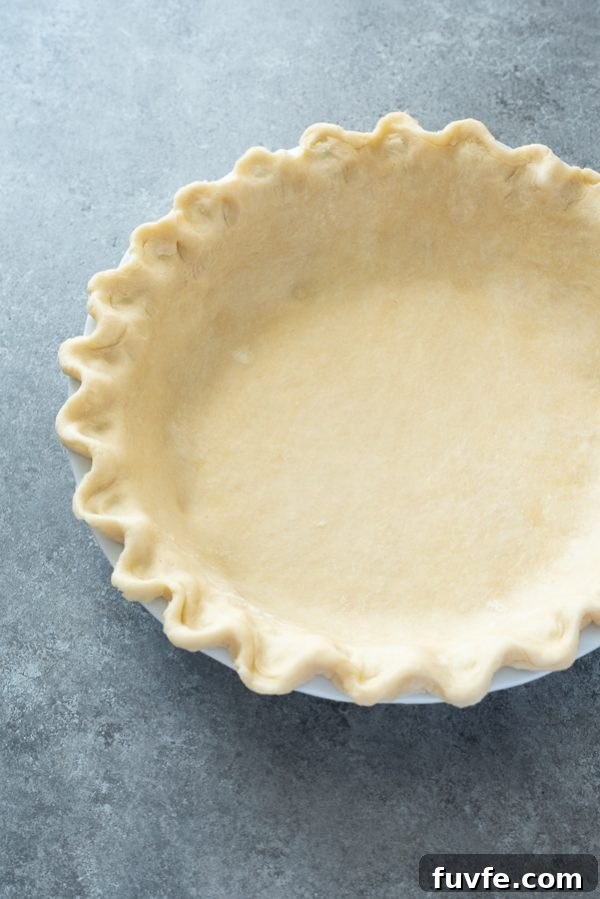
Recipe notes
- Pro tip: Start with the least amount of water and add only one tablespoon at a time until the dough forms.
- Make the dough 1–2 days ahead, wrapped tightly and refrigerated. Bring it to the point of pliability before rolling.
- To freeze: shape into a flat disk, wrap tightly in plastic and foil, and freeze. Thaw overnight in the refrigerator before using.
- Yields one 9″ pie crust. Double the recipe for a two-crust pie.
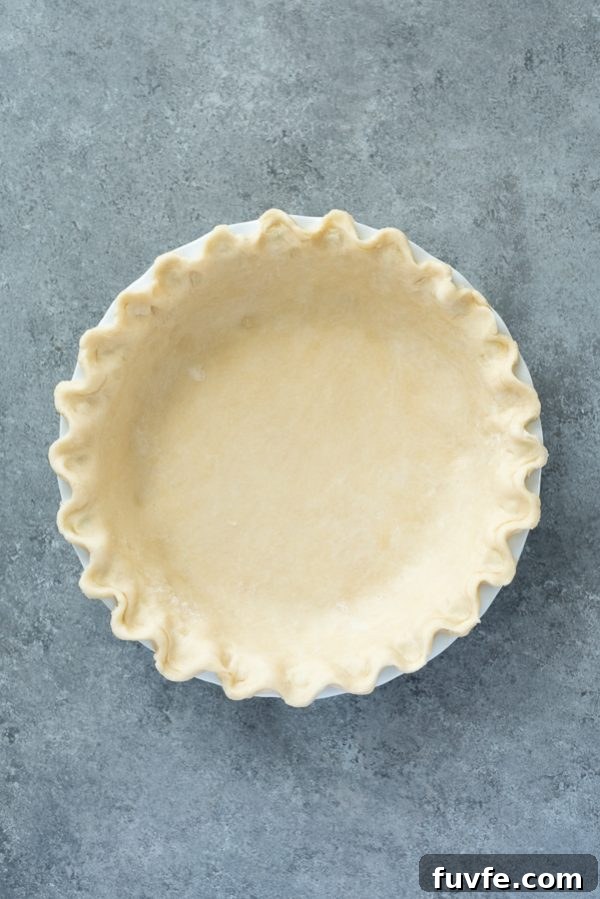
Quick and Easy Flaky Pie Crust
Make Flaky Pie Crust in your food processor with 3 simple ingredients and about 15 minutes of prep time.
Yield & Time
Servings: 8 (one 9″ crust) • Prep time: 15 minutes • Total time: 15 minutes
Ingredients
- 1¼ cups all-purpose flour (plus extra for dusting)
- 1 tablespoon granulated sugar (omit for savory)
- ⅛ teaspoon salt (omit if using salted butter)
- 4 ounces unsalted butter, very cold and cubed
- 3–5 tablespoons ice water
Instructions
- Put flour, sugar, and salt in a food processor and pulse about five times to combine.
- Add the cubed cold butter and pulse in short bursts until the mixture looks like coarse meal with pea-sized butter pieces.
- With short pulses, add 3 tablespoons ice water through the feed tube. Stop when the dough begins to hold together. If needed, add up to 2 more tablespoons one at a time.
- Turn the dough onto a lightly floured surface and shape it into a flattened disk. Wrap and chill for about 30 minutes.
- After chilling, roll the dough from the center outward, rotating it as you go, until it fits a 9″ pie plate with a slight overhang.
- Transfer to the pie pan, trim, and crimp the edges. Fill and bake according to your pie recipe.
Nutrition (per crust)
Calories: 179 kcal • Carbohydrates: 16 g • Protein: 2 g • Fat: 12 g • Saturated Fat: 7 g • Cholesterol: 30 mg • Sodium: 38 mg • Fiber: 1 g • Sugar: 2 g
Did you try this recipe? If so, please leave a review and share a photo so others can see how your pie turned out.