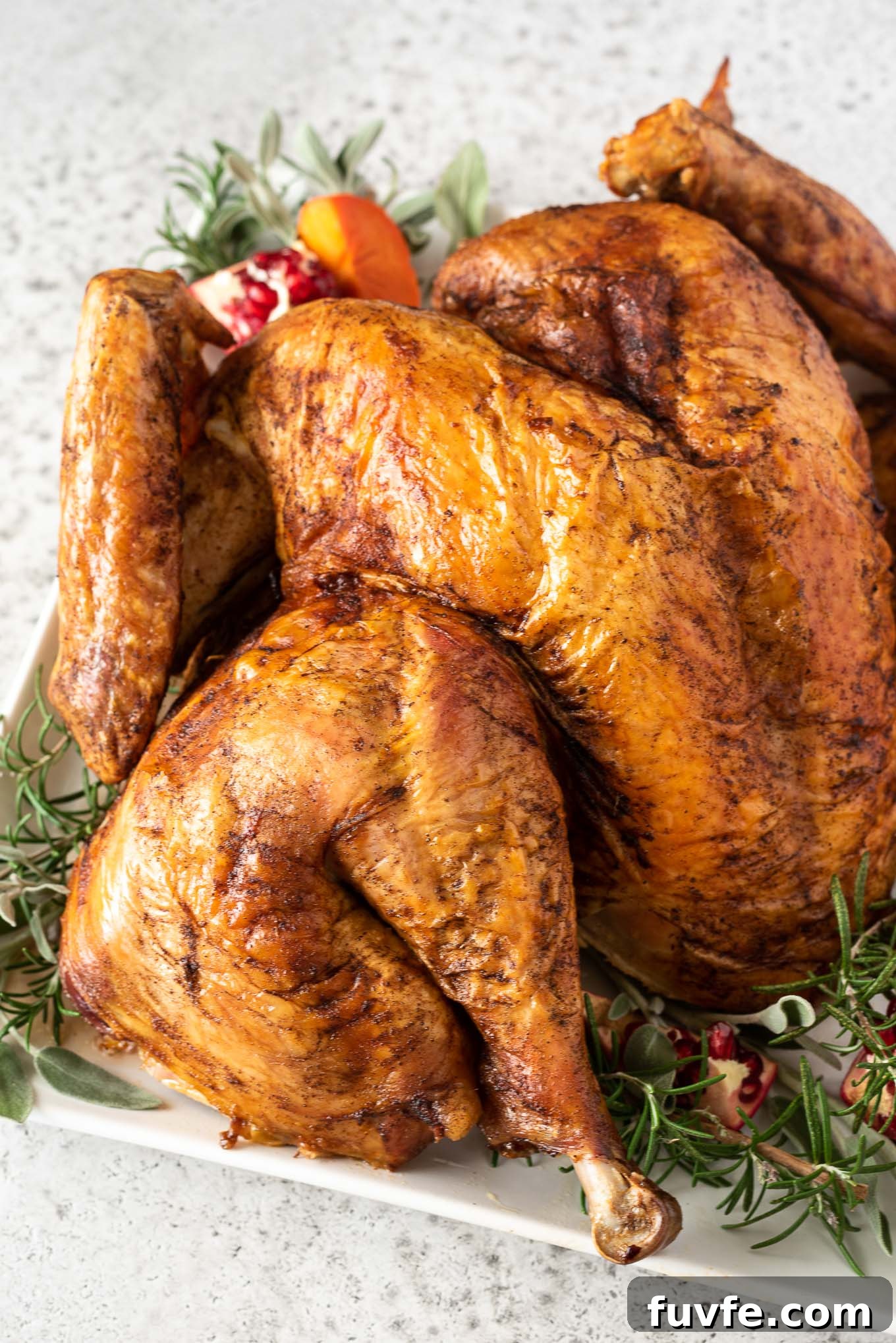
If you want a juicy, evenly cooked turkey with irresistibly crispy skin, this spatchcock turkey recipe delivers. Butterflying the bird yields consistent results every time and a roast time of about an hour to an hour and a half for a 12–14 lb. turkey.
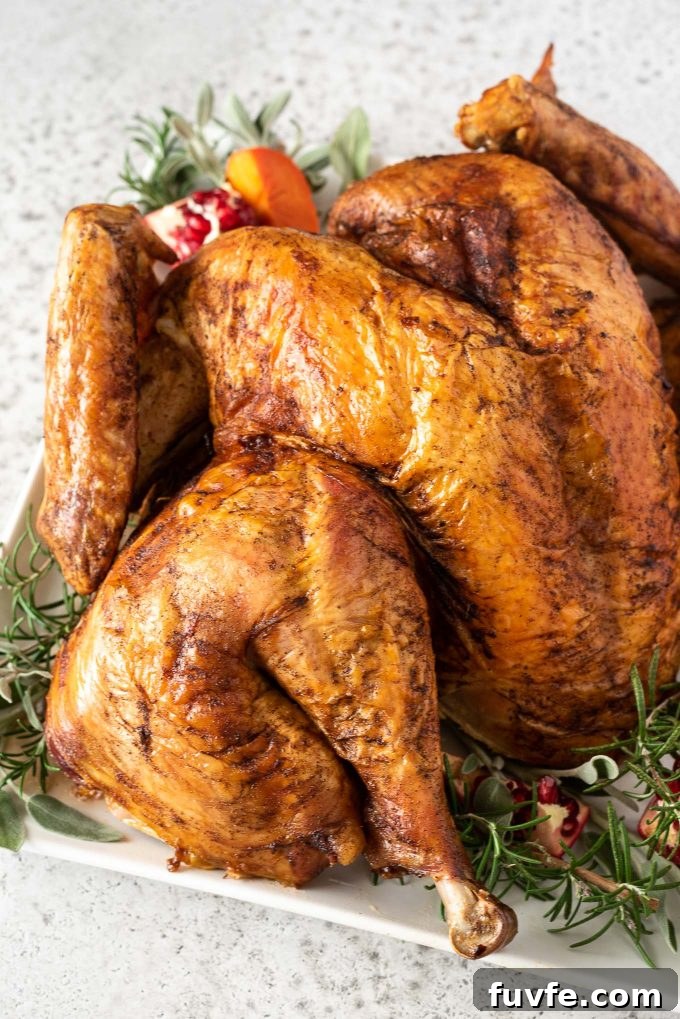
Thanksgiving has long been my favorite holiday, and I’ve been the host for more than 15 years. It’s a lot of work, but the reward of a well-made meal and good company makes it worth every minute.
I’ve prepared turkeys many ways over the years — bone-in turkey breast, boneless turkey breast, dry-brined turkey — but spatchcocking is my go-to method. Spatchcocking (also called butterflying) means removing the backbone of the bird and laying it flat for roasting, which promotes faster, more even cooking and extra-crispy skin.
If you haven’t tried spatchcocking before, it’s straightforward and transformative; once you roast a turkey this way, it’s hard to go back to the traditional upright roast.
Why you’ll love this recipe:
- Butterflying the turkey produces juicy meat and extra-crispy, evenly browned skin.
- A 12–14 lb. spatchcocked turkey roasts at 450°F and finishes in about 1–1.5 hours — roughly half the time of a traditional roast.
- Because the turkey lies flat, the breast and dark meat cook at a similar rate, preventing overcooked breast meat while the thighs finish.
- More skin is exposed during roasting, which maximizes browning and crispiness.
- If you plan to make turkey stock or gravy, save and simmer the backbone and giblets to add depth of flavor.
Recipe ingredients
This spatchcock turkey uses a minimal, flavorful ingredient list — just salt, olive oil, smoked paprika and pepper.
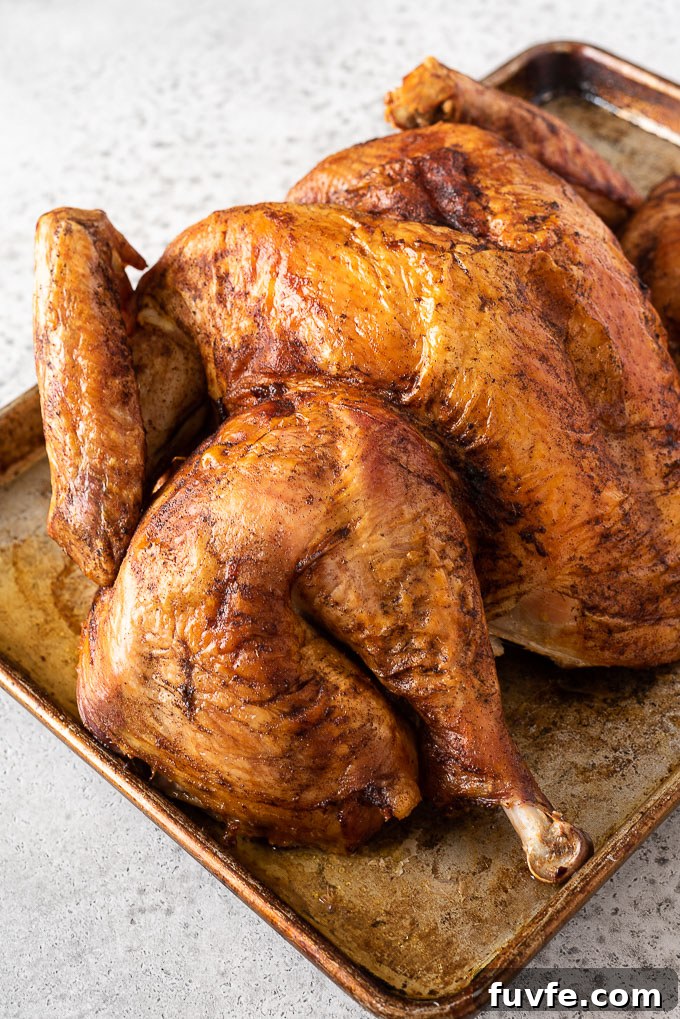
Ingredient notes
- Turkey. This recipe is written for a 12–14 lb. turkey; smaller or larger birds will work but will change cooking time. If you prefer, ask your butcher to spatchcock the turkey for you to save time.
- Oil. Extra virgin olive oil gives a lovely golden crust; melted butter may be used for a richer flavor if you prefer.
- Smoked paprika. Smoked paprika adds color and a mild smoky warmth. Regular paprika or your favorite seasonings can be substituted.
- Kosher salt. Kosher salt has larger grains than table salt; if using table salt, reduce the amount to avoid oversalting (about 3/4 tablespoon table salt for each tablespoon kosher).
How to make this recipe
The method is simple and reliable: spatchcock, dry brine, rub, and roast at high heat. Follow the step-by-step instructions below for full details.
See the recipe card below for exact measurements and a printable version.
How to spatchcock a turkey
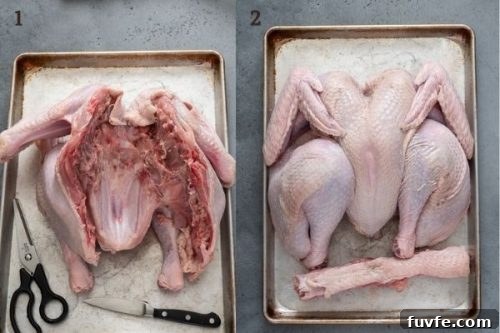
Spatchcocking is easier than it looks when you use sharp kitchen shears and a paring knife. The goal is to remove the backbone so the bird can be flattened for even roasting.
Pro tip: If you’d rather not cut the turkey yourself, ask your butcher to spatchcock it and request that they return the backbone and giblets for stock or gravy.
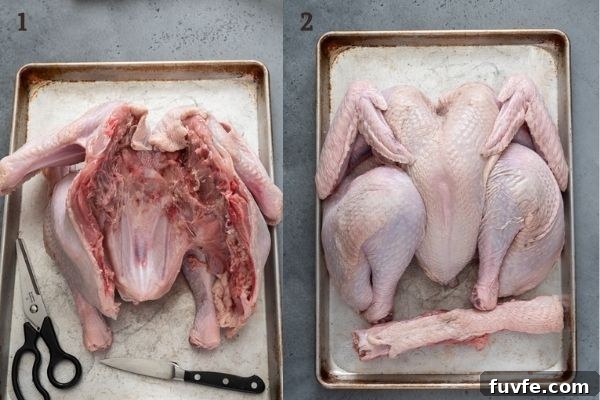
- Remove the giblets and pat the turkey dry. Place the bird breast-side down with the legs facing you. Using sharp kitchen shears, cut along both sides of the backbone to remove it.
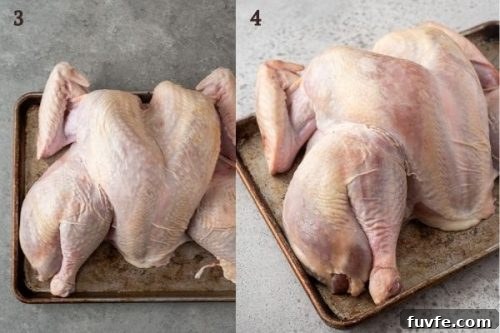
- Score the tip of the breastbone with a paring knife (this makes flattening easier). Turn the turkey breast-side up and press firmly over the breast to flatten the bird.
How to dry brine the turkey
Dry brining is an easy, low-mess method that uses only salt to season and tenderize the meat while helping the skin dry for better crisping.
How it works: Salt draws moisture from the surface of the turkey, which dissolves the salt into a brine that is then reabsorbed. Salt also breaks down muscle proteins, improving tenderness and flavor.
Dry brining also helps the skin dry out, which produces a crisper finish in the oven.
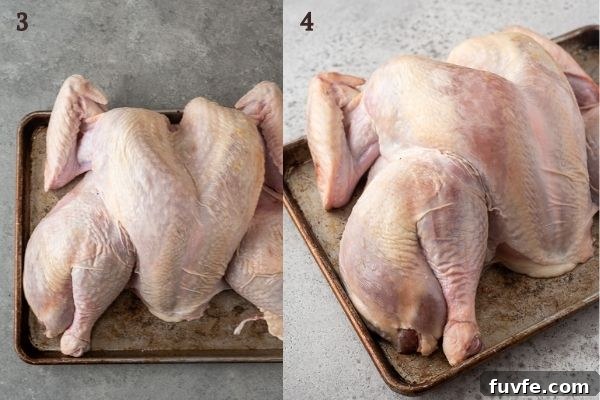
- Pat the turkey dry and loosen the skin over the breast with your hand. Rub some kosher salt directly under the skin over the breast, then sprinkle the remaining salt over both sides of the bird.
- Place the turkey on a rimmed baking sheet and refrigerate uncovered for 1–3 days. The longer it sits, the more pronounced the seasoning and skin dryness will be.
Prep the turkey
After the turkey has dry brined, prepare a simple oil-and-spice rub and allow the bird to come to room temperature before roasting.
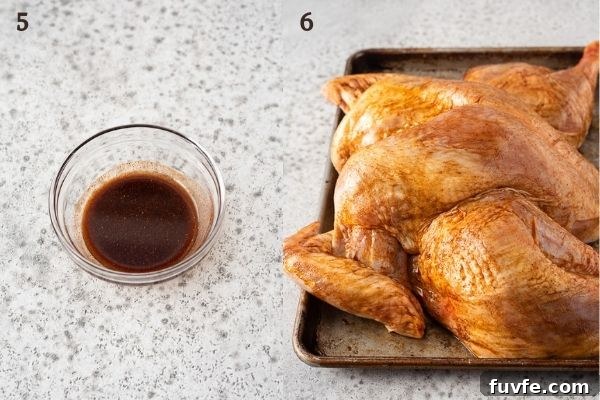
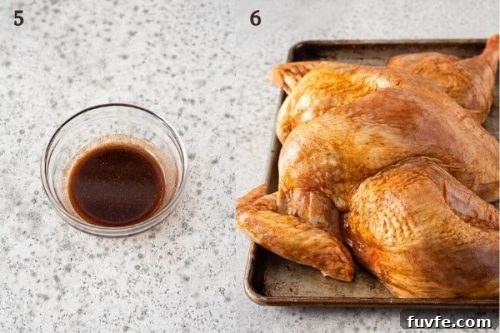
- Whisk together the olive oil, smoked paprika and black pepper in a small bowl.
- Rub the mixture evenly over the turkey (no additional salt is needed thanks to the dry brine). Tuck the wings under the bird, let it sit at room temperature for 1–2 hours, then roast.
- Roast at 450°F for about 1–1.5 hours for a 12–14 lb. bird. Check for doneness after one hour. Cover loosely with foil after the skin reaches a deep golden brown to prevent overbrowning during the remainder of the cook time.
How to check the temperature of a turkey
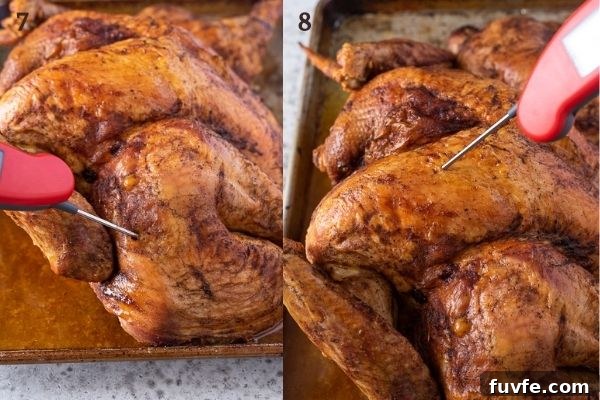
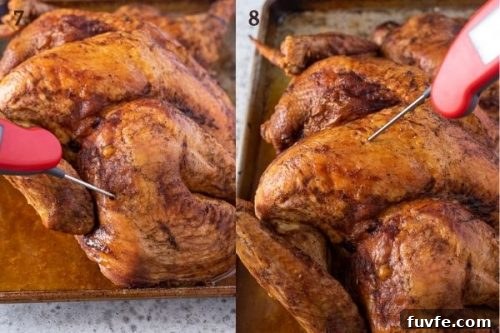
- Insert a thermometer into the thickest part of the thigh without touching bone. The turkey is done when the thigh reaches 175°F. The bird will continue to cook while resting.
- Alternatively, check the thickest part of the breast by inserting the probe parallel to the breast toward the neck without touching bone. The breast is done at 160°F; residual heat will raise the temperature slightly during resting.
FAQs
The term spatchcock typically refers to splitting open a bird and laying it flat for grilling or roasting. It’s often used interchangeably with “butterflying” and describes removing the backbone so the bird can be flattened.
Spatchcocking speeds up cooking and promotes even heat distribution. The bird cooks faster, develops crisp skin, and yields juicier breast and thigh meat because both areas reach doneness more uniformly.
With sharp kitchen shears, spatchcocking a turkey takes roughly five minutes. If you prefer not to do it yourself, ask a butcher to spatchcock it and return the backbone and giblets.
Yes. Because the bird lies flat, heat reaches the meat more evenly and a 12–14 lb. turkey will typically finish in about 1–1.5 hours at 450°F.
No — spatchcocking flattens the turkey, so traditional cavity stuffing is not possible. Instead, serve stuffing on the side or cook it separately.
Place the thermometer in the thickest part of the thigh or breast without touching bone. Look for 175°F in the thigh or 160°F in the breast; the turkey will finish as it rests.
Recipe notes
- Nutrition information in the recipe card is estimated for a 12 lb. turkey.
- Pro tip: Have your butcher spatchcock the turkey and save the backbone and giblets for homemade stock or gravy.
- Cooking time varies with bird size. A turkey 12 lbs. or smaller may finish in about 1 hour; a larger bird (14 lbs. or more) could take 1 hour 15 minutes to 1.5 hours. Start checking for doneness after one hour.
- Because the oven is hot, the skin will brown quickly. Once it reaches a deep golden color (usually 20–30 minutes), cover loosely with foil for the remainder of the cook time.
- Adjust the rub and aromatics to your taste — fresh herbs, citrus zest or additional spices are all welcome.
See all of my Thanksgiving recipes.
What to serve with spatchcock turkey:
- Cranberry orange sauce
- Homemade dinner rolls
- Green bean casserole
- Slow cooker stuffing
- Garlic mashed Yukon Gold potatoes
Did you try this recipe? If so, please leave a review below and tag @flavorthemoments on social media so I can see your results.
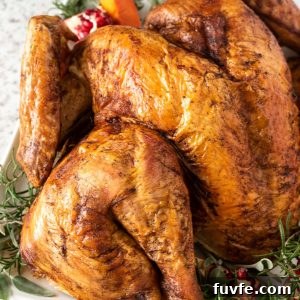
Perfect Spatchcock Turkey
reviews
Leave a Review »
Equipment
-
Rimmed baking sheet (large)
Ingredients
- 1 tablespoon kosher salt
- 12-14 lb. turkey spatchcocked*
- 3 tablespoons extra virgin olive oil
- 1 tablespoon smoked paprika may substitute with regular paprika
- 1/2 teaspoon black pepper
Instructions
-
Spatchcock the turkey: Remove the giblets and pat the turkey dry. Place the bird breast-side down on a cutting board and cut alongside both sides of the backbone with kitchen shears to remove it.
-
Use a paring knife to score the tip of the breastbone so the turkey will flatten easily. Flip the bird breast-side up and press down firmly in the center of the breast to flatten. PRO TIP: Ask your butcher to spatchcock the turkey if you prefer not to do it yourself.

-
Dry brine the turkey: Gently loosen the skin over the breast and rub some kosher salt directly under the skin. Sprinkle the remaining salt over both sides of the turkey; larger birds may need more than 1 tablespoon.
-
Place the turkey on a rimmed baking sheet and refrigerate uncovered for 1–3 days to dry brine.
-
Prep the turkey: Mix the olive oil, smoked paprika and black pepper in a small bowl.
-
Rub the paprika mixture evenly over the turkey (no extra salt is needed). Tuck the wings under and let the bird come to room temperature for 1–2 hours before roasting.
-
Preheat the oven to 450°F and position the rack in the lower third. Roast the turkey 1–1.5 hours depending on size; check for doneness after one hour. Once the skin is well browned (about 20–30 minutes), cover loosely with foil for the remaining time.
-
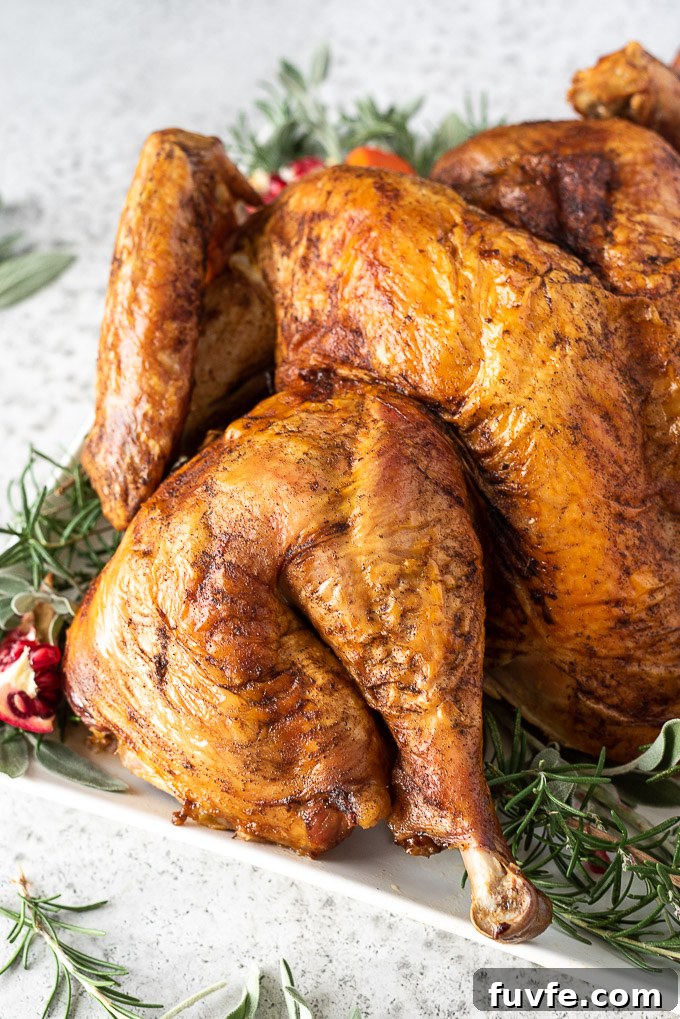
The turkey is done when the thigh reads 175°F or the breast reads 160°F on an instant-read thermometer (avoid touching bone). Remove from the oven, tent loosely with foil and let rest 20–30 minutes before carving; carryover heat will finish the cooking. Carve and serve.
Notes
- Nutrition information is estimated for a 12 lb. turkey.
- Pro tip: Ask your butcher to spatchcock the turkey and return the backbone and giblets for stock or gravy.
- Cooking time varies by turkey size and oven. Check for doneness after one hour and adjust as needed.
- After the skin reaches a rich brown early in the roasting process, loosely tent the turkey with foil to prevent overbrowning while it finishes cooking.
- Customize the seasonings with fresh herbs, citrus zest, or additional spices to suit your taste.
Nutrition
Nutrition is estimated using a food database and is provided as a guideline for informational purposes.
This recipe was originally published in November 2015. The text, recipe and photos have been updated.