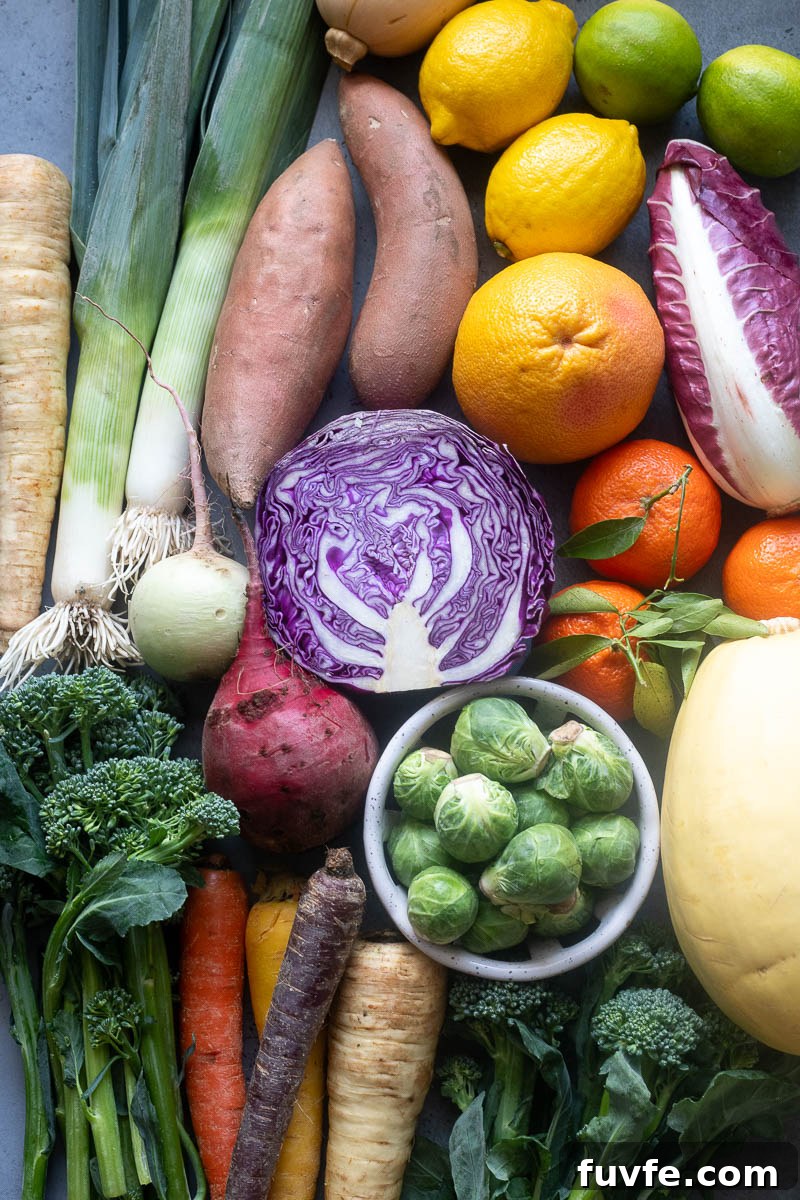
February brings bright citrus, hardy winter vegetables, and nutrient-dense greens that thrive in colder weather. This February Seasonal Produce Guide outlines the fruits and vegetables typically in season during the month, organized by category to help you shop, plan meals, and cook with seasonal ingredients.
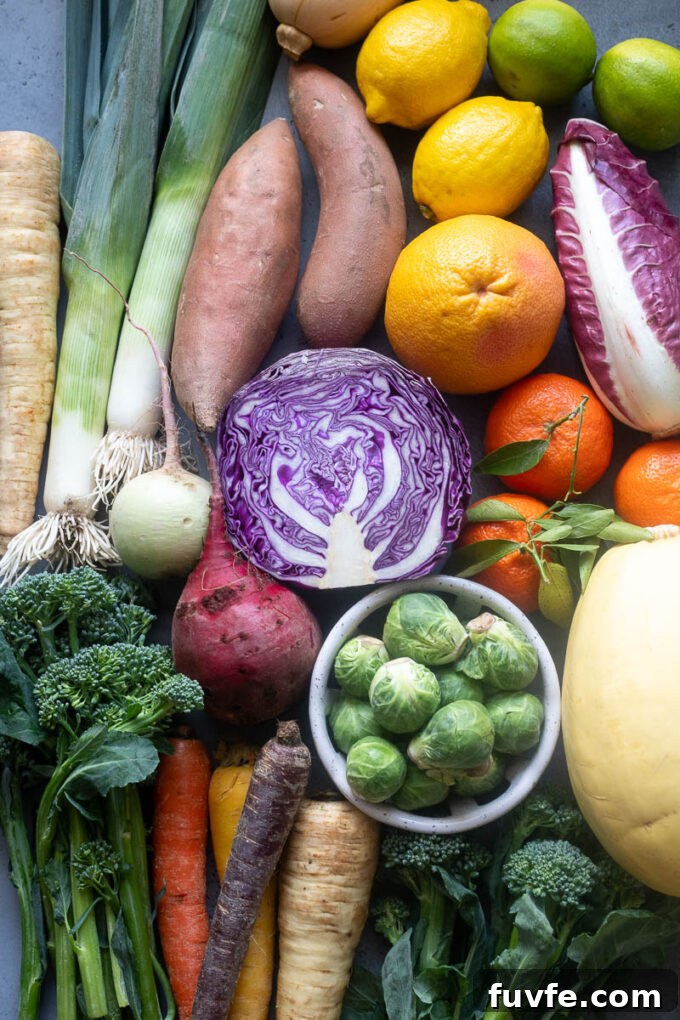
We’re in the heart of winter, and February is a month for embracing hearty roots, crisp greens, and peak-season citrus. Many crops harvested in fall are still at excellent quality thanks to proper storage, while other vegetables and fruits are freshly harvested in cooler regions.
This guide breaks down February produce by category, highlights commonly available varieties, and suggests simple ways to use each ingredient so you can cook seasonally with confidence.
Whether you’re planning a week of meals or looking for inspiration for tonight’s dinner, these seasonal picks will help you get the most flavor and value from winter produce.
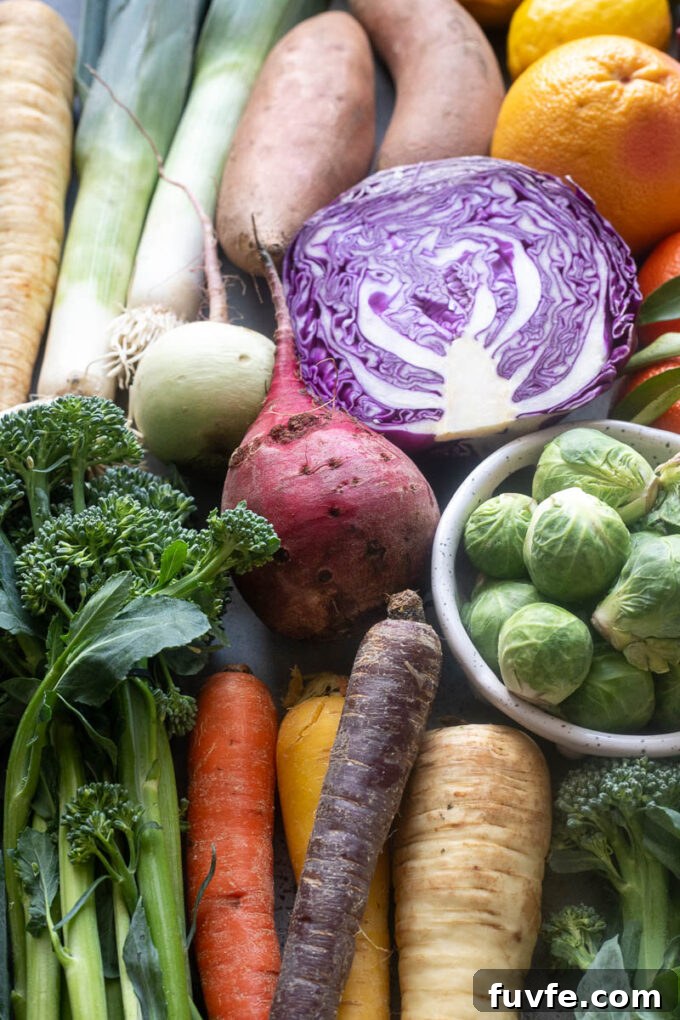
How to Use This February Seasonal Produce Guide
Use this guide as a quick reference to shop smarter and cook with seasonal produce all month long.
- Plan your meals: Focus on recipes that highlight February produce at its best.
- Save money and reduce waste: Choose items that last well in winter storage.
- Mix and match categories: Build soups, salads, sheet-pan meals, and simple sides from complementary ingredients.
- Try seasonal recipes: Use these produce ideas to turn fresh ingredients into easy, satisfying meals.
This guide is flexible—use it for weekly meal planning, grocery lists, or spur-of-the-moment cooking ideas.
Why Seasonal Produce Matters in February
- Better flavor and texture: Cold-weather crops often develop deeper sweetness and firmer texture.
- Lower cost: In-season produce is usually more affordable.
- Longer shelf life: Many winter crops store well and stay fresh longer.
- Support local growers: Choosing seasonal items helps regional farms and reduces transportation impact.
Winter produce performs well roasted, braised, stewed, or lightly sautéed—methods that suit the simple, comforting meals many of us crave during colder months.
Fruits and vegetables in season in February
Here’s a practical list of fruits and vegetables typically in season in February. Availability can vary by region and local climate.
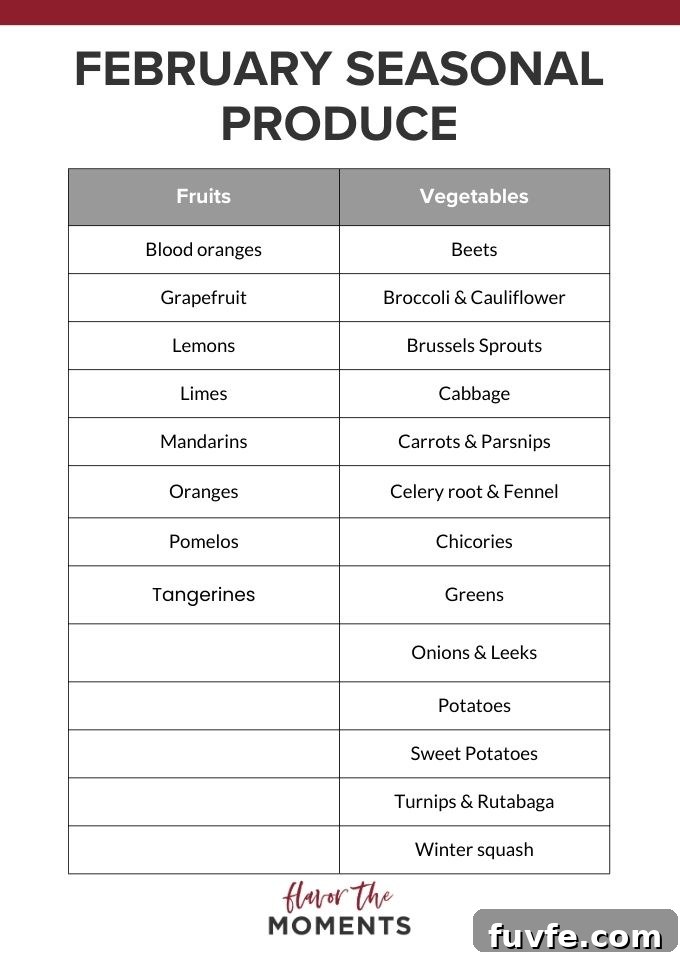
Citrus Fruits (Peak Season)
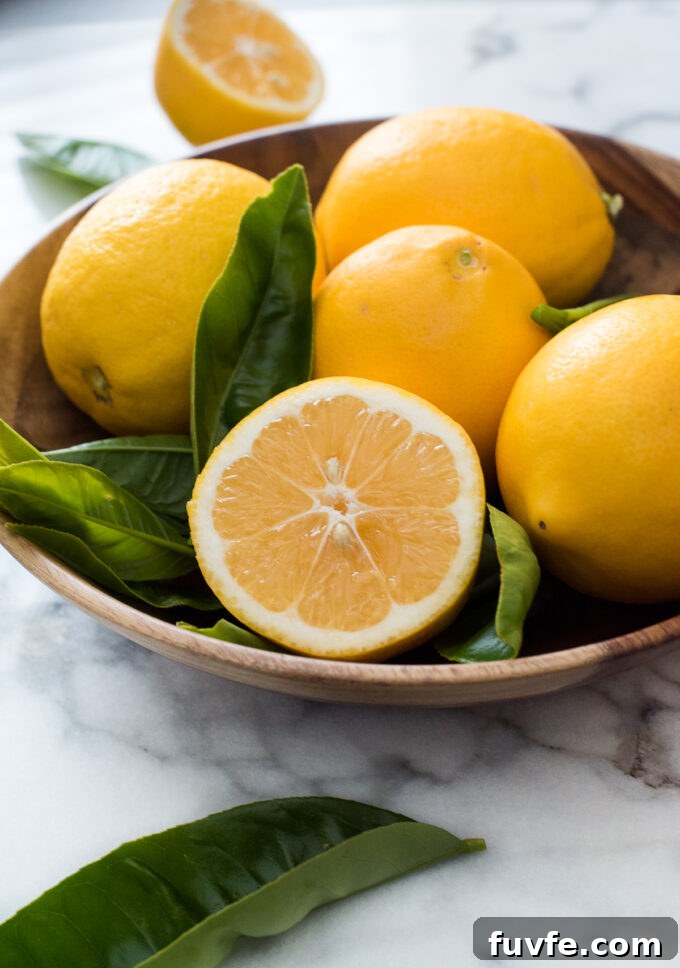
Common February citrus varieties: oranges (navel, blood, Cara Cara, Valencia), grapefruit (pink, ruby red), lemons (including Meyer), limes, tangerines and mandarins, and pomelos.
Citrus is at its juiciest and most flavorful in winter. Use citrus to brighten salads, sauces, marinades, baked goods, and beverages.
How to use citrus: segment for salads, zest to build aroma without added acidity, and squeeze fresh juice into dressings and soups.
Recipe ideas: frisée citrus salad, Greek lemon chicken soup, lemon pudding cake.
Leafy Greens & Chicories
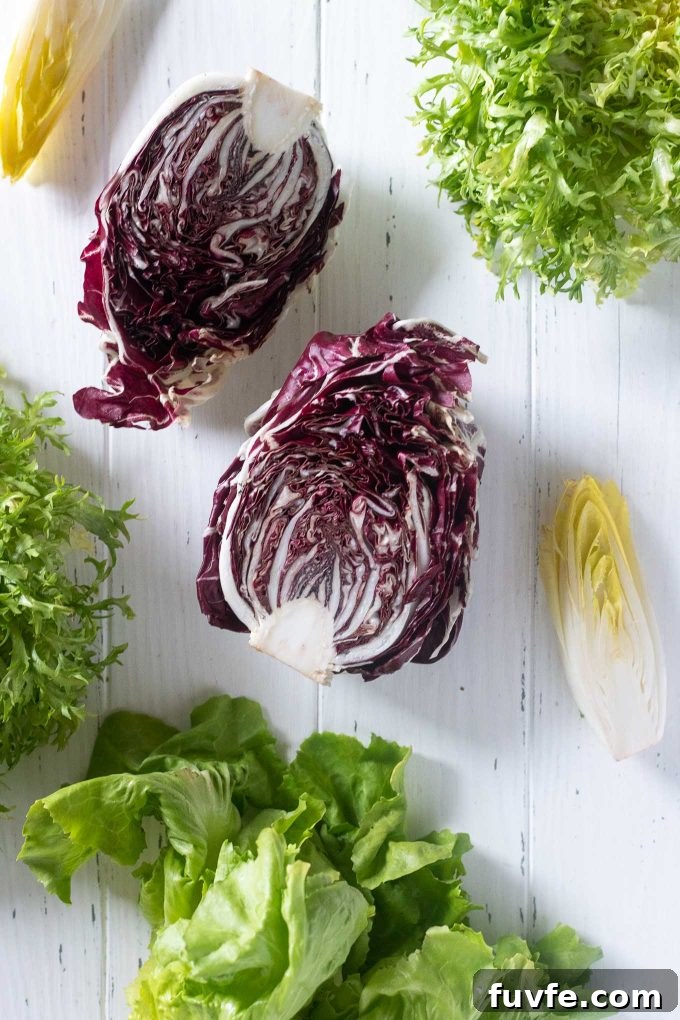
Greens in season: chicories (endive, escarole, frisée, radicchio), kale (curly and lacinato), spinach, arugula, and Swiss chard.
Cool temperatures temper bitterness and enhance sweetness in many greens. Chicories bring firm texture and bold flavor, which work well raw or lightly cooked.
How to use them: massage kale for salads, wilt spinach into soups and pastas, sauté or roast heartier leaves, and use chicories raw for crunch and contrast.
Recipe ideas: winter roasted vegetable kale salad, spinach feta turkey meatballs, bacon and egg breakfast casserole.
Cruciferous vegetables
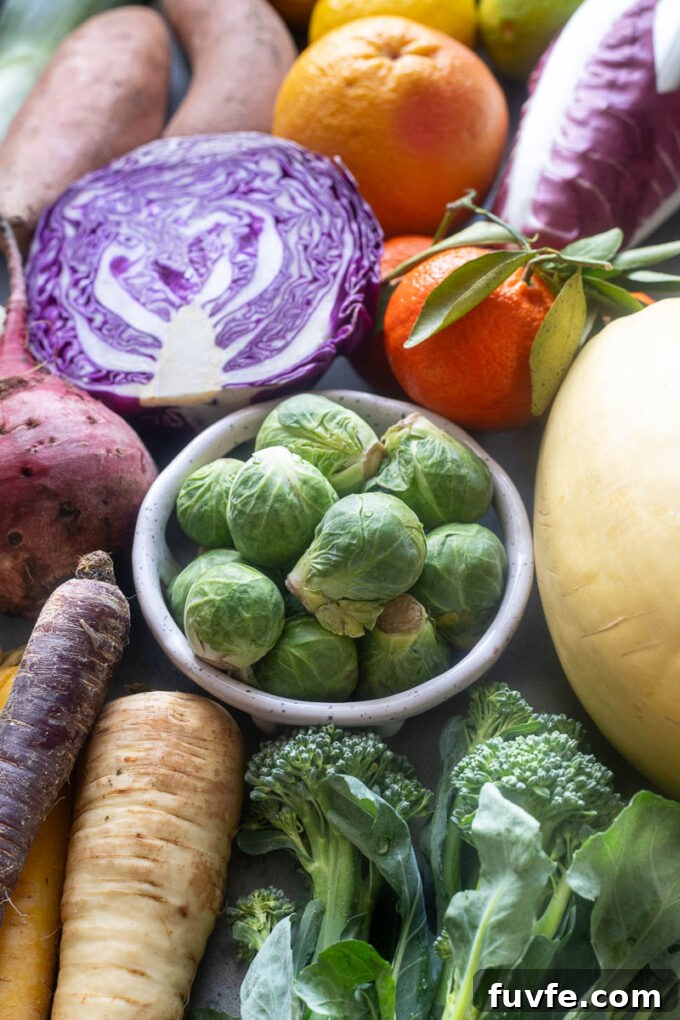
February crucifers: Brussels sprouts, cauliflower, broccoli, and cabbage (green, red, Savoy).
Cold weather improves sweetness and texture in these vegetables, making them excellent for roasting, braising, or shredding raw into slaws.
How to use: roast for caramelized edges, shave raw for slaws and salads, or add to soups and hearty casseroles.
Recipe ideas: smashed Brussels sprouts, cheesy broccoli and chickpea rice casserole, cabbage and ground beef casserole.
Root vegetables
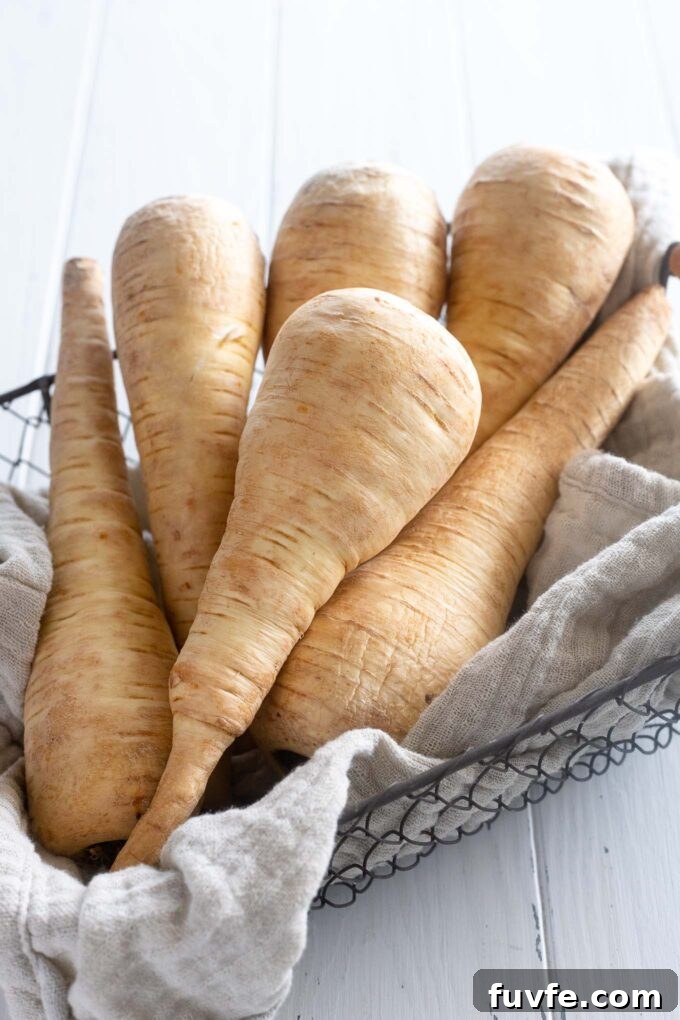
Root veggies in season: carrots, beets, parsnips, turnips, rutabaga, and sweet potatoes.
Roots store well and their flavors often deepen over time. They’re versatile for roasting, mashing, or adding to soups and stews.
How to use: roast with oil and herbs, mash or purée for creamy sides, or include in soups and sheet-pan dinners.
Recipe ideas: roasted carrots and parsnips, slow-cooker pot roast, winter minestrone soup.
Alliums (Onions, Garlic, Leeks)
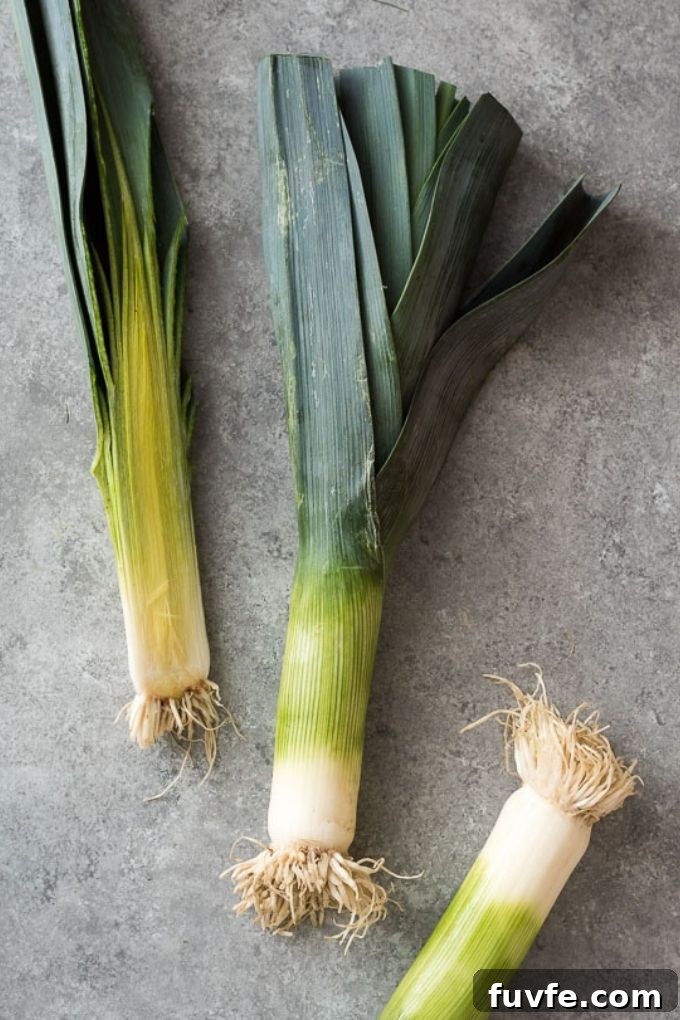
In-season alliums: yellow, white, and red onions, garlic, shallots, and leeks.
Alliums are essential flavor bases that perform consistently in winter. Leeks offer a milder, sweeter onion note perfect for soups and gratins.
How to use: sauté as a soup or sauce base, caramelize slowly for depth, or roast whole for a sweeter profile.
Recipe ideas: beef short rib risotto, butternut squash potato leek soup, garlic butter salmon.
Winter squash & cool weather vegetables
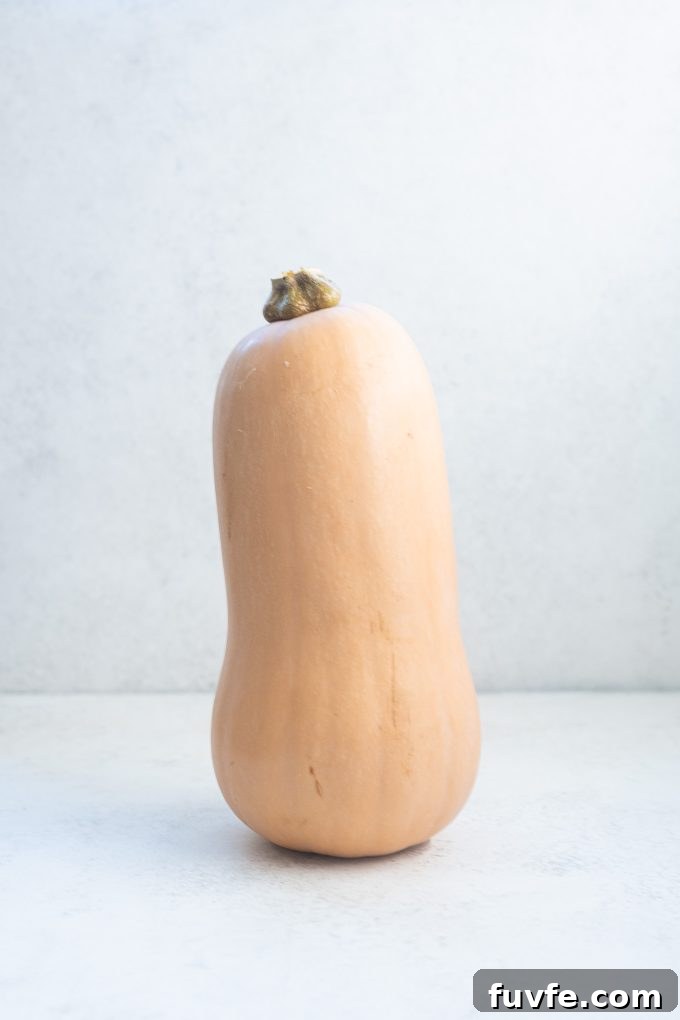
Varieties: butternut, acorn, kabocha, spaghetti squash, plus fennel, celery root (celeriac), and Jerusalem artichokes (sunchokes).
Winter squash stores well and retains sweetness and texture into late winter, making it a reliable ingredient for many dishes.
How to use: roast and stuff, purée into soups, or substitute spaghetti squash for pasta in casseroles.
Recipe ideas: butternut squash mac and cheese, spaghetti squash casserole, creamy kabocha mash.
Apples & Pears (Storage Fruit)
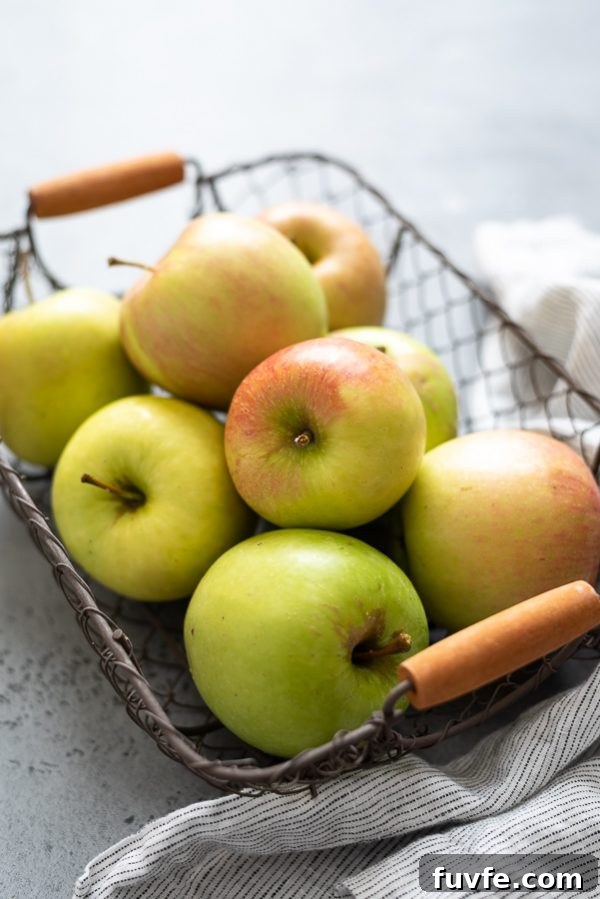
Available fruits: many apple varieties and pears such as Bartlett, Bosc, and Anjou.
These fruits are often stored from fall harvests and remain high quality through winter, giving you sweet and crisp options for snacks and recipes.
How to use: slice into salads, roast or bake, and add to savory dishes for a touch of sweetness.
Recipe ideas: arugula pear salad with blue cheese, easy apple crisp, fennel and apple slaw.
Explore seasonal produce all year long
- December seasonal produce guide
- January seasonal produce guide
- March seasonal produce guide
- Winter fruits and vegetables overview
Shopping and cooking seasonally helps you enjoy produce at peak flavor, save money, and reduce waste. Use this February produce guide to build satisfying, seasonal meals all month long.