Welcome to The Storied Recipe Podcast, a podcast about food, culture, and love.
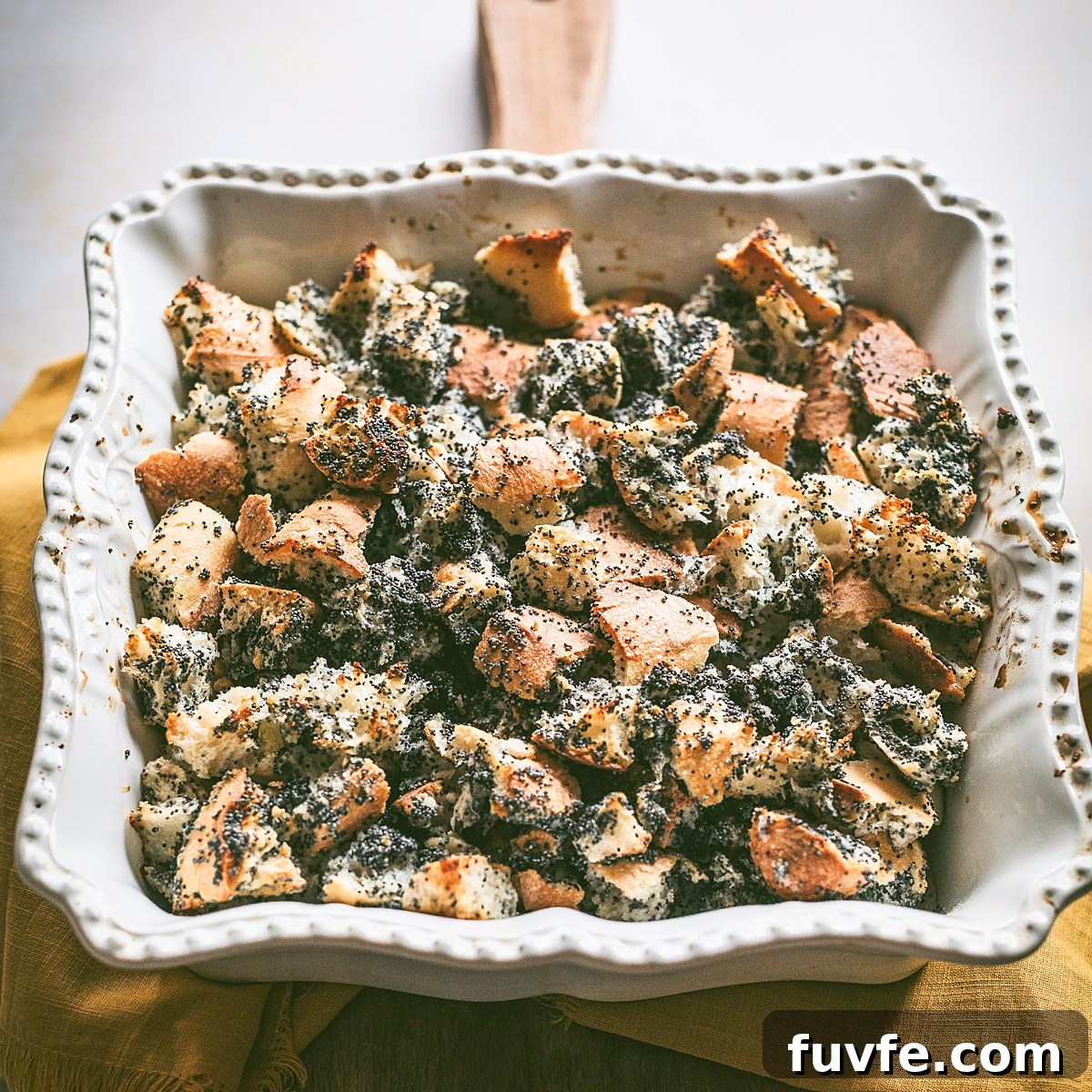
My podcast guest, Dora Hurley, shared this simple and comforting Mákos Guba recipe with us. While many Hungarians serve this poppy seed bread pudding at Christmas, Dora remembers her grandmother making it nearly every Friday as an economical, meat-free meal. It pairs beautifully with simple sides or can be served as a sweet treat—listen to Dora’s episode, “A Hungarian Friday Meal,” while you try her Hungarian Bread Pudding.
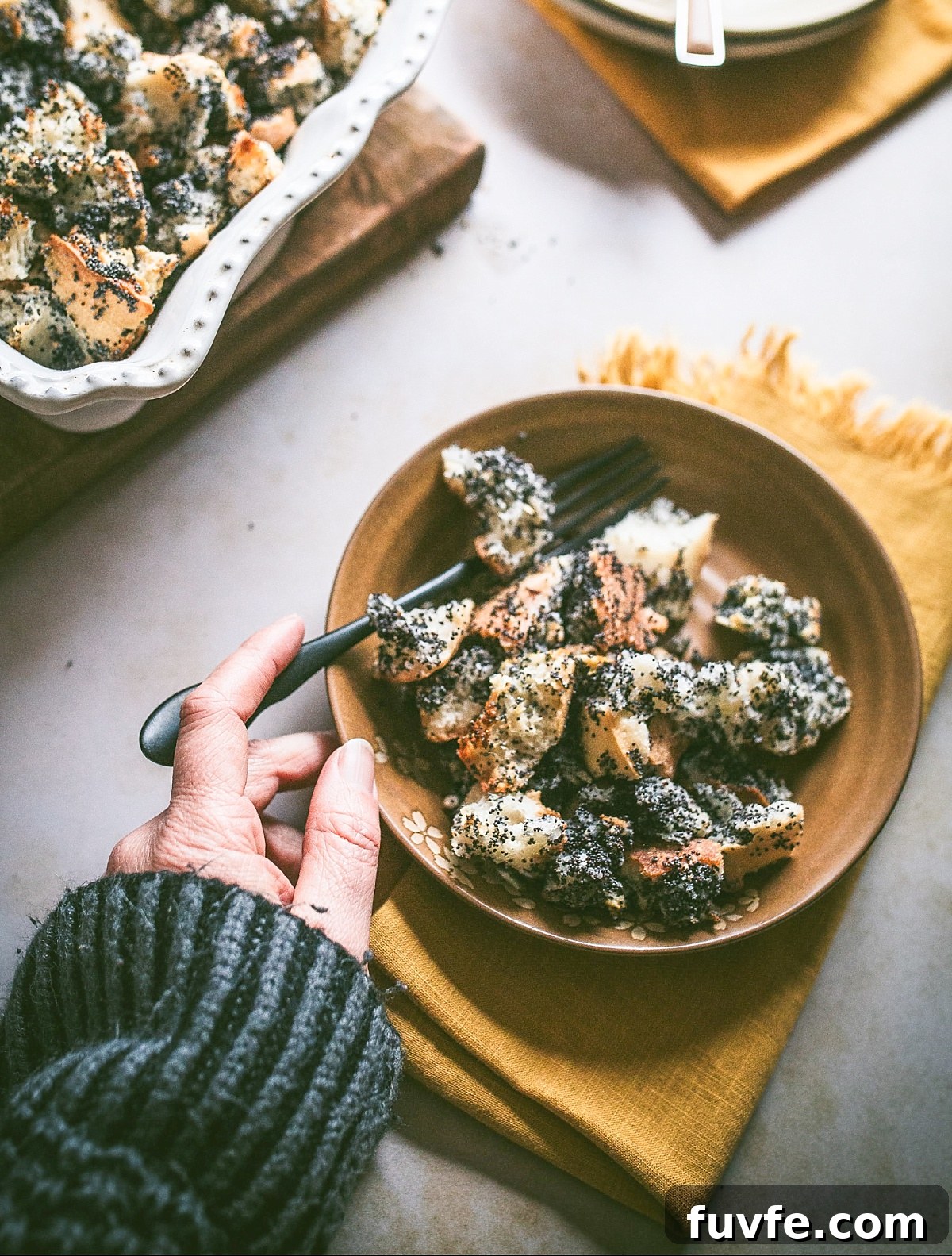
This Mákos Guba (Hungarian poppy seed bread pudding) comes from Dora and her grandmother and highlights how few ingredients can produce a dish rich in tradition and flavor.
Though often linked with holiday tables, Dora’s version was everyday food: a practical way to use stale bread and observe a meat-free Friday. Below you’ll find Dora’s streamlined five-ingredient method along with notes for richer or more festive variations.
What to Expect: Flavor & Texture
- Hearty and satisfying without being overly rich.
- Delicately sweet in this basic version—Dora and her grandmother often treated it like a side rather than a heavy dessert.
- Grinding the poppy seeds yields a creamier texture; leaving them whole adds a pleasant little crunch.
- In the simplest form, the bread you choose will contribute much of the flavor.
- Variations commonly include vanilla, nuts, dried fruit, or custard for serving.
- Preparation can be a simple toss-together or a layered pudding with ground poppy seed cream between bread slices.
What Type of Bread
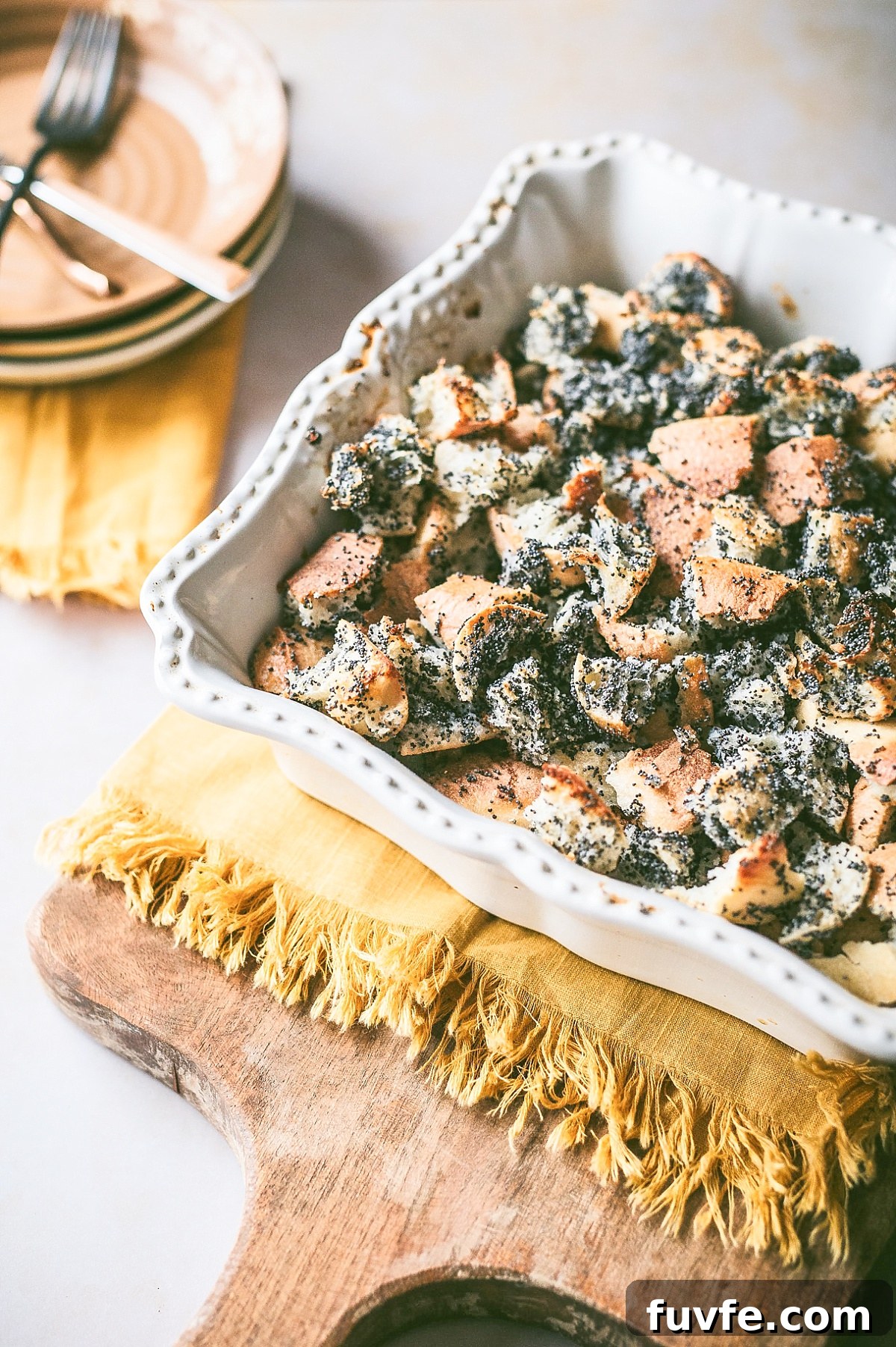
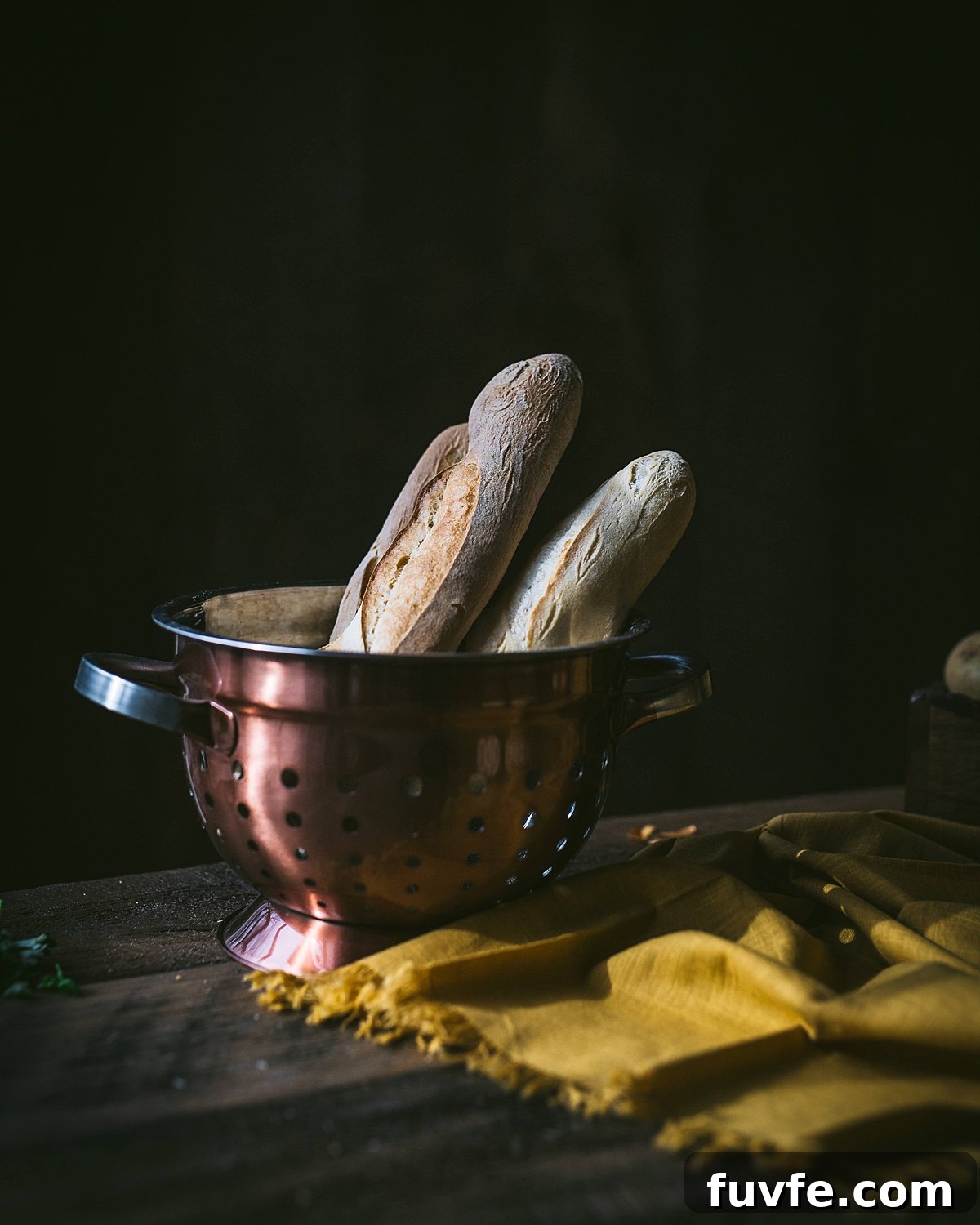
Don’t stress over the bread—any stale bread works well. Use what you have and what you enjoy.
- Brioche or challah: rich and sturdy, they absorb milk while keeping structure.
- Baguette: a great choice and what Dora recommends; it holds up well even when slightly stale.
- Soft sandwich bread: produces a tender, custardy pudding.
- Hawaiian rolls: yield a sweeter, softer result.
- Kifli (crescent rolls) or croissants can also be used for a flakier, buttery texture.
How to Grind Poppy Seeds
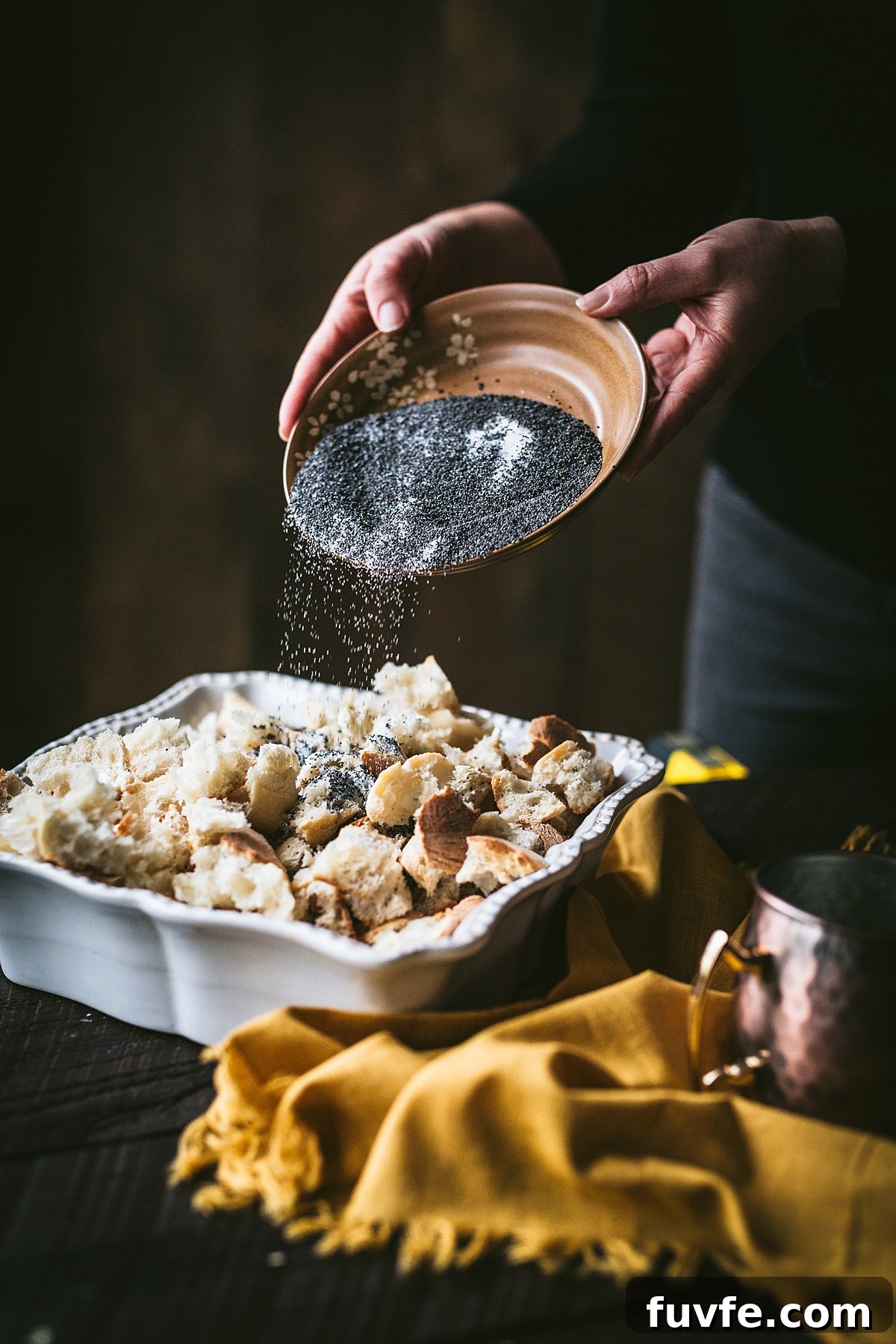
Grinding poppy seeds is optional. Dora’s family often left them whole, but ground seeds create a smoother, creamier filling. Two common methods:
- Use a spice grinder or coffee grinder to process dry poppy seeds.
- Soak or briefly boil seeds in milk or water before processing in a food processor for a softer paste.
- If using prepared poppy seed filling, note it can be sweeter and wetter than ground seeds—adjust sugar and liquid in the recipe accordingly.
Variations
Layer instead of mixing
- Some regional versions layer soaked bread with a creamy ground poppy seed mixture for a more structured, elegant presentation.
Use vanilla sugar instead of white sugar
- Vanilla sugar enhances aroma and gives a subtle vanilla note—use in place of plain sugar if desired.
Add a custard or vanilla pudding
- Stirring a homemade crème anglaise or a quick boxed vanilla pudding into the milk before combining will create a richer, silkier pudding.
- Some versions top the baked pudding with a light meringue for a showy finish.
Add-ins and layers
- Common additions include walnuts, lemon zest, raisins (soaked in rum if you like), or thin apple slices layered into the dish.
What to serve on top
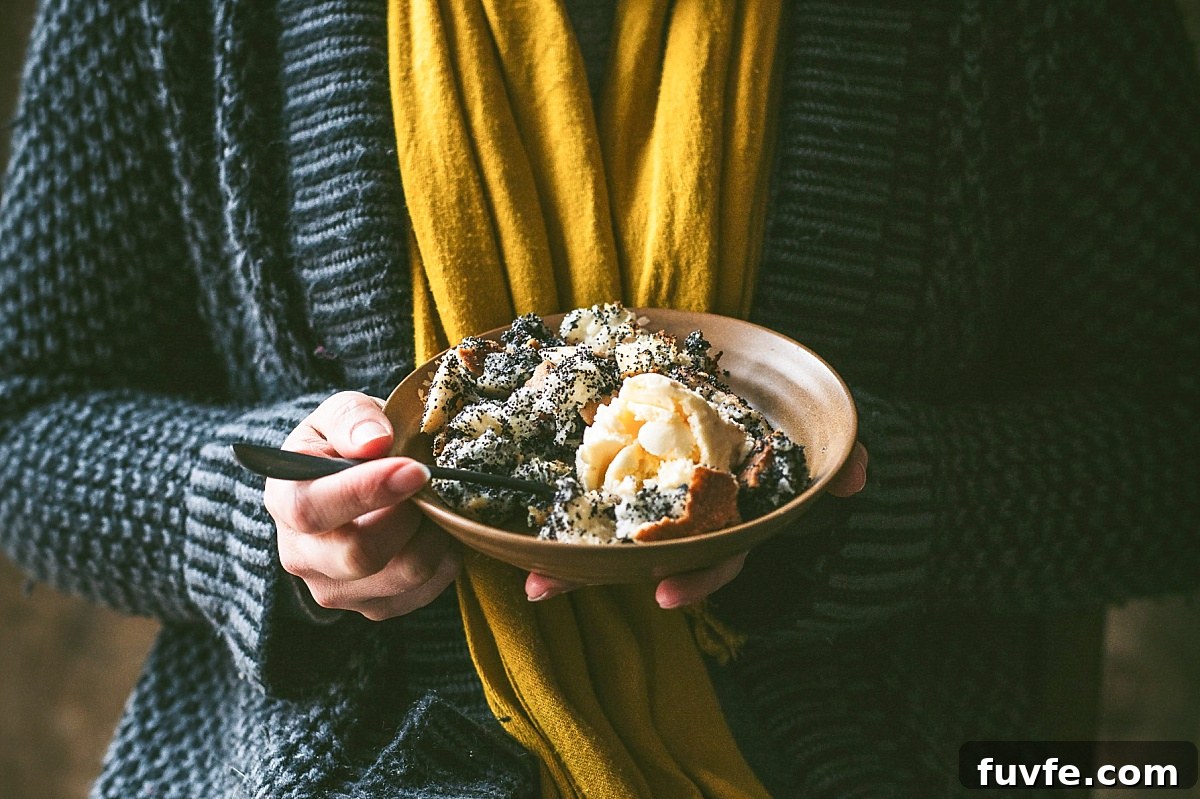
- Vanilla ice cream, custard, a dusting of confectioner’s sugar, or a warm vanilla sauce all pair well.
Why Mákos Guba Is a Christmas Classic in Hungary
- Poppy seed is a beloved ingredient across Central Europe, especially in Hungary and Poland, and it often appears in holiday dishes.
- Poppy seeds symbolize abundance and fertility, which helps explain their role in celebratory meals like Christmas and New Year.
- Practically speaking, the pudding can be prepared ahead, making it convenient for holiday hosting.
Equipment List
- Spice grinder or coffee grinder (optional for grinding seeds)
- Food processor (if you prefer to make a poppy seed paste)
- Mixing bowls and a baking dish if you plan to bake
How to Make In Advance & Store
- For best texture and convenience, do the prep and assembly ahead and bake just before serving.
- You can prepare in stages over two days: cut and dry the bread (day 1), then assemble and let soak overnight (day 2) before baking.
Dora’s Memories of This Recipe
Poppy seed bread pudding was a weekly dish my nana made mostly on Fridays to keep the meal meat-free and because it was inexpensive—by Friday, the weekly budget was nearly gone.
I spent a lot of time with my nana. She was a kitchen wizard who kept things simple, using seasonal, local ingredients. I remember her pantry always stocked—flour, sugar, and oil were never in short supply.
She ran a busy home kitchen in a tiny apartment; jars of fruit waited to be canned, and spaces doubled for storage. None of that bothered her. Her cooking reflected farm roots even after moving to the city.
Recipe
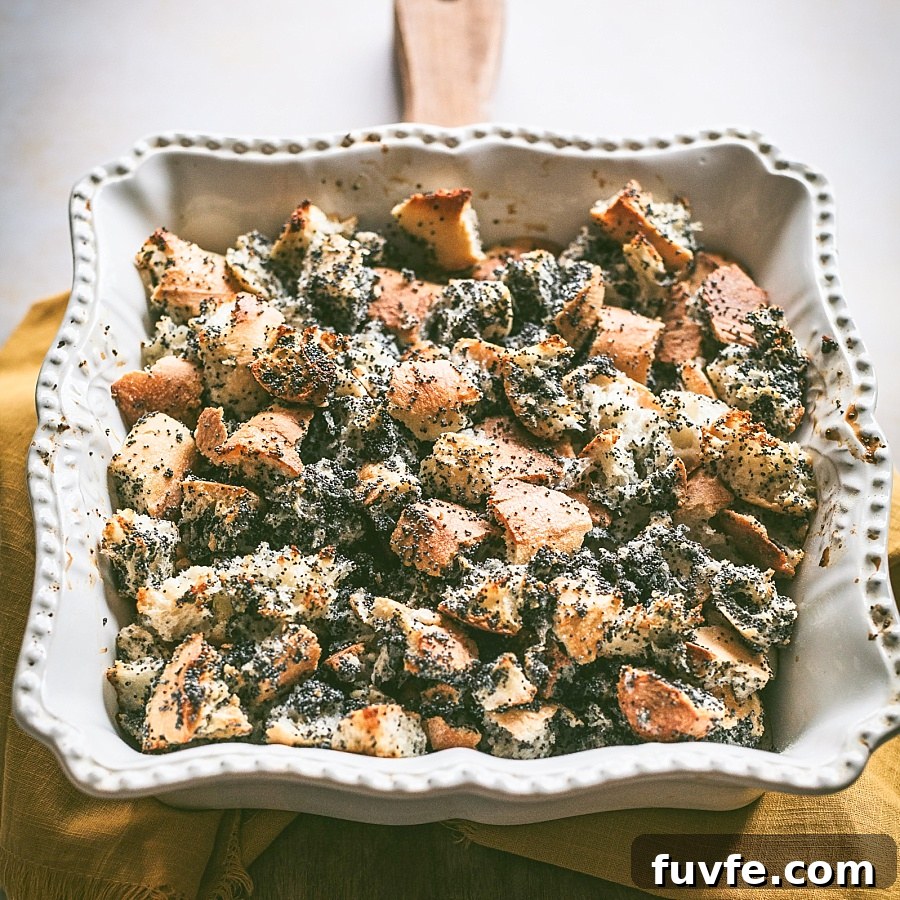
Mákos Guba: Poppy Seed Bread Pudding
- Total Time: 25 minutes
- Yield: 8 servings
Description
Easy Hungarian poppy seed bread pudding made from five simple pantry ingredients. Traditionally paired with a simple soup for a frugal Friday meal or served with custard or ice cream for a special occasion.
Ingredients
- Bread — about 450 g (1 loaf or two baguettes, or equivalent in rolls/croissants)
- 1 1/4 cups milk, half-and-half, or cream (about 350 mL)
- Flavoring: none, or 2 tbsp honey, or 2 tsp vanilla (or seeds from 1 vanilla pod)
- 1/2 cup poppy seeds (or ground poppy seeds)
- 1/4 cup white sugar or confectioner’s sugar
- Optional mix-ins: 1 cup dried fruit, nuts, lemon zest, or thin apple slices
Instructions
Make the pudding
- Cut or tear the bread into bite-sized pieces. If the bread is fresh, leave it uncovered overnight to dry.
- If serving immediately, preheat the oven to 350°F (175°C).
- If desired, grind poppy seeds using a spice or coffee grinder, or soak and process them for a softer paste.
- Combine poppy seeds and sugar in a bowl.
- Warm the milk with any chosen flavoring (honey or vanilla) without boiling.
- Mix the bread, warm milk, and any optional add-ins in a large bowl.
- Either stir in the poppy seed–sugar mixture quickly until combined, or assemble in layers of bread and poppy seed mixture.
- For a quick meal, serve immediately. To bake, place in a greased dish and bake for about 20 minutes until heated through. Alternatively, assemble and chill overnight, then bake the next day at 350°F (175°C).
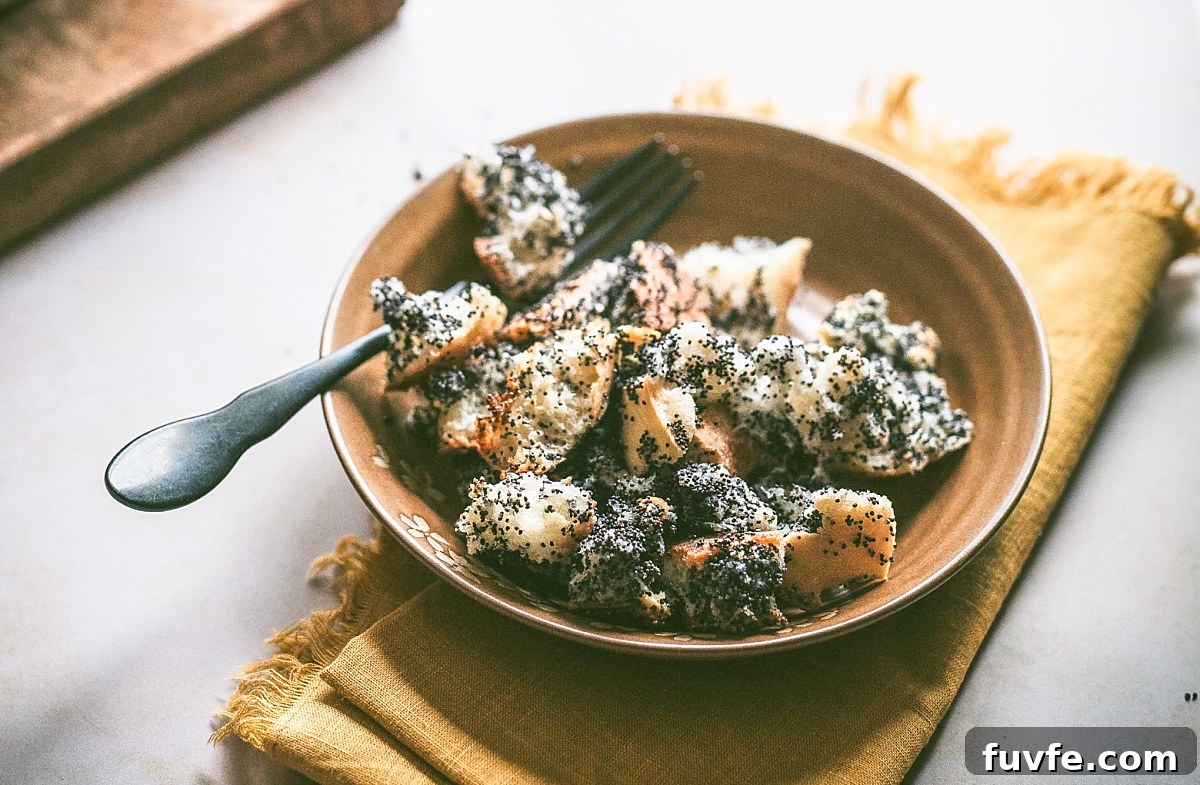
- Serve plain or topped with vanilla custard, pudding, or ice cream.
Notes
- Preparation can be split across days: dry the bread one day, assemble and soak the next, then bake just before serving.
- Use any stale bread you like—brioche, sourdough, baguette, croissants, or rolls will each give different textures and flavors.
- Prep Time: 5 minutes
- Cook Time: 20 minutes (if baking)
- Category: Baking, Bread
- Cuisine: Eastern European
Nutrition (approx. per serving)
- Calories: 80
- Sugar: 8 g
- Fat: 4 g
- Carbohydrates: 10 g
- Protein: 2 g