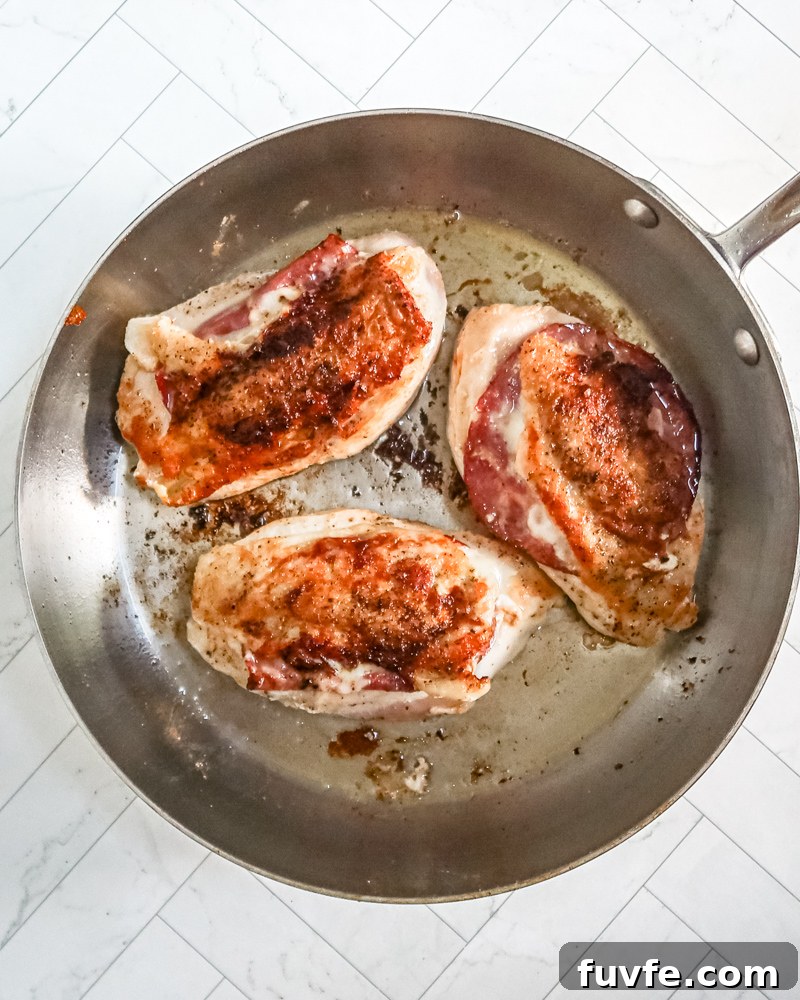
Capicola and provolone stuffed chicken breasts are an elegant yet easy dinner that you can prepare in about 30 minutes. With a few simple ingredients and pantry spices, this dish delivers a restaurant-quality meal without fuss.
Boneless, skin-on chicken breasts are ideal because the skin helps lock in moisture and crisps up beautifully. Slip slices of capicola and provolone under the skin for savory, melty pockets of flavor. A straightforward rub of garlic powder, onion powder, black pepper, and salt finishes the dish. If you only have bone-in breasts, expect a longer oven time — around 35 to 45 minutes — and adjust accordingly.
Capicola contributes fat, salt, and a touch of heat that keeps the chicken juicy and flavorful. If capicola isn’t available, thin ham or salami slices make excellent substitutes. Provolone is a mellow, meltable choice, but Swiss, Gruyère, pepper jack, or cheddar also work well depending on the flavor profile you prefer.
What You’ll Like About This Recipe
- Straightforward technique. Lifting the skin creates a natural pocket to hold the filling securely, so you don’t need toothpicks or complicated assembly.
- Flavorful filling. Capicola adds savory heat while provolone melts into a creamy layer that complements the chicken.
- Quick to cook. Boneless breasts sear and roast quickly, making this a great weeknight option.
- Flexible seasoning. The simple garlic and onion powders provide a versatile base — add fresh herbs or more spice as you like.
- Impressive presentation. Crispy skin, melted cheese, and neatly stuffed breasts look elegant with very little effort.
Ingredient Notes
- Boneless, skin-on chicken breasts: Keeps the stuffing moist. Increase baking time for bone-in pieces.
- Capicola: Brings fat, heat, and salt; can be swapped for ham or salami.
- Provolone: Mild and melty; Swiss, Gruyère, or cheddar are good alternatives.
- Garlic and onion powders: Add depth without overpowering the filling.
- Olive oil: Helps crisp the skin and promotes even browning.
- Fresh herbs (optional): A sprinkle of parsley, basil, or oregano brightens the finished dish.
Steps to Make Capicola and Provolone Chicken
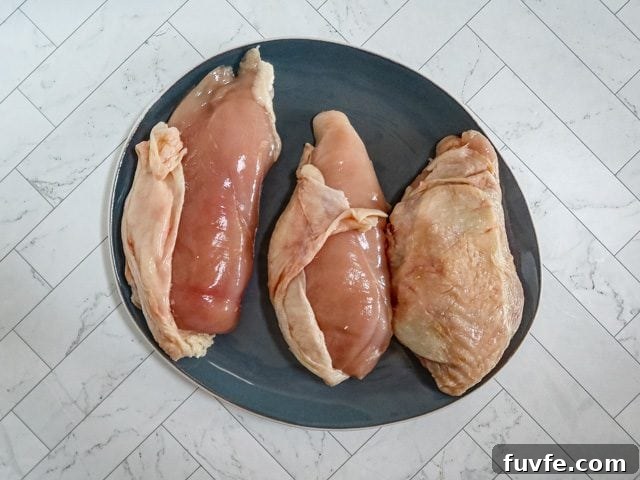
- Preheat the oven to 375°F (190°C). Pat the chicken dry and carefully loosen the skin to form a pocket.
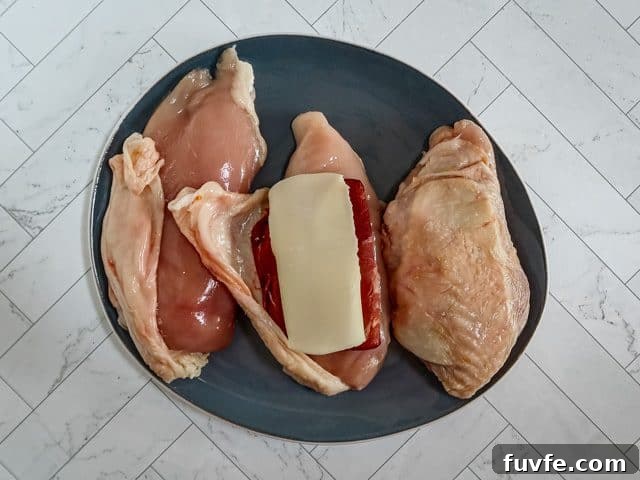
- Slip one thin slice of capicola (or ham) and one slice of provolone under the skin of each breast. Fold the skin back to cover the filling.
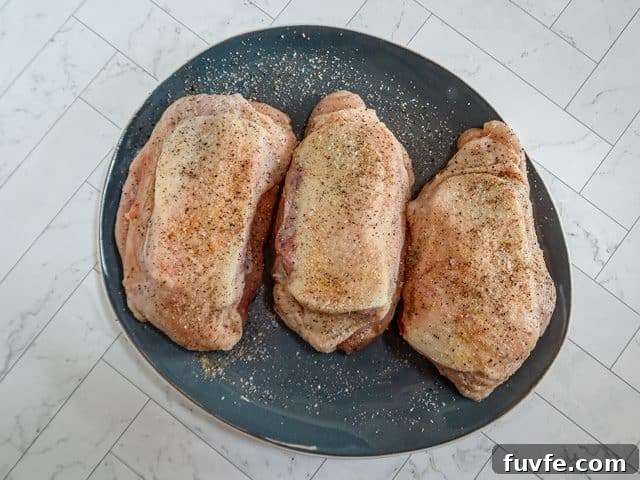
- Drizzle the chicken with olive oil and rub it over the skin and underside. Season both sides lightly with garlic powder, onion powder, black pepper, and kosher salt to taste.
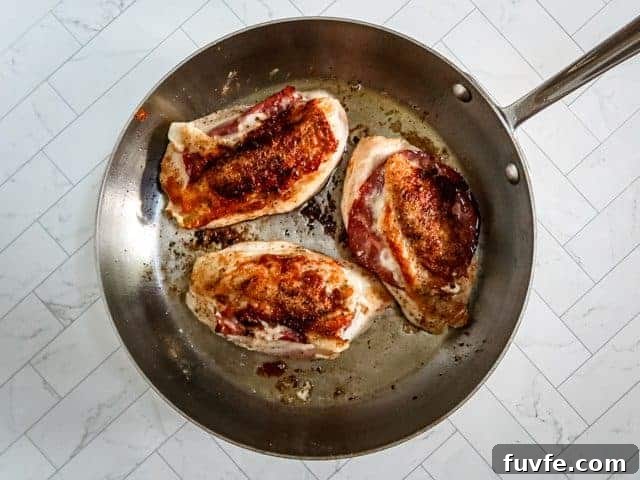
- Heat a tablespoon of olive oil in a large oven-safe skillet over medium-high heat. Add the chicken skin-side down and sear until golden, about 3 minutes.
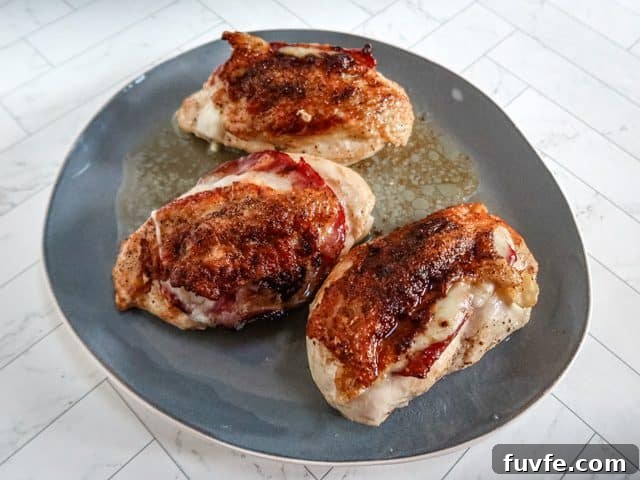
- Turn the breasts over and transfer the skillet to the oven. Roast 15–20 minutes, or until an instant-read thermometer registers 165°F (74°C) in the thickest part of the breast.
- Let the chicken rest 5 minutes before serving. Garnish with chopped fresh herbs if desired.
Pro Tips
- Dry the skin: Pat the chicken well so it browns evenly during searing.
- Press the skin: Gently press the skin back over the filling to help it stay in place while searing and roasting.
- Use a thermometer: Watch the internal temperature to avoid overcooking and keep the meat tender.
- Choose the right pan: A heavy skillet like cast iron or stainless steel gives the best sear.
- Resting matters: Allow the chicken to rest so the juices redistribute before slicing.
Recipe Variations
- Herb-stuffed: Add chopped basil, parsley, or oregano under the skin along with the cheese for a fresh note.
- Skinless option: Cut a pocket into boneless skinless breasts, stuff with capicola and provolone, secure with toothpicks if needed, sear and roast until 165°F.
- Spicy version: Use hot capicola or add crushed red pepper beneath the skin for more heat.
- Creamy mushroom: Mix finely chopped sautéed mushrooms with the cheese for an earthier flavor.
- Ham and Swiss: Swap capicola and provolone for ham and Swiss for a milder, nuttier result.
- With sauce: Serve with pan juices, a simple wine reduction, or a lemon-butter sauce for extra richness.
What to Serve With the Chicken
- Roasted potatoes or a pan of mixed roasted root vegetables pair nicely and soak up the pan juices.
- Mashed potatoes or garlic mashed potatoes make a comforting, classic side.
- A crisp salad—Caesar or a simple cucumber and tomato mix with a light vinaigrette—cuts through the richness.
- Rice pilaf or garlic-Parmesan cauliflower rice are elegant and adaptable accompaniments.
- Polenta topped with Parmesan or cheddar is a silky base that complements the stuffed chicken.
How to Store and Reheat
Refrigerate: Keep leftovers in an airtight container for up to 4 days.
Freeze? Freezing is not recommended; the texture of the cheese and skin may change.
To Reheat: Place in a baking dish, cover with foil, and warm at 325°F (160°C) until heated through, about 15–20 minutes.
Capicola and Provolone Stuffed Chicken Breasts
Diana Rattray
Ingredients
- 4 chicken breasts, boneless, skin-on (about 1 1/2 pounds)
- 4 thin slices capicola or ham
- 4 thin slices provolone cheese
- 2 tbsp olive oil, divided
- 1 tsp garlic powder
- 1 tsp onion powder
- ¼ tsp ground black pepper
- Kosher salt, to taste
Recommended Equipment
-
Instant read thermometer
-
Large oven safe skillet
Instructions
-
Preheat the oven to 375°F (190°C). Pat the chicken dry and fold back the skin to create a pocket.

-
Place a slice of capicola and a slice of provolone on each breast, fold as needed, and replace the skin over the filling.
-
Drizzle 1 tablespoon olive oil over the chicken and rub it into the skin and underside. Sprinkle with garlic powder, onion powder, black pepper, and salt to taste.
-
Heat the remaining olive oil in a heavy oven-safe skillet over medium-high. Add the chicken skin-side down and sear until golden, about 3 minutes. Turn the breasts over and transfer the skillet to the oven; roast 15–20 minutes until the internal temperature reaches 165°F (74°C).
-
Remove from the oven and let rest 5 minutes before serving.
Nutrition
Disclaimer:
Nutrition facts are estimates based on ingredient analysis and may vary with brands, measurements, and preparation methods.