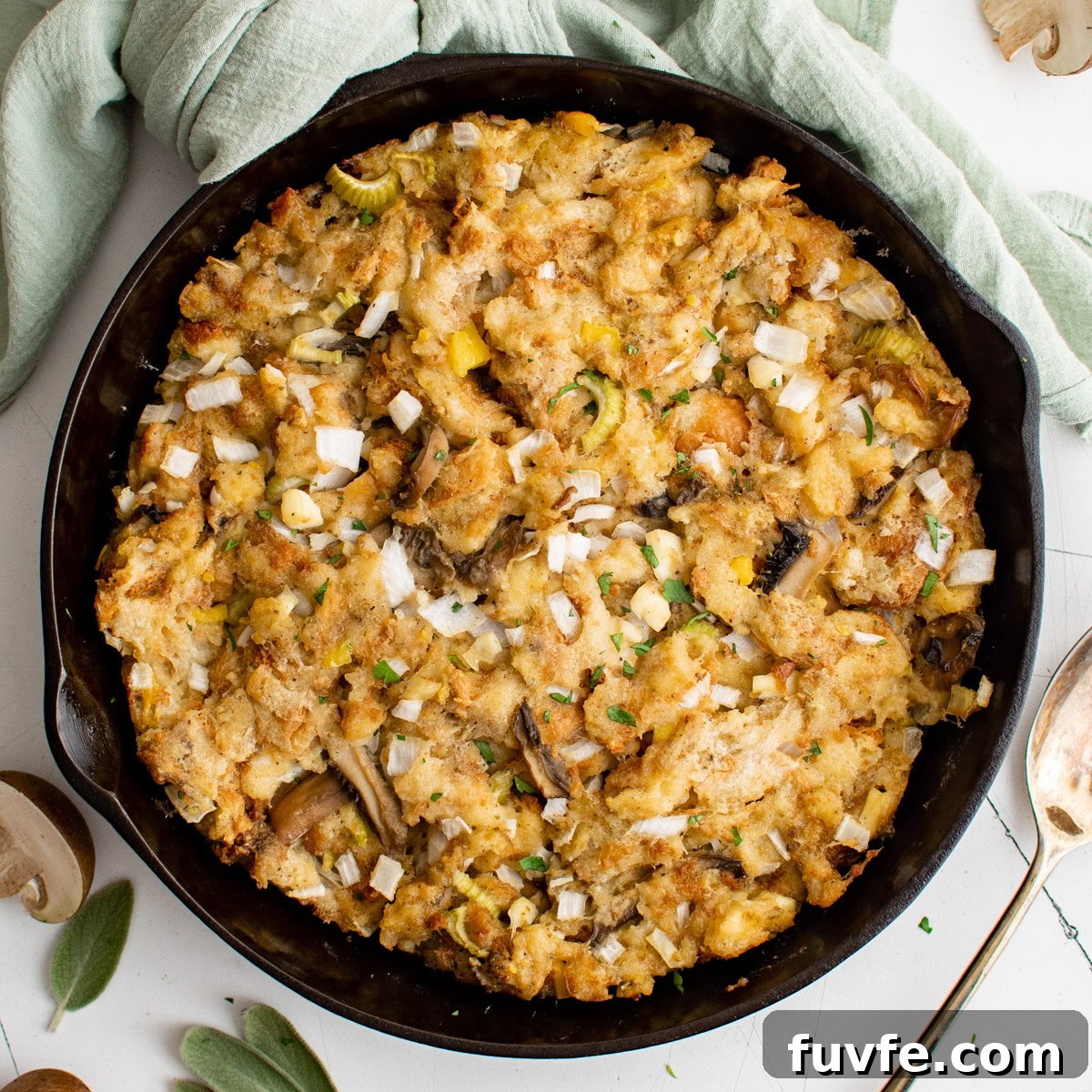
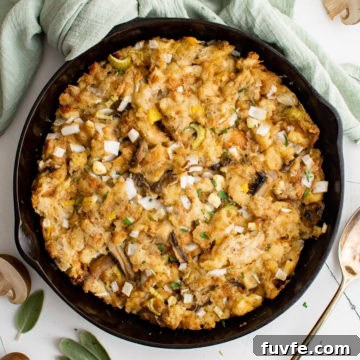
This sage stuffing is a family favorite Thanksgiving side dish—flavorful, easy to prepare, and perfect to slice or scoop.
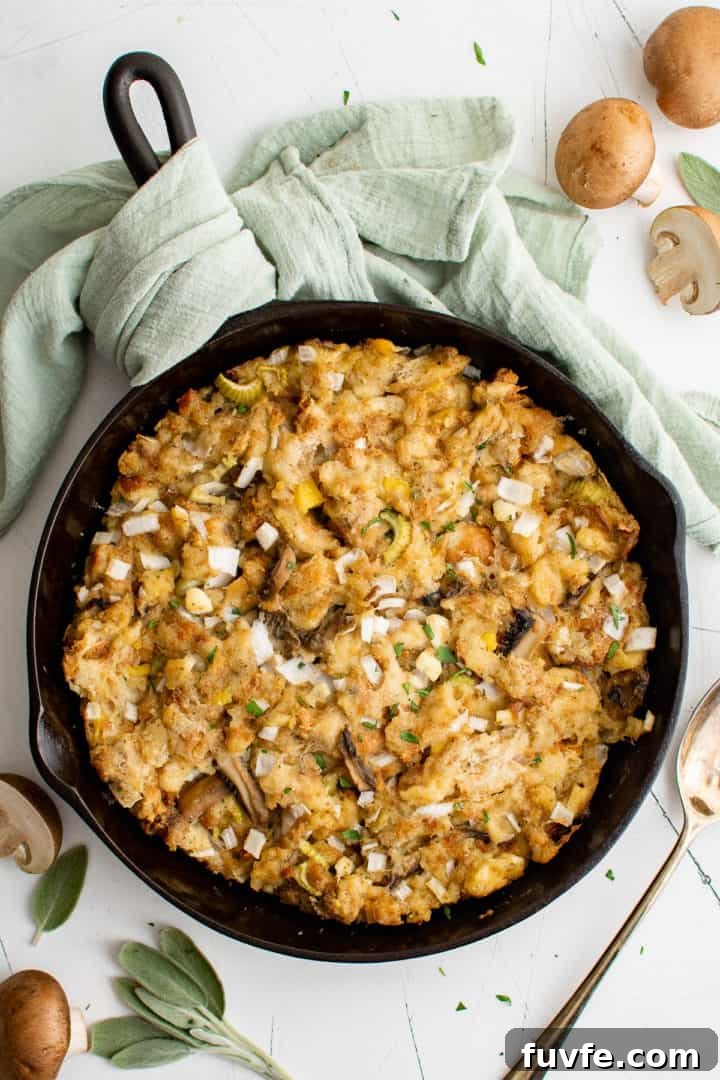
Best Sage Stuffing Recipe
Every family has a go-to Thanksgiving stuffing, and this one is ours. John makes it every year — the recipe came from his dad and is one of those comfort dishes that comes together mostly by flavor and feel rather than strict measurements.
John prefers a generous amount of sage, but you can adjust the herb to taste. This recipe is flexible: you can add sausage, swap canned mushrooms for sautéed fresh mushrooms, or tweak seasonings to suit your family.
We like to serve this stuffing alongside roast turkey, a sweet potato casserole, and pumpkin pie for a classic holiday meal.
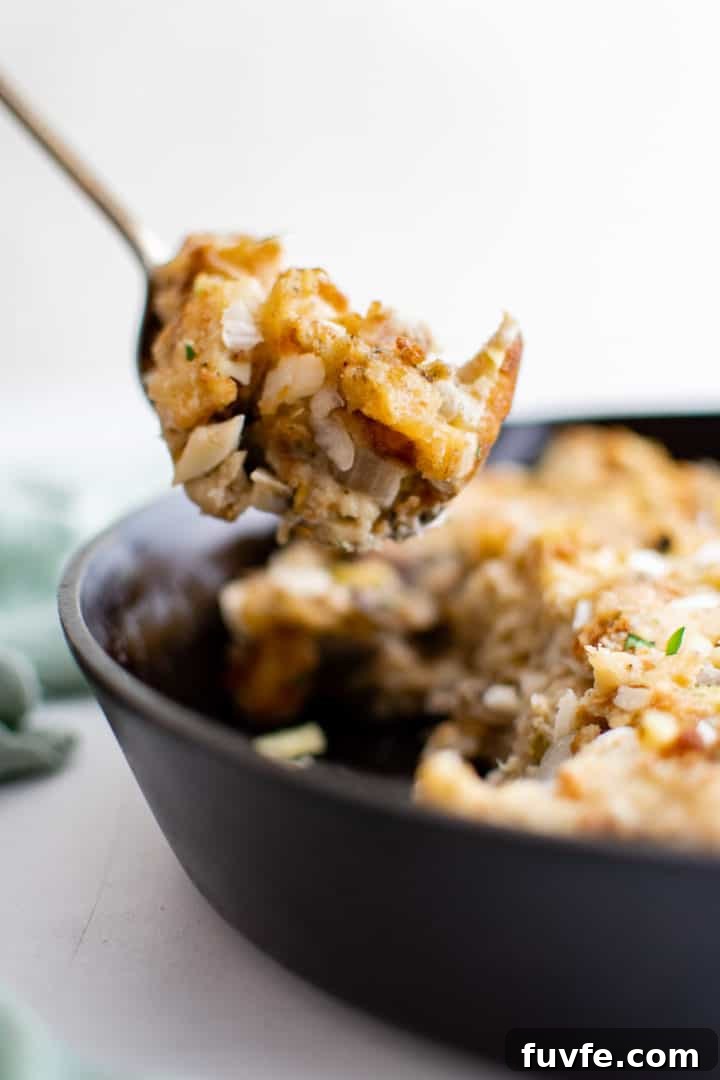
How to Make Sage Stuffing
Preheat the oven to 375°F. If you’re not using cast iron, lightly grease your baking dish so the stuffing won’t stick.
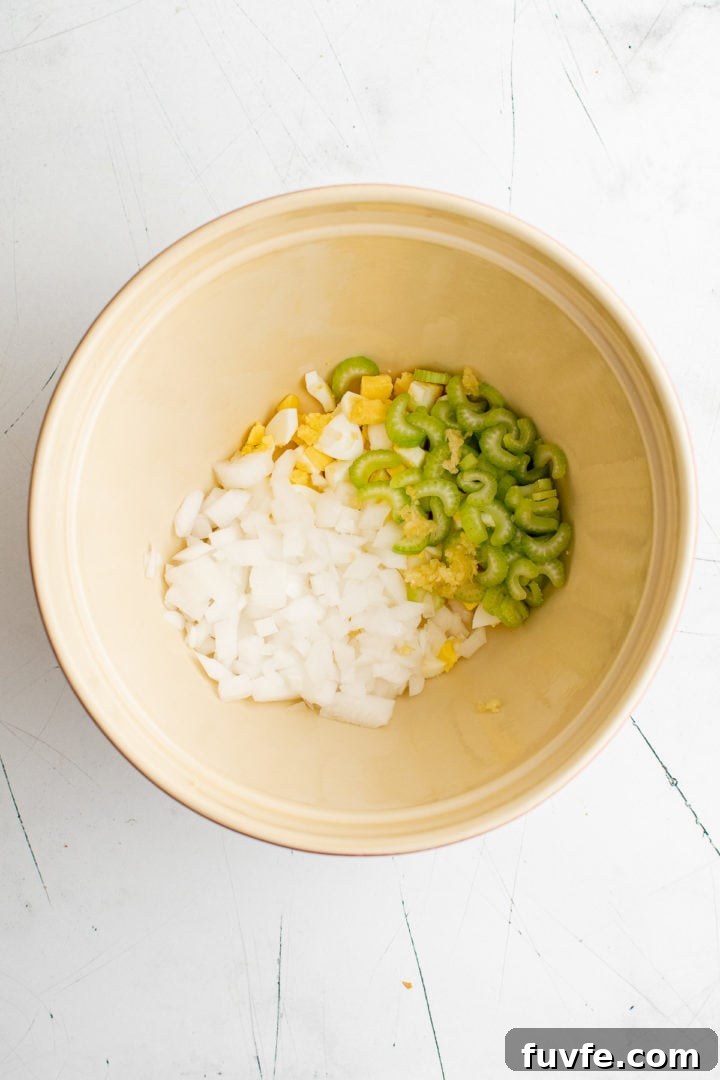
Chop the celery, dice the onion, mince the garlic, and dice the hard-boiled eggs. Combine these in a large mixing bowl.
Cut or tear the bread into roughly 1-inch pieces and add them to the bowl. Drain a can of mushrooms and stir them in—if you prefer fresh mushrooms, sauté them first and add them warm.
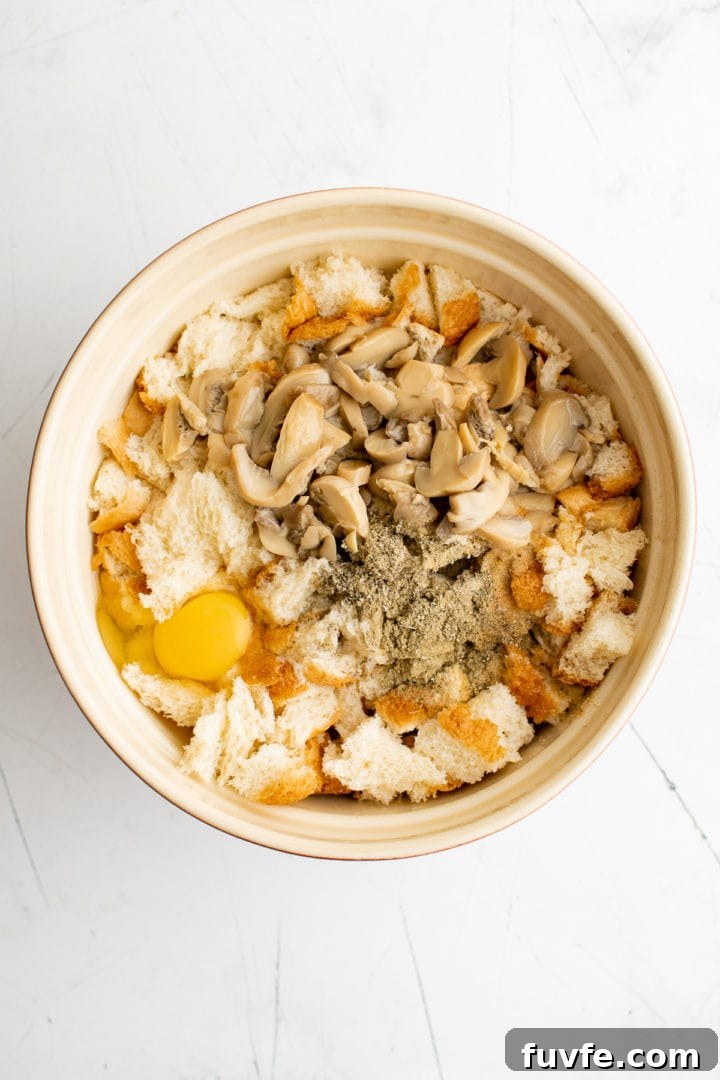
Pour in the chicken broth, add a raw egg for binding, then sprinkle in ground sage, poultry seasoning, garlic powder, onion powder, salt, and black pepper. Mix thoroughly—using your hands works well—to help the bread soak up the liquid and distribute the flavors evenly. If the mixture seems dry, add a splash more broth.
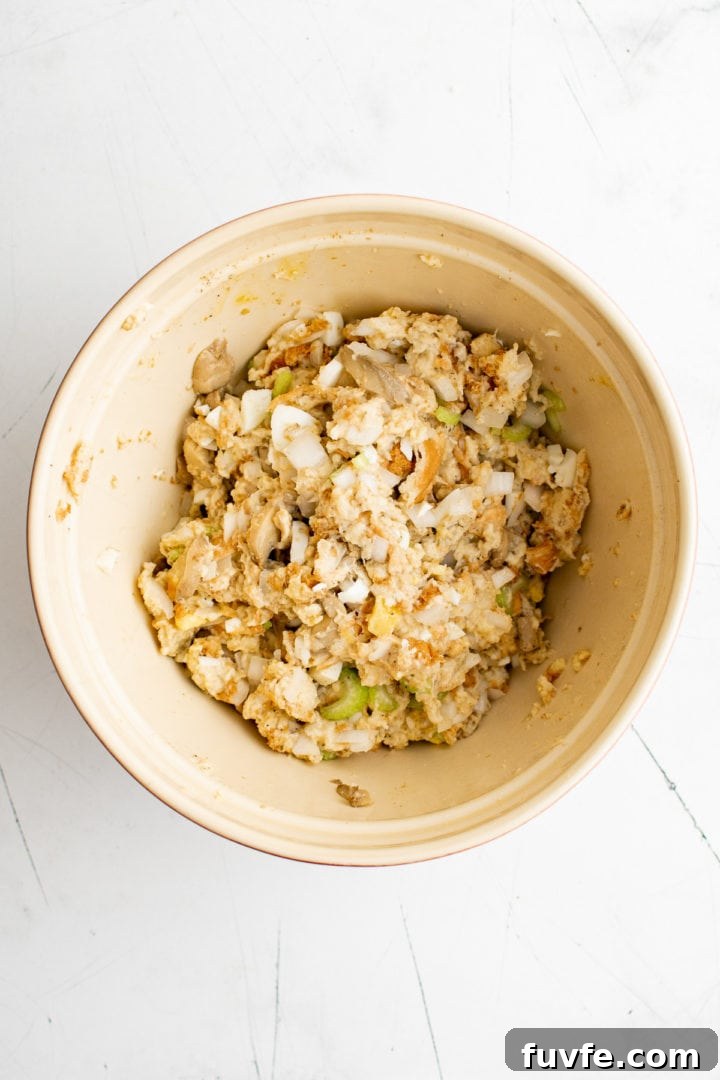
Press the stuffing into your prepared pan and smooth the top. Dot the surface with small cubes of unsalted butter and cover with foil. Bake for about 55–65 minutes. For a crispier top, remove the foil for the final 10–15 minutes of baking.
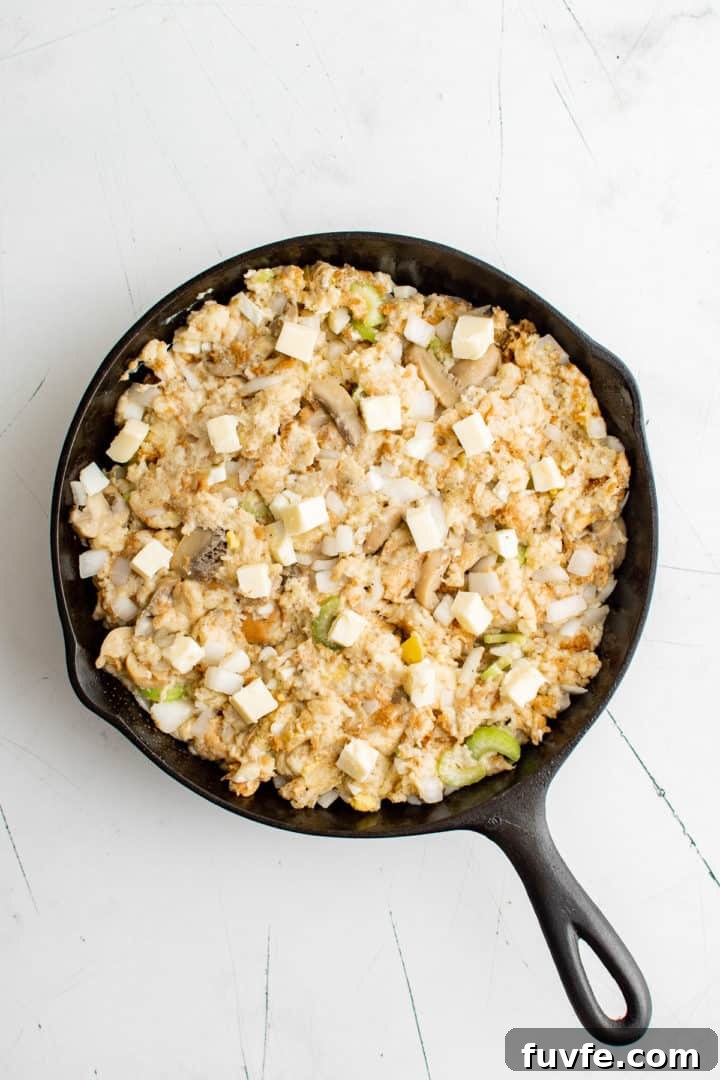
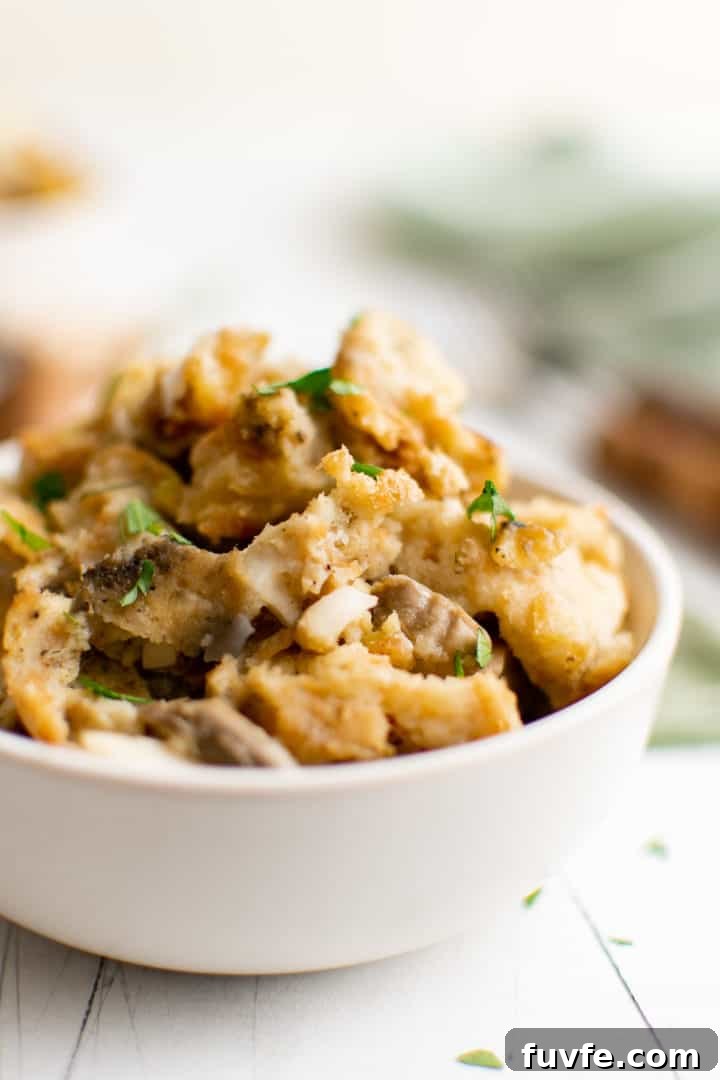
Let the stuffing rest at least 20 minutes before slicing or scooping so it sets up and holds together better.
Variations and Tips
Fresh mushrooms: sauté them before adding if you prefer fresh over canned.
Sausage: cooked crumbled sausage is a delicious addition—brown it first and let it drain before folding it into the mixture.
Make-ahead: you can assemble the stuffing up to a day in advance. Store covered in the refrigerator and transfer to the baking pan just before baking. If using cast iron, wait to put the stuffing in the skillet until you’re ready to bake.
How to Store Leftovers
Fridge: Store leftovers in an airtight container for up to 3 days.
Freezer: Wrap portions in plastic wrap and foil, place in a freezer-safe bag or container, and freeze for up to 2 months. Thaw overnight in the refrigerator and reheat before serving.
Ingredients
- 2 large eggs, hard boiled and diced
- 1 medium celery stalk, finely chopped
- ½ large white onion, diced
- 3 garlic cloves, minced
- 1 loaf white sandwich bread, cut into 1-inch cubes
- 1½ cups low-sodium chicken broth (add more if needed)
- 4 oz can mushrooms, drained (or ~6 oz fresh, sautéed)
- 1 large egg (for binding)
- 2 teaspoons ground sage (adjust to taste)
- 1 teaspoon garlic powder
- 1 teaspoon onion powder
- 1 teaspoon poultry seasoning
- ½ teaspoon salt
- ½ teaspoon black pepper
- 2 tablespoons unsalted butter, cubed
Instructions
- Preheat the oven to 375°F and grease your baking dish if not using cast iron.
- Combine the diced hard-boiled eggs, celery, onion, and garlic in a large bowl.
- Add the bread cubes, drained mushrooms, raw egg, broth, and all seasonings. Mix thoroughly so the bread absorbs the liquid; add more broth if needed.
- Press the mixture into the pan, dot with cubed butter, and cover with foil.
- Bake 55–65 minutes. Remove foil for the last 10–15 minutes if you want a crisp top.
- Let rest 20 minutes before slicing or serving.
Notes
- Broth amount can be adjusted to achieve your preferred stuffing moisture — pour slowly and stop when it’s well moistened.
- Sage can range from 1 teaspoon to 1 tablespoon depending on how pronounced you want the flavor.
- Any inexpensive white sandwich bread works fine; no need for specialty loaves.
- Typical bake pan: a 9×5-inch loaf pan, but any small baking dish or skillet will do.
- Recipe yields about 8 cups and serves roughly 8 people (serving ≈ 3/4 cup).
Author: Kimberly Vargo