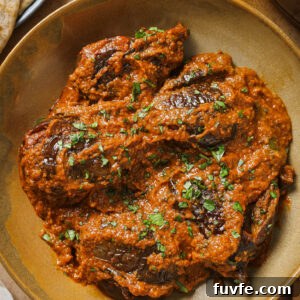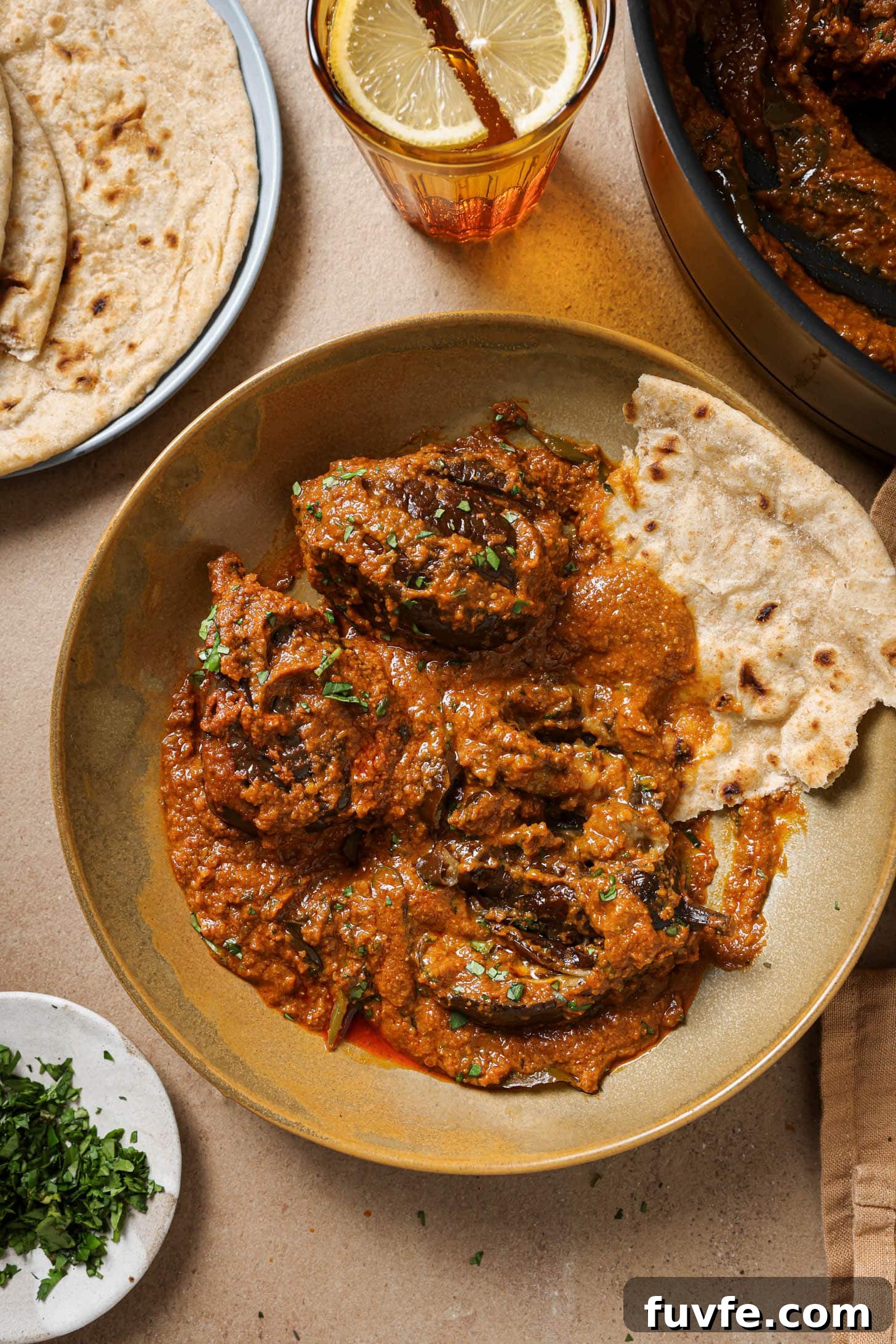
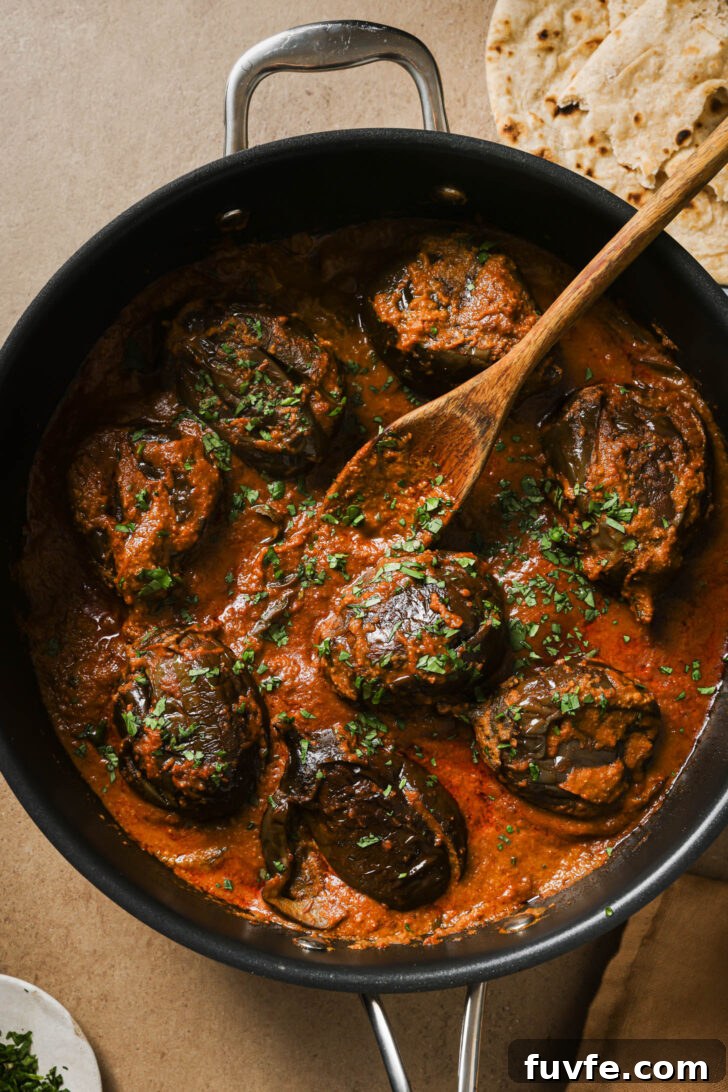
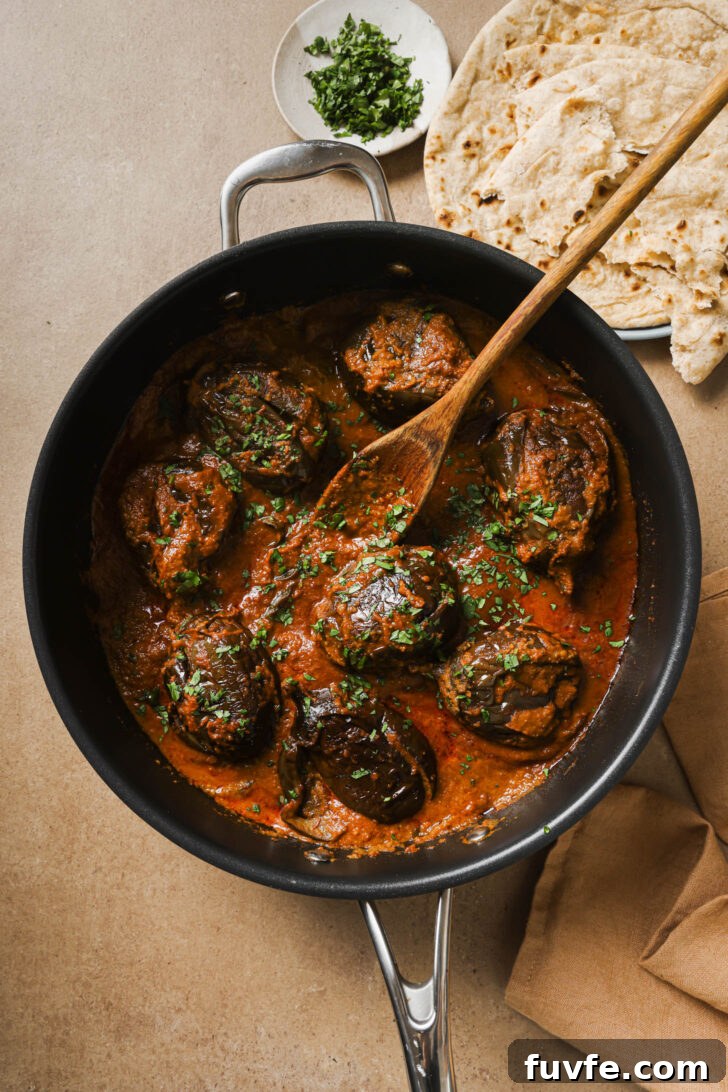
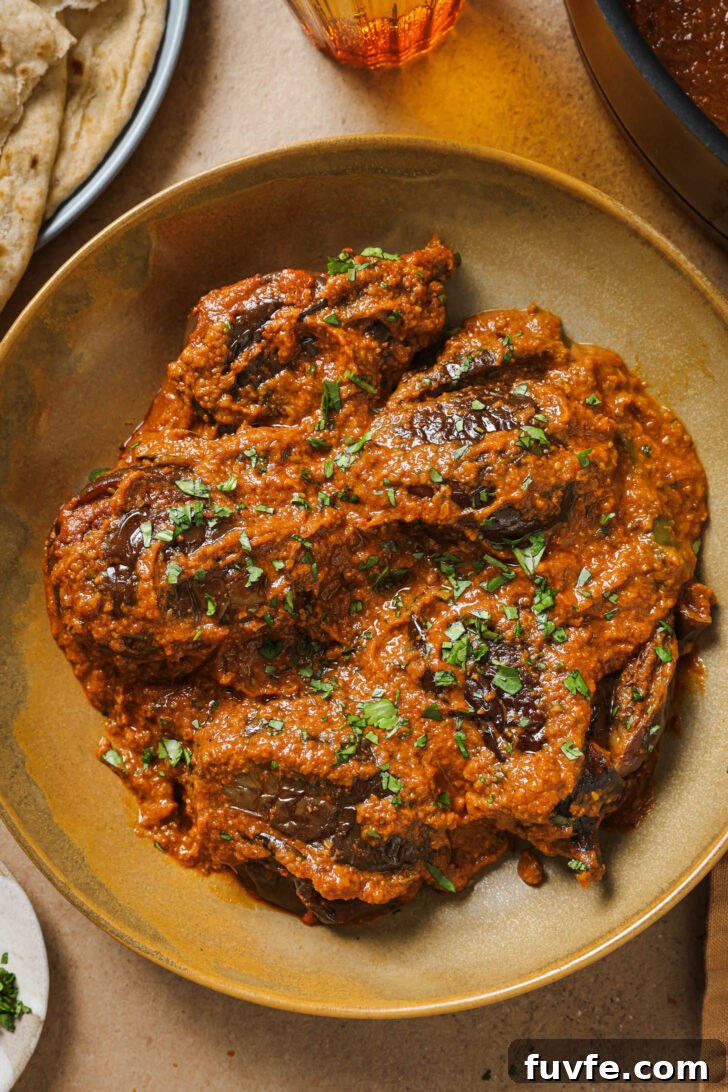
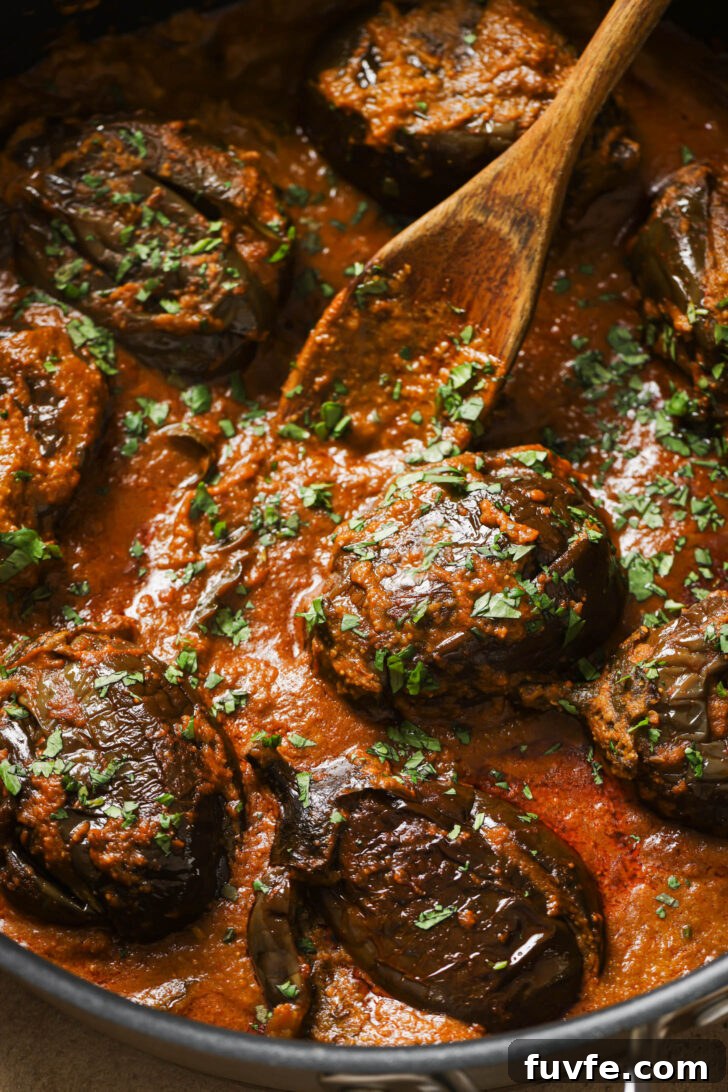
Bagara Baingan, pronounced “Baghaar-e-baingan,” is a Hyderabadi eggplant curry built on a toasted peanut, seed, and dried coconut paste that gives it a rich, layered flavor and an irresistible, velvety texture. It balances savory, mildly spicy, and slightly sweet notes while keeping the baby eggplants tender and intact. This simplified version preserves the essence of the traditional dish while streamlining some steps so it’s approachable and ready in about an hour.
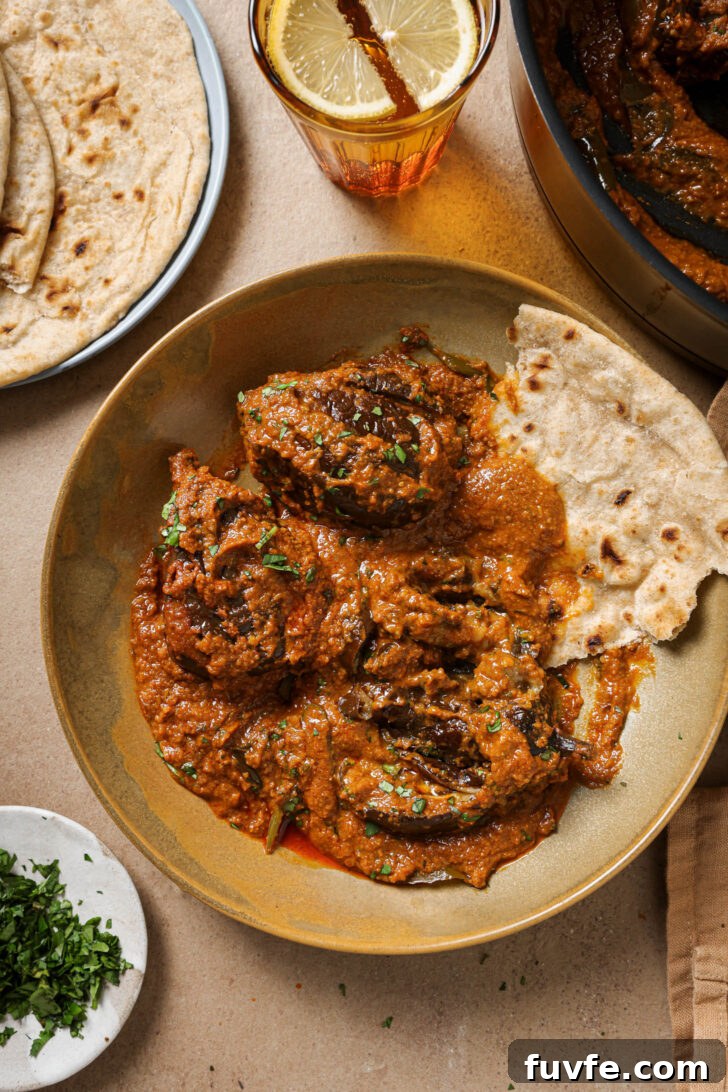
Bagara Baingan – A South Indian Eggplant Dish
If you haven’t tasted Bagara Baingan, you’re missing a uniquely flavored eggplant curry from Hyderabad. The combination of toasted nuts and seeds with coconut creates a masala that clings to every crevice of the eggplant, producing a complex, comforting dish that often surprises people with how deep its flavors are.
This version is inspired by traditional Hyderabadi preparations but simplified for easier home cooking. Instead of the more labor-intensive steps like stuffing and long tamarind preparation, this recipe uses convenient shortcuts—tamarind paste, canned tomato purée, and blender techniques—while retaining the signature flavor profile.
The name Bagara or Baghar refers to the tempering process—spices and aromatics briefly fried in hot oil to release their flavors. Combined with the fried eggplants and the nutty-coconut masala, those tempering layers define Bagare Baingan.
Classic Hyderabadi Bagara Baingan can be elaborate and is often saved for special occasions. This pared-down recipe keeps the heart of the dish intact—coconut, peanuts, sesame, and poppy seeds—while using a few time-saving methods: tamarind concentrate instead of a tamarind block, browning onions while frying the eggplant, and blending the masala in a small blender for a smooth finish.
Ingredients
Bagara Baingan calls for some pantry staples and a few specialty items commonly found at Indo-Pak or South Asian grocery stores. The ingredients below produce a silky, flavorful masala that complements the eggplants.
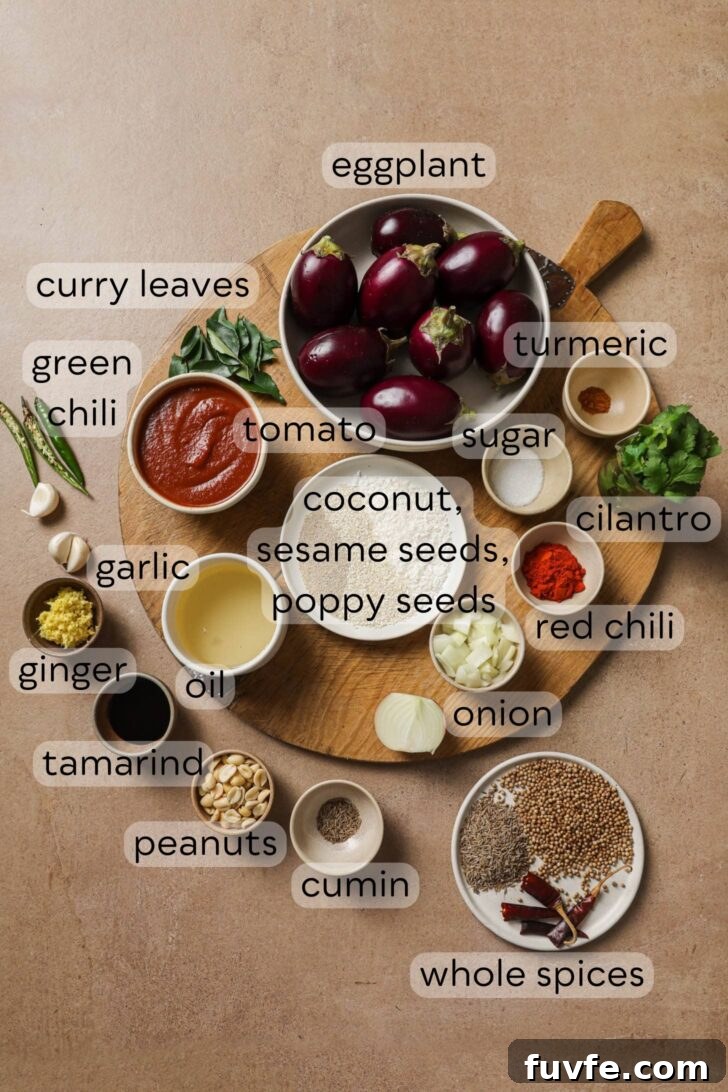
- Baby eggplant: Small Indian eggplants are ideal because they cook evenly and absorb the masala. If unavailable, use Chinese long eggplants sliced thick, but avoid large globe eggplants unless you’re okay with a softer texture.
- White poppy seeds (khashkhash): These add a delicate, nutty flavor and creaminess. Substitute raw cashews if needed or omit—still delicious.
- Tomato purée/sauce: Not traditional in every version, but it gives body and a concentrated tomato tang. You can substitute 1–2 pureed Roma tomatoes if preferred.
How to make Bagara Baingan
The method layers flavor through toasting, blending, tempering, frying, and gentle simmering. Prep ingredients in advance and leave enough space on your counter for the workflow.
Toast the dry masala base:
- Toast coriander and cumin seeds plus dried red chilies briefly until aromatic—avoid heavy darkening to prevent bitterness. Cool on a plate.
- In the same pan, toast raw peanuts until they show golden spots. Add desiccated coconut, sesame seeds, and poppy seeds (or cashews) and continue to toast until aromatic and lightly golden. Remove from heat and cool.
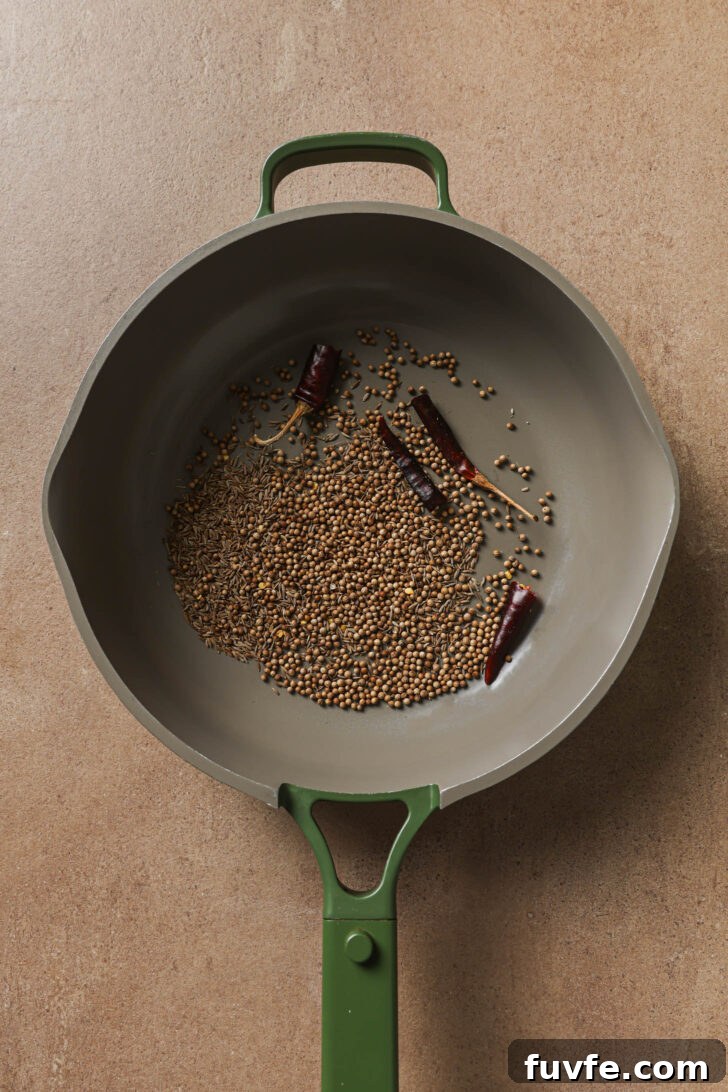
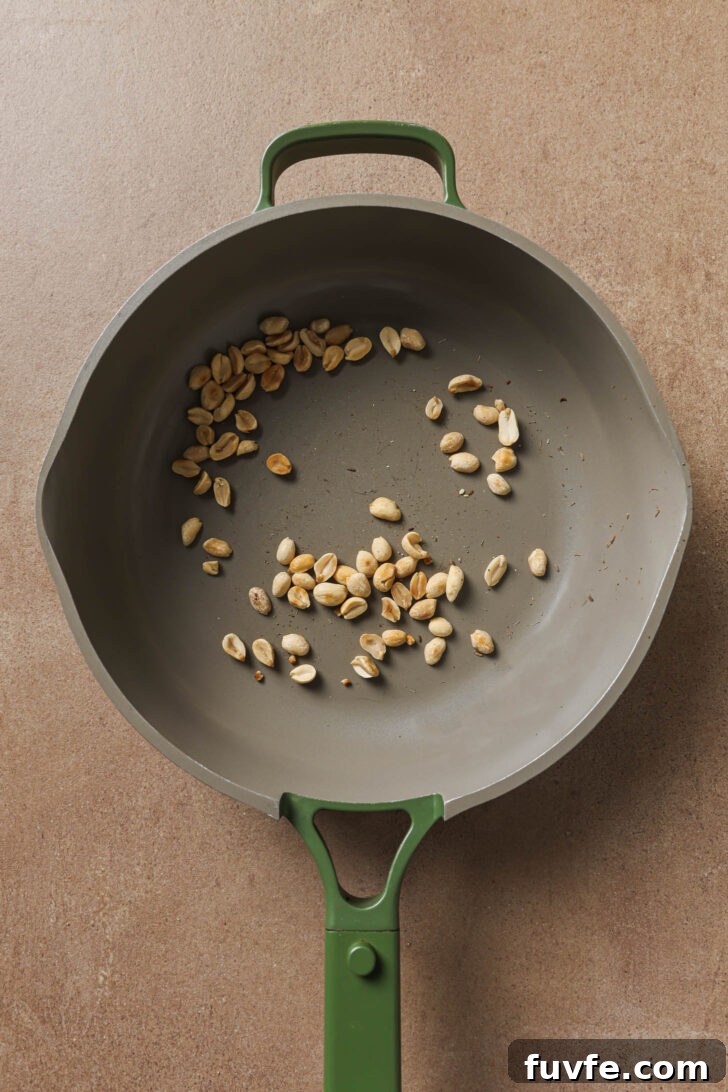
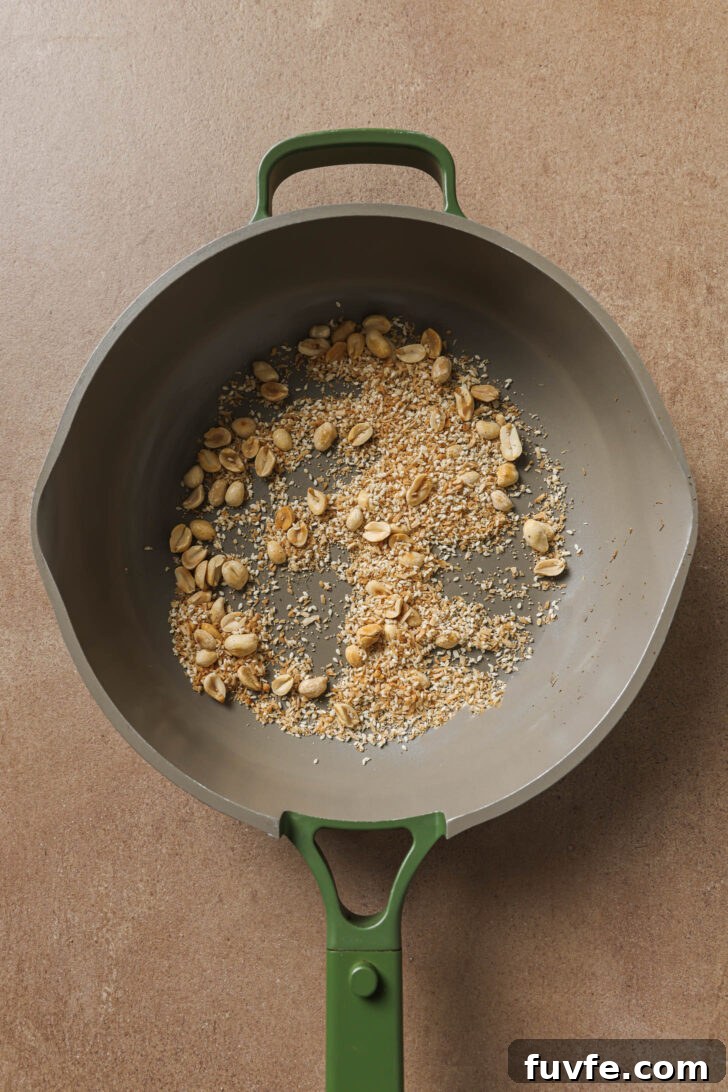
Prepare the eggplant:
- Make crisscross lengthwise slits in each eggplant almost up to the stem so the masala can penetrate but the fruit stays intact when cooked.
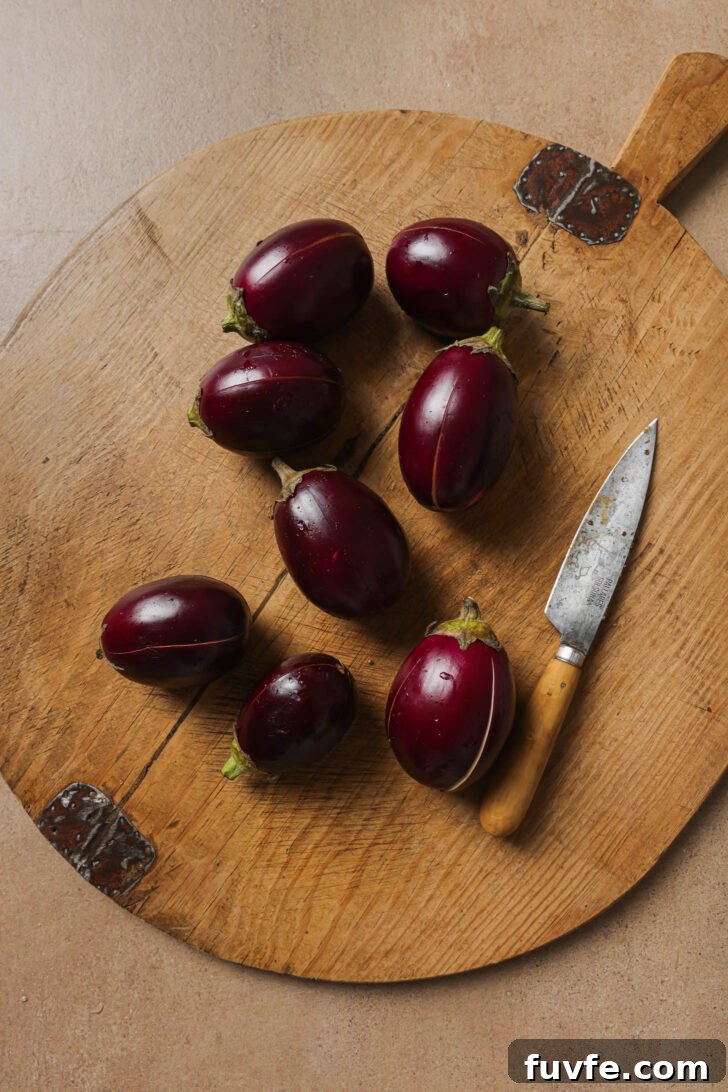
Make the masala base:
- Blend onion, garlic, and ginger with just enough water to create a smooth paste—too much water prevents browning.
- Grind the toasted whole spices with the nut/seed mixture, tomato purée, and a little water to a very smooth paste. If your blender struggles, mill the spices separately first.
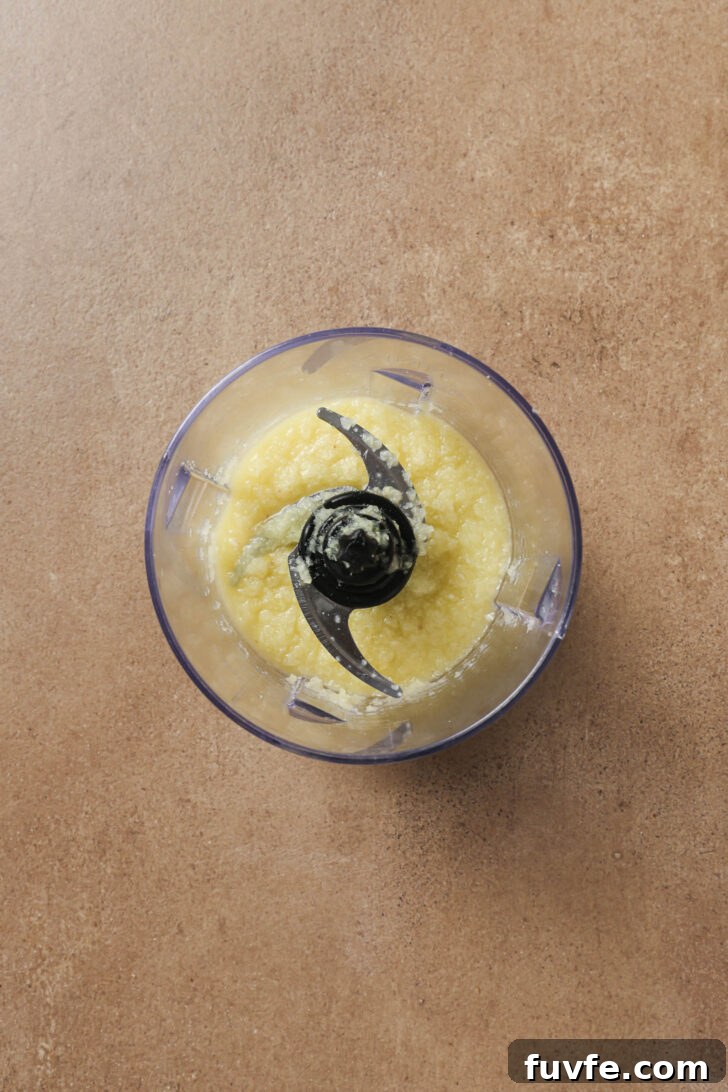

Cook the masala and eggplants:
- Heat oil in a large, heavy pan. Temper cumin seeds and fresh curry leaves briefly until they sputter—do not burn the leaves.
- Add the onion paste and fry until it becomes translucent and begins to brown. Add the eggplants and fry until their skins change color and start to pucker; the onions should deepen to golden brown during this step.
- Stir in the blended masala, then add ground spices (Kashmiri chili for color, red chili powder, and turmeric), salt, and water. Gently cook the masala to bloom the spices, being careful not to break the eggplants.
- Cover and simmer on medium-low until the eggplants are very tender but still intact, allowing them to soak up the masala. The oil should rise to the top when the curry is ready. If they need more time, add a splash of boiling water and continue simmering a few minutes at a time.
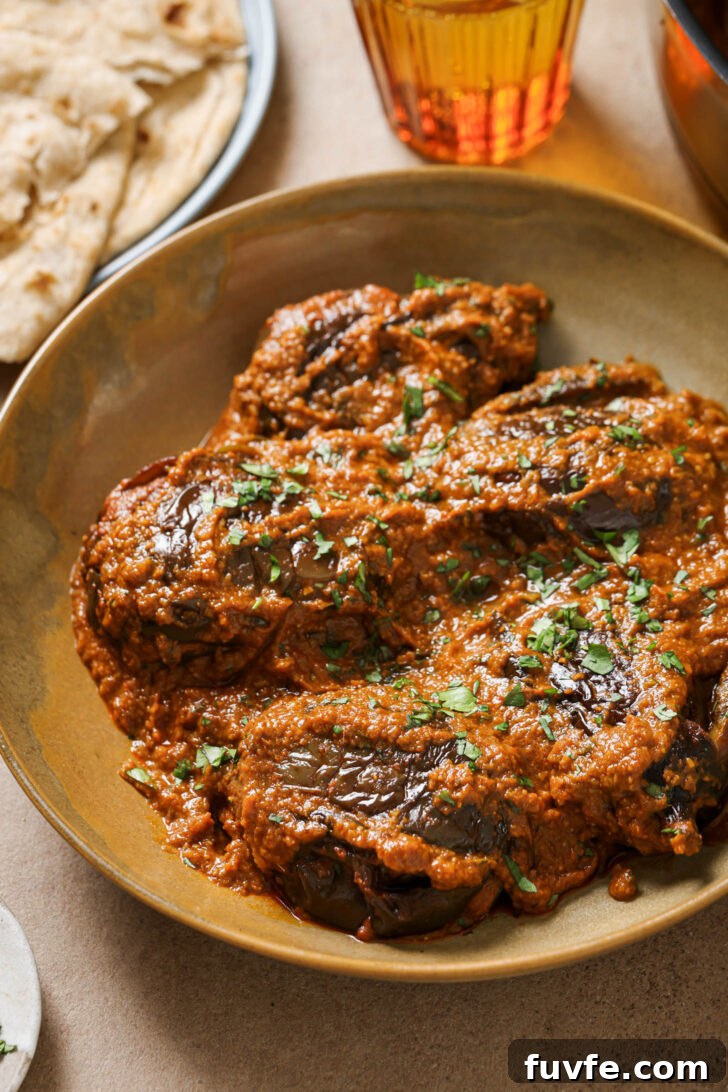
- Finish with slit serrano peppers, tamarind paste, and sugar; adjust tang and sweetness to taste. Simmer briefly until oil separates again, garnish with cilantro, and serve.
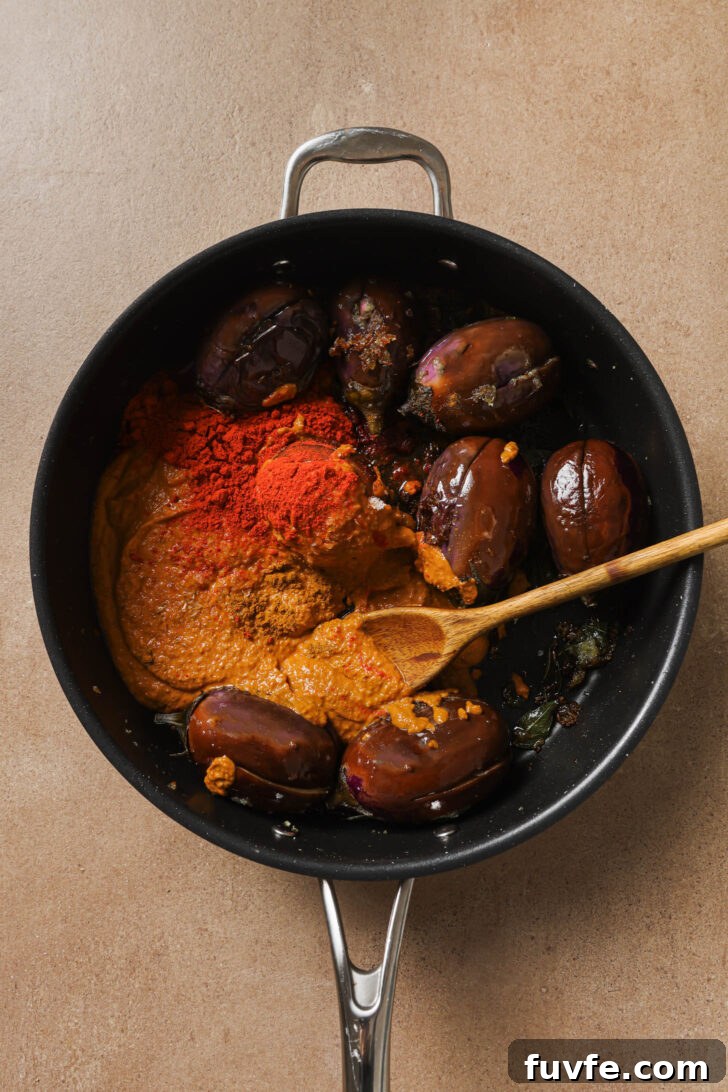
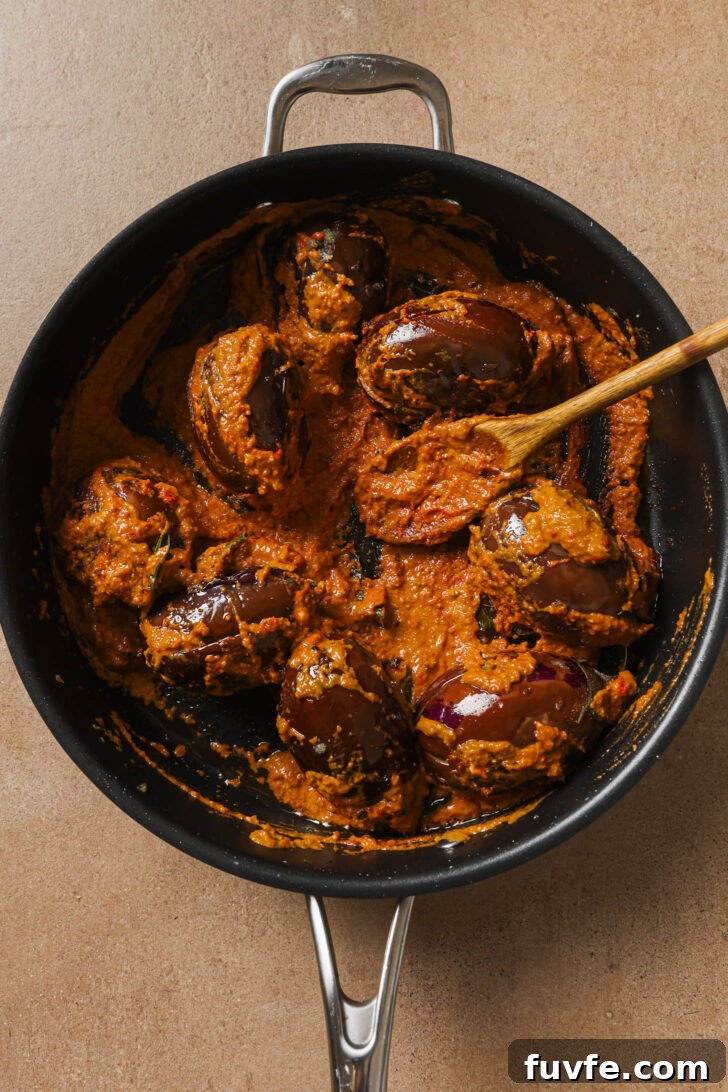
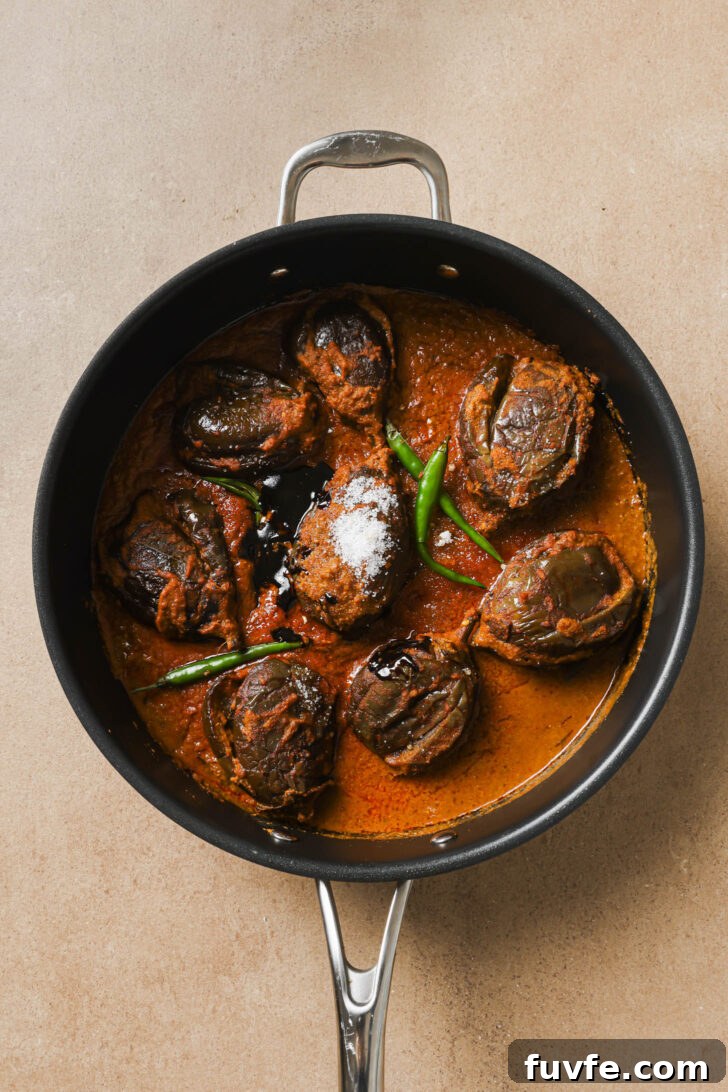
What to Serve it With
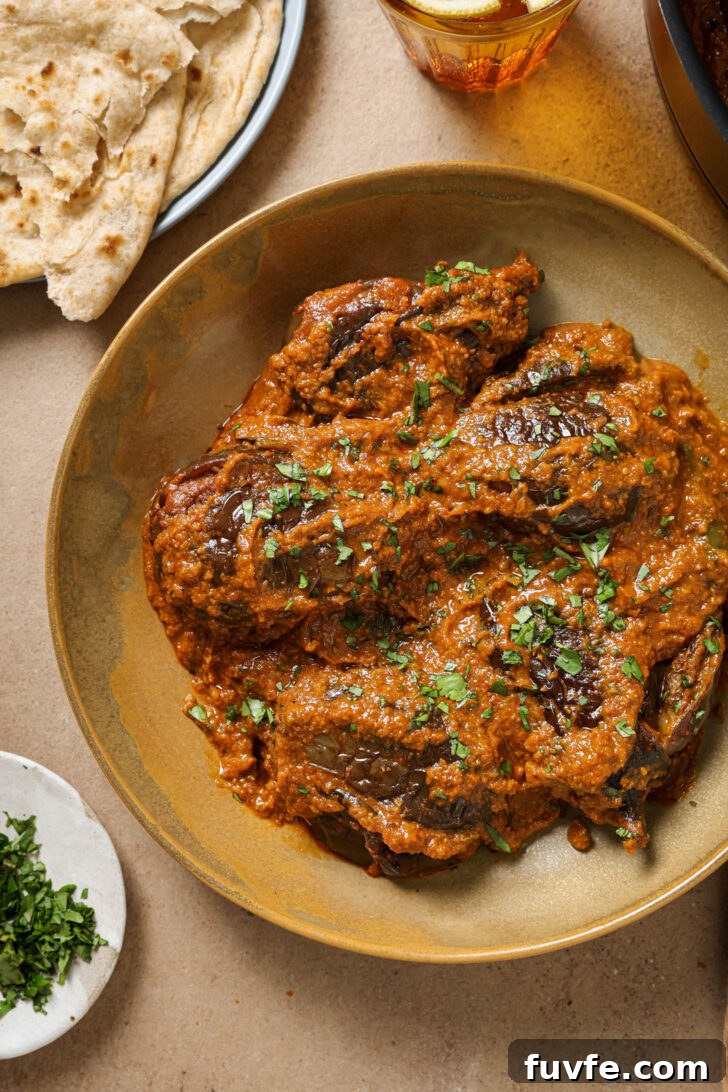
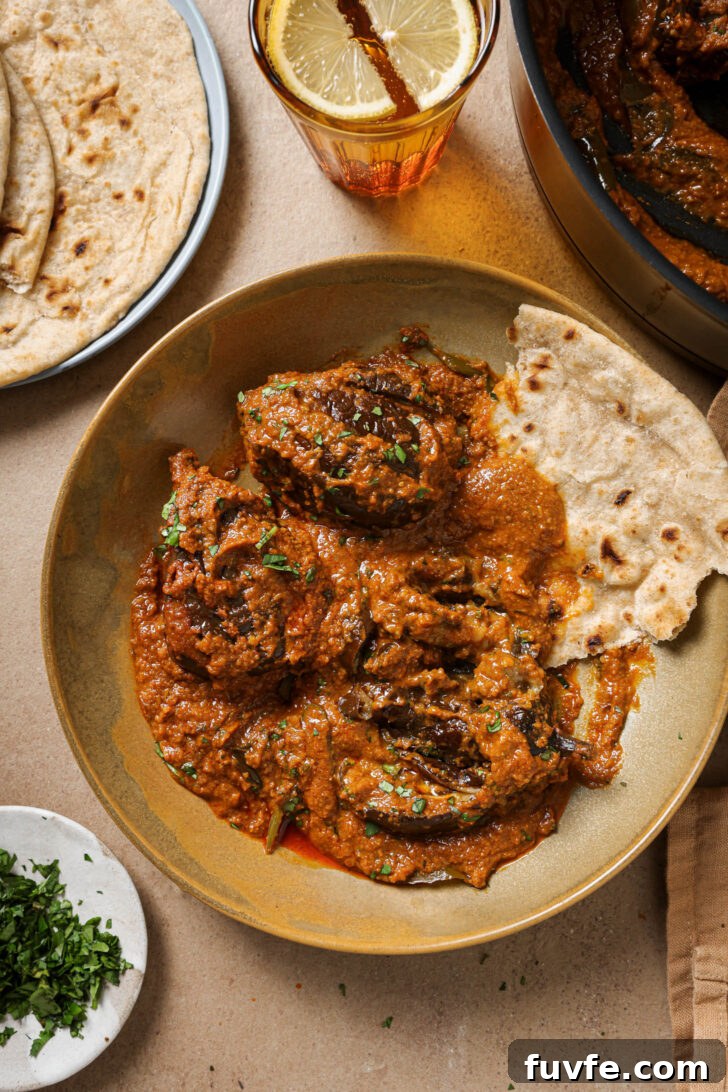
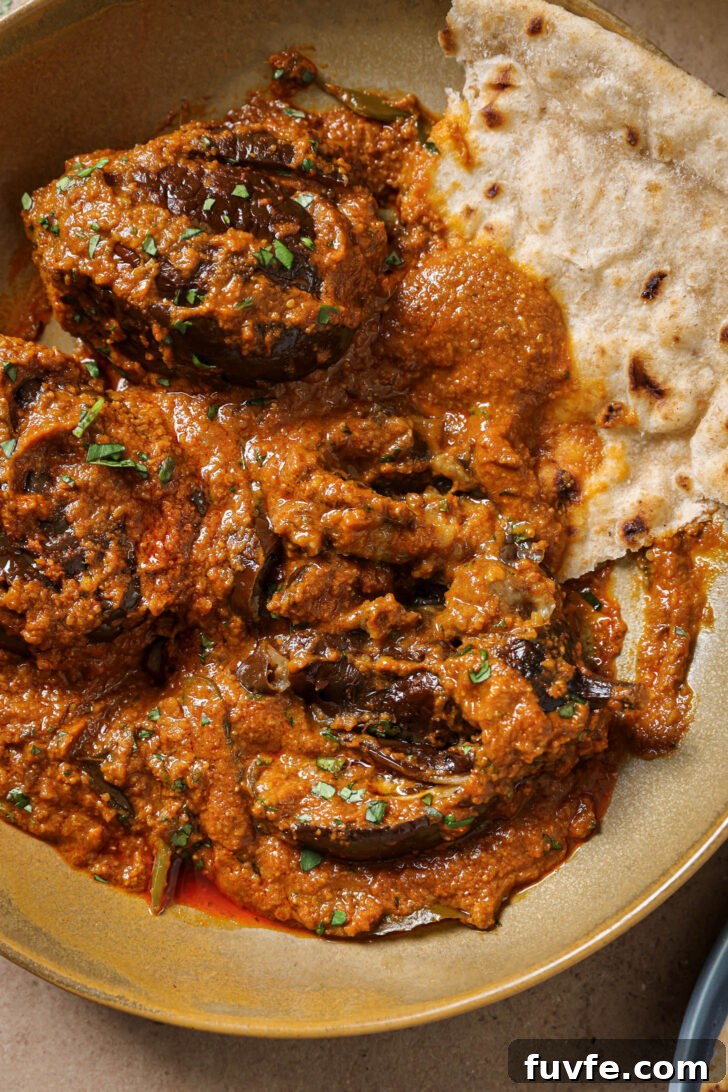
Bagara Baingan is typically a semi-dry curry, so it pairs beautifully with soft rotis, naan, or plain basmati rice. It also complements richer meals—traditionally it’s served alongside biryani or pulao at celebratory spreads, but it’s equally welcome as a centerpiece with simple flatbreads and steamed rice.
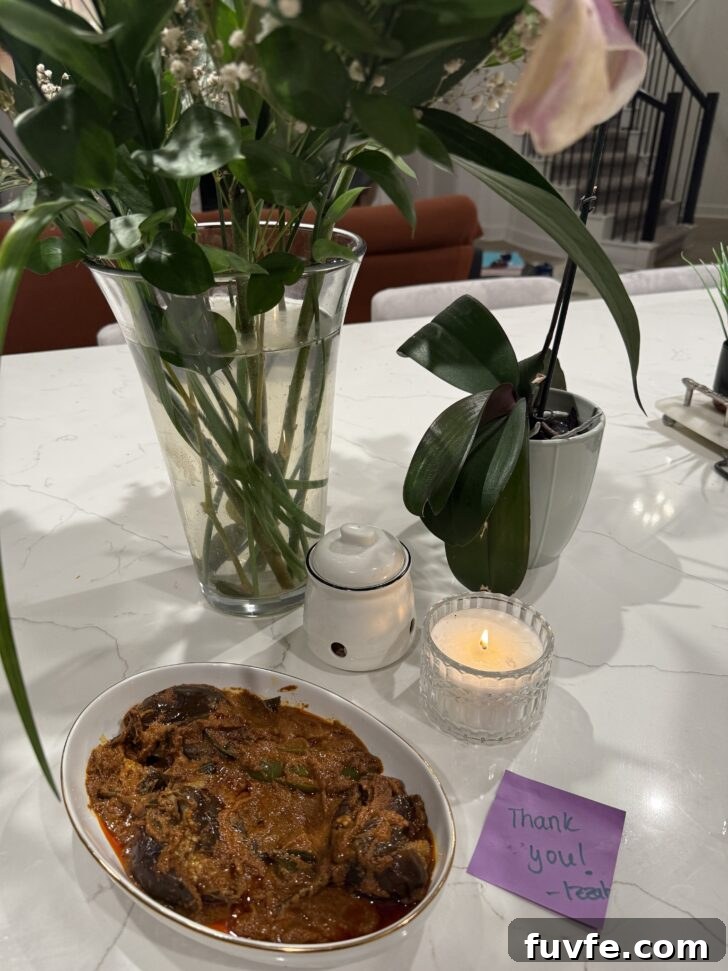
Tried this recipe? I welcome your feedback—leave a comment describing how it turned out or upload a photo if your platform supports it. I appreciate hearing how you adapt and enjoy this dish.