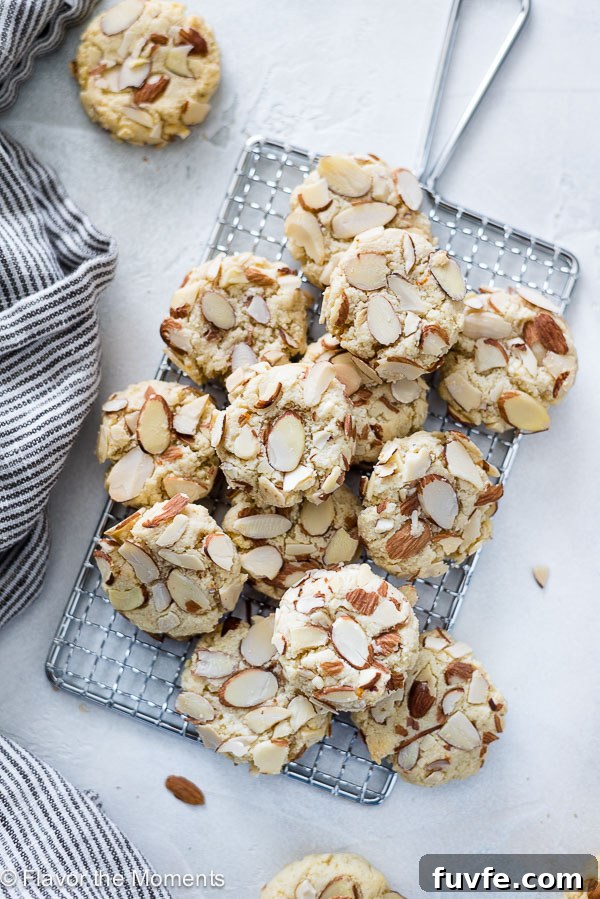
These Greek Almond Cookies are crunchy, chewy amygdalota cookies that are simple to make. They use just five ingredients and are naturally gluten-free, making them a perfect treat for anyone avoiding wheat.

It’s my birthday today, and I wanted to share something simple and meaningful: these Greek Almond Cookies (Amygdalota). They’re classic, comforting, and carry a warm symbolism of happiness and new beginnings.
For me, small traditions and familiar flavors are what make celebrations special—sometimes more meaningful than a large cake.
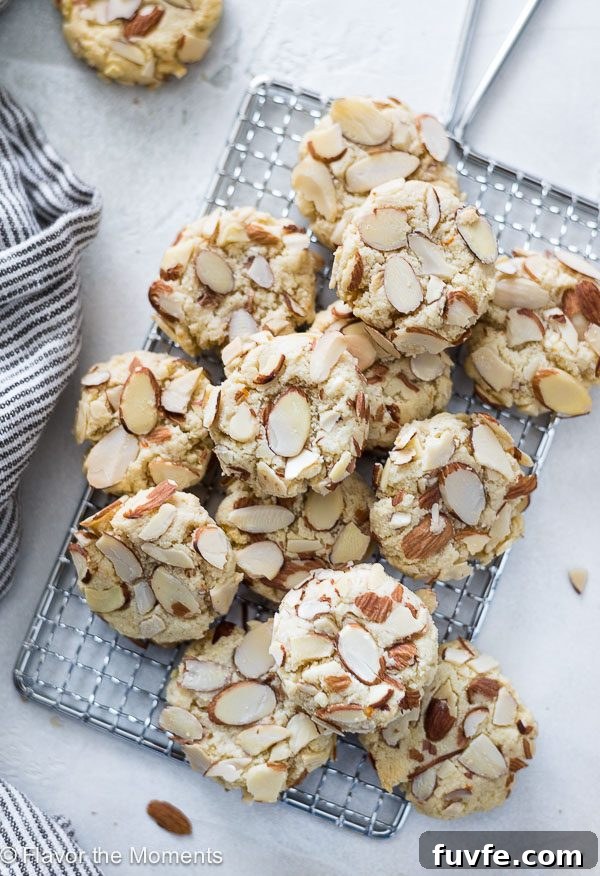
I’m part Greek, so I often make traditional Greek treats for holidays and family gatherings. I also try to limit flour these days, which is why I love recipes that are naturally flourless like this one.
I first tried amygdalota at a Greek festival where they were crescent-shaped. While they resemble almond horn cookies at first glance, amygdalota are a distinct treat: the base is almond flour mixed with egg whites and sugar, often flavored with orange or rose water.
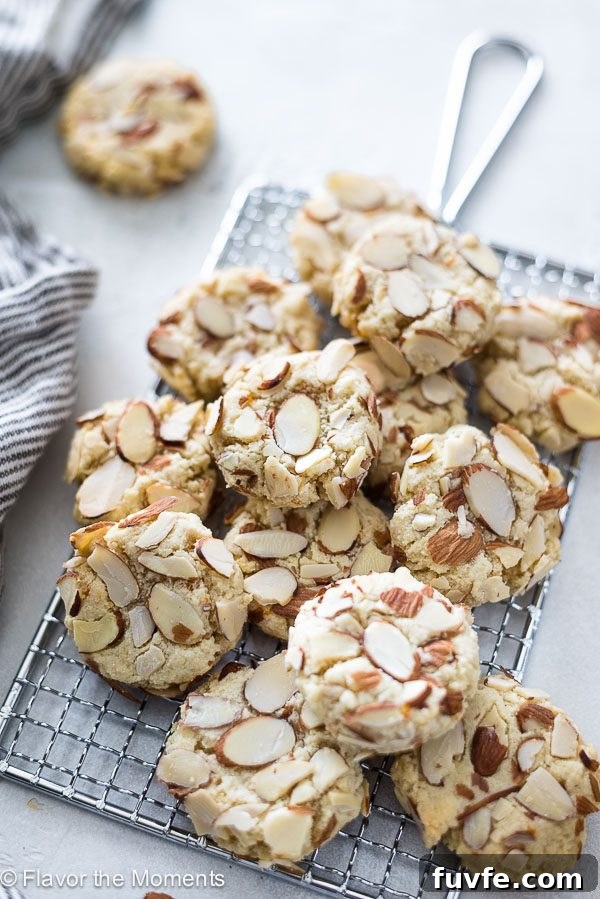
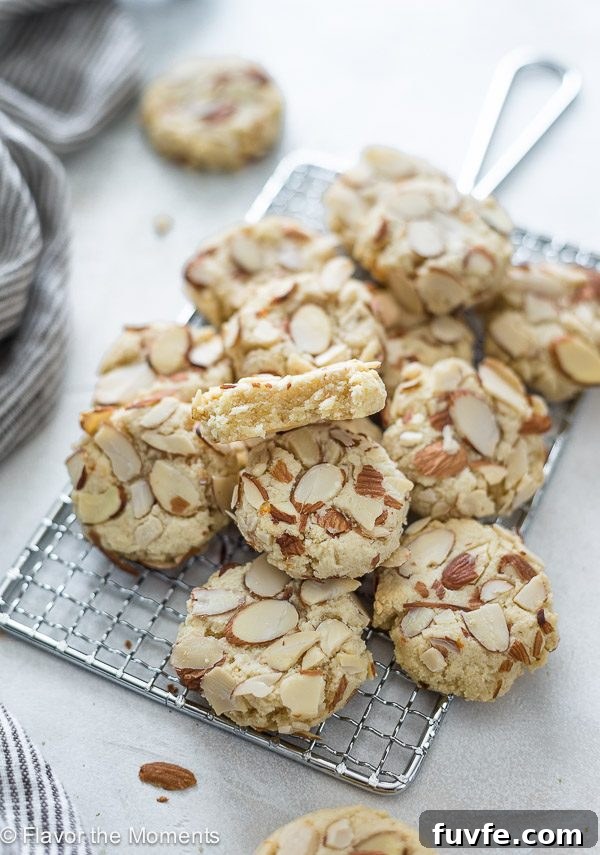
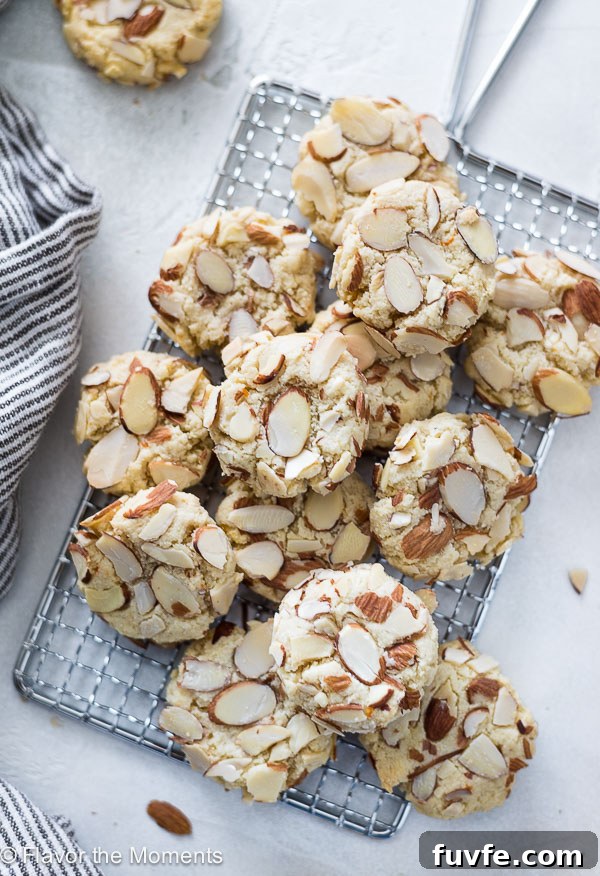
These cookies are crisp on the outside, tender and chewy inside, with a hint of citrus. They’re sweet enough to be satisfying but not cloying.
What does amygdalota mean?
The word “amygdalota” comes from the Greek for almond-based sweets—essentially, treats made from almonds.
History of amygdalota cookies
Almond trees are common in Greece, so almonds are a staple in many Greek desserts. Almonds are traditionally associated with happiness, prosperity, and new beginnings, which is why almond sweets are often served at baptisms and weddings across Greece.
Typical amygdalota recipes use ground almonds, egg whites, sugar, and a floral or citrus flavor like rose water or orange. Some versions include semolina, but many modern recipes are kept gluten-free by using almond flour only.
Think of these cookies as the almond counterpart to macaroons—similar in texture and technique, but centered on almonds instead of coconut.
Across different regions of Greece, shapes vary: some are rolled into balls, others piped with a whole almond on top, and some are shaped into crescents or half-moons. There are many charming regional variations of this classic cookie.
How to make this recipe
This is one of the simplest cookie recipes you’ll try: no chilling, no rolling out dough, and no complicated steps. The texture comes from almond flour combined with just a few pantry ingredients.
Start by whisking together almond flour, sugar, salt, and orange zest in a large bowl. Add lightly beaten egg whites and mix until the mixture is moist and paste-like.
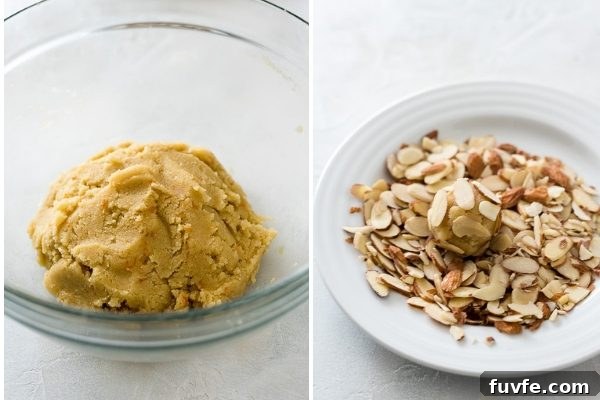
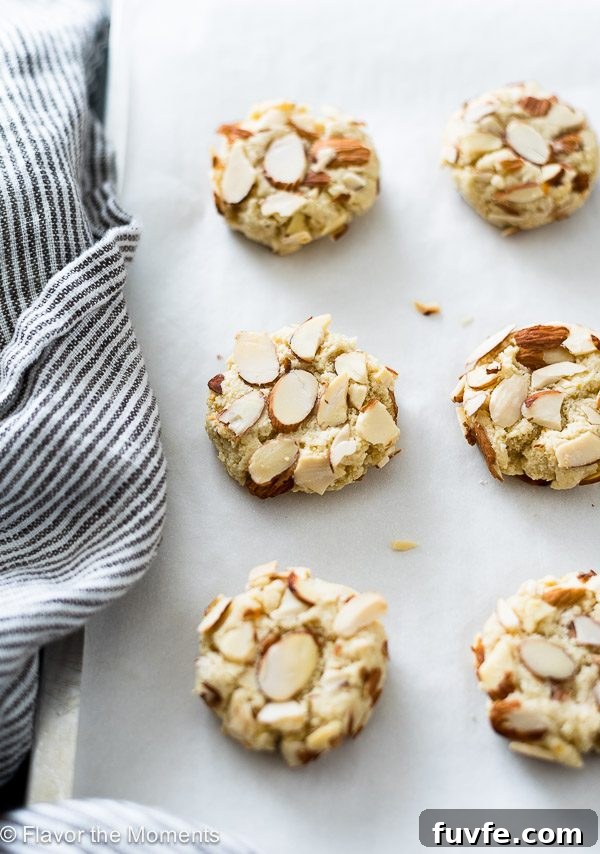
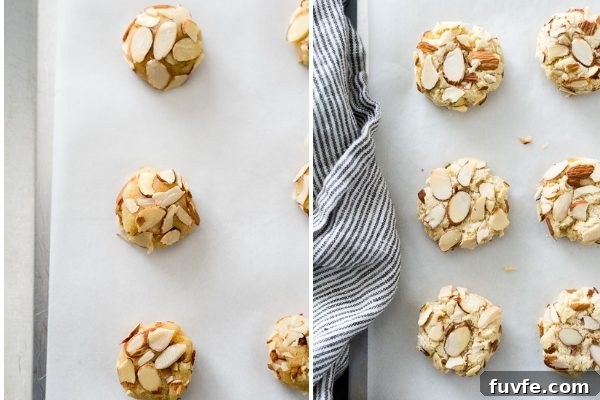
Use a 1 1/2″ cookie scoop or a tablespoon to portion out dough into small balls. Roll each ball in sliced almonds—breaking some almonds into smaller pieces helps them adhere better. Place cookies on a parchment-lined baking sheet and press them lightly flat because they don’t spread while baking.
Bake at 350°F (175°C) for about 13–15 minutes, rotating the pans between the upper and lower racks halfway through so they brown evenly. The cookies should be lightly golden and set. Cool briefly on the pan, then transfer to wire racks to cool completely.
Recipe notes
- Pro tip: Break up half the sliced almonds with your fingers so they coat the cookies more evenly. Alternatively, place a single whole almond in the center of each cookie for a traditional look.
- You can pipe the dough for a fancier presentation or shape cookies into crescents if you prefer a different look.
- Swap the orange zest for lemon or another citrus peel, or use 1 teaspoon of orange, almond, or vanilla extract for flavor variation.
More cookie recipes you’ll love:
- Almond butter cookies
- Carrot oatmeal cookies
- Flourless peanut butter cookies
- Salted chocolate chip cookies
Did you try this recipe? If so, leave a review below and tag @flavorthemoments on social media so I can see your results.
Greek Almond Cookies (Amygdalota)
Servings: 30 cookies
Prep Time: 10 mins Cook Time: 15 mins Total Time: 25 mins
Ingredients
- 3 cups almond flour (not almond meal)
- 3/4 cup granulated sugar (use maple syrup for a Paleo variation)
- 1 tablespoon orange zest
- 1/4 teaspoon salt
- 3 large egg whites, lightly beaten
- 1 cup sliced almonds
Instructions
- Preheat the oven to 350°F. Position racks in the upper and lower thirds and line two baking sheets with parchment paper.
- In a large bowl, combine the almond flour, sugar, orange zest, and salt. Stir in the beaten egg whites until the mixture is moist and paste-like.
- Portion the dough with a 1 1/2″ cookie scoop or a tablespoon. Roll each ball in sliced almonds—breaking some almonds into smaller pieces helps them adhere. Place on the prepared baking sheets and press each cookie lightly flat.
- Bake with one tray on the upper rack and one on the lower rack, swapping positions halfway through, for 13–15 minutes or until lightly golden and set.
- Cool on the pan for 10 minutes, then transfer to wire racks to cool completely. Serve and enjoy.
Notes
- Store cookies in an airtight container at room temperature for up to one week.
- For a different presentation, pipe the dough and top each cookie with a whole or sliced almond, or shape into crescents.
- Replace orange zest with other citrus zest or use 1 teaspoon orange, almond, or vanilla extract for a variation in flavor.
Nutrition (per cookie)
Serving: 1 cookie • Calories: 130 kcal • Carbohydrates: 9 g • Protein: 4 g • Fat: 9 g • Fiber: 2 g • Sugar: 6 g
Nutrition is an estimate and intended for informational purposes only.
Course: Cookies Cuisine: Greek Author: Marcie