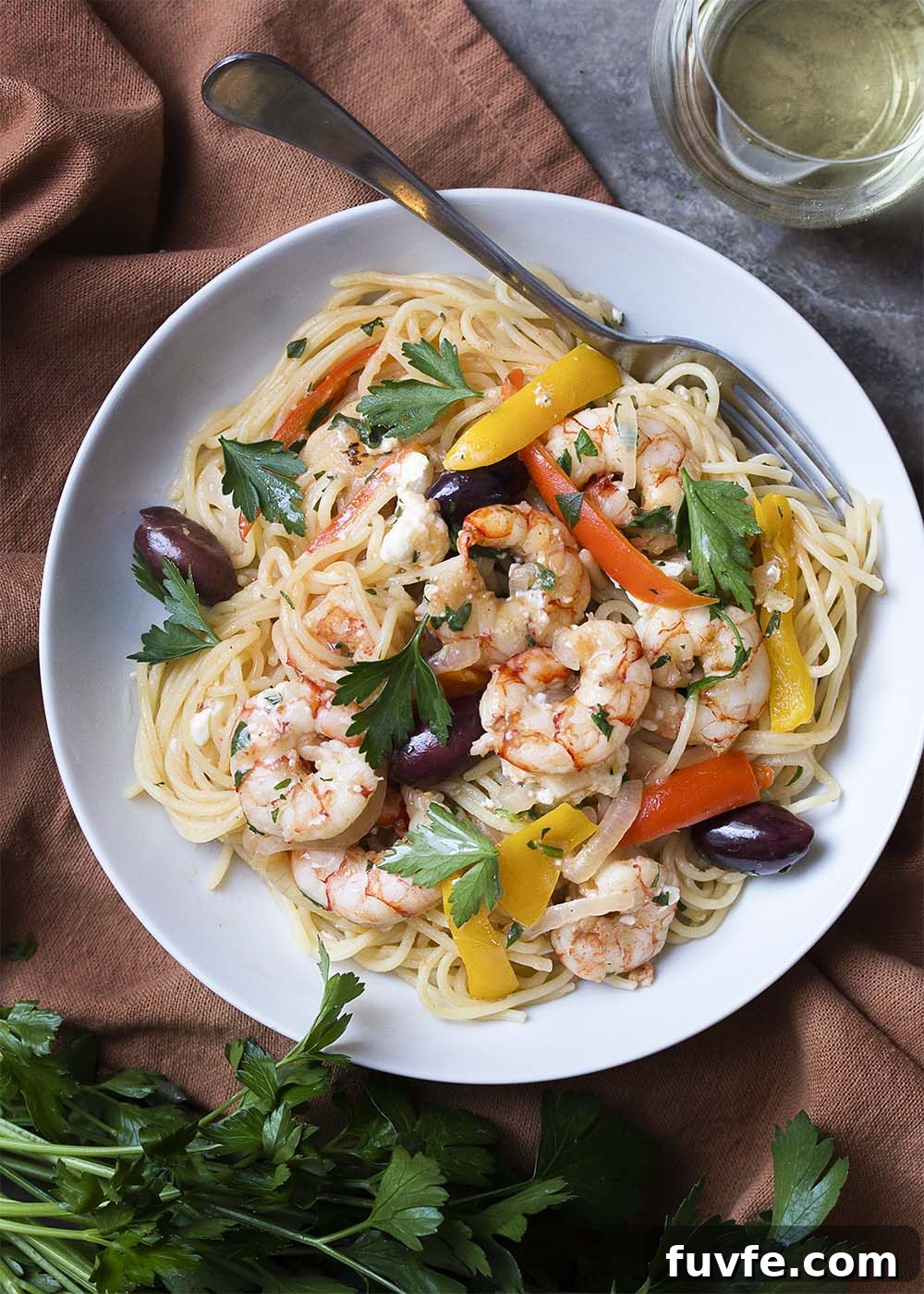
When my love of simple pasta meets my love of Greek flavors, the result is Greek pasta with shrimp, feta, and olives. If you want a straightforward, healthy one-bowl meal, this dish delivers: bright vegetables, lean protein, savory feta, briny olives, and pasta to pull it all together.
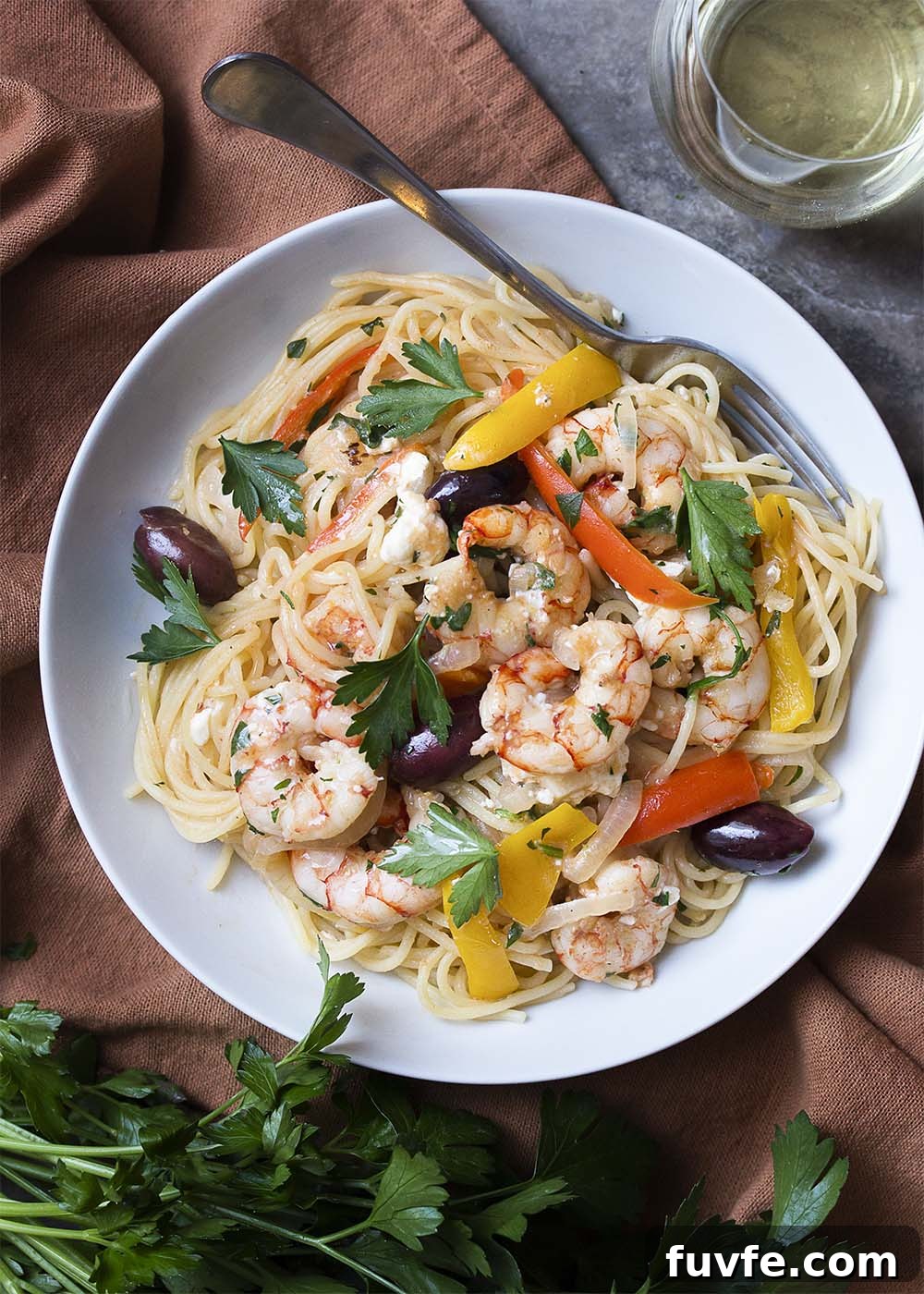
Hello from the unpredictable winter at BitofBacon HQ. After a harsh January, February has felt unusually mild—warm enough that I’ve been out whispering to my crocuses to hold off. Crocuses are not great listeners, but dinner still has to happen.
This Greek shrimp pasta is one of my favorite simple dinners. It’s not strictly a single-pot dish— I cook the pasta separately— but it’s absolutely a one-bowl meal: flavorful, quick, and satisfying.
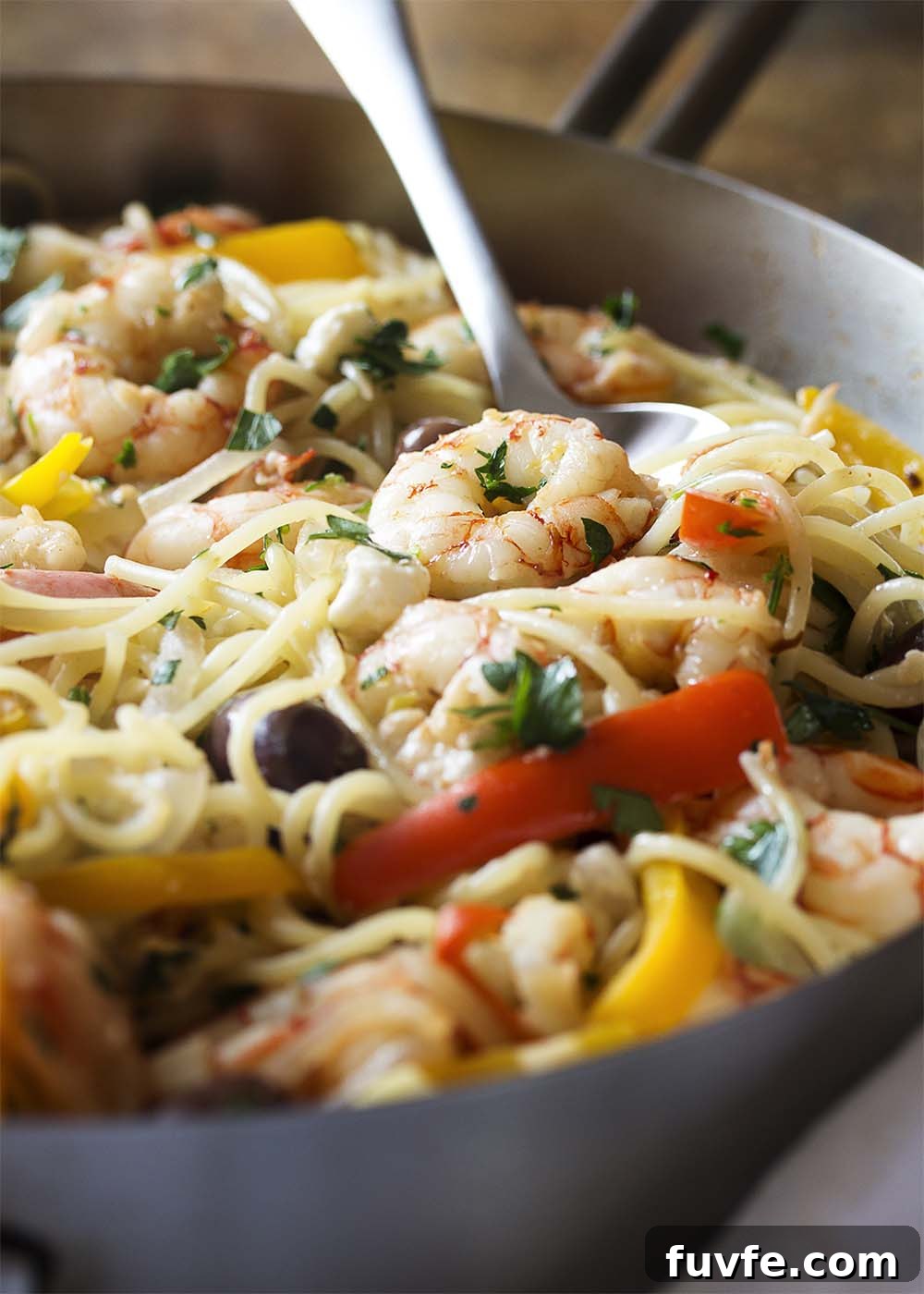
How to make Greek pasta with shrimp
The method is simple and fast. Start by sautéing the shrimp briefly, then — if you like a little culinary theater — flambe them with brandy for extra depth. The quick flame caramelizes the surface and concentrates flavor.
Transfer the shrimp to a bowl and get the pasta cooking. In the same pan, soften onions, bell peppers, and garlic in olive oil. Toss in the drained pasta with a splash of reserved pasta water, add olives, lemon, and seasonings, and cook until a silky sauce forms. Return the shrimp to warm through, then finish with crumbled feta and fresh parsley. It’s a true 30-minute dinner.
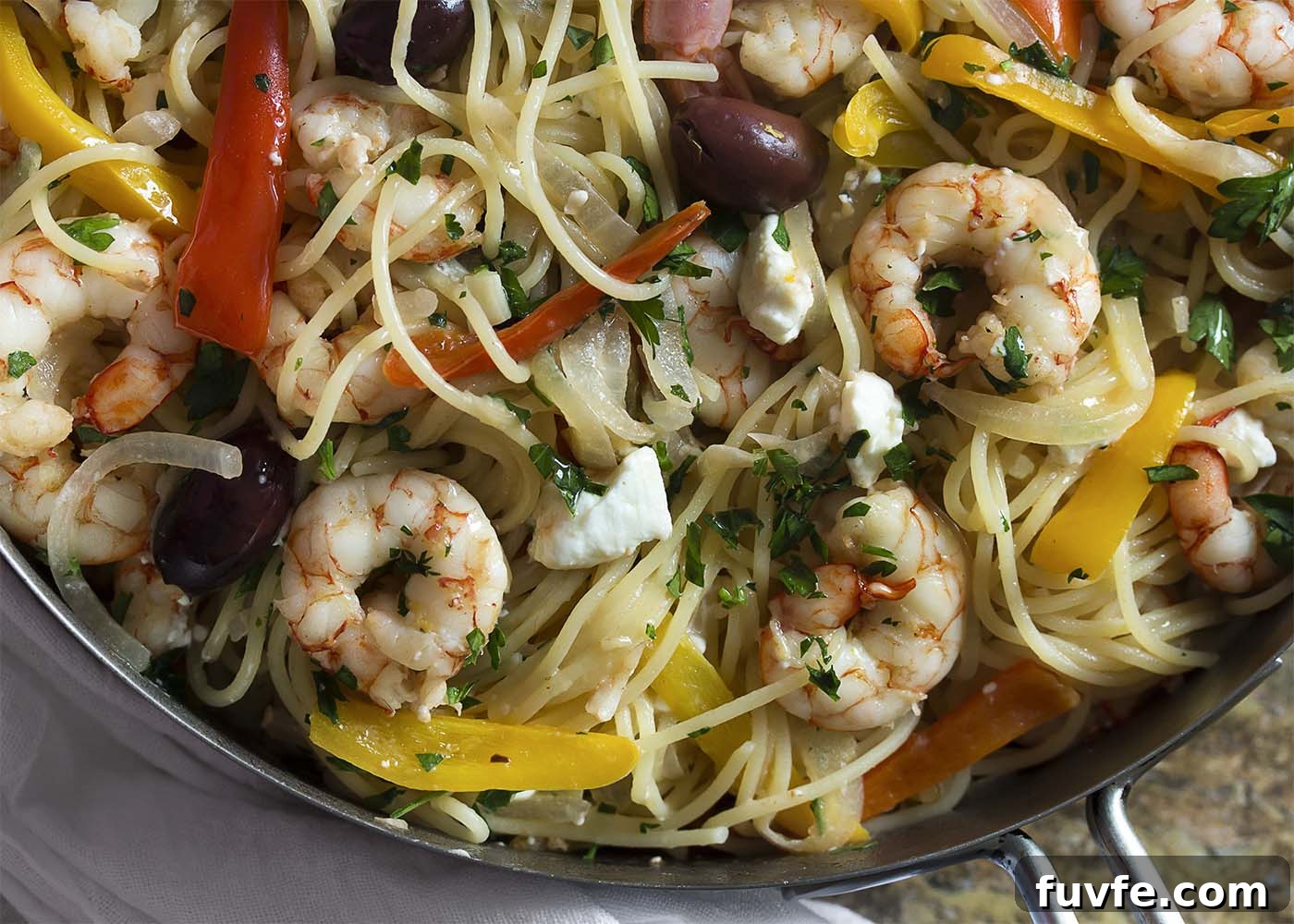
Why flambe the shrimp?
Flambeing is optional. If it makes you uncomfortable or you lack a heatproof pan and a long lighter, skip it. If you do choose to flambe, follow safe practices: use a heavy pan (not nonstick), keep flammable items away, and use a long match or lighter.
Reasons to flambe:
- It’s fun and dramatic—dim the lights and watch the flame briefly leap across the pan.
- The intense heat sears and caramelizes surfaces quickly, adding complexity of flavor.
- Most of the alcohol burns off, leaving depth from the brandy without strong alcohol taste.
- Flambeing reduces the brandy quickly so you don’t overcook the shrimp while concentrating flavor.
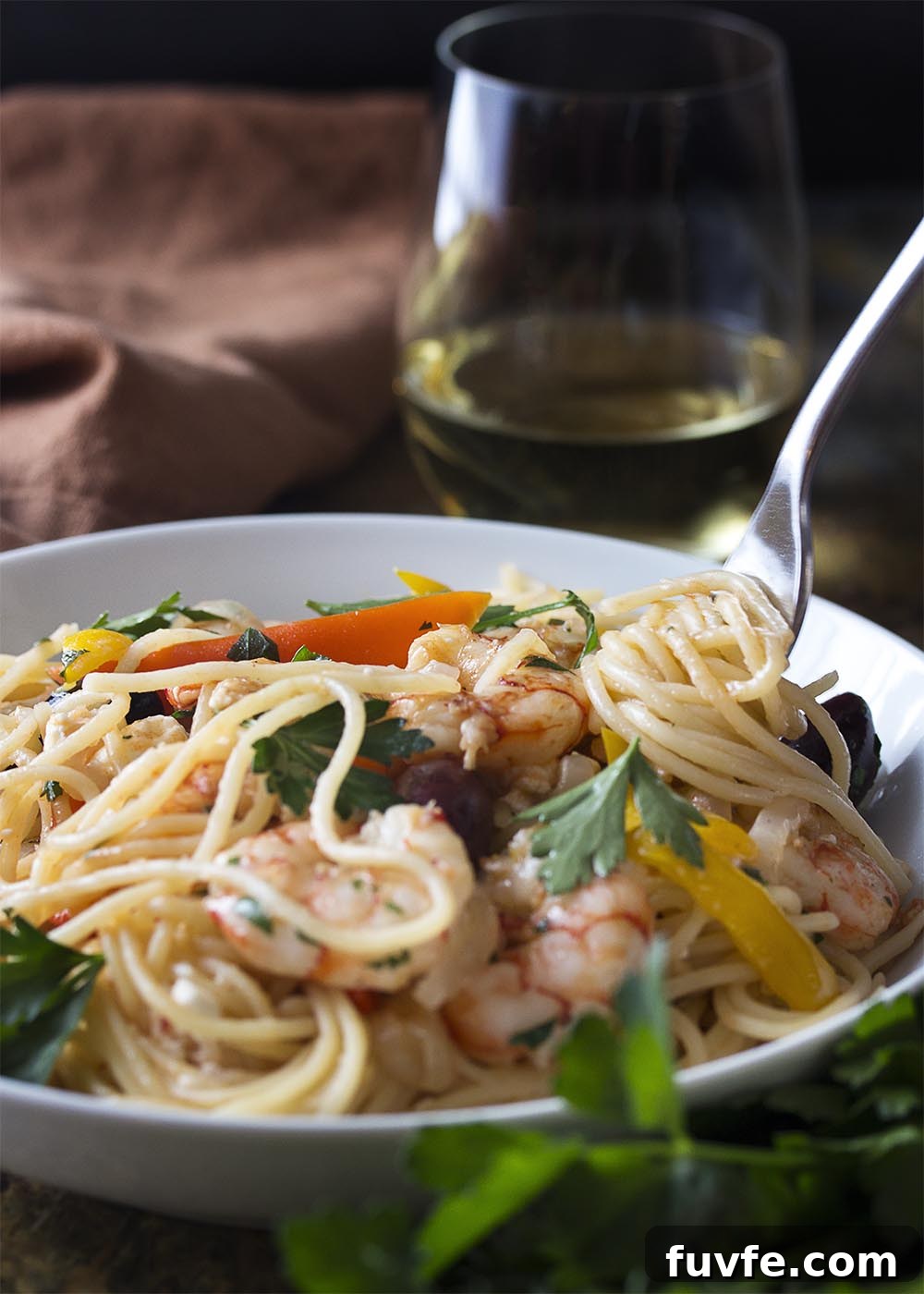
A quick, flavorful meal with a touch of Mediterranean brightness—perfect for weeknights.
– Happy cooking, Annemarie

Greek Pasta with Shrimp, Feta, and Olives
Ingredients
- 12 oz thin spaghetti
- 3 tbsp olive oil, divided: 1 tbsp for shrimp, 2 tbsp for vegetables
- 1 lb large or extra-large shrimp, shelled, tails removed
- 1/4 cup brandy
- 1 medium white onion, chopped
- 2 bell peppers, sliced (mixed colors if possible)
- 1/2 tsp kosher salt
- 4 cloves garlic, minced
- 1/2 cup pitted kalamata olives
- 2 tbsp fresh lemon juice
- 2 tsp lemon zest
- 1/4 tsp red pepper flakes
- 3 oz feta cheese
- 1/2 cup chopped fresh parsley
Instructions
-
Bring a large pot of water to a boil, salt it well, and cook the spaghetti according to package directions minus 1 minute. Reserve 1 cup of pasta water, then drain the pasta.
-
Heat 1 tablespoon of olive oil in a large sauté pan over medium-high heat (use a heatproof pan, not nonstick). Pat the shrimp dry and add to the pan. Sauté, turning frequently, for 1–2 minutes so they begin to color but are not fully cooked.
-
If flambeing, warm the brandy in the pan briefly, then remove the pan from the heat and carefully ignite with a long match or lighter. Swirl to distribute the flame. If you prefer not to flambe, simply remove the shrimp and juices to a bowl.
-
Add the remaining 2 tablespoons of olive oil to the pan and heat until shimmering. Add the chopped onion, sliced bell peppers, and salt. Sauté for 5–6 minutes until softened, then add the garlic and cook 1 more minute.
-
Return the pasta to the pan with about 1/2 to 1 cup of the reserved pasta water, olives, lemon juice, lemon zest, red pepper flakes, and the reserved shrimp juices. Toss frequently until the sauce thickens and coats the pasta, about 2–3 minutes. Stir the shrimp back in and heat through.
-
Remove from heat, add the crumbled feta and chopped parsley, toss gently, and serve.
Notes
- I often begin heating the pasta water and flambe the shrimp when it’s nearly boiling; that way the pasta can go in while I finish the sauce so nothing waits too long.
- Use a mix of colored bell peppers to make the dish more vibrant. Aim for the equivalent of two medium peppers—three smaller peppers in different colors also work well.