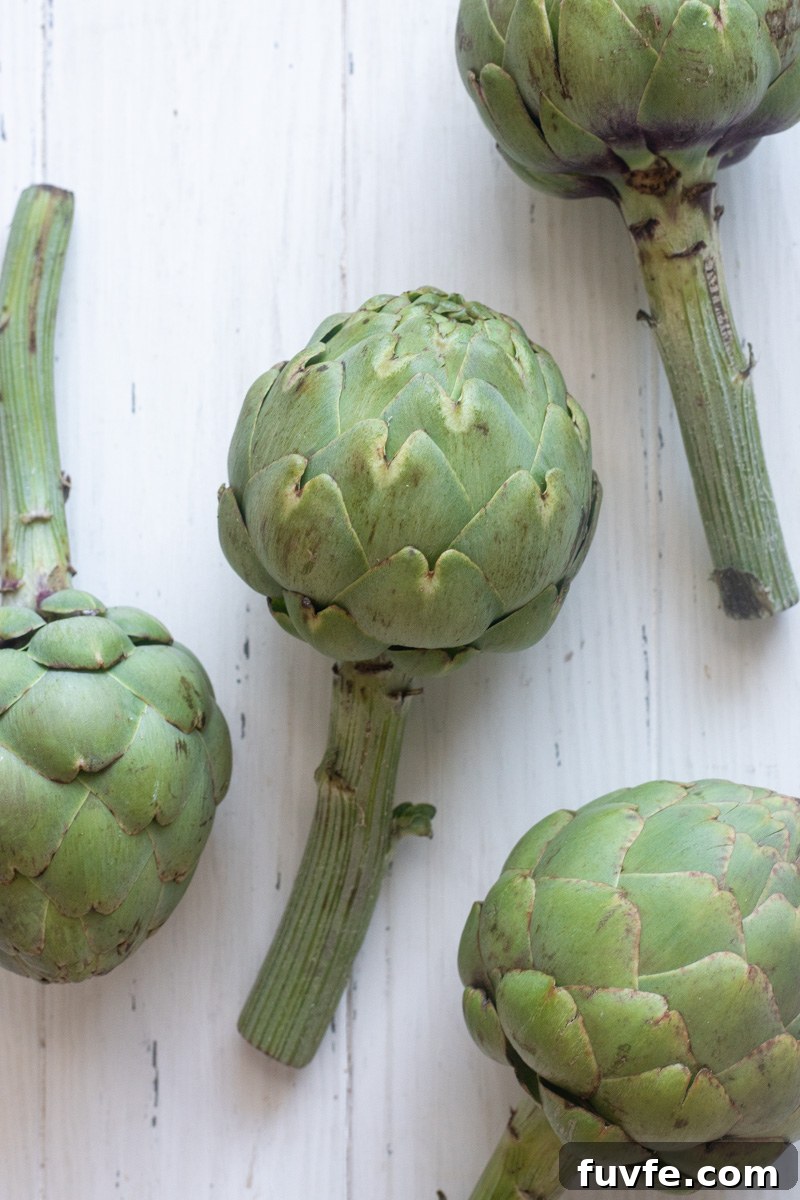
Learn how to prep an artichoke with these clear, step-by-step instructions. You’ll find easy guidance for trimming the stem, removing the thorny tips, scooping out the choke when needed, and preparing artichokes for steaming, roasting, grilling, or braising so you can enjoy them throughout artichoke season.
Artichokes can look intimidating with their layered leaves and sharp tips, but once you know the basic trimming steps they are straightforward to prepare. This guide walks you through trimming the stem, cutting off the top, snipping any sharp leaf points, and removing the fuzzy choke when making halved artichokes for the grill or oven.
Why you’ll love this tutorial
- Clear, practical step-by-step instructions with photos.
- Shows exactly how to trim and clean an artichoke.
- Explains what the artichoke choke is and when to remove it.
- Applicable to steaming, roasting, grilling, or braising.
What you’ll need
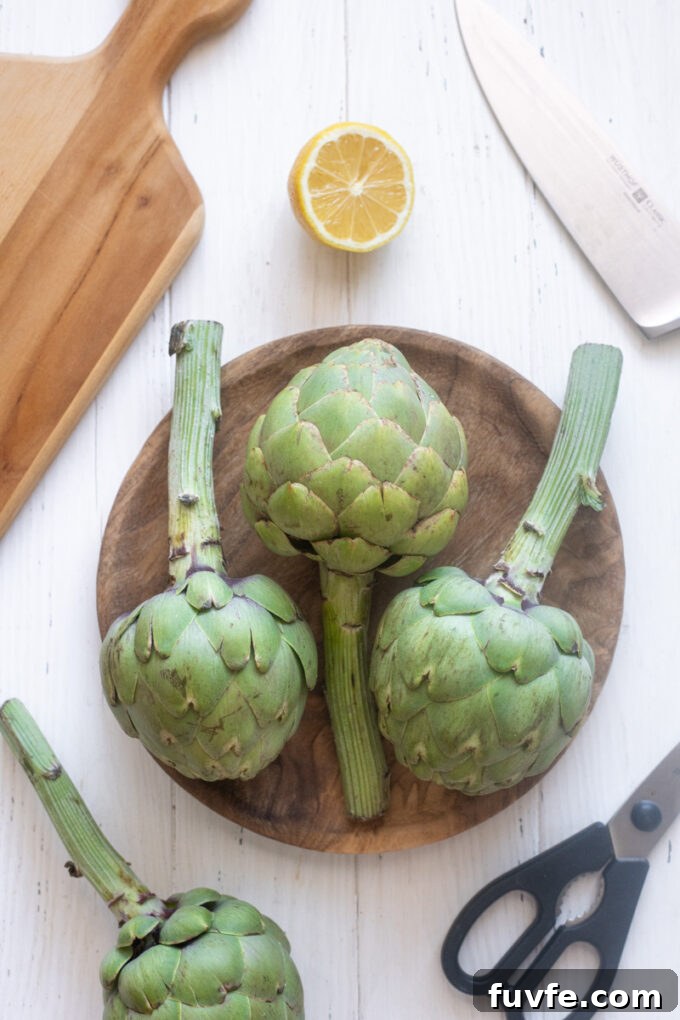
- Fresh globe artichokes. Choose ones with tightly closed leaves and a firm, heavy feel for their size.
- Lemon. Rubbing cut surfaces with lemon prevents browning and keeps the artichoke looking fresh.
- A sharp chef’s knife. A sharp blade makes clean cuts through the tough top and stem.
- Kitchen shears. Helpful for trimming the sharp tips from leaves quickly.
- Spoon or melon baller. Useful for scooping out the fuzzy choke when halving artichokes.
How to prepare an artichoke step-by-step
Step 1: Trim the stem
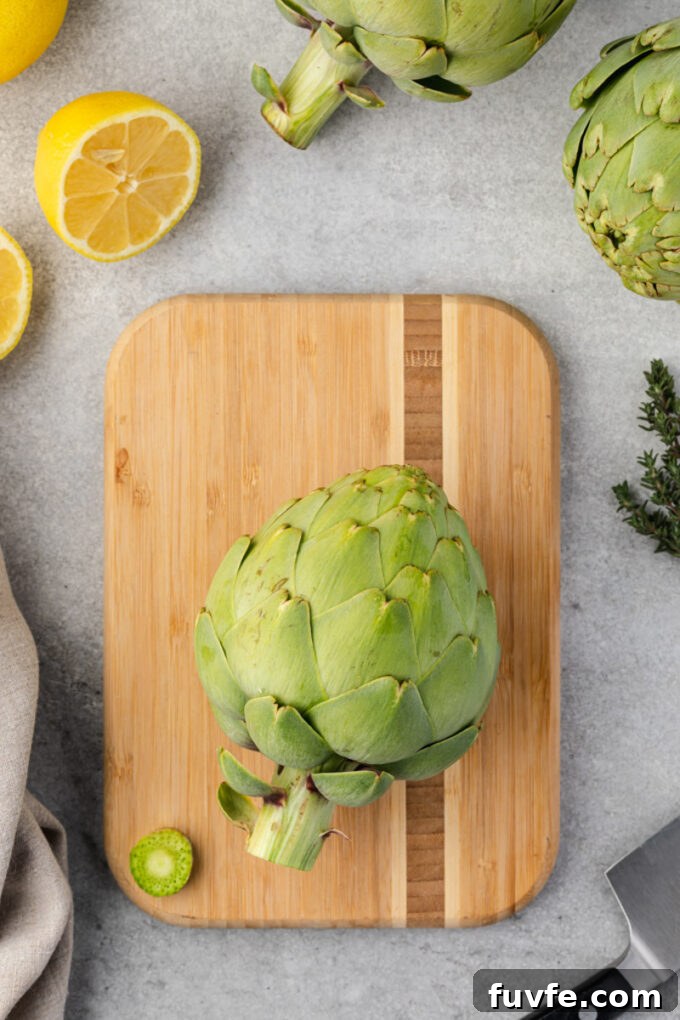
Place the artichoke on a cutting board and slice off the very end of the stem so the artichoke will sit upright. The stem itself is edible—peel the tough outer layer if you plan to cook and serve it along with the artichoke.
Step 2: Cut off the top
Using a sharp knife, cut about 1/2 to 1 inch off the top of the artichoke to remove the thorny leaf tips and expose the heart more easily.
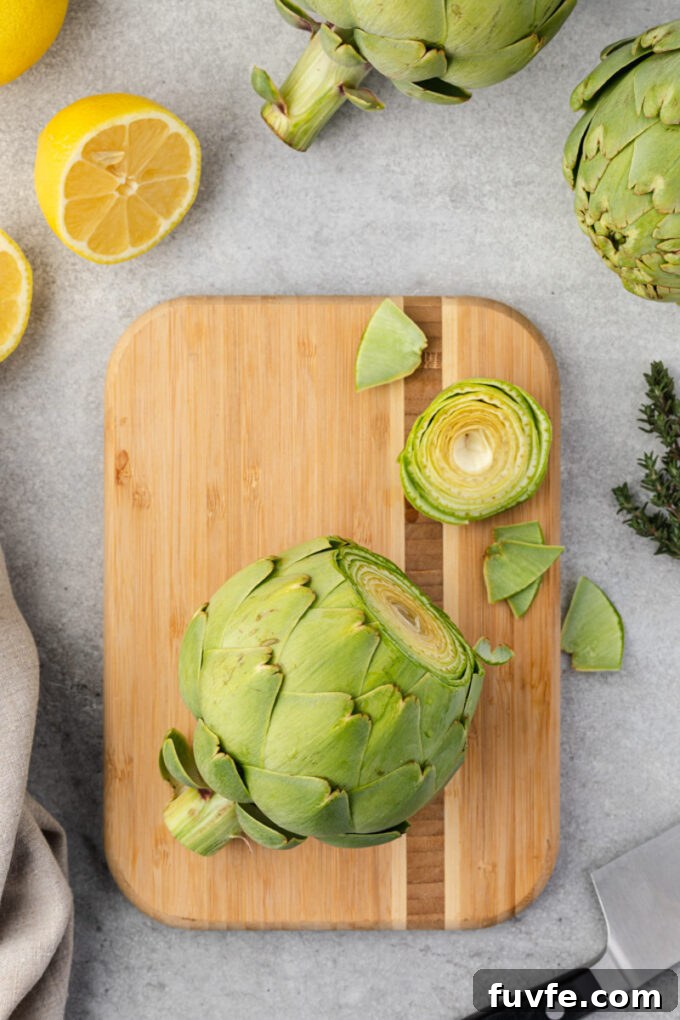
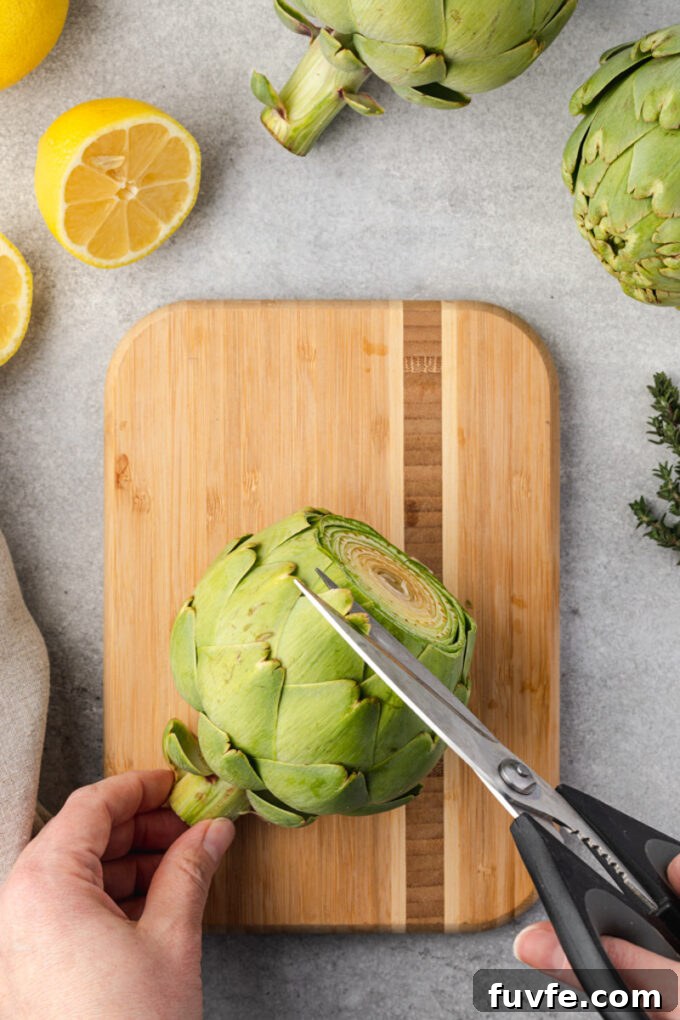
Step 3: Trim the leaf tips
Use kitchen shears to snip off the sharp points from the outer leaves. This step is optional but makes the artichoke easier to handle and improves presentation, especially if you plan to serve them whole at the table.
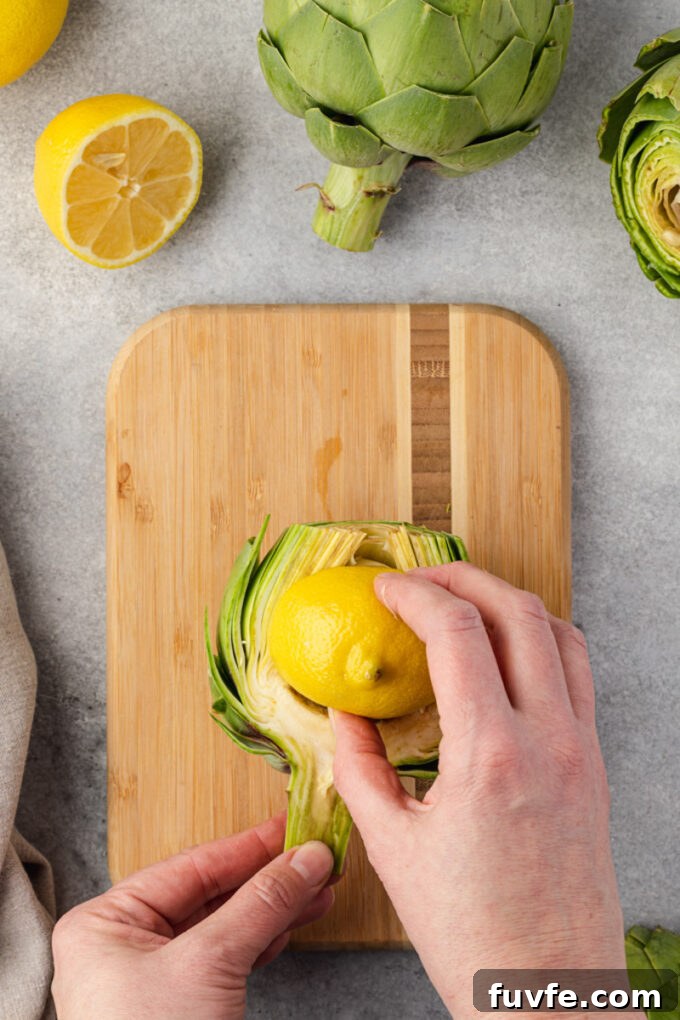
Step 4: Rub cut surfaces with lemon
Rub all cut surfaces with a halved lemon to prevent oxidation and browning. If you are prepping multiple artichokes, place them in a bowl of lemon water until you are ready to cook.
Decide how you’ll cook the artichoke
After trimming, what you do next depends on your chosen cooking method.
For steamed artichokes
Leave the artichoke whole after trimming. When steamed whole, the fuzzy choke is usually removed after cooking, when the inner leaves pull away and you reach the heart. Serve with melted butter, aioli, or a simple vinaigrette.
For Roman-style artichokes
Roman-style preparations are typically made with whole, trimmed artichokes: the leaves are opened slightly and the artichokes are braised gently with olive oil, garlic, and herbs until tender.
For roasted or grilled artichokes
For the oven or the grill, cut the trimmed artichokes in half and remove the choke before cooking. This makes the halves easier to season and ensures even caramelization.
How to remove the choke (for roasting or grilling)
Step 5: Cut the artichoke in half
Slice the trimmed artichoke in half lengthwise to expose the center. This reveals the fuzzy choke sitting above the heart.
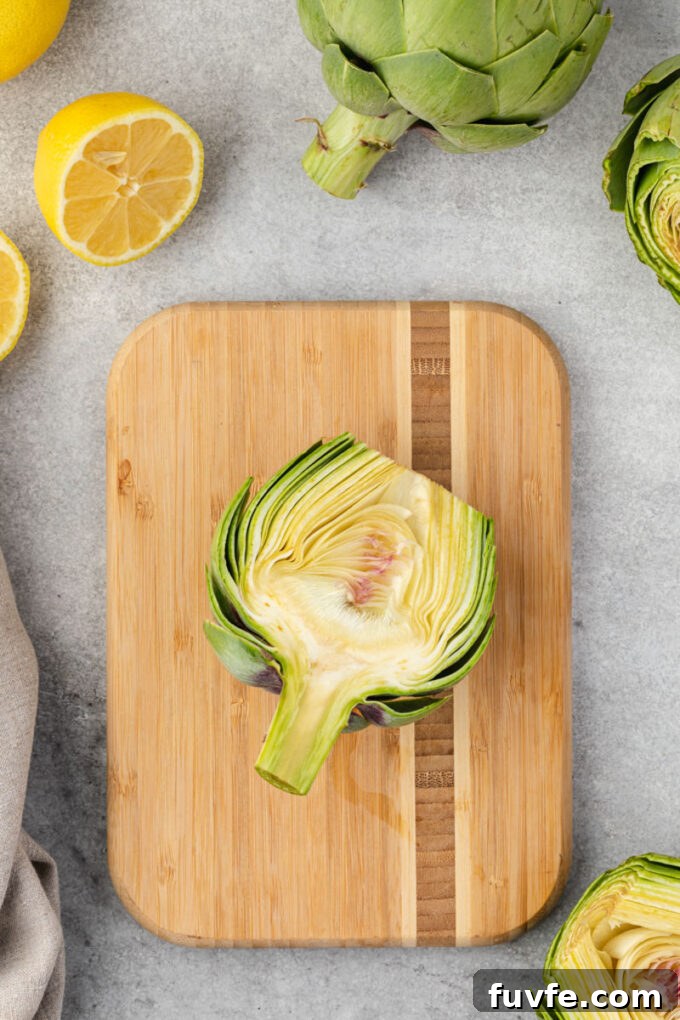
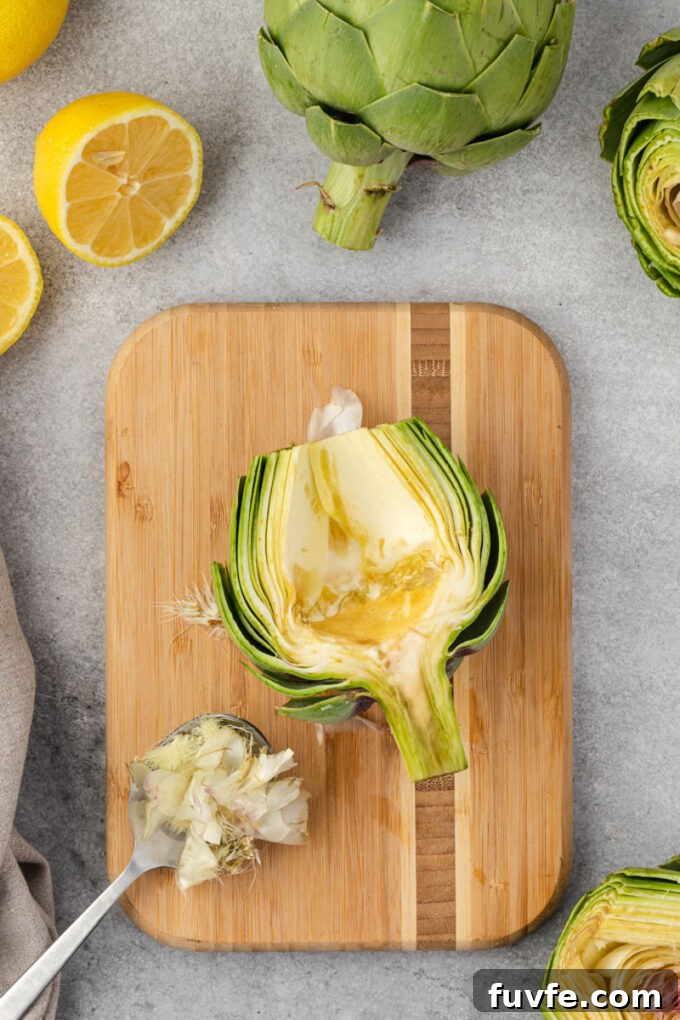
Step 6: Remove the choke
Use a spoon or melon baller to scoop out the fuzzy choke and any tough, sharp inner leaves. Remove down to the tender heart and discard the inedible bits.
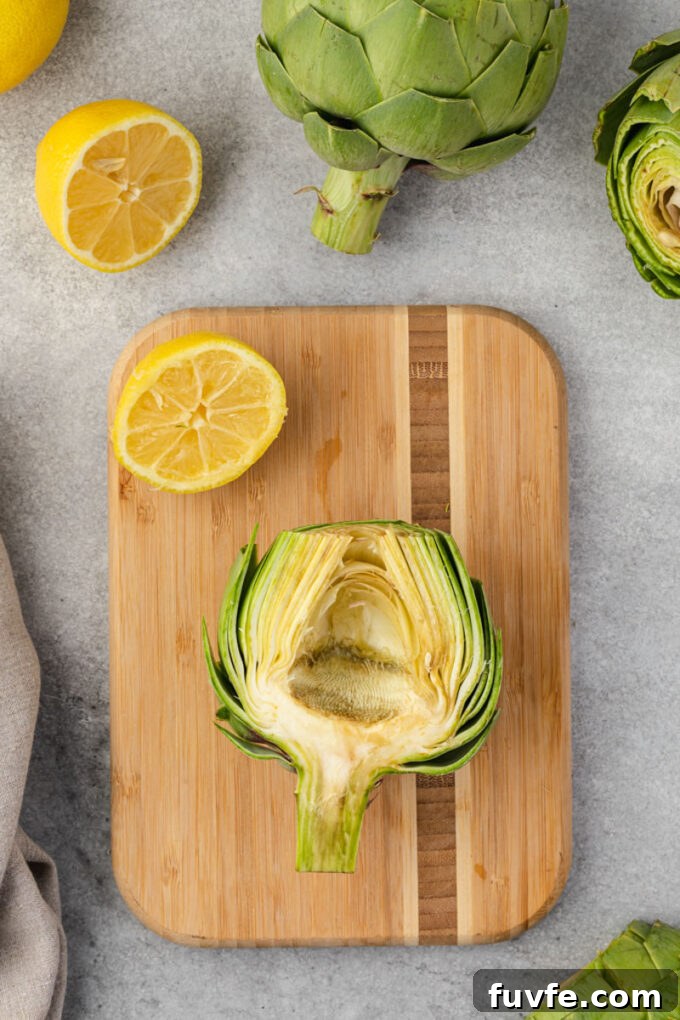
Step 7: Artichoke ready to cook
With the choke removed, the artichoke halves are ready to be brushed with oil, seasoned, and roasted or placed on the grill until the flesh is tender and lightly caramelized.
Tips for prepping artichokes
- Always use a sharp knife for clean, safe cuts.
- Rub cut surfaces with lemon to prevent browning and maintain color.
- Kitchen shears make trimming the leaf tips faster and safer.
- The stem is edible—peel the tough outer layer and cook it along with the artichoke.
- If prepping several artichokes, keep them in lemon water to stop discoloration.
How to cook artichokes
Trimmed artichokes can be prepared in many tasty ways:
Steamed artichokes
A classic method that yields tender leaves and a soft heart. Steam whole, then remove the choke after cooking and serve with a dipping sauce.
Roasted artichokes
Halved and tossed with olive oil, lemon, garlic, and herbs, roasted artichokes develop caramelized edges and rich flavor.
Roman artichokes
A gentle braise with olive oil, garlic, and herbs results in a fragrant, tender preparation inspired by traditional Italian techniques.
FAQs
Do you need to wash artichokes before cooking?
Yes. Rinse them under cold water, gently pulling the leaves apart to remove any dirt trapped between layers.
What is the choke in an artichoke?
The choke is the fuzzy, inedible center that sits above the artichoke heart. It becomes tough as the vegetable matures and should be removed when the artichoke is halved.
Do you remove the choke before cooking?
It depends on the method. Remove the choke before roasting or grilling. When steaming whole artichokes, the choke is usually removed after cooking.
Can you eat the artichoke stem?
Yes. After peeling away the fibrous outer part, the inner stem is tender and edible.
How do you keep artichokes from turning brown?
Rub cut surfaces with lemon juice or place trimmed artichokes in lemon water until you are ready to cook them.
Now that you know how to prep them, try steaming, roasting, grilling, or braising artichokes for a flavorful appetizer or side that highlights their unique texture and flavor.
Did you try this technique? If so, leave a review below and feel free to tag @flavorthemoments on social media to share your results.
How to Prep an Artichoke
Step-by-step instructions for trimming the stem, cutting off the top, snipping leaf tips, and removing the choke when needed. Prepared artichokes are ready for steaming, roasting, grilling, or braising.
Equipment
- Chef’s knife
- Kitchen shears
- Melon baller or spoon
- Cutting board
Ingredients
- 1 fresh globe artichoke
- 1/2 lemon
Instructions
- Rinse the artichoke under cold water, pulling the leaves apart slightly to remove any dirt.
- Trim the stem by slicing off the end so the artichoke will sit flat. Peel the outer layer of the stem if you plan to cook it.
- Cut about ¾–1 inch off the top with a sharp knife to remove thorny tips.
- Use kitchen shears to snip sharp tips from the outer leaves for easier handling and a neater presentation.
- Rub all cut surfaces with lemon to prevent browning. At this point, the artichoke is ready to steam whole—the choke can be removed after cooking.
Optional (for roasting or grilling)
- Cut the artichoke in half lengthwise to expose the fuzzy choke.
- Use a spoon or melon baller to scoop out the choke and any sharp inner leaves. The halves are then ready to roast, grill, or braise.
Notes
- Pro tip: For steamed artichokes, leave them whole after trimming and remove the choke after cooking.
- The stem is edible—peel and cook it if desired.
- If prepping multiple artichokes, place trimmed ones in lemon water to prevent discoloration.
- Prep time will vary slightly with the size of the artichoke.
Nutrition (per artichoke, approximate)
Calories: 76 kcal; Carbohydrates: 18 g; Protein: 5 g; Fat: 0.3 g; Fiber: 8 g; Vitamin C: 44 mg.
Nutrition is estimated and provided for informational purposes.
All recipes and images © Flavor the Moments.