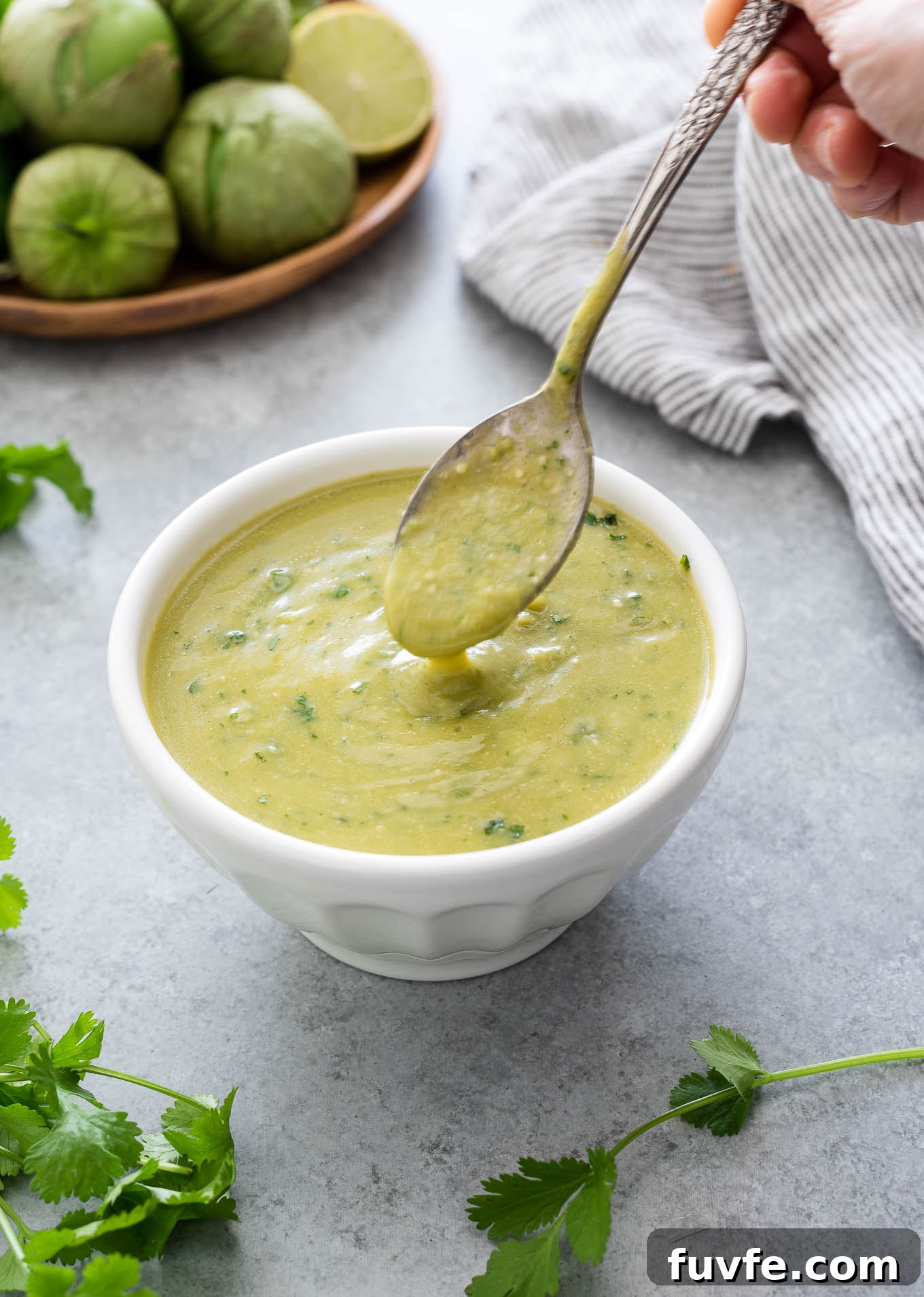
Homemade Green Enchilada Sauce is bright, fresh and far better than anything from a can. Easy to prepare, fully customizable for heat, and freezer-friendly, this tomatillo-based sauce brings vibrant flavor to enchiladas, casseroles, tacos and more.
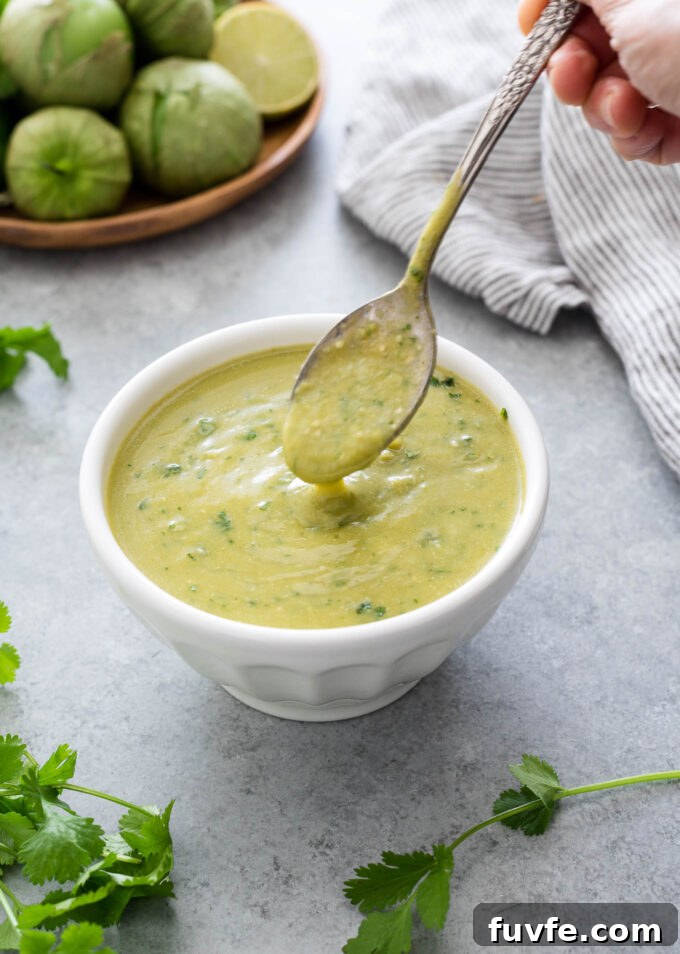
Homemade always tastes best, and this green enchilada sauce is a perfect example. Roasting the tomatillos and chiles builds depth and a subtle char while lime and cilantro keep the sauce lively. You can control the spice level by choosing different peppers and keeping or discarding the seeds.
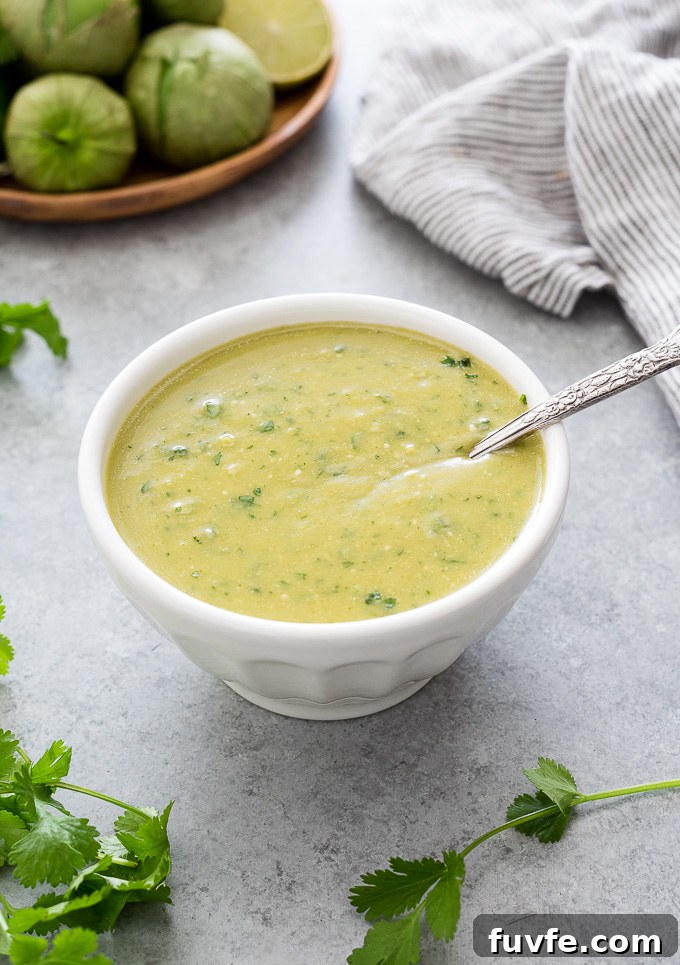
Why you’ll love this recipe:
- Bright, fresh tomatillo flavor that canned sauces can’t match.
- Adjustable heat—make it mild or spicy to suit your palate.
- Simple to prepare, can be made ahead, and freezes well.
- Gluten-free, dairy-free and vegan; easy to customize.
Recipe ingredients
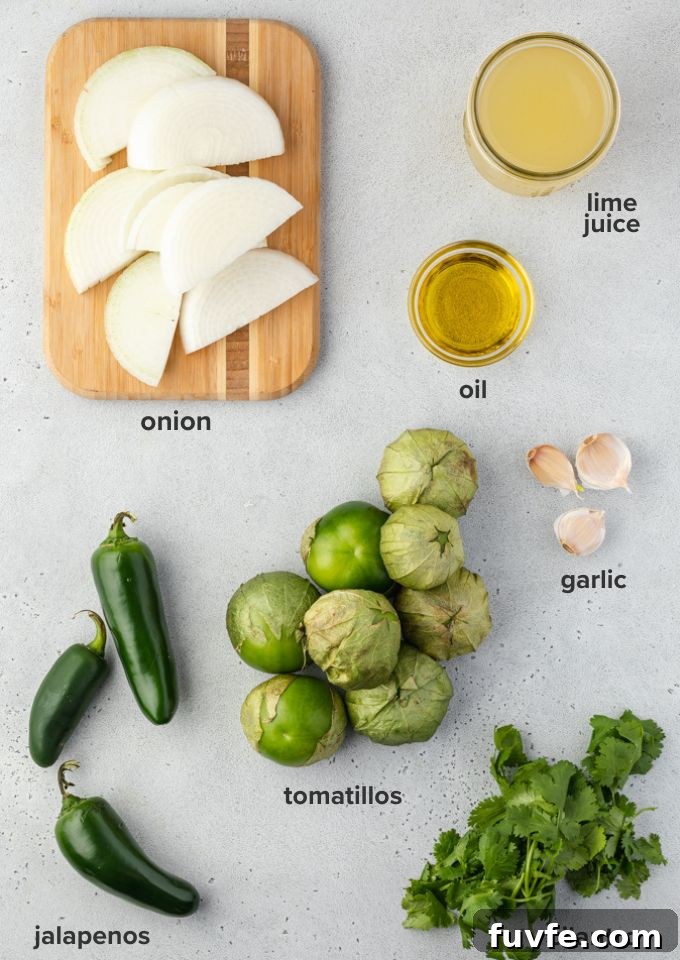
- Tomatillos — the base of the sauce. These small, husked fruits have a bright, slightly tart flavor. Rinse and remove the husks before roasting.
- Onion and garlic — add depth and savory balance to the tomatillos.
- Green chiles — jalapeños, serranos, hatch, anaheim or poblanos work well. Remove seeds for a milder sauce; keep seeds if you want more heat.
- Water or broth — thins the sauce. Use water, vegetable stock or chicken stock for extra flavor.
- Oil — a little oil helps roast the vegetables and develop color.
- Lime juice — fresh lime brightens the sauce at the end.
- Cilantro — optional but recommended for fresh herb flavor; omit if you don’t like it.
See the recipe card below for exact quantities and timing.
How to make tomatillo enchilada sauce
This green enchilada sauce is straightforward to make and lets you control every ingredient and the heat level. Roasting the tomatillos and chiles creates a deeper, slightly smoky flavor compared with raw blends.
Pro tip: To make a spicier sauce, add more jalapeños or include the seeds when you blend.
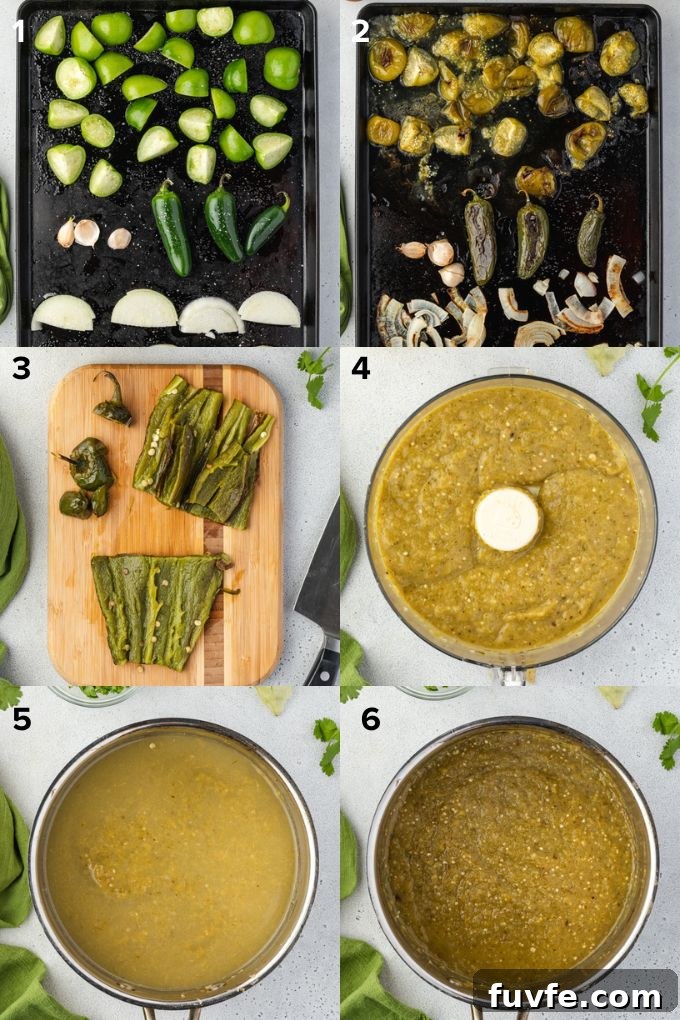
- Preheat the oven to 400°F (about 200°C). Toss the tomatillos, chiles, onion and garlic with a bit of olive oil and salt on a rimmed baking sheet so everything is evenly coated.
- Roast until well browned and slightly charred on all sides, about 25–30 minutes, turning as needed. Remove from the oven and let cool slightly.
- Peel the garlic, and remove stems and seeds from the chiles if you want a milder sauce. For more heat, leave some or all of the seeds in.
- Place the roasted vegetables and any pan juices in a blender or food processor and puree until smooth.
- Transfer the blended tomatillo mixture to a medium saucepan. Add water or stock and salt and pepper to taste.
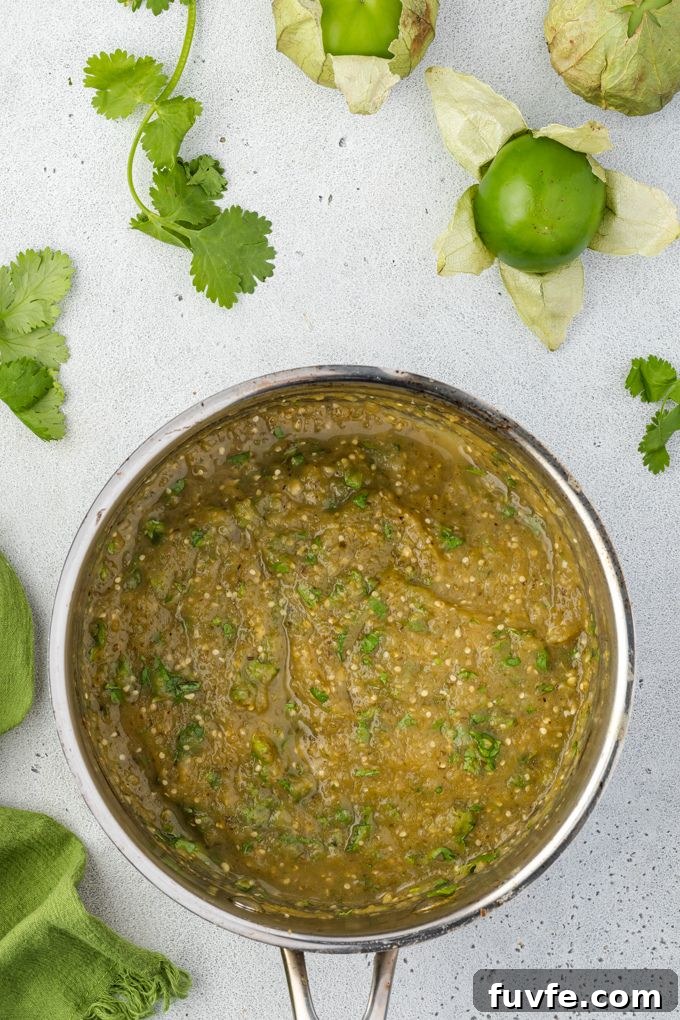
- Bring to a boil, then reduce heat and simmer until the sauce reaches your desired thickness, about 5–10 minutes. Stir in chopped cilantro and lime juice at the end and adjust seasoning.
Recipe FAQs
Green enchilada sauce (salsa verde for enchiladas) is typically made from tomatillos, green chiles, onion, garlic and lime juice. Cilantro and spices like cumin are optional additions.
The main difference is that enchilada sauce is cooked and typically includes extra liquid such as water or stock. Salsa verde is usually raw and served fresh without cooking.
Heat depends on the chiles used and whether you include the seeds. Both green and red sauces can be mild or very spicy depending on preparation.
Use less liquid initially or simmer the sauce longer to reduce it to your desired consistency.
Recipe notes
- Pro tip: Increase jalapeños or keep seeds for a spicier sauce.
- Yields about 3 cups of sauce.
- Store in an airtight container in the refrigerator for up to one week, or freeze for up to three months.
- For a low FODMAP version: omit white onion and garlic, use water instead of stock, and add 1/2 cup raw chopped green onion (dark green parts only) when blending.
More Mexican recipes you’ll love
- Black bean, sweet potato and corn enchiladas
- Homemade chicken enchiladas
- Grilled fish tacos with cherry tomato-corn salsa
- Easy ground beef tacos
- Cheesy Mexican rice skillet
- Oven-baked turkey black bean tacos
- Chicken tortilla soup (slow cooker)
- Slow cooker pork carnitas
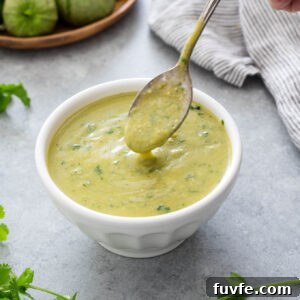
Homemade Green Enchilada Sauce
Servings: 6 | Prep time: 15 mins | Cook time: 20 mins | Total time: 35 mins
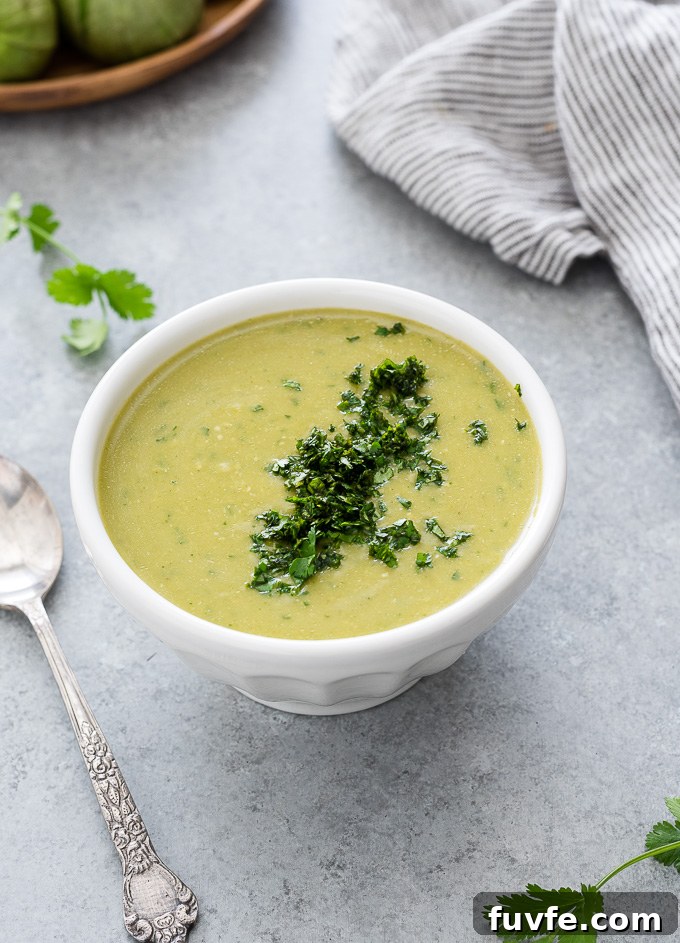
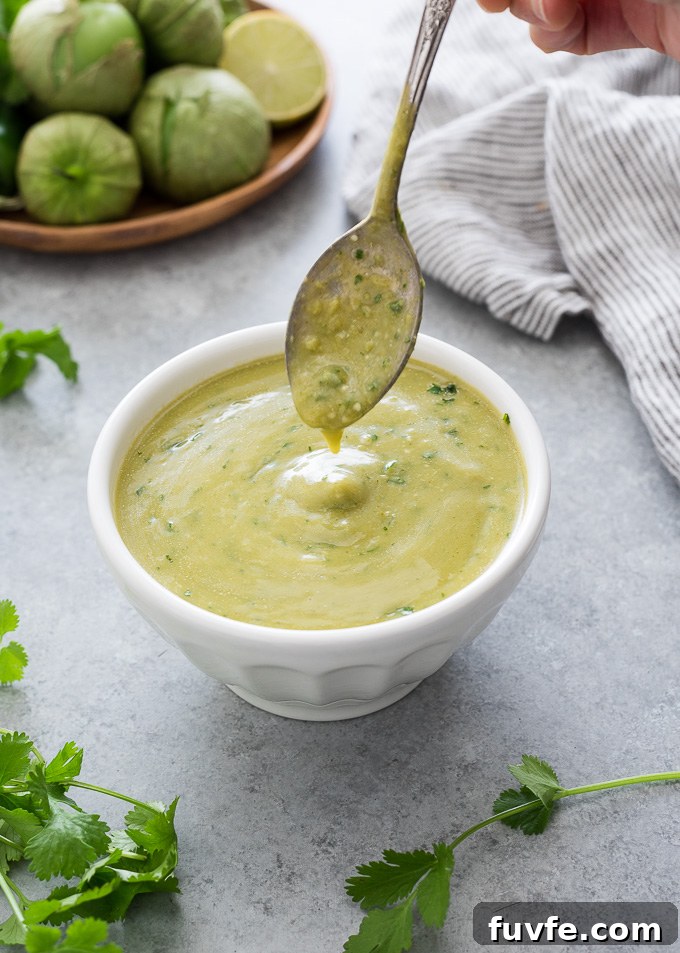
This sauce is fresh, flavorful and better than store-bought. It’s easy to make, freezer-friendly and fully customizable for heat.
Equipment
- Blender or food processor
- Rimmed baking sheet
- Medium saucepan
Ingredients
- 2 tablespoons olive oil
- 1½ lbs tomatillos, husks removed, rinsed, halved or quartered
- 1 large white onion, peeled and halved
- 2–4 large jalapeño peppers (or other green chiles)
- 3 cloves garlic, unpeeled during roasting
- 1½ cups water (or vegetable/chicken stock)
- 1/3 cup freshly chopped cilantro
- Juice of 1 lime (about 2 tablespoons)
- Salt and pepper to taste
Instructions
- Preheat oven to 400°F. Toss tomatillos, onion, green chiles and garlic with 2 tablespoons olive oil and salt on a rimmed baking sheet. Roast until well browned and charred on all sides, about 30 minutes. Remove and cool slightly.
- Peel the garlic, then remove stems and seeds from the chiles if you prefer a milder sauce. If you want extra heat, keep some or all of the seeds.
- Blend the roasted vegetables and any pan juices until smooth.
- Pour the tomatillo puree into a medium saucepan. Add water or stock, then bring to a boil. Reduce heat and simmer until the sauce thickens slightly, about 5–10 minutes. Stir in cilantro and lime juice, adjust salt and pepper, and serve.
Notes
- Recipe yields approximately 3 cups of sauce.
- Refrigerate up to one week or freeze for up to three months.
- For a low FODMAP variation, omit onion and garlic and blend in green onion tops.
Nutrition (per serving, estimated)
Calories: 105 kcal; Carbohydrates: 12 g; Protein: 3 g; Fat: 6 g; Fiber: 3 g; Vitamin C: ~37 mg. Nutrition is an estimate for informational purposes only.
Recipe history: This recipe was originally published in April 2019. Step-by-step photos and additional recipe details have been added for clarity and readability.
Did you try this recipe? If so, leave a review below and share your version on social media with tags or hashtags you prefer.