
Looking for a simple brunch idea or an easy meal-prep breakfast? These Bacon and Egg Muffins deliver flavor and convenience. Made with just two main ingredients, they can be prepared ahead of time, stored in the freezer, and reheated for busy mornings.

I cook eggs most days—soft eggs over avocado toast, poached eggs, or scrambled with mushrooms and greens. Having prepared breakfasts in the fridge or freezer changes mornings entirely. While frittatas and crustless quiches are great, these Bacon and Egg Muffins are even easier: two ingredients, minimal hands-on time, and flexibility to suit your preferred yolk doneness.

Why you’ll love this recipe:
- Two main ingredients—eggs and bacon—plus an optional garnish of chopped chives.
- Easy to adjust cooking time to get runny or fully set yolks.
- Perfect for meal prep: refrigerate for several days or freeze for longer storage.
- Low carb, dairy- and gluten-free, and compatible with Whole30-style meal plans.
Recipe ingredients
- Eggs – Large eggs are recommended; cooking times will vary slightly based on egg size.
- Bacon – Thick-center-cut bacon works well and crisps up nicely. If using thin-cut bacon, reduce the initial baking time slightly.
- Salt and pepper – To taste.
- Chives (optional) – Finely chopped for garnish.
How to make bacon egg cups
These bacon egg cups are straightforward to prepare. A couple of tips will help them come out perfectly every time.
I recommend using silicone muffin cups if you have them; they’re non-stick and make removal easy without greasing the pan. If you use a standard muffin pan, grease each cavity well to simplify cleanup and release.
Pro tip: Thick-cut bacon generally takes about 10 minutes to par-cook at 400°F; thin-cut bacon often needs 7–8 minutes. Par-cooking helps the bacon hold its shape around the egg and prevents undercooked pork after the egg finishes baking.
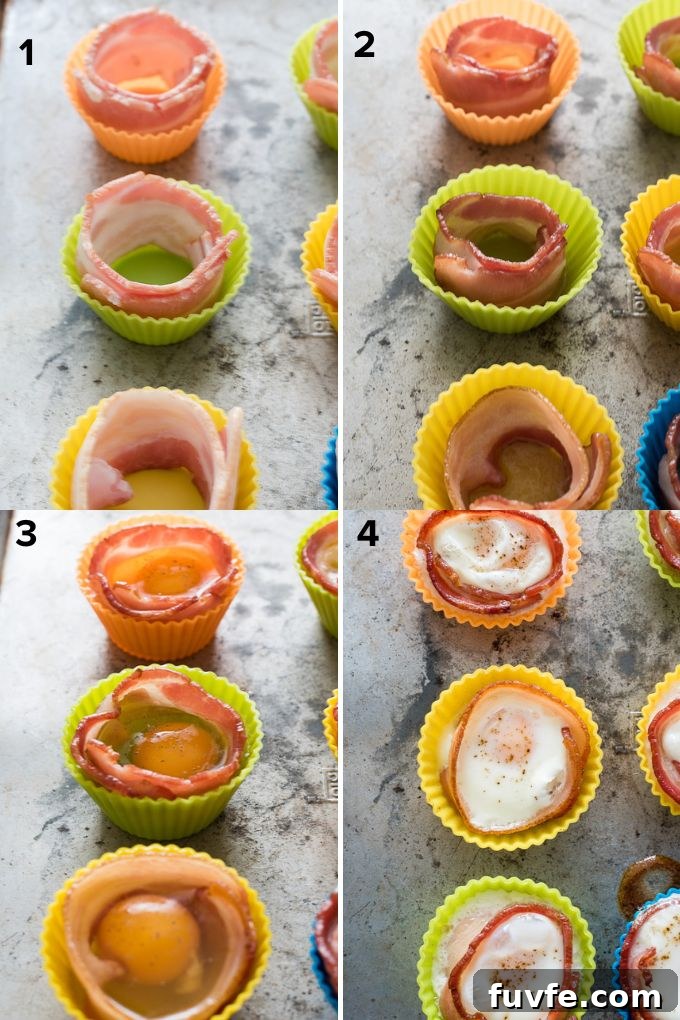
- Preheat the oven to 400°F (about 200°C). Prepare twelve muffin cavities—either spray a standard muffin tin generously with cooking spray or place silicone muffin cups into the pan.
- Wrap one slice of bacon around the inside edge of each muffin cup so it forms a little nest. Bake for 7–10 minutes until the bacon begins to crisp; timing depends on bacon thickness. Remove and drain excess grease, then reshape the bacon if needed to leave room for the egg.
- Crack one large egg into the center of each bacon-lined cup. Season lightly with salt and pepper.
- Bake 12–15 minutes more, depending on how set you like your yolks. For a jammy, slightly runny yolk aim for about 12–13 minutes; for firmer yolks bake closer to 14–15 minutes. Remove from the oven and allow cups to rest on a wire rack for 3–5 minutes before removing from the cups.
- Top with chopped chives if desired and serve warm.

Recipe FAQs
Approximately 126 calories per muffin, based on one large egg and a single slice of bacon. Calories will vary with bacon type and thickness.
What pan should I use?
A standard 12-cup muffin pan works well. Silicone baking cups are highly convenient: they’re non-stick and make individual removal easy, which is helpful when some eggs cook faster than others.
How long will these keep in the fridge or freezer?
Store in the refrigerator for 3–5 days. Reheat in the microwave until warm. For long-term storage, freeze for up to 3 months in a sealed bag or container. Thaw overnight in the refrigerator before reheating.

Serving suggestions
These bacon and egg muffins are versatile. Serve them in many ways:
- Enjoy plain with a simple butter lettuce or mixed greens salad.
- Pair with roasted vegetables such as asparagus or air-fryer broccoli for a balanced plate.
- Serve alongside roasted potatoes or sweet potatoes for a heartier breakfast.
- Include them in a make-ahead brunch spread with baked oatmeal or French toast casserole.
- Pack them for lunches or grab-and-go breakfasts with a piece of fruit.
Recipe notes
- Timing: Adjust initial bacon bake time by thickness: 10 minutes for thick-cut, 7–8 minutes for thin-cut.
- Yolk texture: For a runny yolk remove when the white is set but the yolk still jiggles slightly (roughly 12–13 minutes). For a fully set yolk bake 14–15 minutes.
- Additions: If desired, sprinkle grated cheese on each cup for the final 1–2 minutes of baking.
- Storage: Refrigerate up to 5 days or freeze up to 3 months. Reheat in the microwave until warmed through.

More egg recipes you’ll love:
- Bacon and egg casserole
- Cottage cheese egg bites
- Simple French-style egg salad
- Perfect hard-boiled eggs
- Sausage and egg casserole
- Spinach and feta frittata
Did you try this recipe? If so, please leave a review below and share a photo of your bacon and egg muffins.
Bacon and Egg Muffins
Bacon and Egg Muffins are a two-ingredient, low-carb breakfast perfect for meal prep. They’re dairy- and gluten-free and freeze well.
Servings & Time
Servings: 12
Prep Time: 10 mins | Cook Time: 15 mins | Total Time: 25 mins
Ingredients
- 12 slices thick center-cut bacon
- 12 large eggs
- Salt and pepper, to taste
- 1/4 cup chopped chives, for serving (optional)
Instructions
- Preheat oven to 400°F. Prepare the muffin pan or place silicone cups into the tin.
- Wrap one slice of bacon around the inside edge of each cavity and bake 7–10 minutes until beginning to crisp. Drain excess grease and adjust bacon to make room for eggs.
- Crack one egg into each bacon-lined cup. Season with salt and pepper.
- Bake 12–15 minutes depending on desired yolk doneness. Let rest 3–5 minutes before removing from cups.
- Garnish with chives, if using, and serve.
Nutrition (per egg cup)
Calories: 126 kcal | Carbohydrates: 1 g | Protein: 10 g | Fat: 9 g | Saturated Fat: 3 g | Polyunsaturated Fat: 5 g | Cholesterol: 197 mg | Sodium: 289 mg
Nutrition is estimated using a food database and is intended as a guideline.
Note: This post was originally published in 2013 and updated with refreshed photos and revised text.