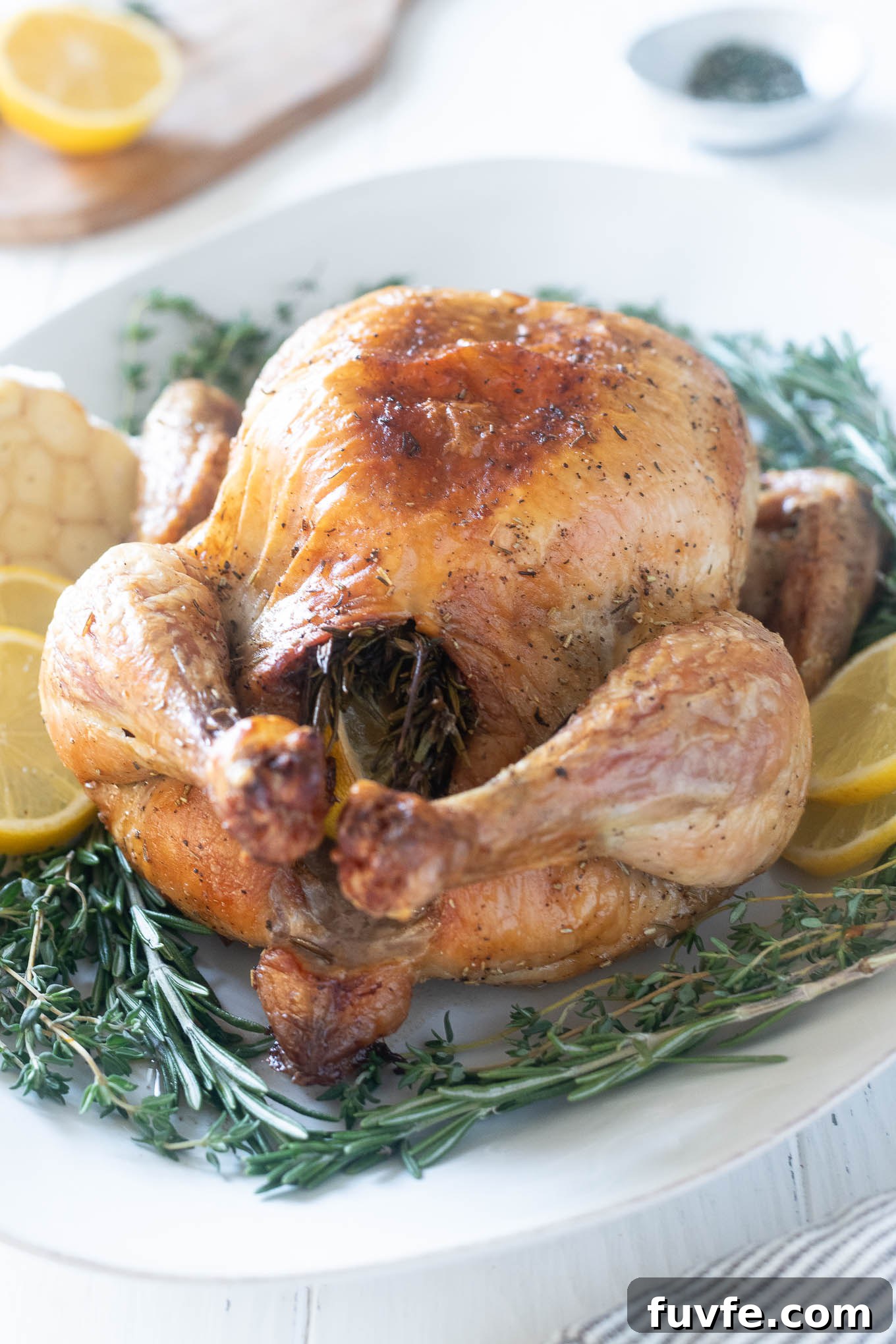
Lemon Garlic Roasted Chicken is a classic roast that delivers juicy meat, golden-brown crispy skin, and bright lemon-garlic flavor. It’s simple enough for a weeknight, elegant enough for guests, and easy to prepare ahead of time. Use the leftovers for salads, soups, or to make homemade stock from the carcass.
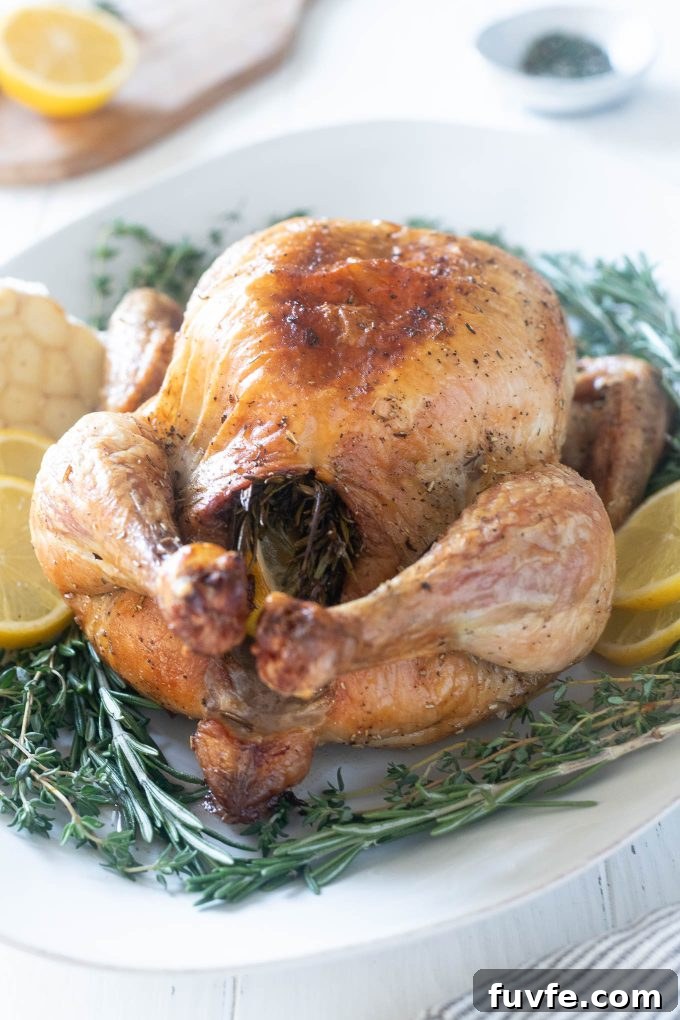
Roasting a whole chicken is economical and satisfying: everyone can choose breast or dark meat, and a single bird feeds a family with extra for leftovers. This recipe uses a dry brine for more flavorful, juicier meat and extra-crispy skin. If you prefer a faster cook, spatchcocking is an option, but a traditional trussed roast makes a beautiful presentation for any occasion.
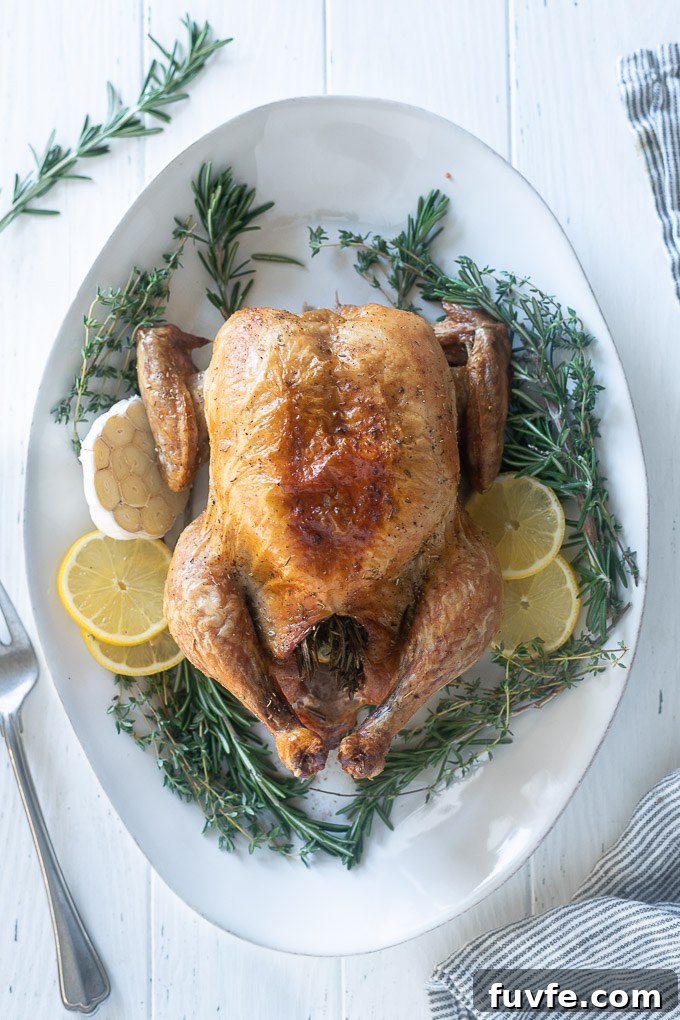
Why you’ll love this recipe
- Juicy, well-seasoned meat with lemon and garlic infused through the cavity.
- Perfectly golden, crispy skin thanks to a simple dry brine step.
- Minimal hands-on prep—about 15 minutes—and flexible timing for busy schedules.
- Dairy- and gluten-free, and easily customized with your favorite herbs and seasonings.
Recipe ingredients
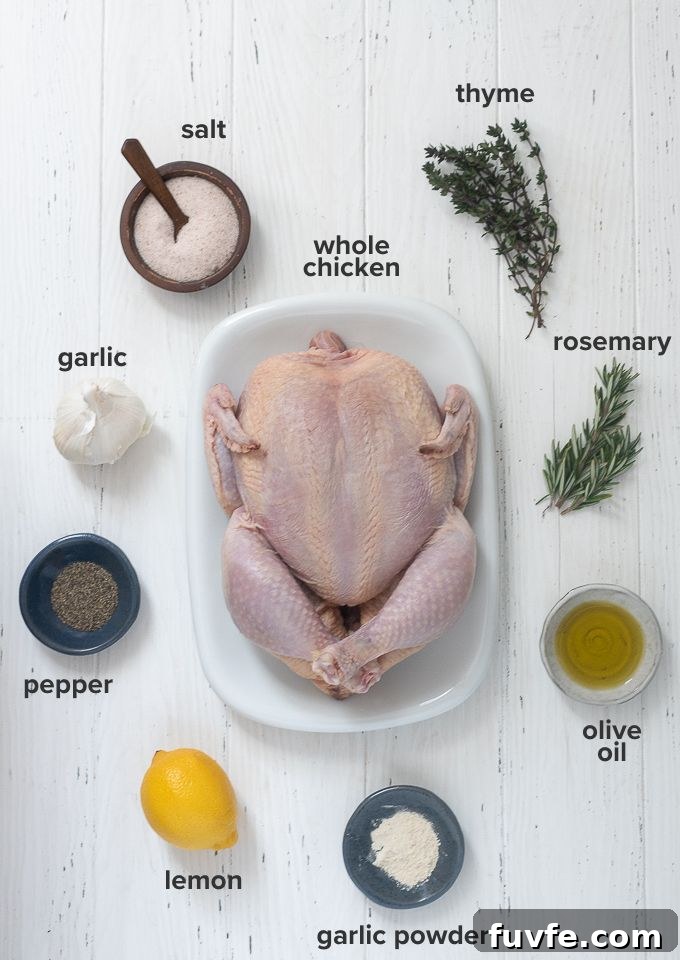
- Whole chicken — about 4 lb. Adjust cooking time for a larger or smaller bird.
- Kosher salt — about 1 tablespoon, or enough to season the chicken generously (used for dry brining).
- Olive oil — 1.5 tablespoons to help the skin brown.
- Garlic powder — 1.5 teaspoons.
- Dried rosemary — 1.5 teaspoons (or substitute your favorite dried herbs).
- Black pepper — 1 teaspoon.
- Lemon — 1, quartered (any citrus or an onion can be substituted).
- Garlic — 1 head, halved crosswise to release flavor into the cavity.
- Fresh herbs — 3 sprigs rosemary or thyme (optional, for the cavity).
How to roast a chicken
Roasting a whole chicken is both impressive and straightforward. The dry brine enhances flavor and helps the skin crisp. For best results, dry brine the chicken at least one day ahead and allow it to come to room temperature before roasting.
Pro tip: A 4 lb. chicken will generally take around 75–90 minutes total when roasted 30 minutes at 400°F followed by 45–60 minutes at 350°F. Ovens vary, so check the chicken after 60 minutes of total cooking time. The chicken is done when a thermometer inserted into the thickest part of the thigh (without touching bone) reads 175°F.
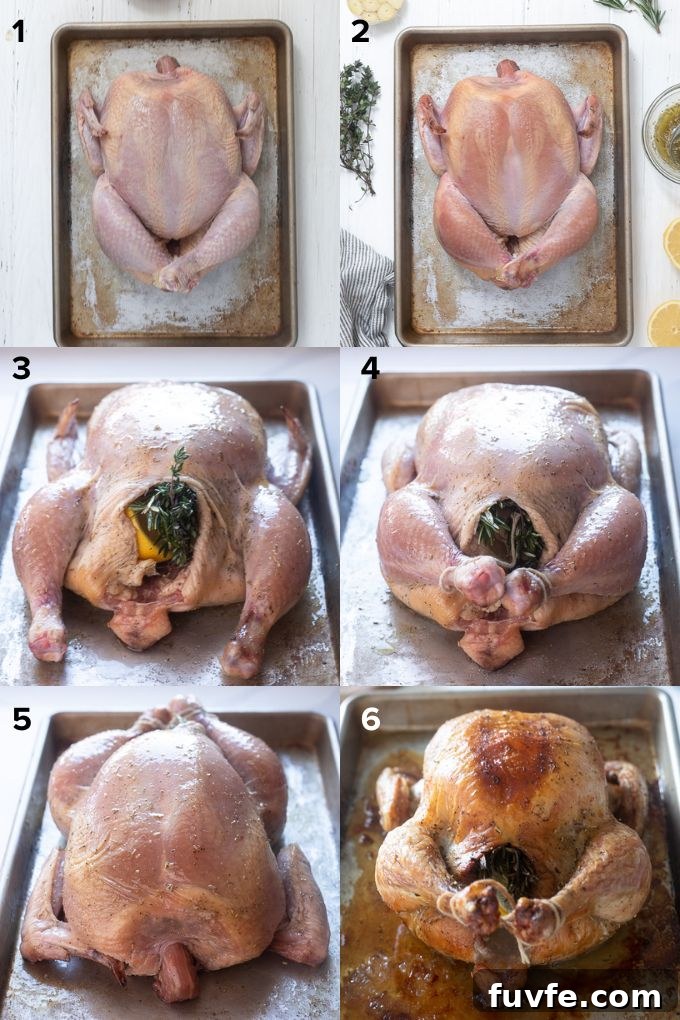
- Remove giblets from the cavity and pat the chicken dry with paper towels. Generously salt the inside of the cavity and the outside of the bird; place the chicken on a rimmed baking sheet. Refrigerate uncovered for 1–3 days to dry brine. The skin will look very dry after this step.
- Remove the chicken from the refrigerator about 1 hour before roasting to come to room temperature.
- Preheat the oven to 400°F. In a small bowl, combine olive oil, garlic powder, dried rosemary, and black pepper. Rub the mixture over the outside of the chicken.
- Stuff the cavity with the quartered lemon, halved head of garlic, and herb sprigs. Truss the legs with baking twine and tuck the wing tips underneath the front of the bird.
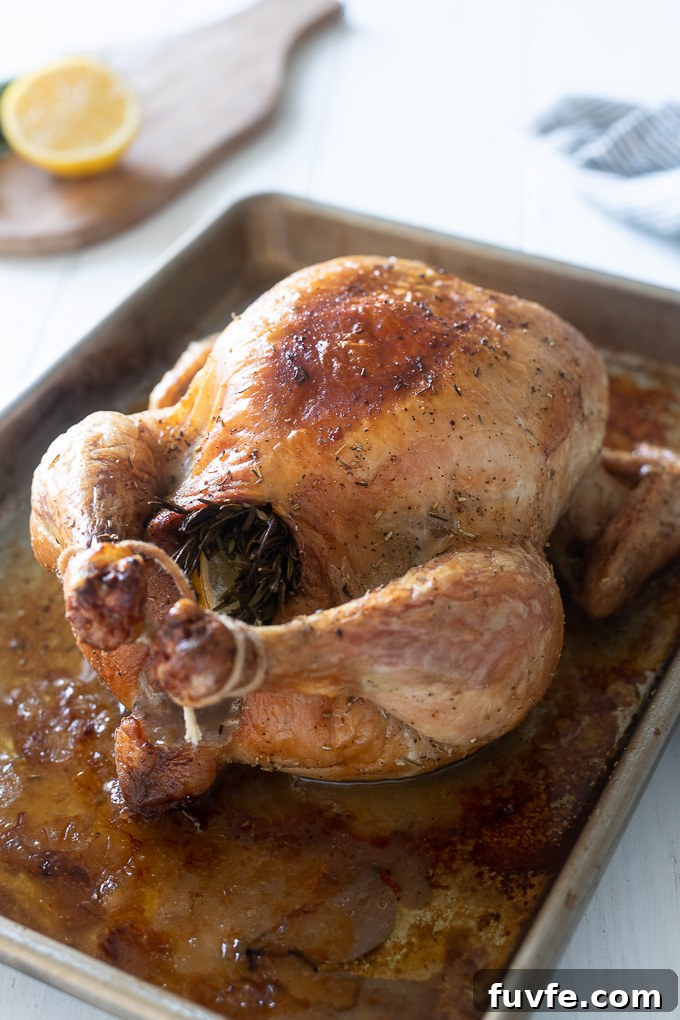
- Roast uncovered at 400°F for 30 minutes to promote browning. Reduce the oven temperature to 350°F and continue roasting for another 45–60 minutes, or until the thigh thermometer reads 175°F. If the skin browns too quickly, loosely tent the chicken with foil for the remaining time.
- Remove the chicken from the oven and tent loosely with foil. Let it rest at least 20 minutes so the juices redistribute before carving.
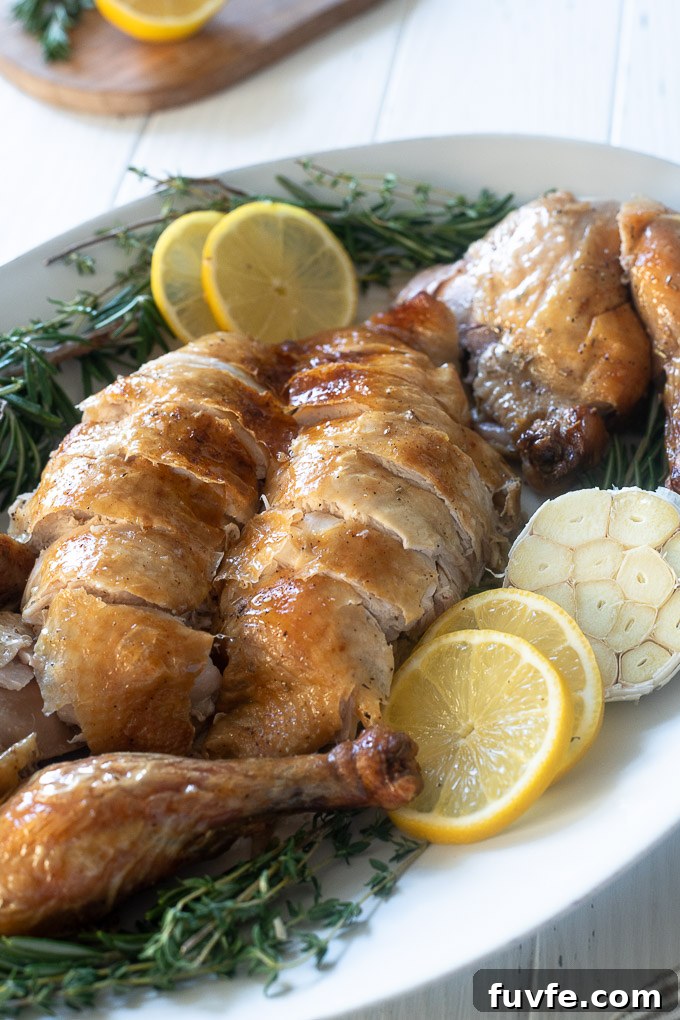
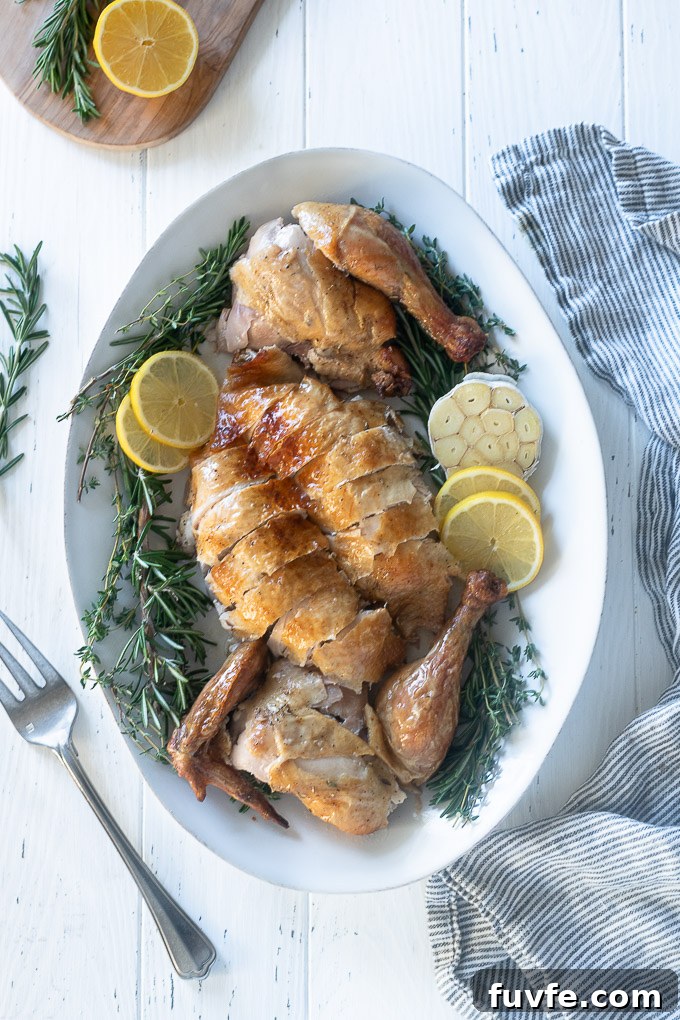
- Carve the chicken and discard the lemon, garlic, and herbs from the cavity. Reserve the carcass for stock if desired.
Recipe FAQs
Is it better to roast a chicken at 350°F or 400°F?
Start at 400°F for 30 minutes to encourage browning and shorten overall cook time, then lower to 350°F for the remainder. You can roast at 350°F the entire time, but it will take longer and may not brown as well.
Does dry brining work on chicken?
Yes. Dry brining (salting and refrigerating uncovered for 1–3 days) seasons the meat and breaks down proteins, yielding juicier meat and crispier skin. It’s less messy than a wet brine and very effective.
How long does a whole chicken take to cook?
Total time depends on the bird’s size. A 4 lb. chicken typically takes 75–90 minutes using the 400°F then 350°F method. Test for doneness with an internal thermometer.
Do I cover a chicken when roasting?
Roast uncovered to get golden skin. If the exterior is browning too quickly, loosely cover with foil for the remainder of cooking.
How long should the chicken rest before carving?
Let the roasted chicken rest, tented loosely with foil, for a minimum of 20 minutes so juices redistribute.
Serving suggestions
- Serve with mashed potatoes, parsnip purée, or mashed cauliflower for a lower-carb option.
- Make it the centerpiece for an intimate holiday meal with classic sides like green beans and sweet potatoes.
- Use leftovers for burrito bowls, chicken soup, salads, or sandwiches.
- Shredded chicken freezes well for up to three months; the carcass can be frozen and later used to make stock.
Recipe notes
- Pro tip: Check for doneness after about 60 minutes of total cooking time since oven temperatures and bird sizes vary.
- Dry brine the chicken 1–3 days ahead for juicier meat and crisp skin.
- Bring the chicken to room temperature before roasting for more even cooking.
- Adjust herbs and citrus to your preference—thyme, sage, or orange will also work well.
- Store leftovers refrigerated up to 3 days or frozen up to 3 months.
Nutrition (per serving)
Serving: 0.5 lb. — Calories: 523 kcal; Carbohydrates: 3 g; Protein: 43 g; Fat: 37 g; Saturated Fat: 10 g; Cholesterol: 170 mg; Sodium: 1032 mg; Potassium: 474 mg; Fiber: 1 g; Sugar: 0.4 g; Vitamin A: 334 IU; Vitamin C: 12 mg; Calcium: 38 mg; Iron: 2 mg.
Nutrition is estimated and provided for guidance only.
Did you try this recipe? If so, I’d love to see your results—share how it turned out and any changes you made.