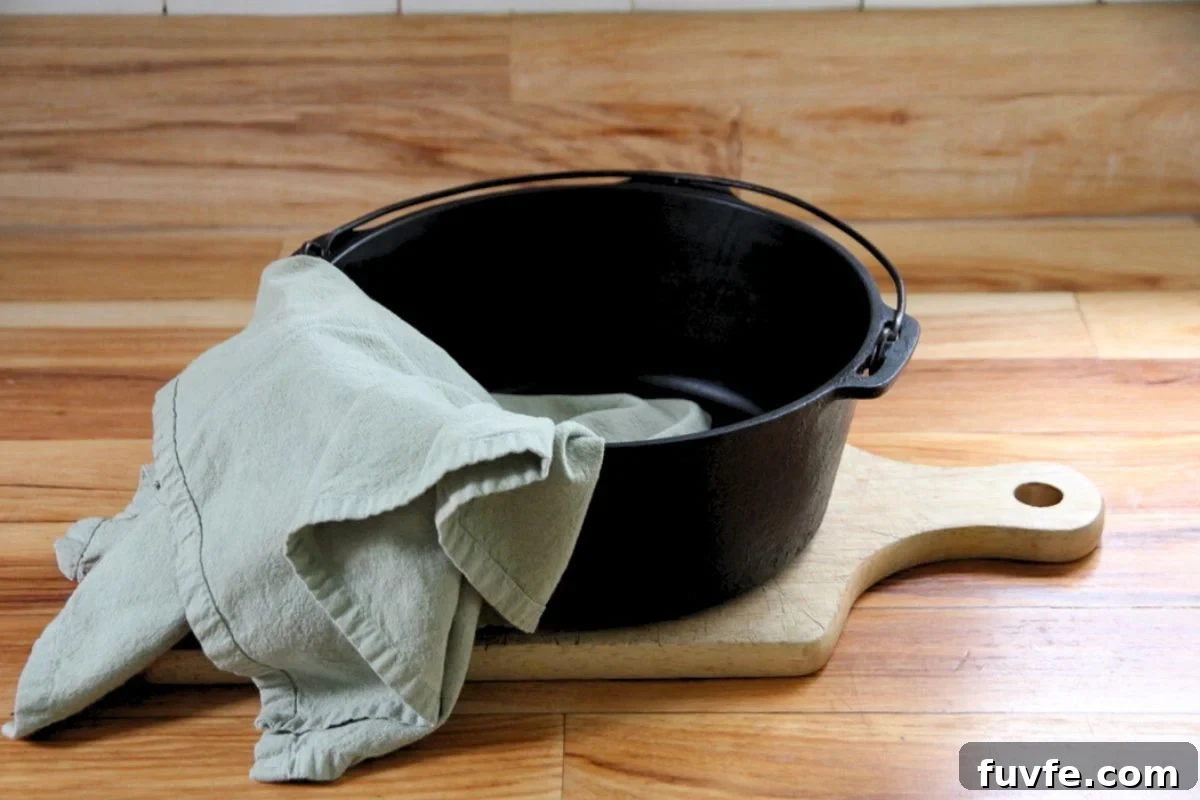
Learn how to care for your cast iron cookware so it stays in great shape and resists rust.
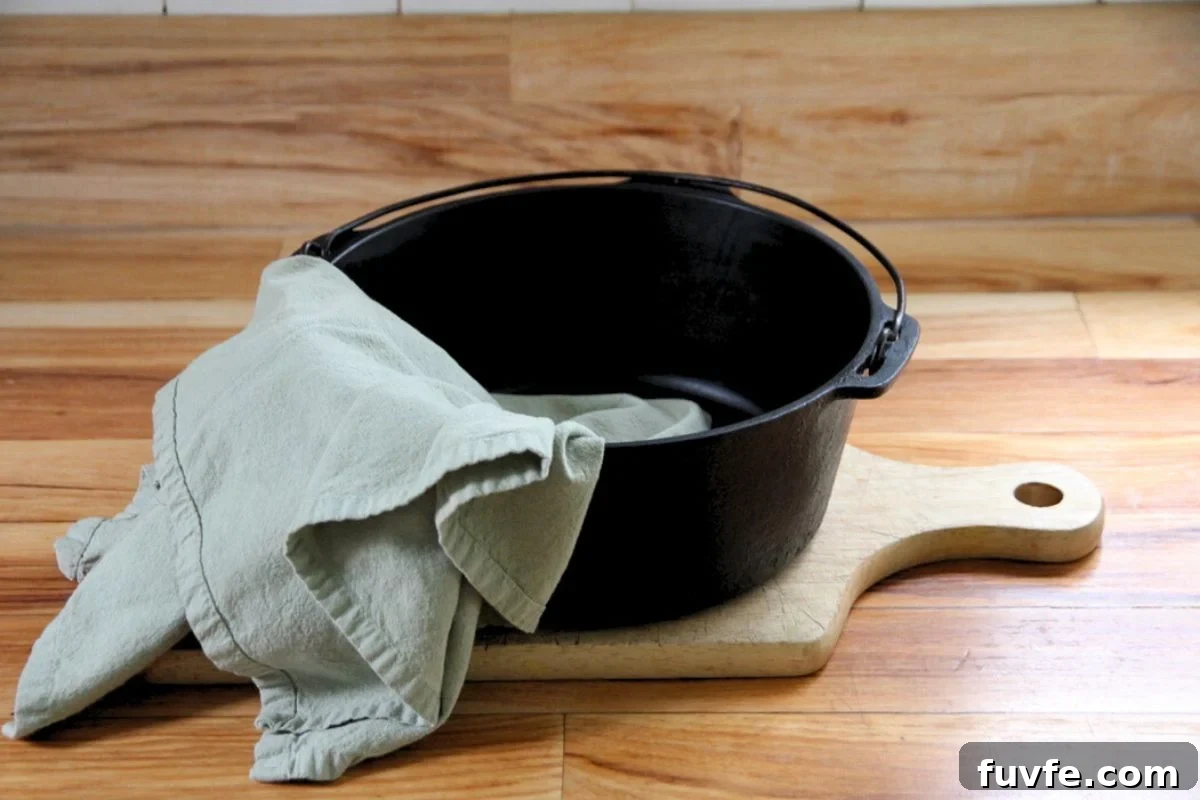
Cast iron is one of the most durable and versatile types of cookware you can own. With proper care it can last for decades, developing a naturally nonstick surface that improves with use.
Unlike many modern nonstick pans whose coatings can flake and fail, traditional cast iron can be restored if the finish wears away. A simple seasoning routine builds a protective layer of polymerized oil that helps prevent food from sticking and shields the metal from moisture and rust.
Because cast iron is porous iron, it will rust if water is allowed to sit on the cooking surface or inside the vessel for prolonged periods. The good news is rust is easy to prevent with a few consistent habits.
Below are practical steps to keep your cast iron in excellent condition and avoid stubborn rust spots.
6 Simple Steps to Prevent Rust
Maintain the Nonstick Surface on Your Cast Iron
Cast iron arrives from the factory with a light protective coating in many cases, but you should maintain that finish by seasoning the pan yourself. Seasoning creates a hard, slick layer that protects the iron and improves cooking performance. For most home cooks, re-seasoning once a year is sufficient; you can do it more often if the surface starts to look dull or sticky.
A brief overview of the oven seasoning method:
- Preheat your oven to 350–400°F (175–200°C).
- Warm the clean pan briefly in the oven to remove residual moisture.
- Using an oven mitt, remove the pan carefully.
- Apply a thin, even layer of oil or rendered fat over all cooking surfaces.
- Wipe off excess so the surface appears glossy but not pooled.
- Place the pan upside down in the oven and bake for 2–3 hours, or until the oil has polymerized and lost its shiny look.
- Repeat one or two more times if you want a stronger seasoning layer.
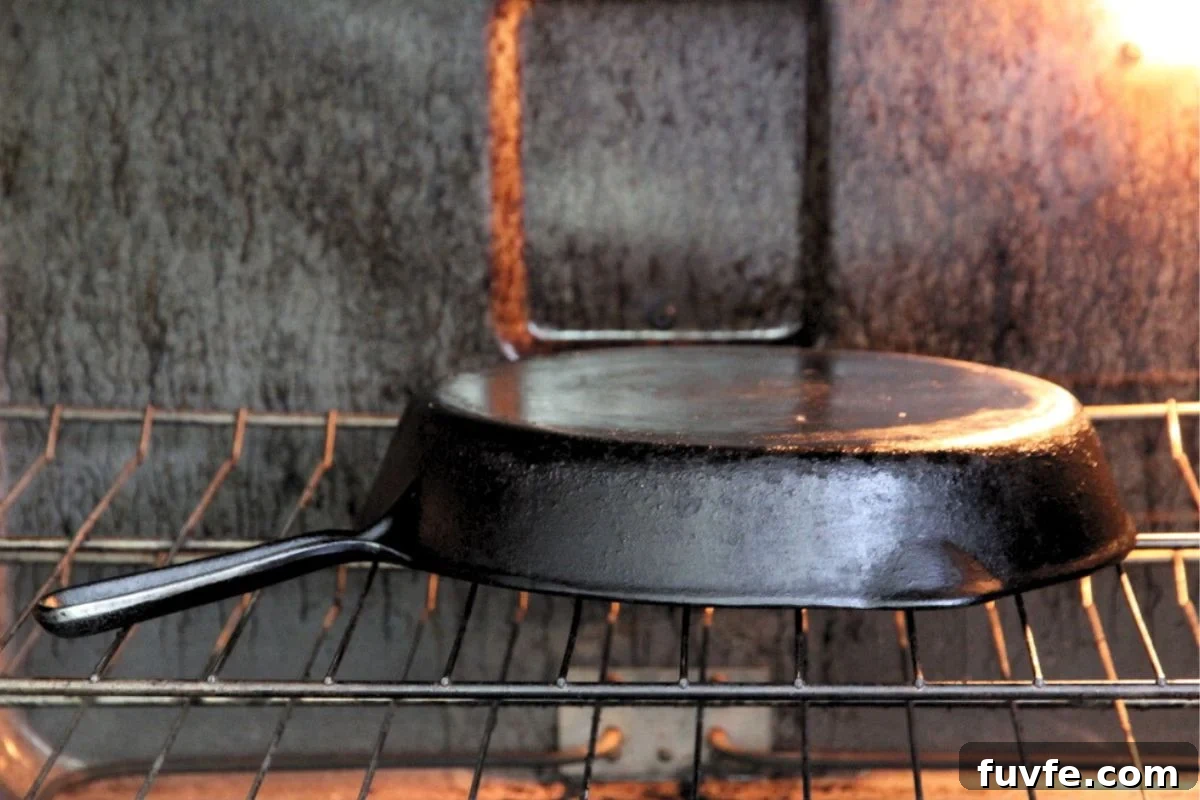
A solid seasoning is the single most effective defense against rust. Below are additional habits that help preserve that finish.
Don’t Store Acidic Foods in Your Cookware
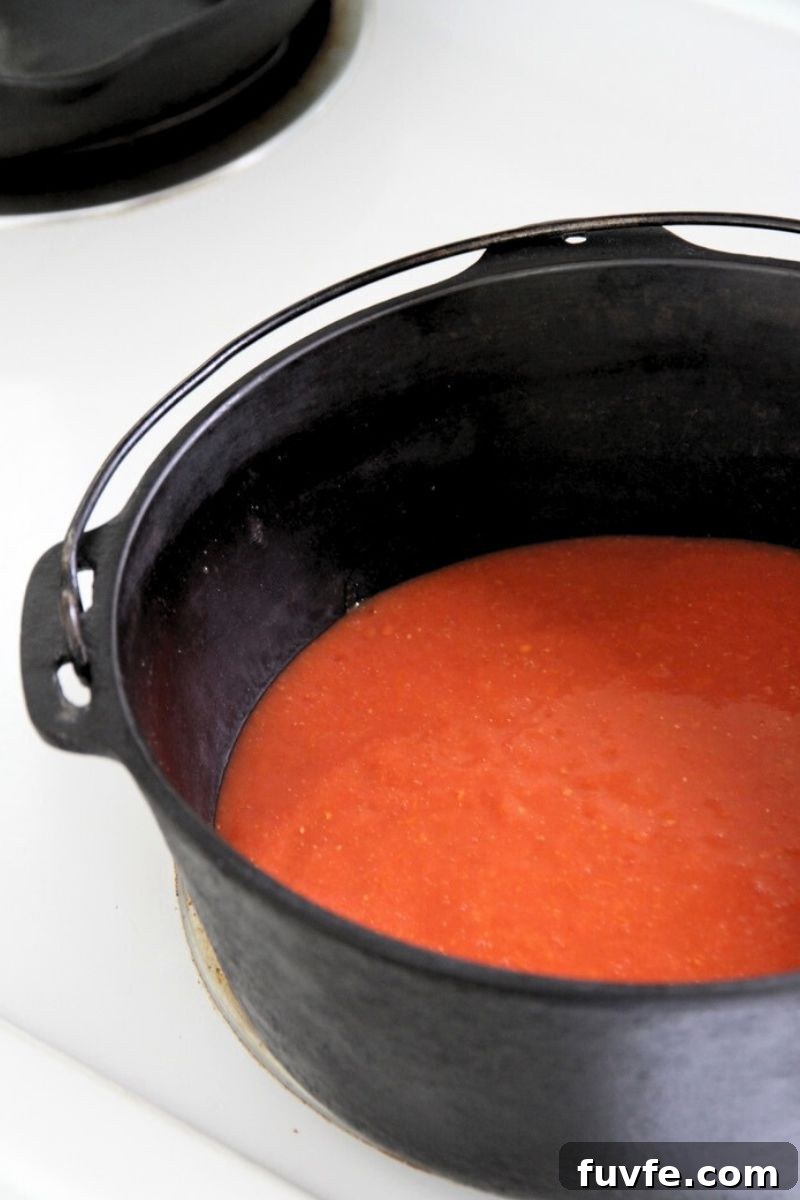
Cooking tomatoes, citrus-based sauces or vinegar-rich dishes in cast iron is fine, but acidic foods can gradually erode the seasoning if left to sit. Transfer leftovers to another container for storage rather than refrigerating them in the skillet or Dutch oven.
After cooking acidic foods, wash the cookware promptly in hot water (you may use soap if needed) to remove residues that could damage the seasoning.
Thoroughly Dry Cast Iron After Washing
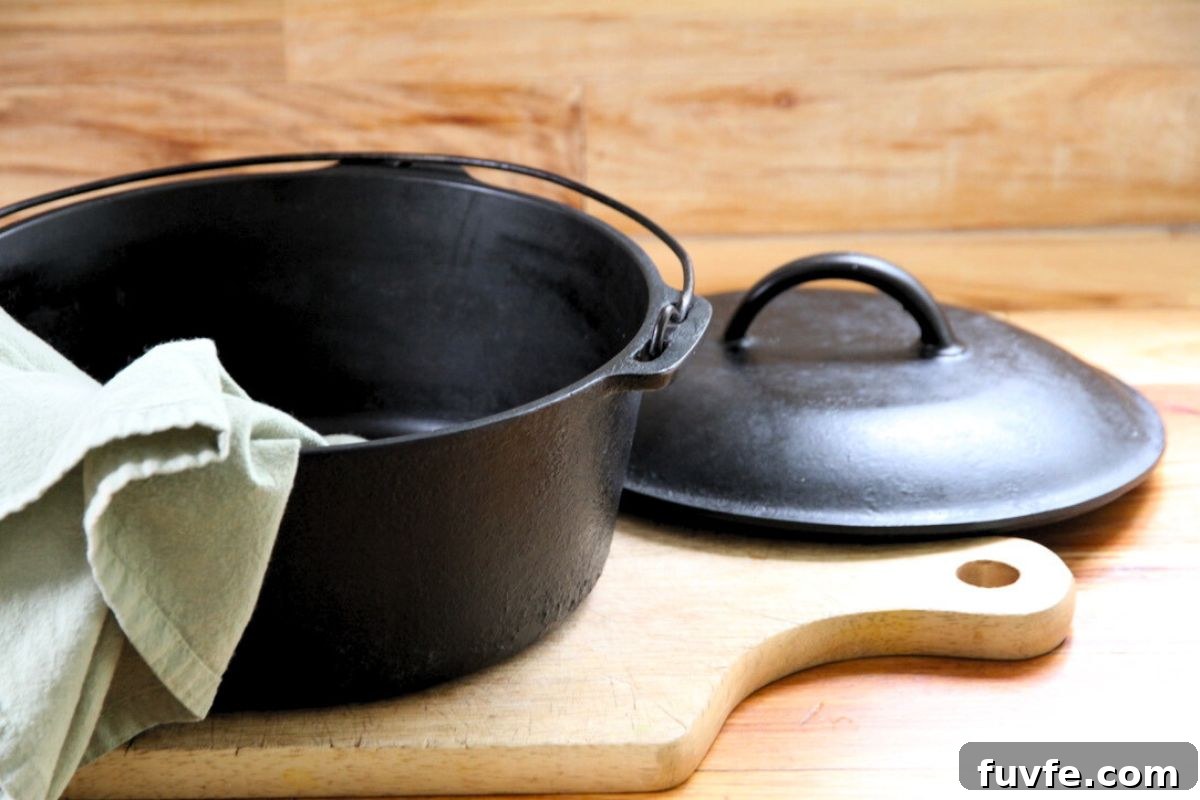
Cleaning methods vary—hot water only, light soap, or coarse salt scrubbing—but the important step is to dry the cookware completely. Air drying can work, but I prefer wiping with a clean tea towel right after washing. Do not let water sit in the pan or lid; even a small amount of moisture left on the metal can lead to rust over time.
Apply a Light Layer of Oil After Washing
Once dry, rub a thin layer of oil or fat onto the cooking surface. This light coating helps maintain the seasoning and provides short-term protection against moisture when the cookware is in storage.
Avoid Stacking Other Cookware with Cast Iron
Stacking cast iron skillets together is fine for saving space, but if you place other types of cookware on top make sure everything is completely dry. Any trapped moisture between stacked items can promote rust, so take care to store cookware dry and separated when possible.
Store Cast Iron in a Dry Place
Keep cast iron where humidity and lingering moisture are unlikely—avoid storage above the stove, under sinks, or near appliances that produce condensation. A dry cabinet or pantry shelf is ideal.
How to Deal with Light Rust
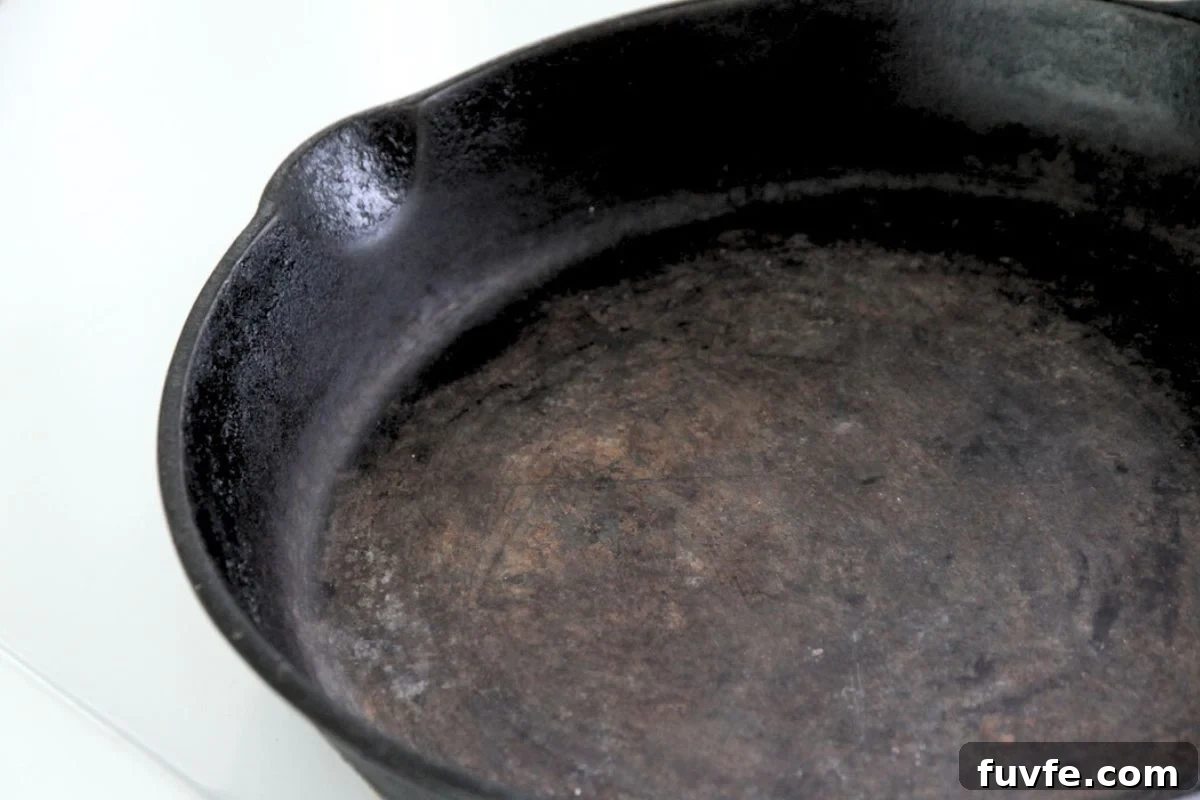
Finding a few rust spots on cast iron is common and easy to fix. Light surface rust can often be removed and the pan re-seasoned in a short time.
Option 1
Re-season the cookware in the oven following the steps above. Oven seasoning restores the protective layer and removes minor surface oxidation as the oil polymerizes onto the metal.
Option 2
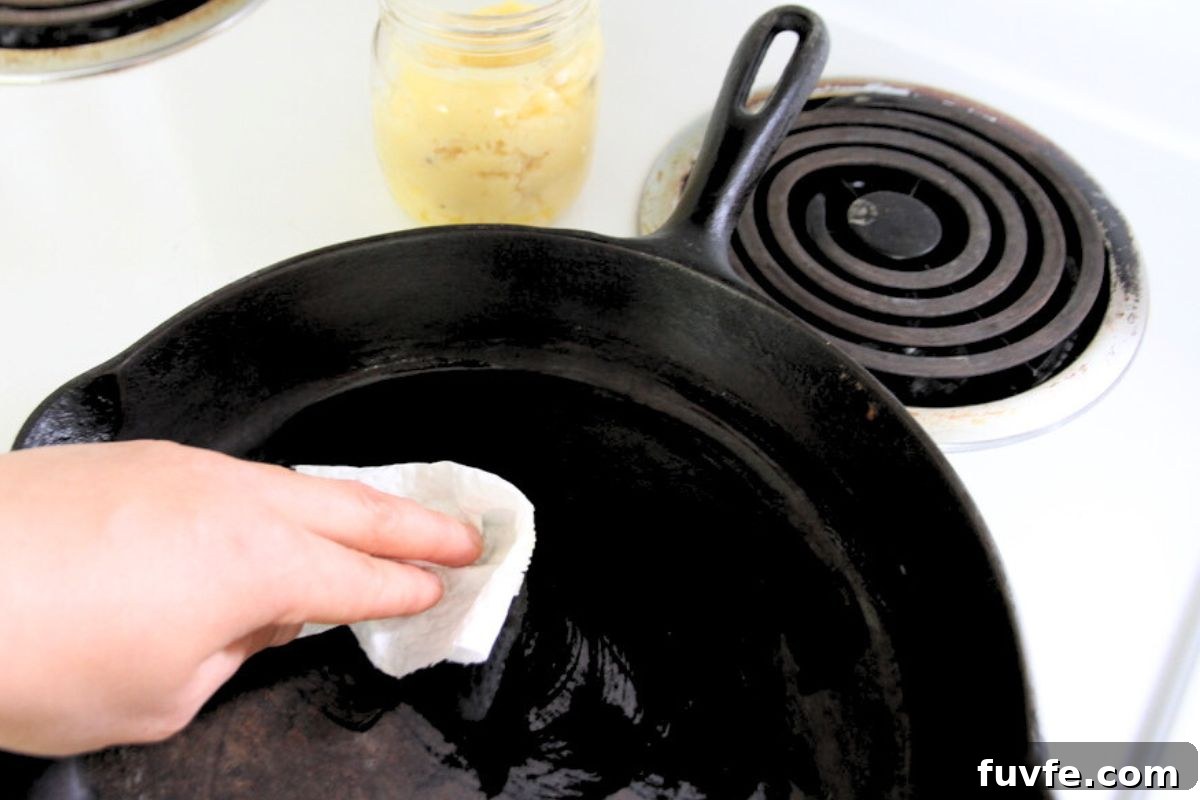
For a quicker, temporary fix, heat the pan on the stovetop and rub in a thin layer of oil while the surface is warm. It’s fine if the oil smokes a little—this helps bond the oil to the metal. Wipe the surface with paper towel while using an oven mitt to protect your hand.
If the rust is extensive, you’ll need to remove it with scrubbing (steel wool or a wire brush) before re-seasoning. Heavy rust restoration takes more effort and a separate, dedicated process.
With regular care—thorough drying, occasional reseasoning, and proper storage—cast iron will remain a reliable, long-lasting part of your kitchen toolkit.
Read More on Cast Iron Cookware
How to Clean a Cast Iron Dutch Oven
Best Fats and Oils for Seasoning Cast Iron Cookware
How to Create a Non-Stick Surface on Your Cast Iron
How to Store Cast Iron Cookware in Your Kitchen