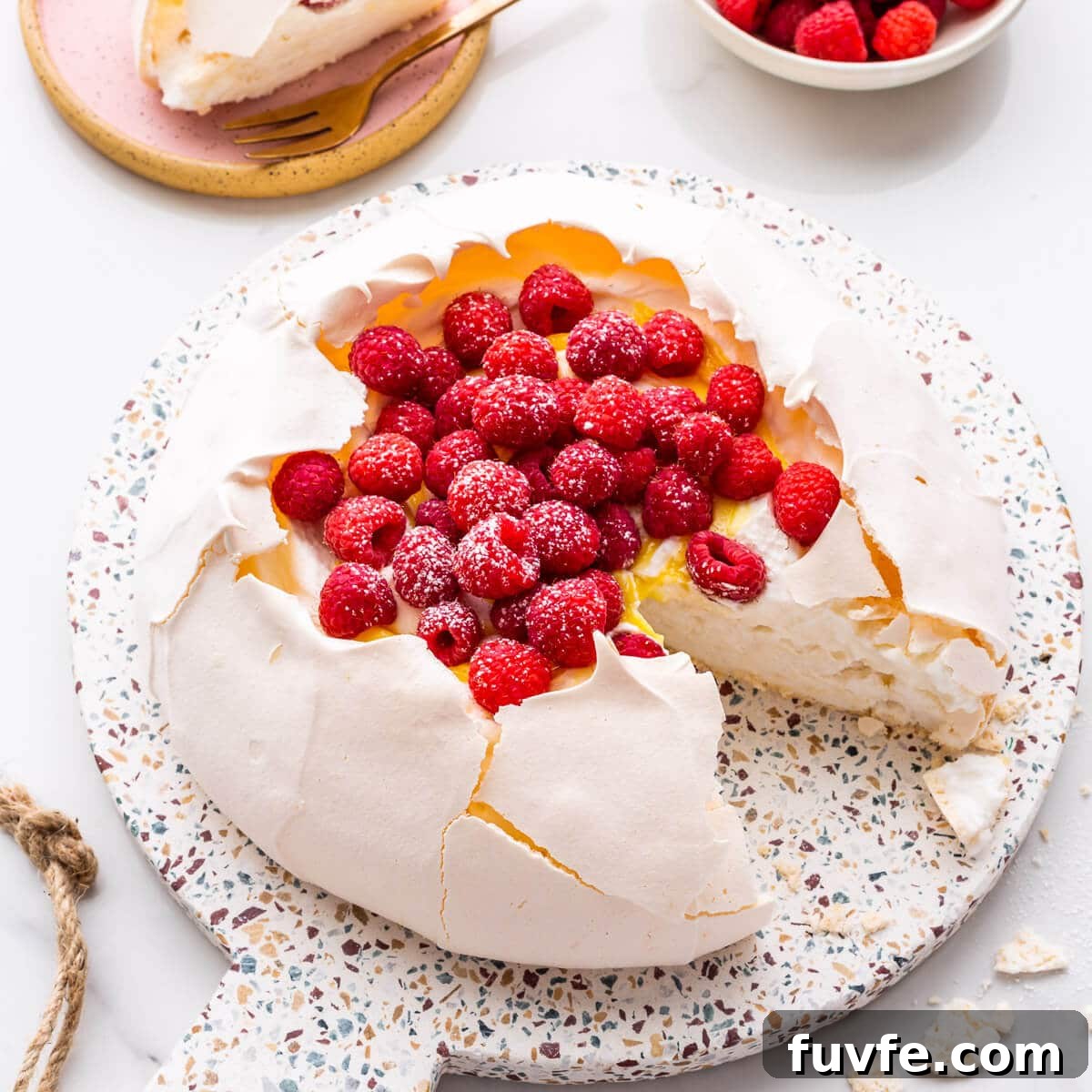
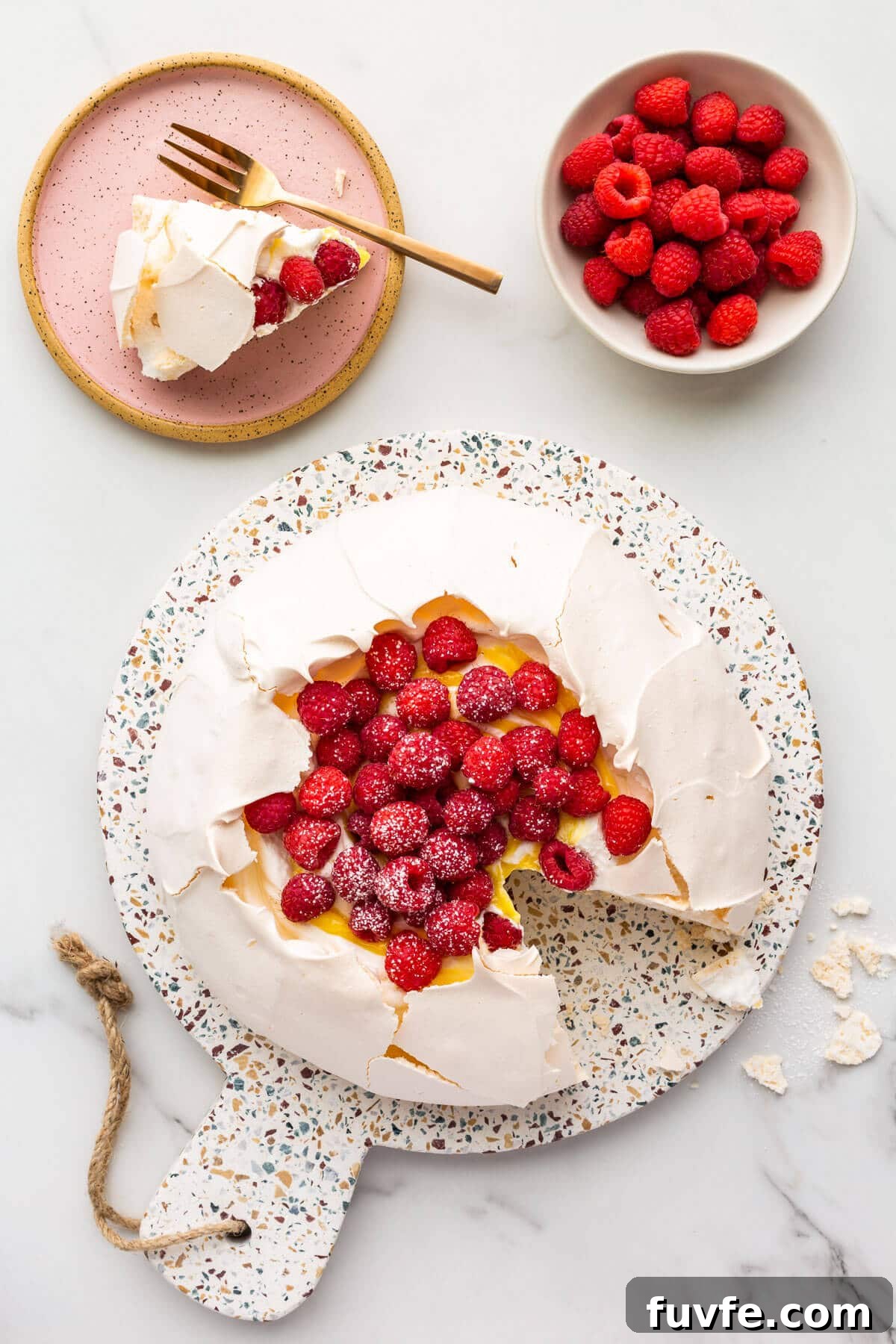
Learn how to make a classic pavlova with this detailed recipe. Pavlova is a single-layer meringue cake that bakes into a crisp, delicate shell with a soft, marshmallow-like center. It is traditionally topped with whipped cream and fresh berries; here it’s finished with lemon curd, lots of whipped cream, and raspberries for bright contrast.
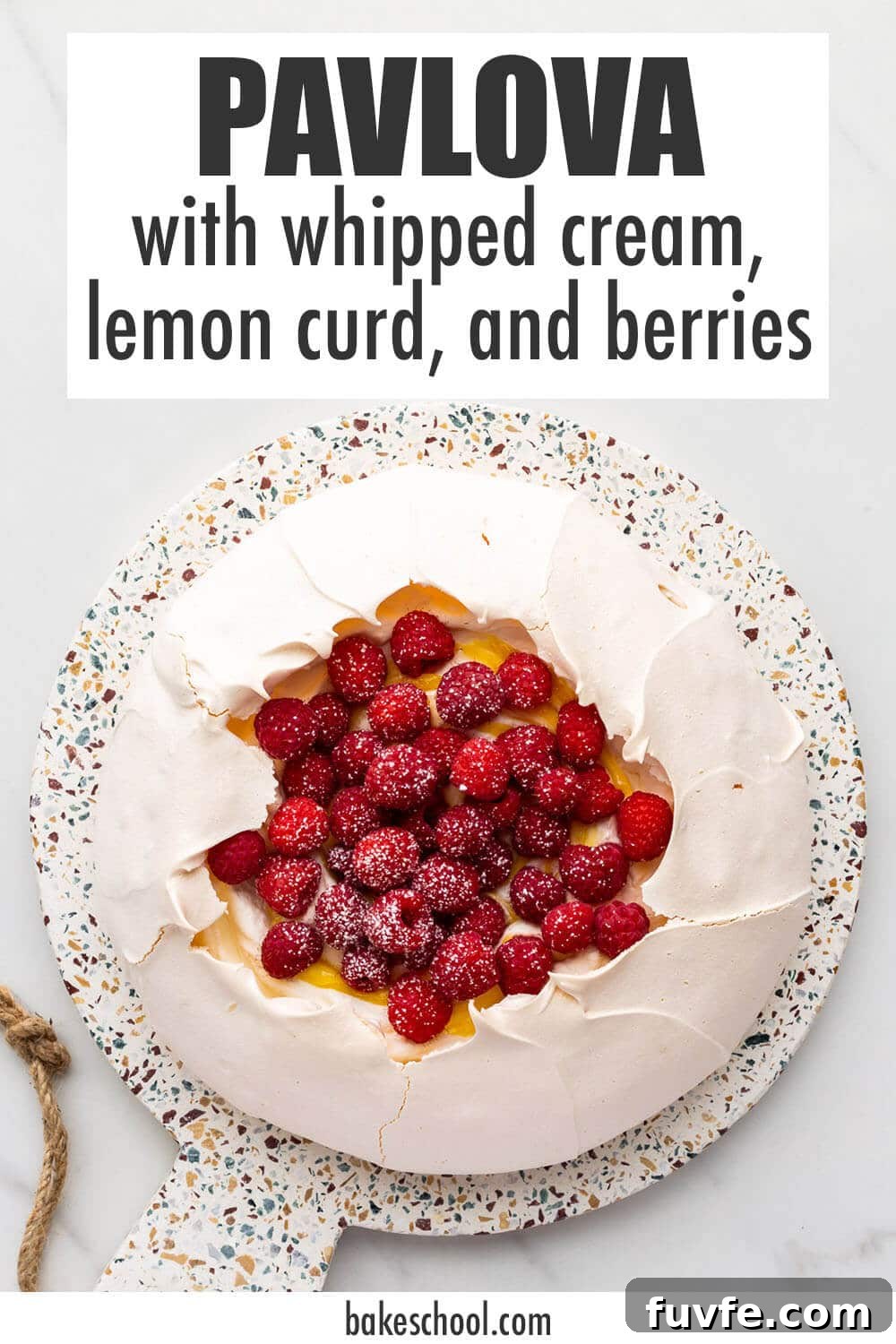
Pavlova is not your typical meringue
Pavlova is a meringue-based cake formed as a single, large disk. When baked correctly, the outside becomes crisp and delicate while the interior stays soft, pillowy, and marshmallowy. Some parts can be slightly chewy. This texture is what distinguishes pavlova from meringue cookies, which are baked until fully dry and airy throughout.
Toppings
Pavlova is served like a cake and can be topped in many ways. The classic finish is lightly sweetened whipped cream and fresh berries. You can also add lemon curd, salted caramel, jam, or other toppings—the meringue base is a blank canvas for flavor combinations.
What makes it special
Pavlova’s appeal comes from the contrast of textures and flavors:
- Crisp outer shell, chewy or marshmallowy interior, and creamy filling.
- Very sweet meringue balanced by lightly sweetened whipped cream and bright, fresh fruit.
The difference between meringue and pavlova
Meringue is whipped egg whites with sugar (or a sugar syrup) that become stable and stiff. It’s a fundamental pastry technique used for cookies, cake bases, and buttercreams. Pavlova is a meringue that contains cornstarch (and often an acid like vinegar) to create a crisp exterior and a soft, marshmallow center. All pavlovas are meringues, but not all meringues are pavlovas.
Ingredients you need to make the best pavlova every time
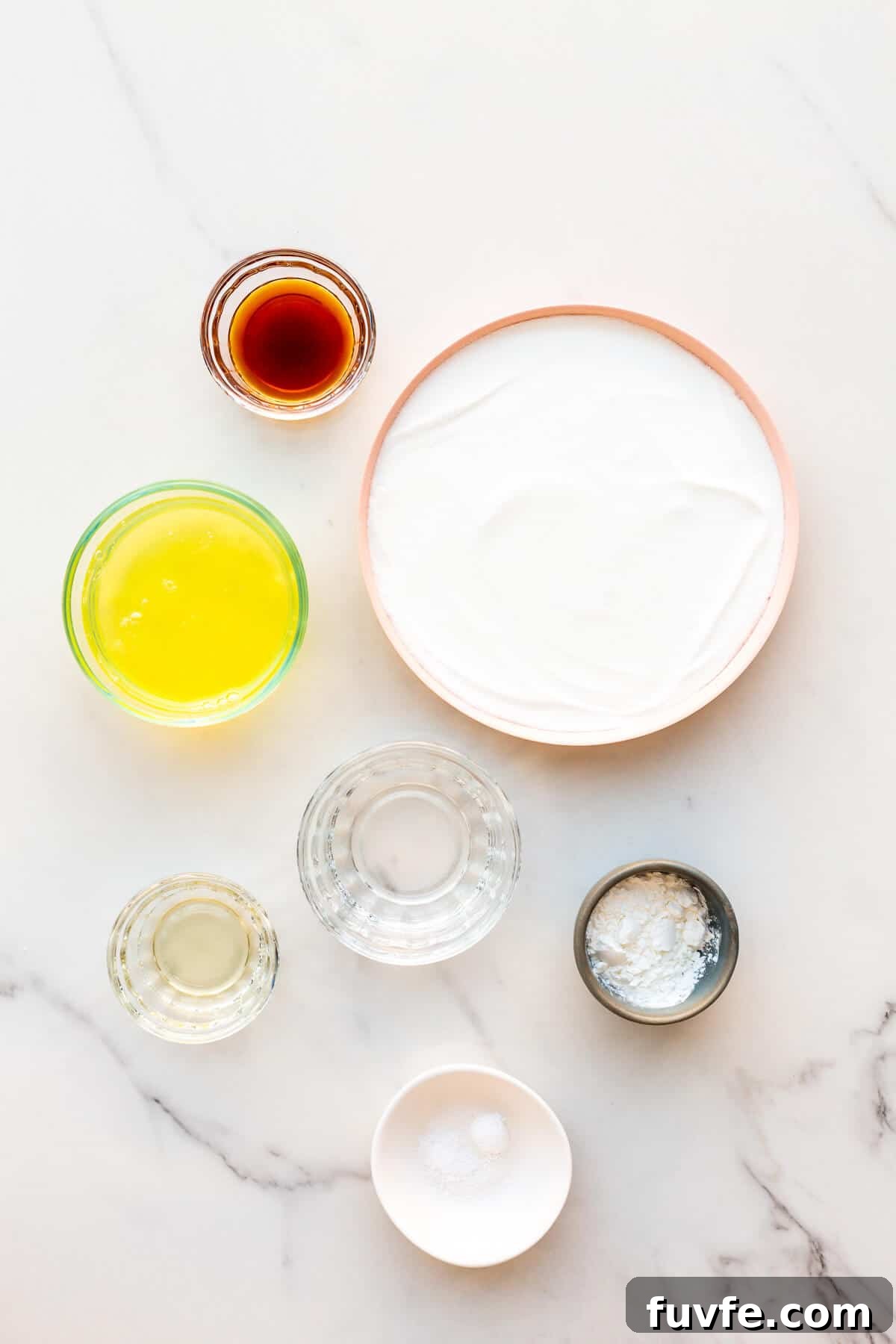
Beyond the basic egg whites and sugar, pavlova relies on a few specific ingredients for its signature texture. Before you start, make sure you have:
- Cream of tartar (optional but helpful) — an acid that helps unfold egg white proteins for more stable foam.
- Salt — enhances flavor and balances sweetness; use sparingly as salt can weaken foams in excess.
- Water — a small amount added to egg whites helps dilute proteins so they whip up lighter and faster and helps dissolve sugar.
- Cornstarch — essential for creating the marshmallowy interior and stabilizing the pavlova so it’s less likely to weep.
- Vinegar — an acid (apple cider or white) that helps set the meringue structure and contributes to texture.
- Superfine sugar — dissolves quickly into egg whites, preventing weeping and keeping the meringue light; if you don’t have it, make your own in a food processor.
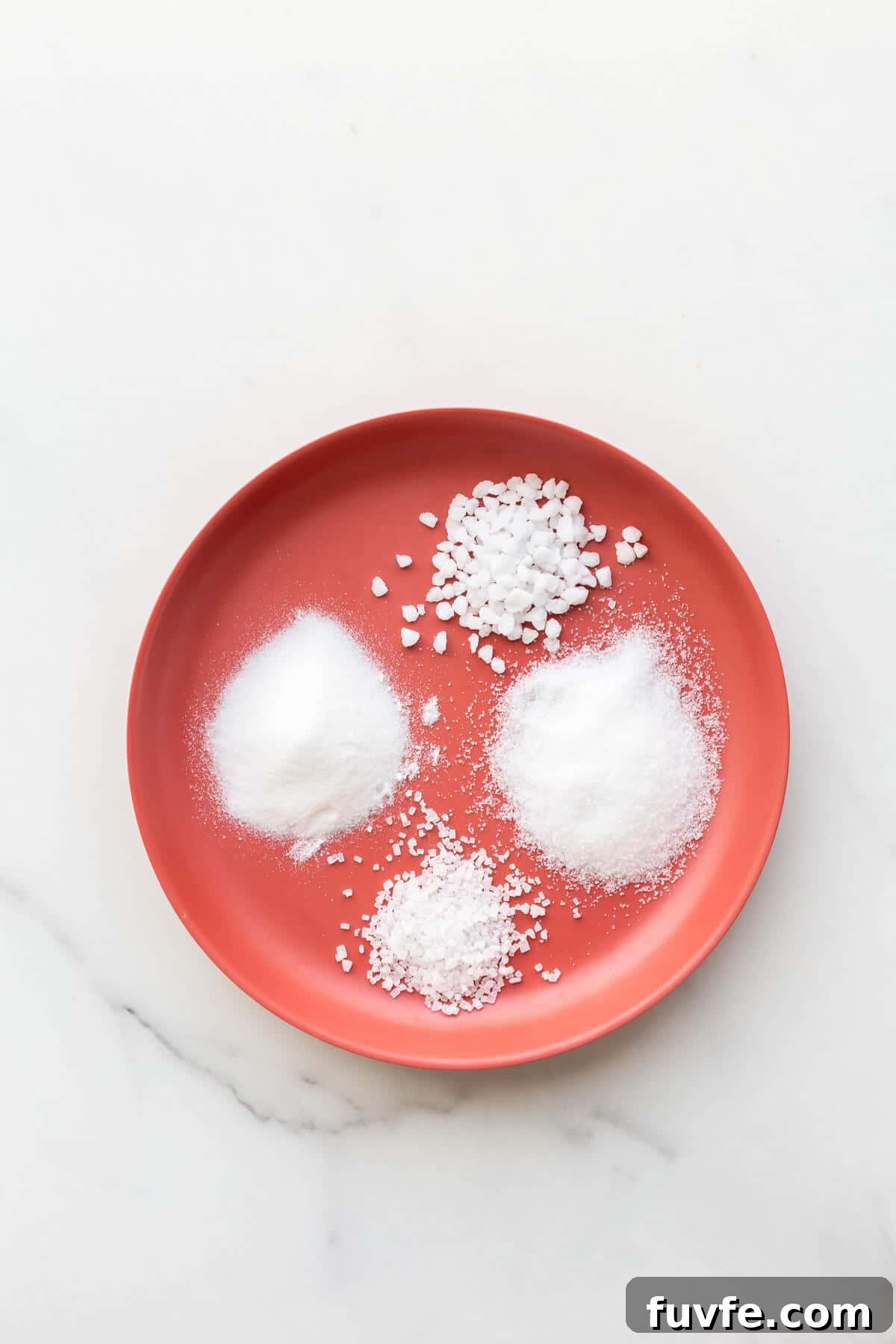
Making superfine sugar at home
To make superfine sugar, pulse granulated sugar in a food processor until the crystals are noticeably finer. A fine dust that puffs up when you open the processor indicates you have superfine sugar.
How to make pavlova
There are three main meringue techniques that can produce a pavlova: French, Swiss, and Italian. Each varies in stability and complexity.
- French meringue: Egg whites are whipped while sugar is added slowly. This is the simplest method but the least stable; it works well if using superfine sugar.
- Swiss meringue: Egg whites and sugar are heated together over a bain-marie to dissolve the sugar and slightly denature proteins before whipping. Swiss meringue is more stable than French.
- Italian meringue: Hot sugar syrup is poured into whipped egg whites, producing the most stable meringue. It’s the most technical method but yields a very firm, glossy meringue.
Any of these methods can be used for pavlova, but the French technique works well when you use superfine sugar and take care with each step. Granulated sugar is coarser and dissolves more slowly; if it doesn’t dissolve, you may see bubbling or syrup seeping from the edges as the pavlova bakes.
Critical steps for success
While the ingredients list is short, a few steps make the difference between a good pavlova and a great one. Focus on building a stable meringue, baking low and slow, and cooling without shocks.
Building a stable meringue
Whip egg whites with cream of tartar (or a pinch of salt) to soft-to-medium peaks. Add water, then incorporate sugar spoonful by spoonful very slowly. Keep whipping until the meringue reaches very stiff peaks and is glossy. Adding sugar too quickly can collapse the foam, so take your time—it can take several minutes.
Baking the pavlova
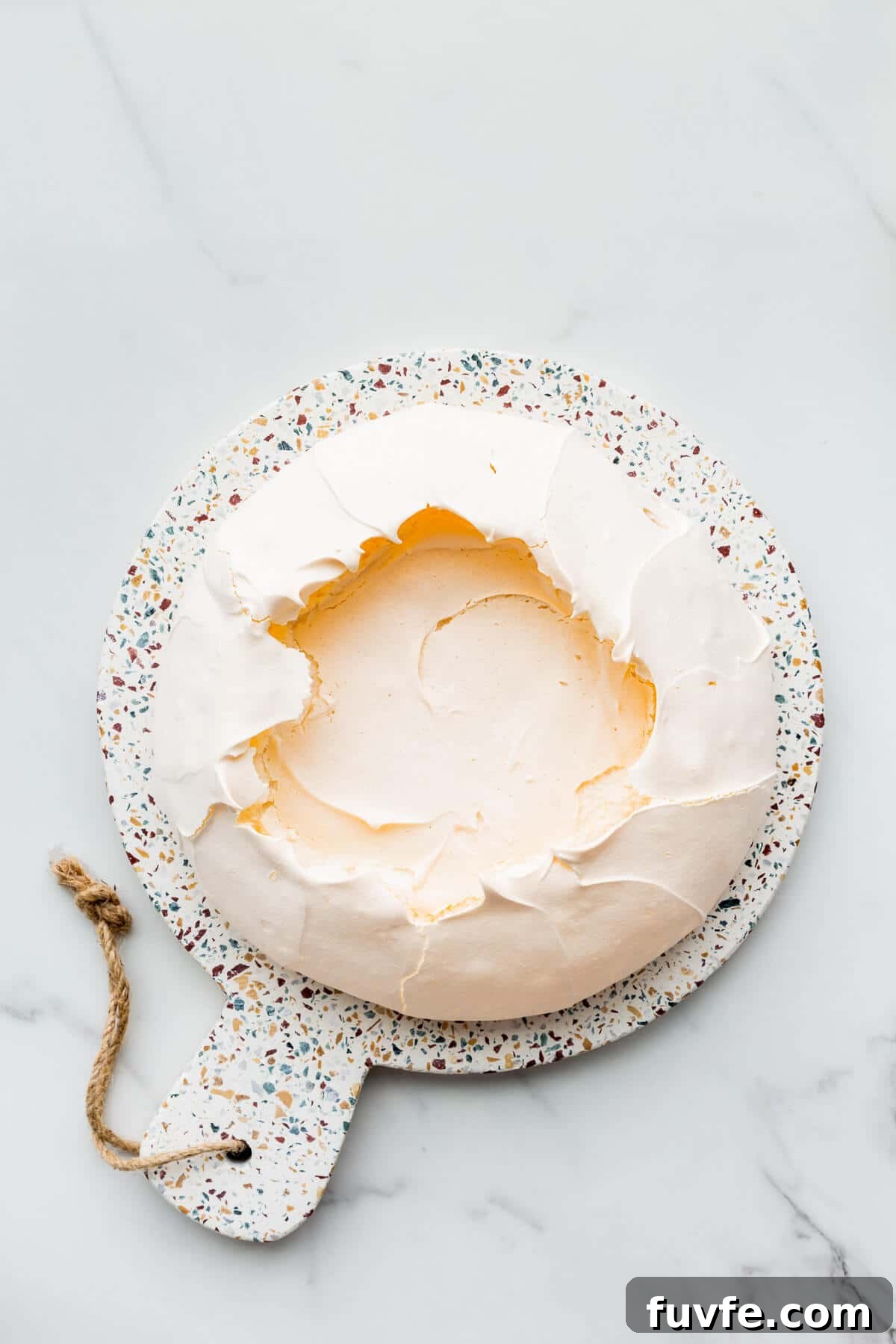
Pavlovas are baked at low temperature for a long time. A common method is to bake until set, then turn off the oven and let the pavlova cool inside with the door closed or slightly ajar so it cools gently and avoids temperature shock that can crack the shell.
Cooling the pavlova and finishing
The baked pavlova is fragile. Avoid opening the oven while it bakes and during the initial cooling. Rapid temperature changes or too-high heat can cause the shell to crack or collapse. Once cooled, carefully run an offset spatula between the parchment and the base to transfer the pavlova to a serving plate.
Whipped cream ratio
For a lightly sweetened whipped cream, use about 10% of the cream weight in icing sugar. For example, 350 g cream pairs with about 35 g icing sugar. For 375 mL cream, around 38 g icing sugar is proportional; this recipe uses 30 g (¼ cup) because the pavlova is already quite sweet. Whip to firm peaks but don’t overwhip, or the cream will separate into butter and whey.
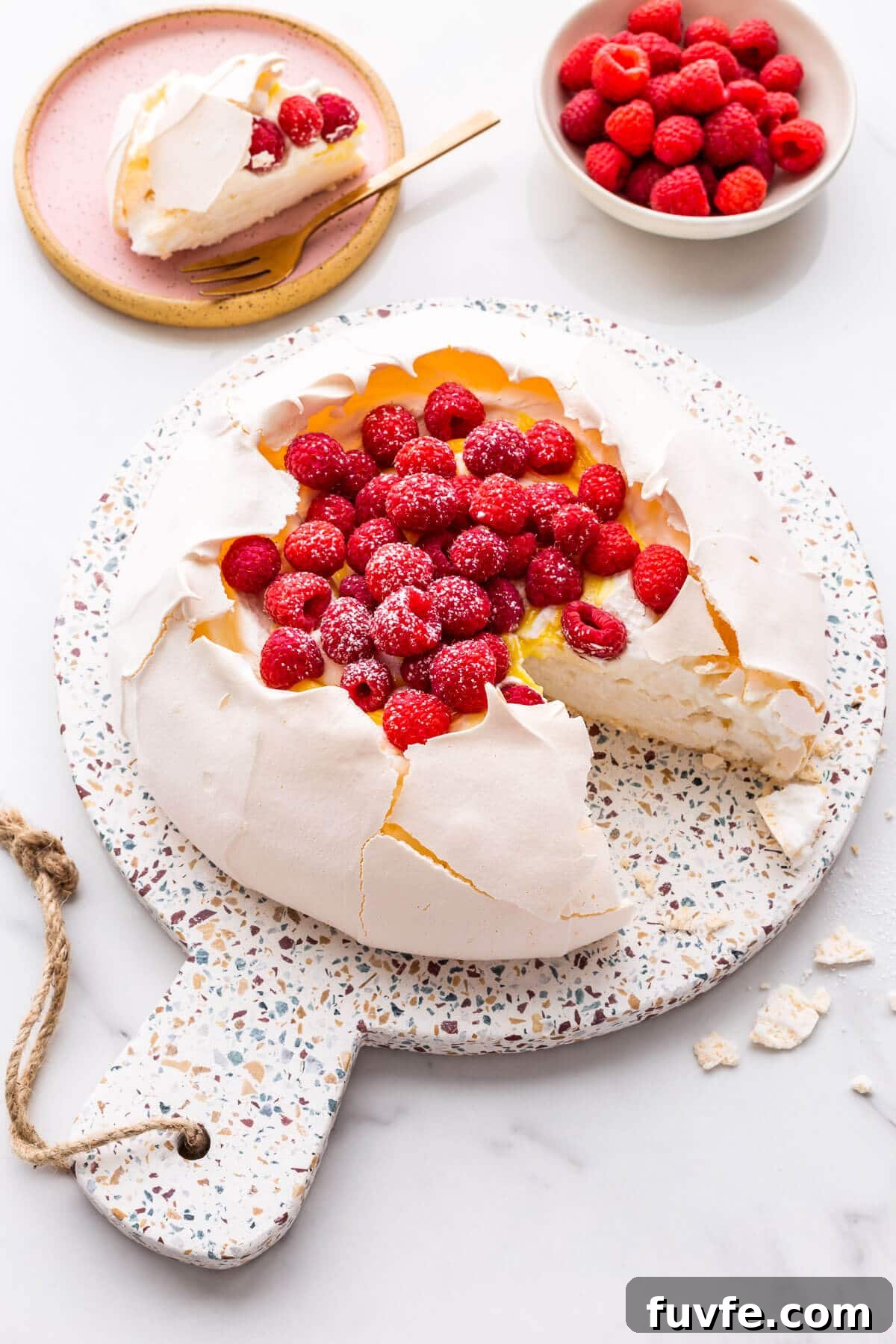
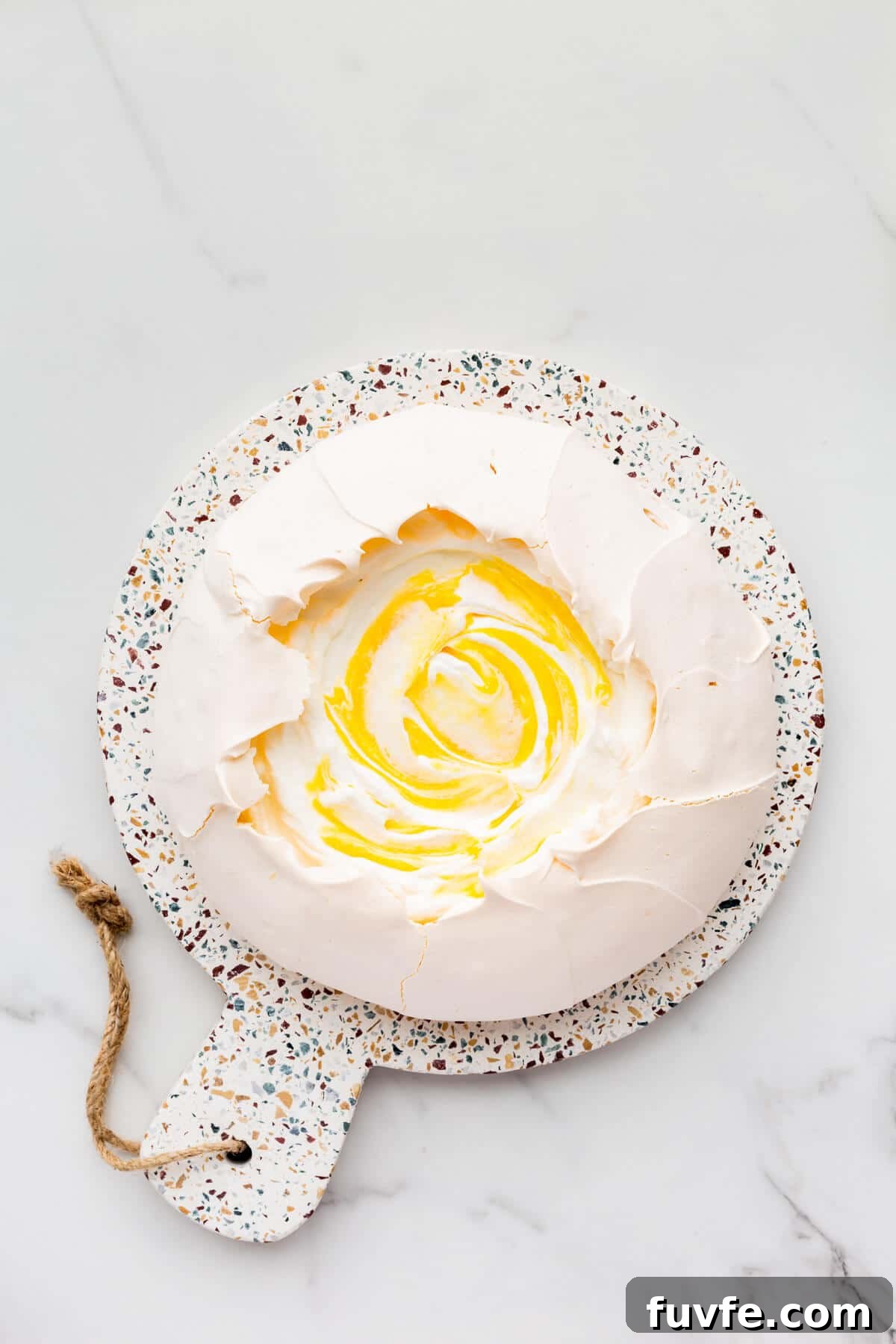
Another option is to fold lemon curd into whipped cream for streaks of bright flavor. After filling, chill the pavlova for about an hour to allow the cream to set and the meringue to soften slightly for easier slicing. Store leftovers in the fridge; textures are best within a few hours of assembly.
📖 Recipe
Equipment
- Stand mixer with whisk (or electric mixer)
- Sheet pan
- Parchment paper
- Offset spatula
Ingredients
- 150 g large egg whites (about 4–5 whites, weighed)
- 1 pinch fine kosher salt
- 0.625 mL cream of tartar (optional)
- 45 mL cold water
- 250 g superfine sugar
- 8 g cornstarch
- 5 mL pure vanilla extract
- 5 mL apple cider or white vinegar
Whipped cream
- 375 mL whipping cream (35% fat)
- 30 g icing sugar
- 5 mL vanilla bean paste or extract
Toppings
- 30 mL lemon curd
- Fresh raspberries or mixed berries
- Icing sugar for dusting (optional)
Instructions
Pavlova
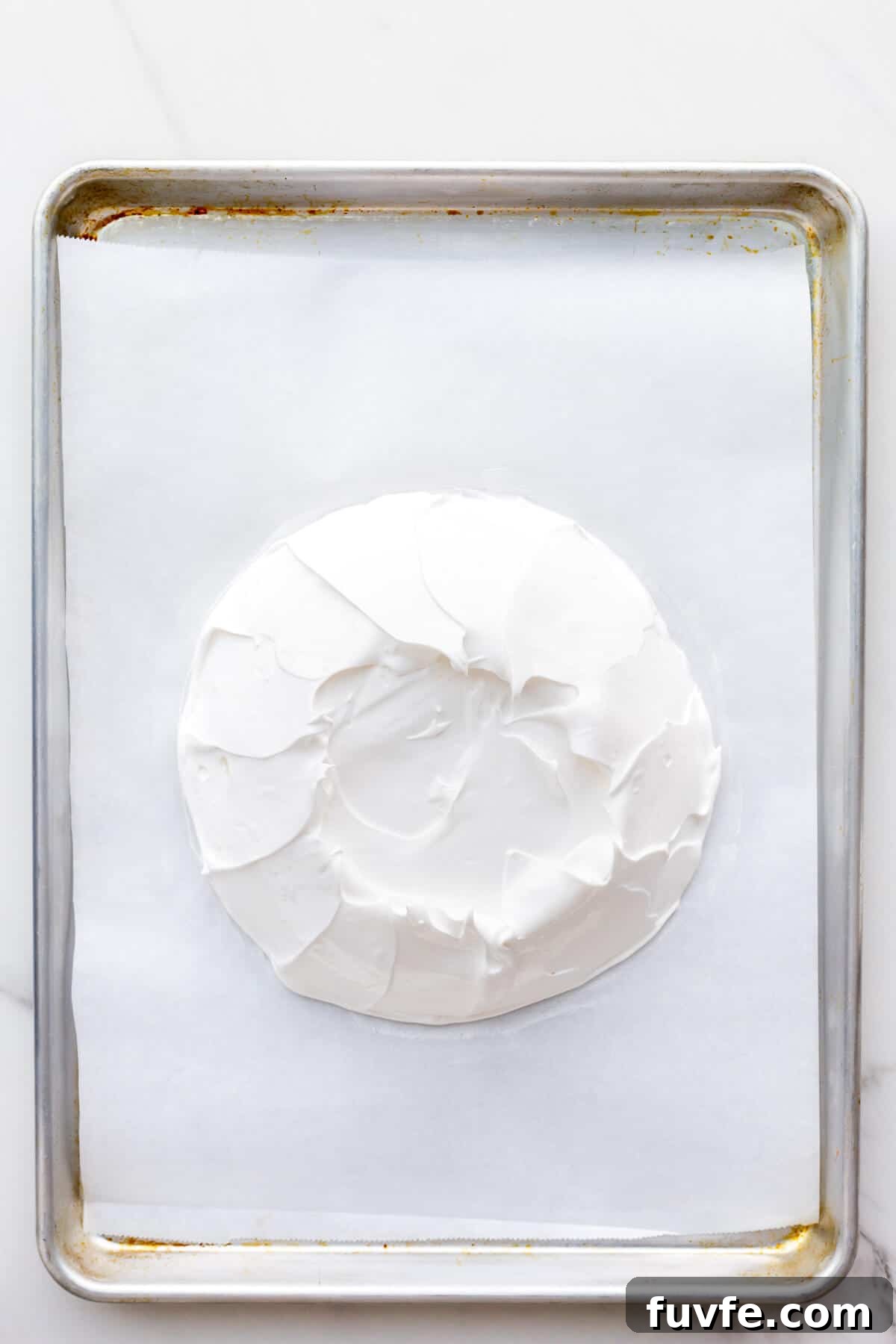
- Preheat oven to 275 °F (140 °C). Line a sheet pan with parchment and, on the underside, trace a 6–7 inch (15–18 cm) circle. Flip the paper over.
- Whip egg whites with salt and cream of tartar on medium-high until soft peaks form (about 5 minutes).
- Reduce speed to medium-low and whisk in the water.
- Add superfine sugar slowly, spoonful by spoonful, then increase speed back to medium-high and whip until very stiff, glossy peaks form.
- Fold in cornstarch, vanilla, and vinegar. The mixture will be thick and stiff.
- Dollop the meringue inside the drawn circle and build it into a tall mountain. Smooth the edges and create a shallow crater in the center to hold filling.
- Bake for 45 minutes, then reduce oven to 250 °F (130 °C) and continue baking until set — about 1 hour 15 minutes total.
- Turn off the oven, leave the light on, and let the pavlova cool completely inside the oven for several hours or overnight without opening the door.
Whipped cream
- Whip cream to soft peaks, add icing sugar and vanilla, then whip to firm peaks. Don’t overwhip.
Finishing
- Carefully loosen the cooled pavlova from the parchment with an offset spatula and transfer to a serving plate.
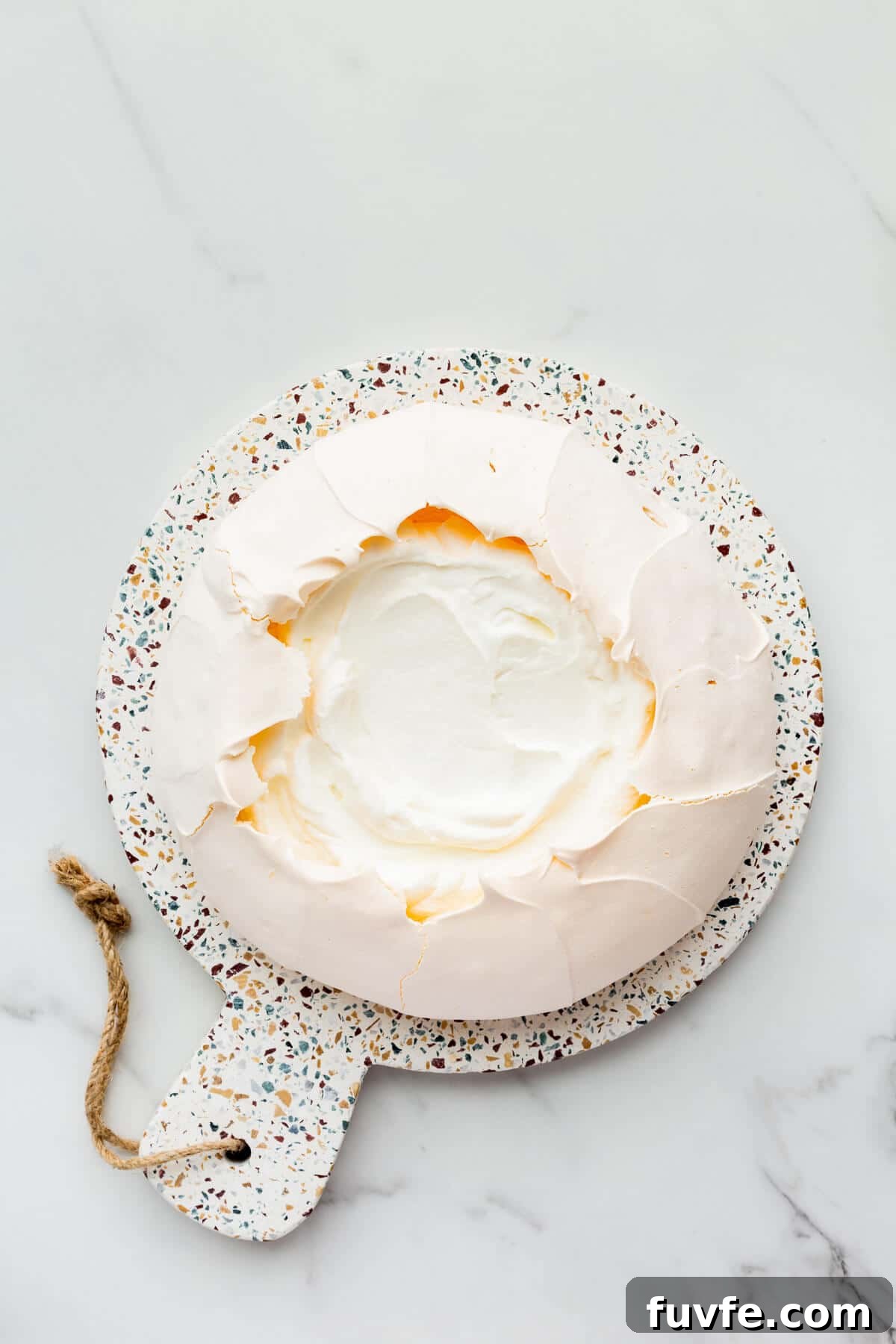
- If the center hasn’t collapsed enough for filling, gently open it with a paring knife to form a bowl.
- Fill the crater with whipped cream, dollop and swirl lemon curd on top, then scatter fresh berries.
- Chill the assembled pavlova for 1 hour before serving. Dust with icing sugar if desired.
Notes
- Use fine kosher salt sparingly; if substituting table salt, reduce the amount by half.
- Cornstarch is essential for the marshmallow center—do not skip it.
Nutrition
Nutrition information is an approximation.
Recipe adapted from the pavlova technique in Zoe Bakes Cakes. This method highlights the key steps and ingredients needed to produce a crisp shell and soft center, with suggested toppings that complement the sweet meringue.
Frequently asked questions
A flat pavlova is often caused by spreading the meringue too thin instead of mounding it, or by under-whipping the whites so they don’t form very stiff peaks. Adding sugar too quickly or not dissolving it fully can also prevent the foam from stabilizing, causing collapse.
The meringue should lose its glossy sheen and become matte. Bake low and slow until the shell is set and dry to the touch without browning excessively.
Browning indicates the oven temperature was too high or the pavlova baked too long. Bake at a lower temperature for longer to dry the meringue without caramelizing the sugar.