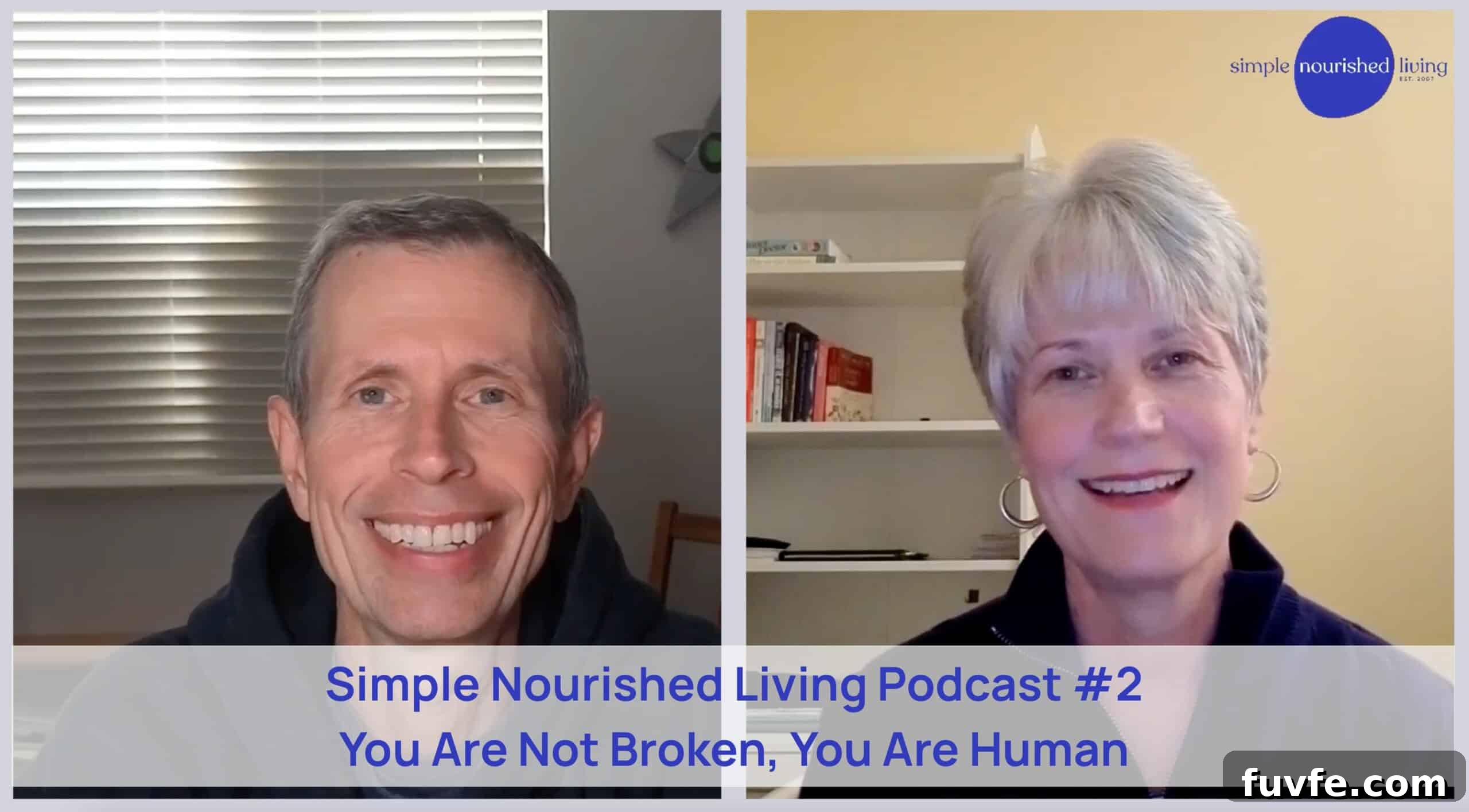
In episode 2 of the Simple Nourished Living podcast, hosts Martha McKinnon and Peter Morrison discuss the theme “You’re Not Broken, You’re Human.” They examine how our environment shapes eating habits, share personal stories, and stress the role of mindset in any weight-loss journey. The episode draws on insights from the book Mindless Eating, which demonstrates how surroundings influence food choices and behavior. Martha and Peter invite listeners to accept their humanity, treat mistakes as learning opportunities, and use simple strategies to make healthier choices easier.
Key Takeaways
- You are not broken; you are human.
- Mindless Eating had a major impact on Martha’s approach.
- Mindset is a crucial factor in long-term change.
- Adjusting your environment makes healthier choices easier.
- Food is more accessible now than ever, which affects behavior.
- Recognizing environmental influences helps you make better decisions.
- Mistakes are feedback, not failures.
- Start where you are and use what you have.
- Enjoy the process of cooking and eating.
- Mindfulness can help you take charge of your eating habits.
You Are Not Broken, You Are Human – Podcast 002
Video Transcript
Martha McKinnon (00:00)
Hi, welcome to the Simple Nourished Living podcast. I’m Martha and this is my brother and partner, Peter. Hi, how you doing?
Peter Morrison (00:06)
Hello. Hi. Good, how are you doing today?
Martha McKinnon (00:12)
Good, really well. Our topic for today is “You’re not broken, you’re human.” That idea first hit me when I read Mindless Eating, which I return to often because it changed how I think about food and environment. But before we dive in, what’s new and good in your world?
Peter Morrison (00:35)
I made a really good soup last night.
Martha McKinnon (00:38)
Tell us more. I love to know what people are eating.
Peter Morrison (00:40)
Sometimes cooking for the site can feel like work, so yesterday I just cooked for joy. I roasted a package of pre-peeled, chopped butternut squash—about 16 ounces—in the air fryer with herbes de Provence, sea salt and a little oil for 20 minutes. I blended it with chicken broth and a bit of light coconut milk to get a creamy Thai-inspired flavor, added red Thai chili paste, ginger, nutmeg and some leftover rotisserie chicken. I also tossed in chopped green beans for texture. It turned out chunky but delicious; we paired it with a little red wine. I might refine the recipe and measurements for the website, but it was fun to cook without thinking about photos or precise amounts.
Martha McKinnon (03:27)
That sort of cooking gets you in the flow—no anxiety, just enjoyment.
Peter Morrison (03:31)
Exactly. I was tasting as I went and trusting my instincts.
Martha McKinnon (03:53)
Nice. What about you—how’s your week going?
Martha McKinnon (04:03)
We announced the podcast and asked readers for topic suggestions. The response surprised me with its number and variety. We’ve started collecting ideas in a spreadsheet. I had no expectations going in, so I’ve been really pleased by the thoughtful suggestions.
Peter Morrison (04:42)
I noticed there wasn’t much overlap—lots of unique ideas.
Martha McKinnon (05:05)
That’s great because it challenges our bubble of assumptions. Thanks to everyone who submitted ideas. If listeners have suggestions during any episode, drop them in the comments and we’ll add them to our list.
Martha McKinnon (05:41)
This is episode two. We’re still getting comfortable, but we’ll keep going. The whole process feels like the weight-loss journey: start where you are, use what you have, experiment, and accept feedback rather than seeing mistakes as failures. Changing the way you look at progress can make the journey less overwhelming and even enjoyable.
Peter Morrison (06:48)
So, “You’re not broken.” Tell me more.
Martha McKinnon (06:51)
Mindless Eating is central to this idea. I ran a virtual book-club-style challenge years ago after reading it and many readers shared the same “aha” moments. The book’s experiments reveal that our environment powerfully shapes how much we eat—through plate size, packaging, menu language, and more. It begins with the statement: you’re not broken, you’re human. That reframing removed a lot of shame for me and made the process feel lighter.
Peter Morrison (07:35)
When did you do that challenge?
Martha McKinnon (07:46)
In 2017. At the time I’d been a longtime Weight Watchers member and was a few pounds above goal. I took a break for the summer while we were in northern Wisconsin, read Mindless Eating, and started applying its ideas. The book explains that humans are wired to “see-food” and eat when food is available because, historically, availability was unpredictable. Today, food is constantly available—microwaves, delivery services, grocery stores—so those survival instincts work against us.
Martha McKinnon (11:11)
Brian Wansink’s experiments show how easily external cues—bowl size, portion packaging, the number of people at the table—affect consumption. His practical insight was that it’s easier to re-engineer your environment than to rely solely on willpower. That summer I started making small changes: keeping tempting foods out of sight, creating minor obstacles to overeating, and changing dishware to smaller sizes. When I returned to meetings in the fall, I was under goal and didn’t feel deprived.
Peter Morrison (14:37)
So it worked?
Martha McKinnon (14:39)
Yes. It felt fun and experimental rather than punitive. Mindset is key: whether you feel deprived depends on how you interpret changes. For me, choosing a satisfying salad at lunch is enjoyable—if I truly wanted a burger and fries, I’d have them. My mom once couldn’t understand why I repeatedly chose salad, and that difference in perspective highlights how mindset shapes behavior.
Martha McKinnon (16:55)
One practical example: dish size. A single cup of cereal looks tiny in an oversized bowl, so people pour more. Using appropriately sized plates and bowls helps make portions look generous and reduces overeating. I still use these strategies in social situations—if appetizers are out, I’ll take a small plate, enjoy a portion, then step away and converse so I’m not grazing mindlessly. Reminding myself “you’re human” reduces shame and helps me respond more deliberately.
Peter Morrison (19:14)
Mm.
Martha McKinnon (19:19)
Recognizing external triggers—TV food exposure, enticing aromas at the mall, or oversized restaurant portions—lets you pause and choose. Assess your environment: what helps you meet your goals and what works against you? Small tweaks to your surroundings and habits create gentler, more sustainable progress. The environment has changed rapidly; our biology hasn’t. By reshaping cues around us, we can make healthier choices easier.
Peter Morrison (20:50)
Even without an urgent need, the book sounds valuable. We should schedule it for discussion.
Martha McKinnon (21:03)
Agreed. I’ll plan on it.
Martha McKinnon (24:17)
Thanks for tuning in. If you have topic ideas, please leave them in the comments and subscribe to our channel.
Peter Morrison (24:32)
Thank you.
Martha McKinnon (24:33)
Thanks.
More Podcast Episodes
- Inside Out Weight Management
- Dealing with the Disconnect: Distorted Body Image
- Nighttime Eating – Satisfying Your Cravings
- The Milkshake Experiment
- WW Zero Points Foods Discussion
- What To Do When You Don’t Feel Like Cooking?
- WW Mindset: Points Budget versus Points Target