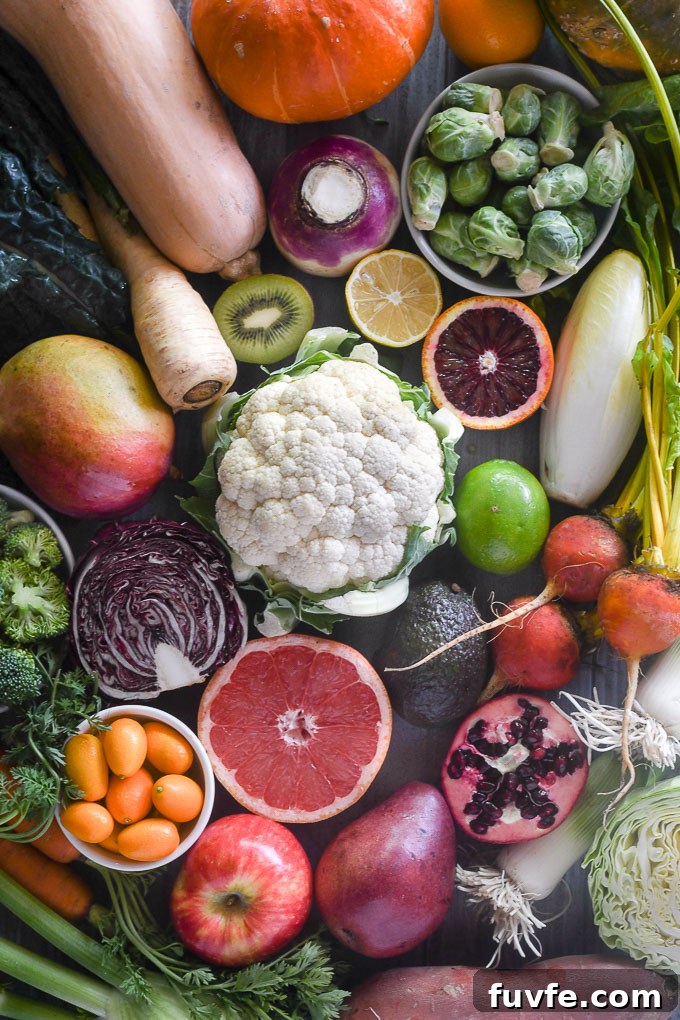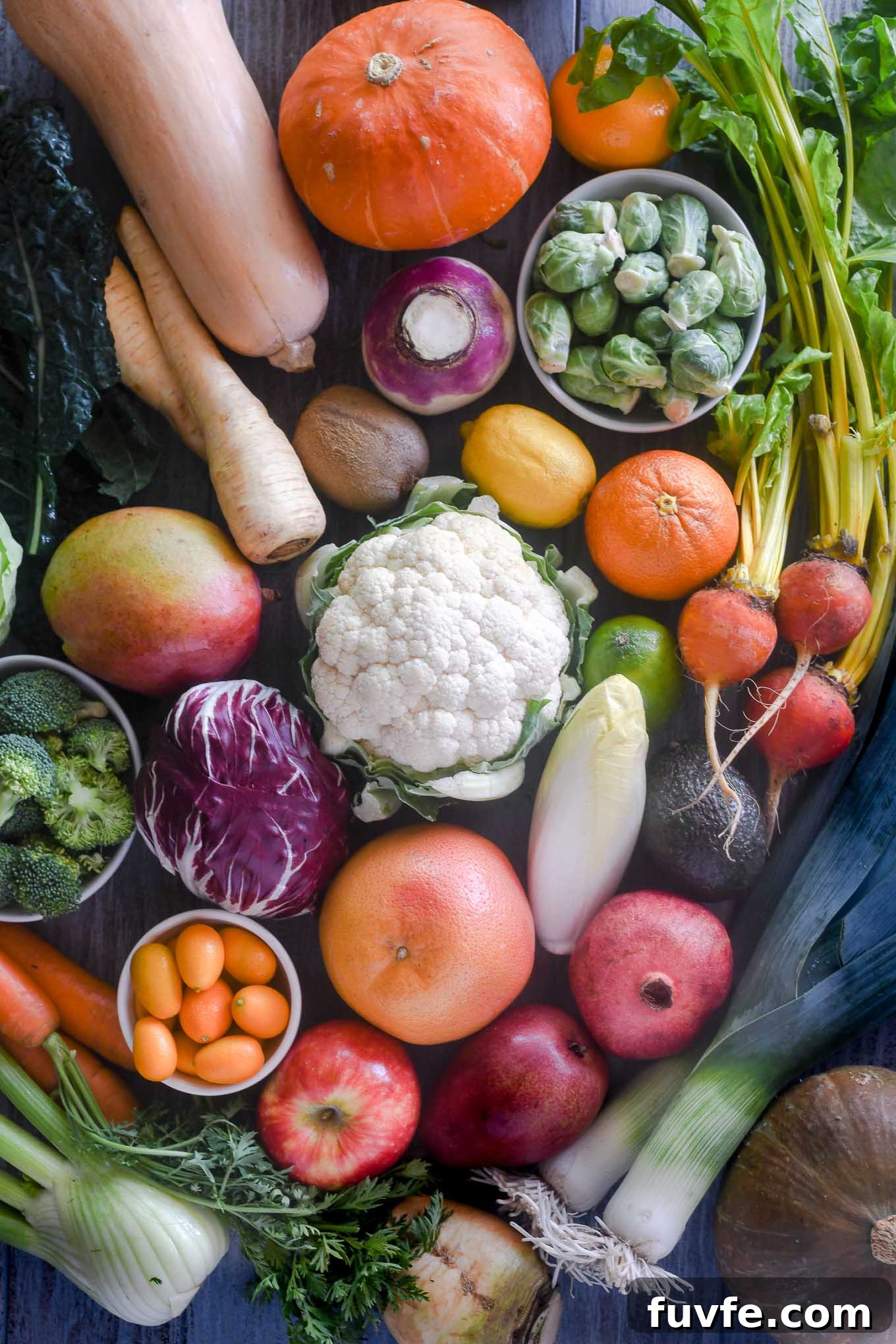
There are so many varieties of delicious winter produce in season right now. Use this handy Winter Fruits and Vegetables guide to see what’s fresh—from broccoli, cauliflower and winter squash to bright citrus and sweet seasonal fruits—and find recipe ideas to enjoy them all season long.
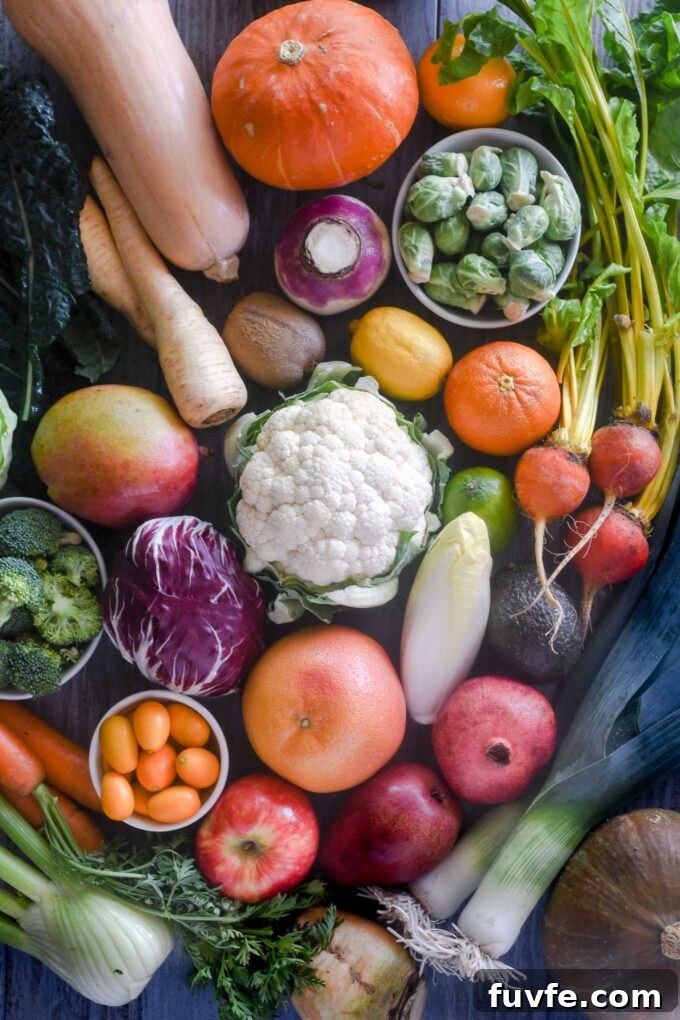
Winter often gets overlooked as a season for fresh produce, but it offers a wide assortment of colorful, flavor-packed fruits and vegetables. Many of these items are harvested locally, which means better taste and value.
This guide lists winter fruits and vegetables that are in season now, including beets, broccoli, sweet potatoes, winter squash and an abundance of citrus and winter fruits, plus tips for using them in everyday cooking.
I started eating seasonally years ago and found it transformed my meals. Seasonal produce tends to be fresher, more flavorful and more affordable, and it encouraged me to try ingredients I might otherwise have skipped.
Eating with the seasons keeps cooking interesting and gives you fresh ideas to rotate through your weekly menus throughout the colder months.
See the monthly produce guides linked below for more seasonal ideas and recipes.
- December seasonal produce guide
- January seasonal produce guide
- March seasonal produce guide
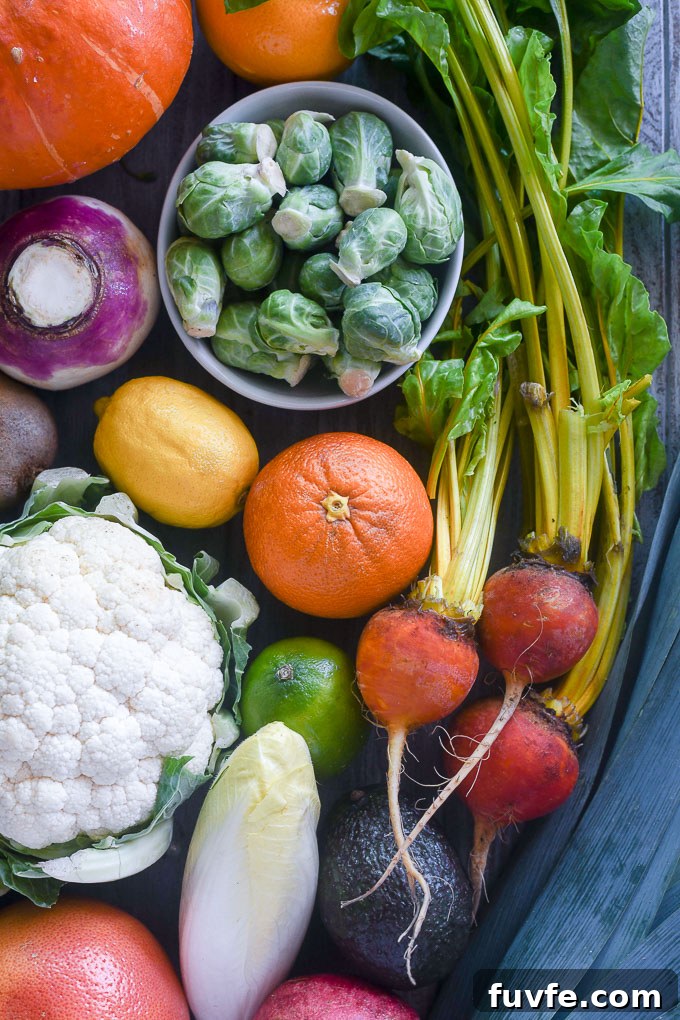
List of seasonal winter foods
Below is a concise list of seasonal winter foods you can reference before heading to the market.
Read the sections on winter vegetables and fruits for details about uses, seasonal swaps and recipe suggestions.
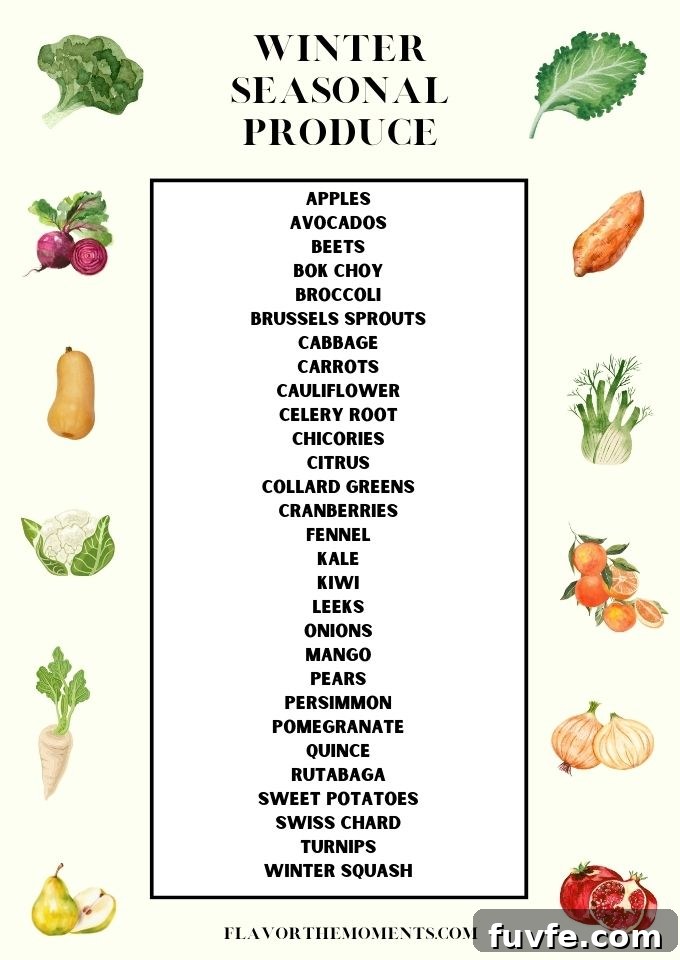
Choosing and storing winter produce
Proper storage extends freshness and preserves flavor. Cold-hardy roots, squashes and citrus each have different needs—some do well in a cool, dry pantry while most leafy greens store best in the refrigerator.
For practical tips on selection and storage of many fruits and vegetables, consult a produce storage guide to learn how to make winter produce last longer and perform better in recipes.
Winter Vegetables
Winter brings an excellent selection of vegetables—from crucifers and root vegetables to hardy leafy greens—so you can enjoy nutritious, flavorful dishes all season.
Availability can vary by region, but many of these vegetables are at their peak through the colder months.
Avocado
Technically a fruit, avocados are usually used in savory cooking. They offer a creamy, buttery texture and a subtle, rich flavor that complements salads, sandwiches and dips.
They are calorie-dense due to healthy monounsaturated fats and provide vitamins, minerals and fiber.
Uses: Spread on toast, add to salads, mash into guacamole, blend into dressings or incorporate into desserts for moisture and richness.
Seasonal swaps: There’s no true substitute for avocado’s texture and flavor.
Try it in:
- Butter lettuce salad
- Homemade guacamole
- Shrimp ceviche
Beets
Beets, also called beetroot, come in red, golden and striped varieties. They have a sweet, earthy taste and are rich in vitamins, minerals and fiber. Don’t discard the greens—they’re edible and nutritious.
Uses: Eat raw in salads, roast to enhance sweetness, pickle for a tangy side, or sauté the greens for a nutritious addition to meals.
Seasonal swaps: Sweet potatoes, butternut squash or parsnips for sweetness; rutabaga, turnips or celery root for earthy notes.
Try them in:
- Oven roasted beets
- Refrigerator pickled beets by Belly Full
- Roasted beet salad with goat cheese
Bok choy
Bok choy is a mild, crisp Chinese cabbage with tender white stalks and dark green leaves. It offers vitamins A, C and K plus calcium and fiber.
Uses: Excellent raw in slaws or quickly cooked in stir-fries, soups and sautés.
Seasonal swaps: Green cabbage or other winter greens such as kale, Swiss chard or collards work well in cooked dishes.
Try it in:
- Sautéed in shrimp fried rice or chicken vegetable stir fry.
- Ramen bowl by Foolproof Living
Broccoli
Broccoli, a member of the brassica family, has mildly earthy, cabbage-like flavors that mellow with cooking. Stalks and florets are both edible; stalks may need a longer cook time.
Uses: Serve raw in salads or with dips, roast, steam, add to quiches, soups or stir-fries.
Seasonal swaps: Cauliflower, Brussels sprouts or cabbage depending on the recipe.
Try it in:
- Broccoli kale salad
- Broccoli slaw salad
- Mini crustless broccoli quiche
Brussels sprouts
Small, leafy buds related to cabbage, Brussels sprouts become sweet and nutty when roasted or sautéed. They can also be shredded raw for salads.
Uses: Roast, pan-fry, shave for slaws or add to hearty winter dishes.
Seasonal swaps: Green cabbage, broccoli or cauliflower depending on preparation.
Try them in:
- Air fryer brussels sprouts
- Kale and brussels sprouts salad
- Roasted brussels sprouts with carrots and parsnips
Cabbage
Cabbage appears in many varieties—green, red, savoy and napa—each with a slightly different flavor and texture. It’s excellent raw or cooked.
Uses: Shred for slaws, sauté, roast, or simmer in soups and stews. See a cabbage produce guide for more recipe ideas.
Seasonal swaps: Brussels sprouts, bok choy, leeks or root vegetables like turnips and parsnips work well in many preparations.
Try it in:
- Corned beef and cabbage
- Egg roll in a bowl
- Vinegar coleslaw
Carrots
Carrots are versatile root vegetables available in orange, white, yellow and purple varieties. They range from sweet to earthy and are rich in vitamins and fiber.
Uses: Enjoy raw as a snack, roast, add to soups and stews, use in stocks or bake into desserts and muffins.
Seasonal swaps: Parsnips, beets or other roots like rutabaga and turnips depending on the dish.
Try them in:
- Carrot oatmeal muffins
- Carrot ginger soup
- Carrot top pesto
Cauliflower
Cauliflower features a compact head of white florets with a mild, slightly sweet flavor. It’s a versatile vegetable suitable for many techniques.
Uses: Eat raw with dips, roast, steam, mash or rice as a low-carb rice substitute.
Seasonal swaps: Broccoli or other crucifers depending on texture needs.
Try it in:
- Cauliflower rice stuffing
- Garlic mashed cauliflower
- Roasted cauliflower
Chicories
Chicories—like frisée, Belgian endive, escarole and radicchio—offer a pleasant bitterness that adds depth to salads and cooked dishes.
Uses: Eat raw in salads, add to soups or sautées, or roast sturdy varieties like radicchio for a caramelized flavor.
Seasonal swaps: Other bitter greens such as kale, Swiss chard or cabbage can be used depending on the recipe.
Try them in:
- Endive salad bites
- Escarole and bean soup
- Radicchio salad
- Salade lyonnaise
- Tricolore salad
Fennel
Fennel has a crisp bulb and feathery fronds with a gentle anise-like flavor. It’s crunchy raw and becomes sweet and tender when roasted.
Uses: Thinly sliced in salads and slaws, roasted as a side, or added to soups and roasted vegetable mixes.
Seasonal swaps: Celery, leeks or bok choy depending on taste and texture needs.
Try it in:
- Citrus salad with fennel and avocado
- Fennel and apple slaw
- Italian chopped salad
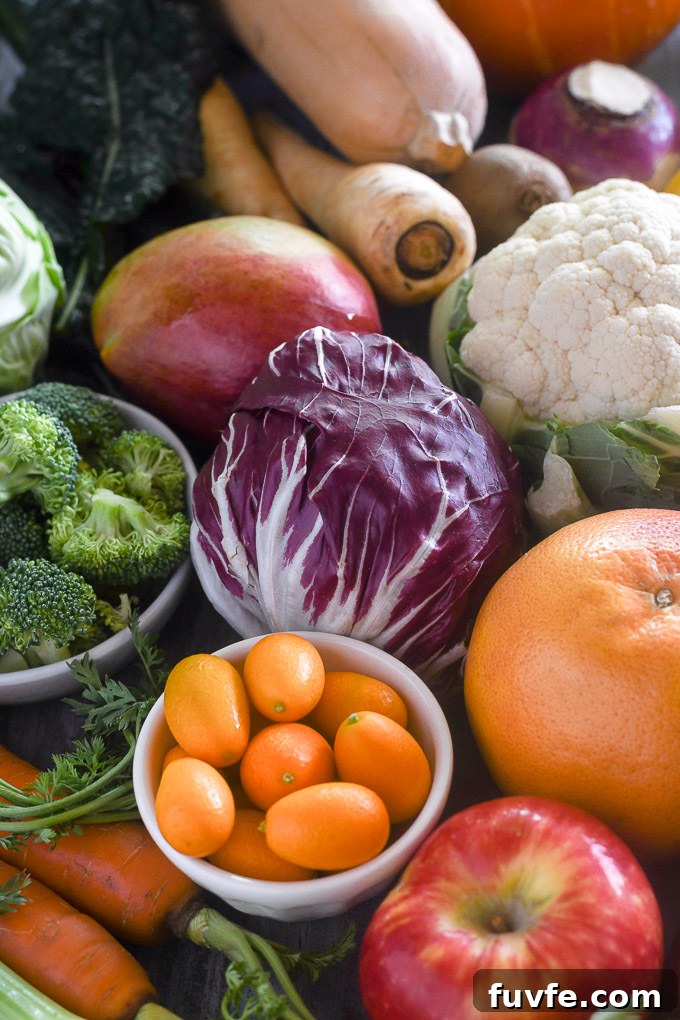
Kale
Kale is a sturdy leafy green available in several varieties, including lacinato, curly and red Russian. Its robust leaves tolerate dressings and heat without wilting quickly.
Uses: Massaged raw for salads, sautéed, or added to soups and stews. Kale is nutrient-dense and a winter staple.
Seasonal swaps: Swiss chard, mustard greens or dandelion greens.
- Italian sausage kale soup
- Kale apple salad
- Tropical kale smoothie
Leeks
Leeks belong to the allium family and offer a milder, sweeter onion flavor. The white and pale green parts are tender and ideal for many cooked dishes; dark green tops are excellent for stocks.
Uses: Sauté in risottos, soups, stews and pastas, or roast for a gentle oniony note.
Seasonal swaps: Shallots or pearl onions depending on the recipe.
Try them in:
- Instant pot mushroom risotto
- Pasta primavera
- Spinach feta frittata
Parsnips
Parsnips are sweet, pale root vegetables related to carrots and parsley. When cooked they become tender and sweet with subtle earthy notes.
Uses: Roast, purée, add to soups and stews, or bake into savory and sweet dishes.
Seasonal swaps: Carrots, rutabaga or turnips depending on desired sweetness and texture.
Try them in:
- Parsnip purée
- Parsnip soup
- Roasted carrots and parsnips
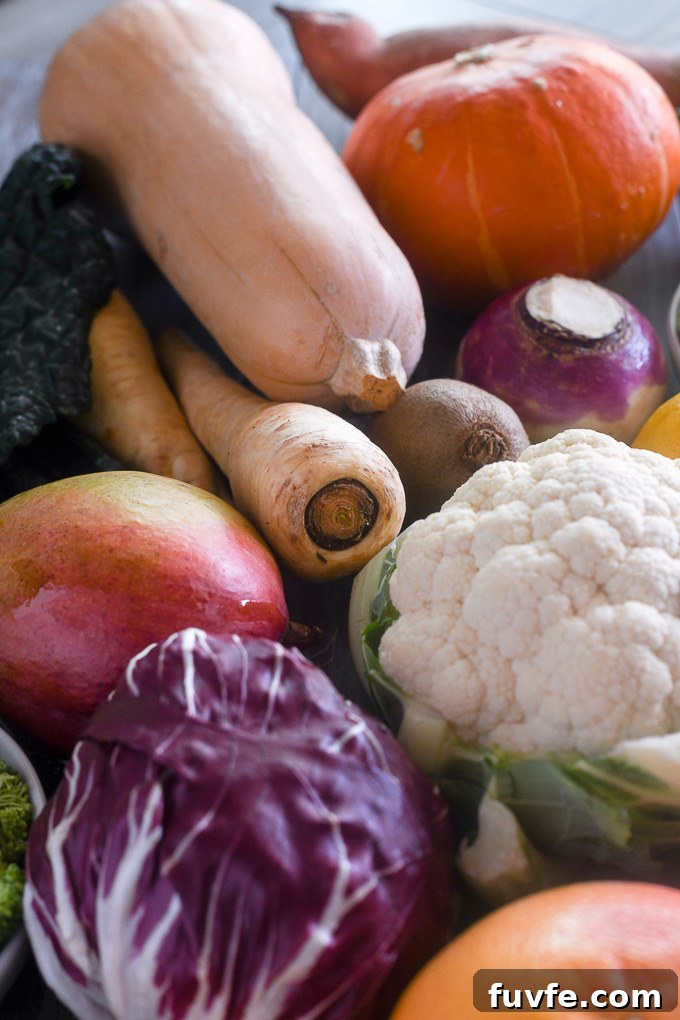
Potatoes
Potatoes are a versatile starchy root available in many types—Yukon Gold, red, fingerling and russet among them. Textures range from creamy to waxy.
Uses: Bake, roast, mash, fry or add to soups and stews. Potatoes are a foundation for countless winter recipes.
Seasonal swaps: Sweet potatoes, parsnips, rutabaga or turnips for different flavors and textures.
Try them in:
- Crispy smashed potatoes
- Dill pickle potato salad
- Yukon gold mashed potatoes
Rutabaga
Rutabaga is a sweet, slightly bitter root vegetable with yellow-orange flesh. It works well roasted, mashed or added to soups and stews as a potato alternative.
Seasonal swaps: Turnips, parsnips or potatoes depending on texture and sweetness desired.
- Add them to a hearty chicken stew in place of potatoes.
Turnips
Turnips are crisp, globe-shaped roots with white or pale yellow flesh. They can be mildly peppery or slightly sweet and add body to many winter dishes.
Uses: Roast, mash or add to stews and soups for earthy flavor and texture.
Seasonal swaps: Rutabaga, parsnips or potatoes.
- Use them in Irish beef stew as a hearty swap for parsnips.
Sweet potatoes
Sweet potatoes come in many shapes and colors with a naturally sweet, slightly nutty flavor. They’re packed with vitamins and fiber and work in both sweet and savory recipes.
Uses: Bake, mash, roast, fry or use in soups, casseroles and desserts.
Seasonal swaps: Potatoes for texture, carrots for similar sweetness.
Try them in:
- Black bean sweet potato enchiladas
- Mashed sweet potatoes
- Vegetarian tortilla soup
Swiss chard
Swiss chard, related to beets, has broad leaves and colorful stems. Raw it reads slightly bitter; when cooked it softens and develops a milder flavor.
Uses: Use raw in salads or pesto, sauté, or add to soups and stews.
Seasonal swaps: Kale, collards or mustard greens; spinach and arugula in a pinch.
Try them in:
- How to make pesto sauce (with any greens)
- Sautéed Swiss chard
- White bean stew
Winter squash
Winter squash includes acorn, butternut, delicata, kabocha and spaghetti squash. Harvested in the fall, these varieties store well and bring sweet, nutty flavors to winter meals.
- Acorn squash: Small, dark green, mildly sweet and nutty when roasted.
- Butternut squash: Smooth, sweet orange flesh excellent roasted, mashed or puréed.
- Delicata squash: Thin skin and sweet flesh—great roasted and stuffed.
- Kabocha squash: Dense, sweet flesh with a velvety texture similar to pumpkin.
- Spaghetti squash: When cooked, the flesh separates into noodle-like strands—an easy pasta alternative.
Uses: Roast, mash, stuff or purée for soups and sides. Spaghetti squash is an ideal low-carb pasta substitute.
Seasonal swaps: Many winter squashes can be used interchangeably, though spaghetti squash is unique in texture.
Try them in:
- Creamy kabocha squash mash
- Fall harvest salad (use any roasted squash)
- Mashed butternut squash
- Maple roasted delicata squash
- Spaghetti squash lasagna
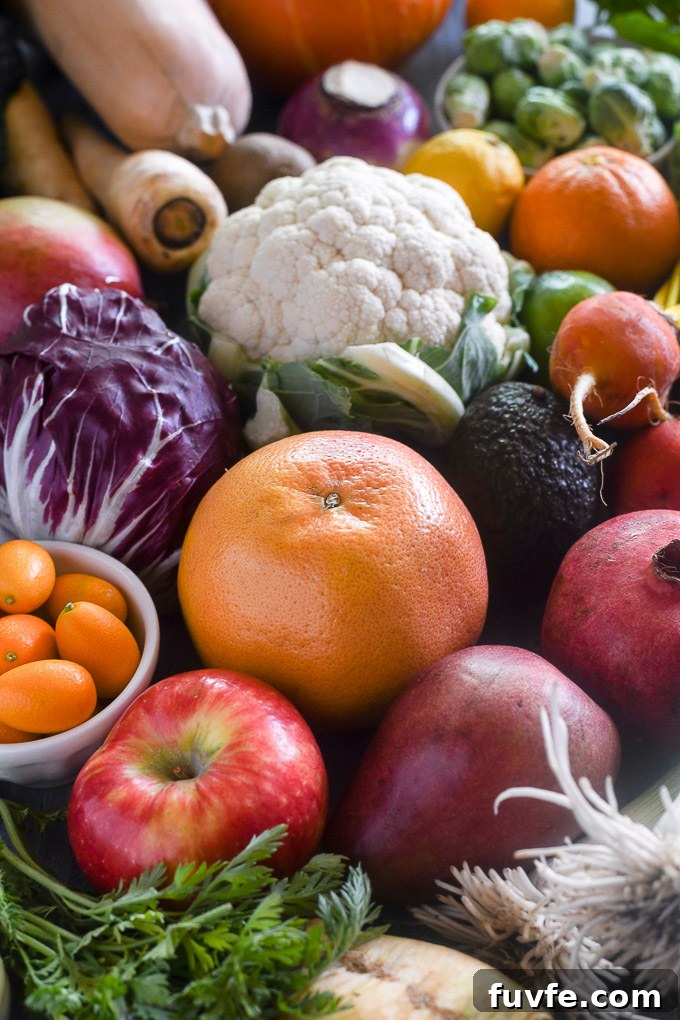
Winter fruits
Winter offers an array of fruits that brighten cold days—citrus dominates the season, along with apples, pears, persimmons, pomegranates and more. Availability varies by location, but many of these fruits are at their best in winter.
Apples
Apples are crisp, juicy and available in many varieties—from sweet to tart. They’re rich in fiber and vitamin C and can be eaten fresh or used in baking and cooking.
Uses: Enjoy raw, baked into pies and crisps, stewed into applesauce or added to salads for crunch and sweetness.
Seasonal swaps: Pears.
Try them in:
- Apple crisp
- Apple crockpot steel cut oats
- Homemade applesauce
Citrus
Citrus fruits add bright color and acidity to winter menus. Varieties include clementines, mandarins, tangerines, grapefruits, kumquats, lemons, limes, oranges and pomelo—each with a distinct flavor profile.
Uses: Eat fresh, juice, add to salads, dressings, marinades and desserts to lift flavors with tangy brightness.
Seasonal swaps: Different citrus types can often substitute for one another, though flavor intensity will change the result.
Try them in:
- Citrus salad
- Key lime pie
- Lemon dijon baked salmon
- Pico de gallo
Cranberries
Cranberries are tart, ruby-red berries that are high in antioxidants and vitamin C. Fresh, cooked, dried or juiced, they add bright acidity to both sweet and savory dishes.
Uses: Use them in sauces, relishes, baked goods, salads or as dried fruit in grains and snacks.
Seasonal swaps: Pomegranate seeds in salads; frozen tart cherries or raspberries for baking.
Try them in:
- Apple cranberry pie
- Cranberry orange muffins
- Cranberry orange sauce
Kiwi
Kiwi are small, fuzzy fruits with bright green flesh and a sweet-tart flavor. They’re rich in vitamin C and add tropical brightness to winter fruit salads and breakfasts.
Uses: Slice into fruit salads, blend into smoothies, or top yogurt and oatmeal for a fresh finish.
Seasonal swaps: Citrus or mango may be used in some recipes but will change the flavor profile.
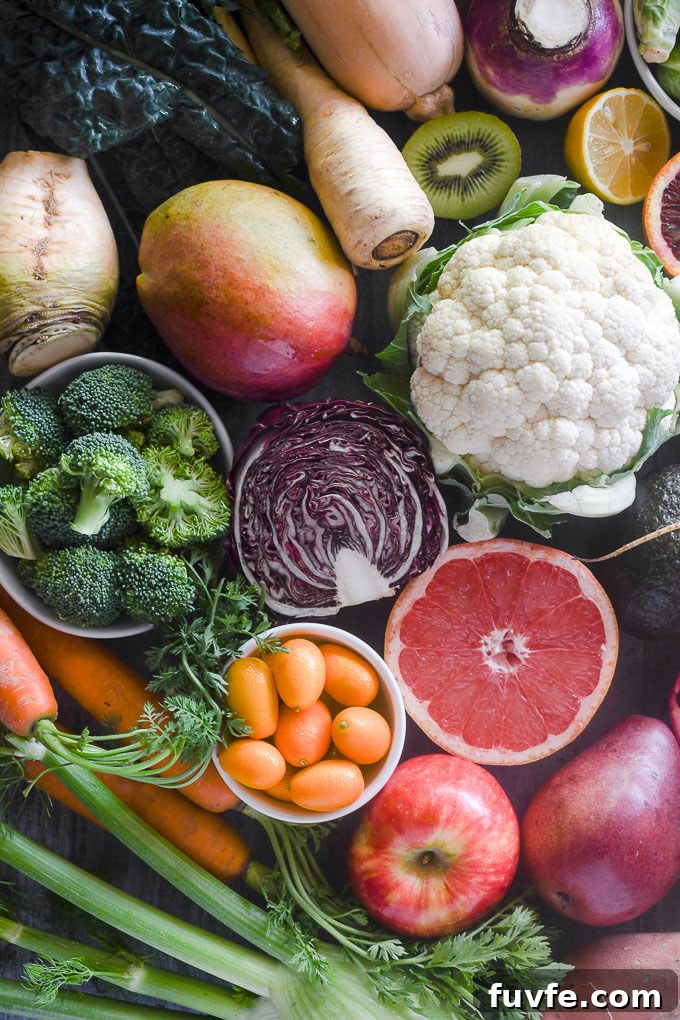
Mango
Mangoes are sweet, juicy and tropical. While typically associated with warmer seasons, certain varieties and imports make them available in winter and they add bright, sweet flavor to salads, salsas and smoothies.
Seasonal swaps: Oranges or persimmons in some applications.
- Mango salsa
- Peach mango smoothie
- Shrimp ceviche
- Tropical fruit salad
- Tropical smoothie
Pears
Pears are juicy, sweet fruits available in many varieties. They can be eaten fresh, baked or poached and pair well with cheese and nuts in salads and desserts.
Seasonal swaps: Apples.
Try them in:
- Pear crumble
- Pear salad
- Roasted butternut squash and pear soup
Persimmons
Persimmons come in Fuyu (crisp and sweet) and Hachiya (astringent until fully ripe) varieties. They offer floral, honeyed flavors when ripe and work well raw or cooked.
Uses: Slice Fuyu into salads, or use very soft Hachiya and Fuyu in jams, baked goods and purées.
Seasonal swaps: Apples, oranges or pears depending on the recipe.
Try them in:
- Persimmon cake
- Persimmon cookies
- Persimmon salad
Pomegranates
Pomegranates are filled with jewel-like arils that are tart-sweet and add color and crunch to dishes. They’re rich in vitamin C and antioxidants.
Uses: Scatter arils over salads, yogurt and desserts, press for juice or use as a bright garnish in savory recipes.
Seasonal swaps: There’s no exact fresh substitute—pomegranate is unique—but dried cranberries or ruby grapefruit can provide similar color and tartness in some salads.
Try them in:
- Arugula orange pomegranate salad
- Holiday salad
- Vodka spritzers
Quince
Quince resembles a large pear and is hard and astringent when raw. Cooked quince develop sweet, fragrant flavors and are ideal for jams, jellies and baked desserts.
Uses: Poach, bake or simmer quince into preserves, compotes and fillings for tarts and pastries.
Seasonal swaps: Apples or pears when cooked.
- 10 Quince recipes by Martha Stewart