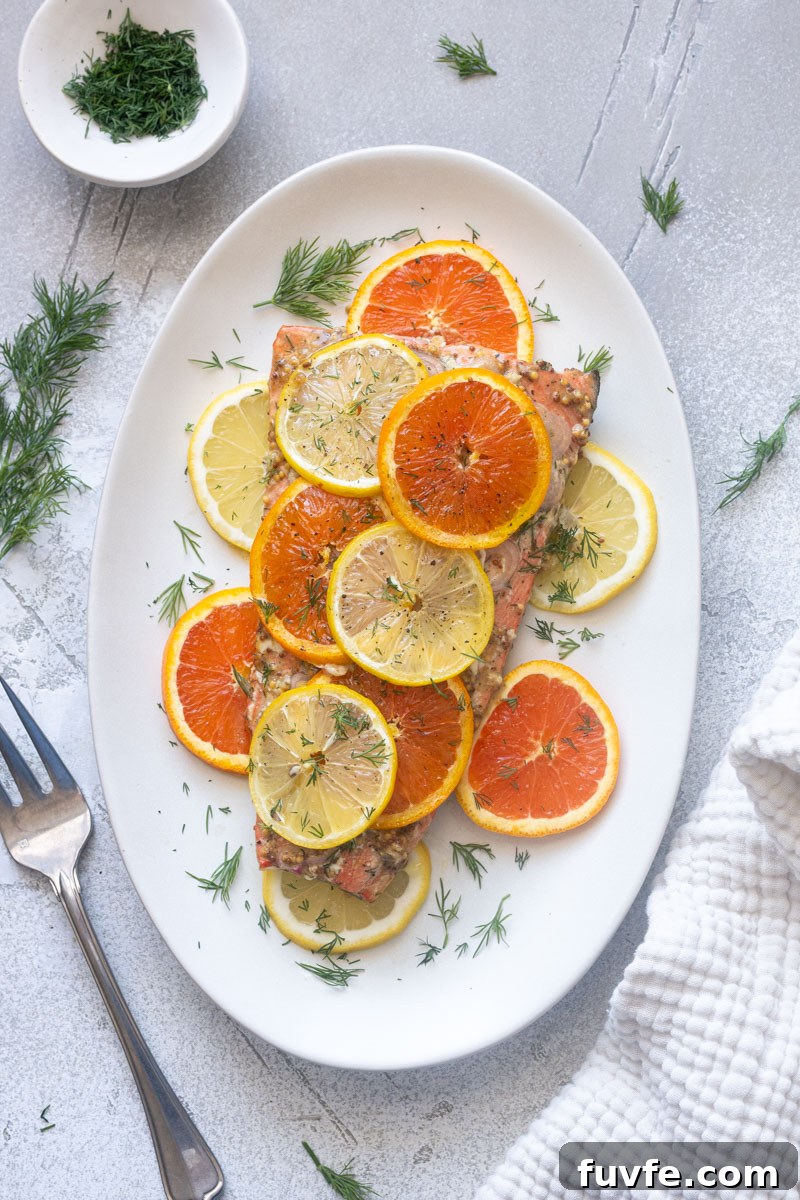
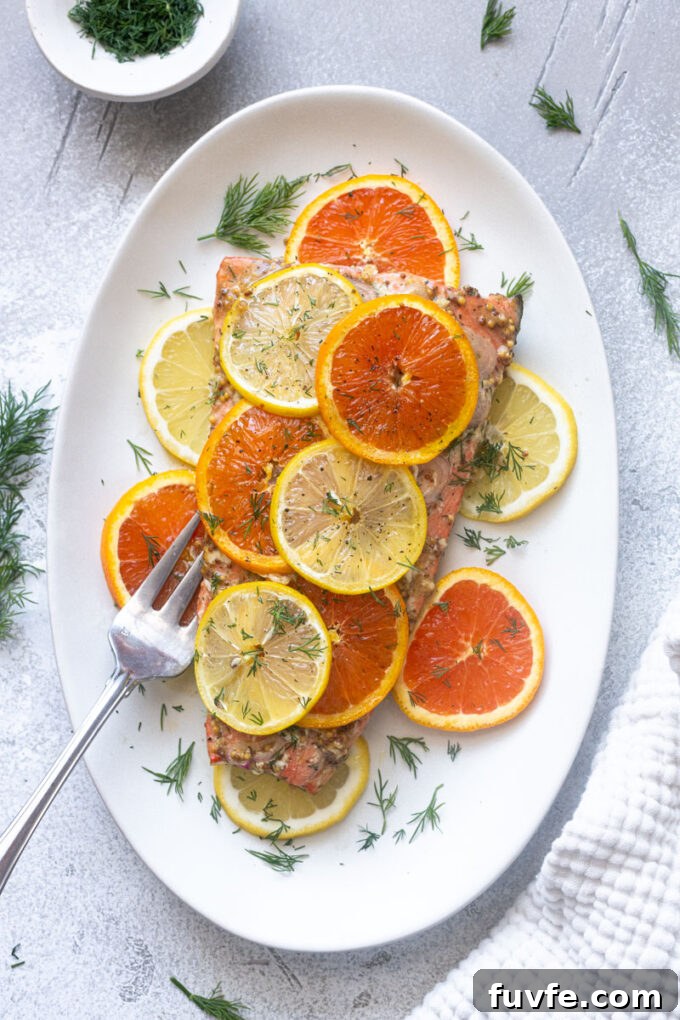
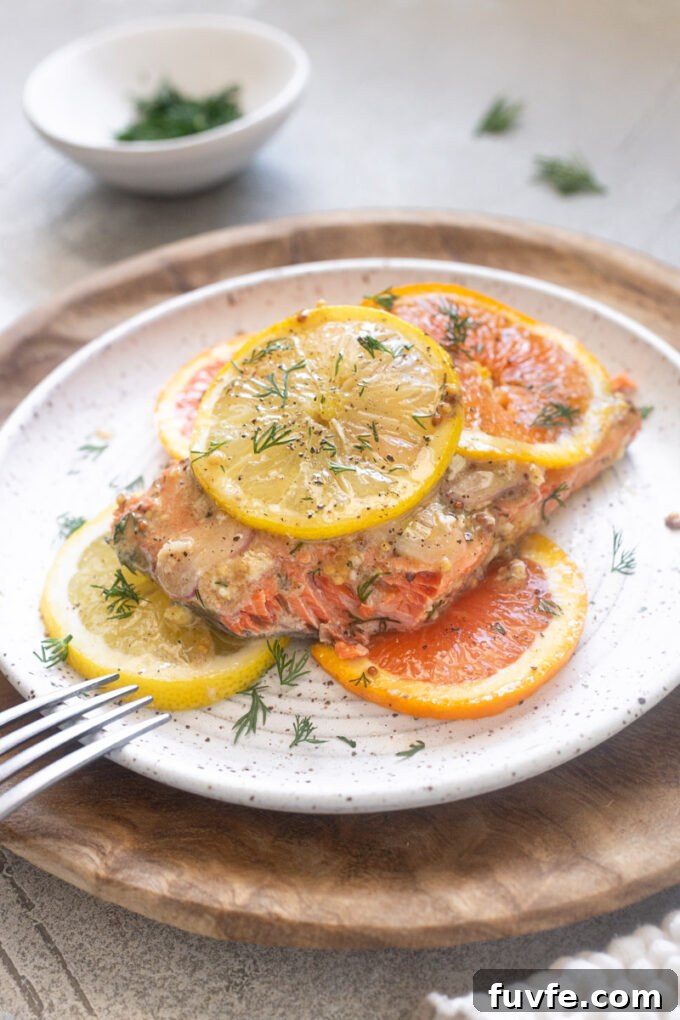
If you’re looking for a reliable method for tender, silky salmon, this Slow Roasted Citrus Salmon delivers. It’s roasted gently at a low temperature with olive oil, whole grain Dijon mustard, garlic, fresh citrus and dill, keeping the fish moist and flavorful. The result is bright, balanced, and elegant enough for weeknights or entertaining.
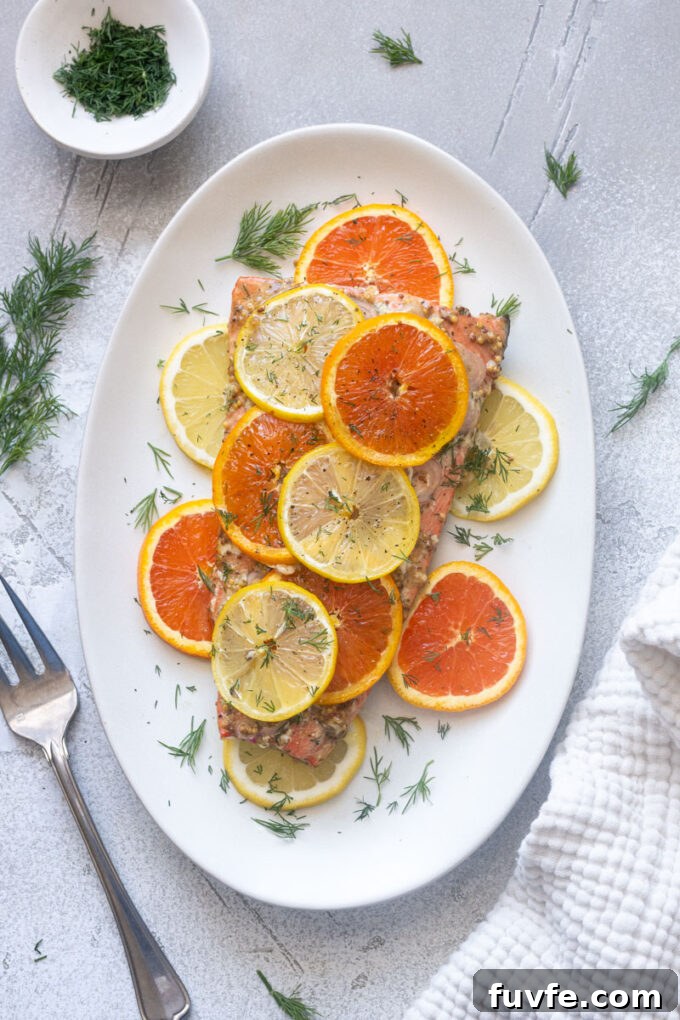
Salmon is one of my go-to proteins because it’s versatile, quick to prepare, and satisfying. This slow roasted version is particularly lovely: the low heat makes the fillet buttery and forgiving, while the Dijon-citrus-dill combination adds a fresh, lively flavor.
This recipe takes minimal hands-on time and highlights ingredients you likely have on hand—olive oil, mustard, garlic, lemon, orange and fresh dill. It’s a simple preparation that still looks and tastes special.
Serve the salmon warm, at room temperature, or chilled over salad. It pairs beautifully with simple sides like greens, rice, or roasted vegetables.
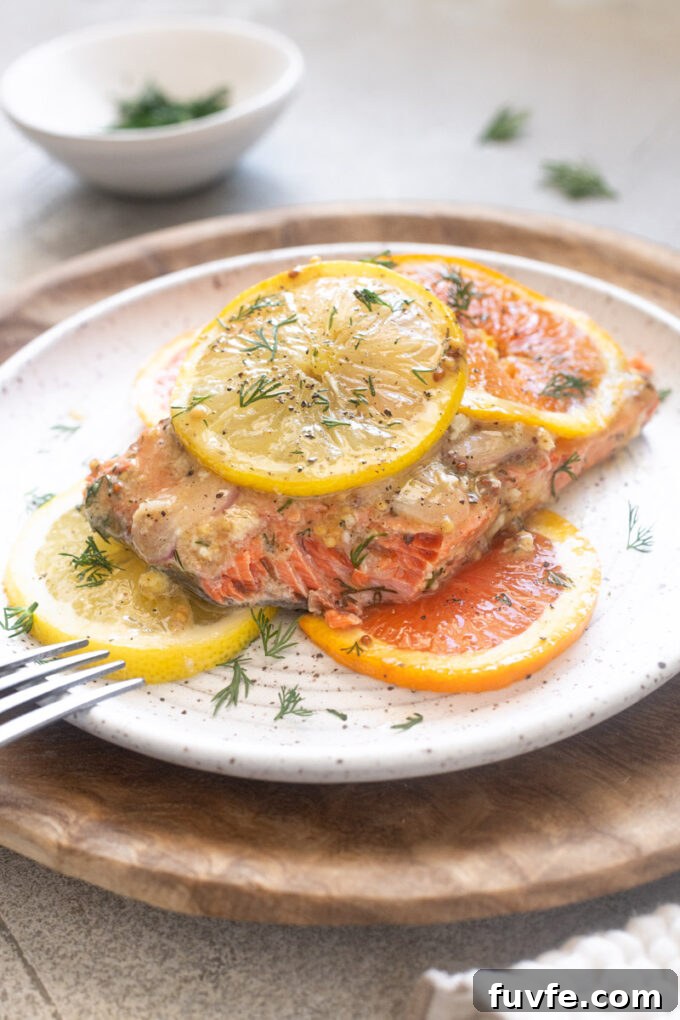
Why you’ll love this recipe
- Perfectly tender every time – Slow roasting prevents overcooking and yields a silky texture.
- Fresh, vibrant flavor – Citrus, Dijon and dill brighten the salmon without masking it.
- Easy but impressive – Minimal prep, yet elegant for guests.
- Healthy and wholesome – High in protein and made from simple, real-food ingredients.
- Versatile – Serve warm, at room temperature or chilled over salads.
Recipe ingredients
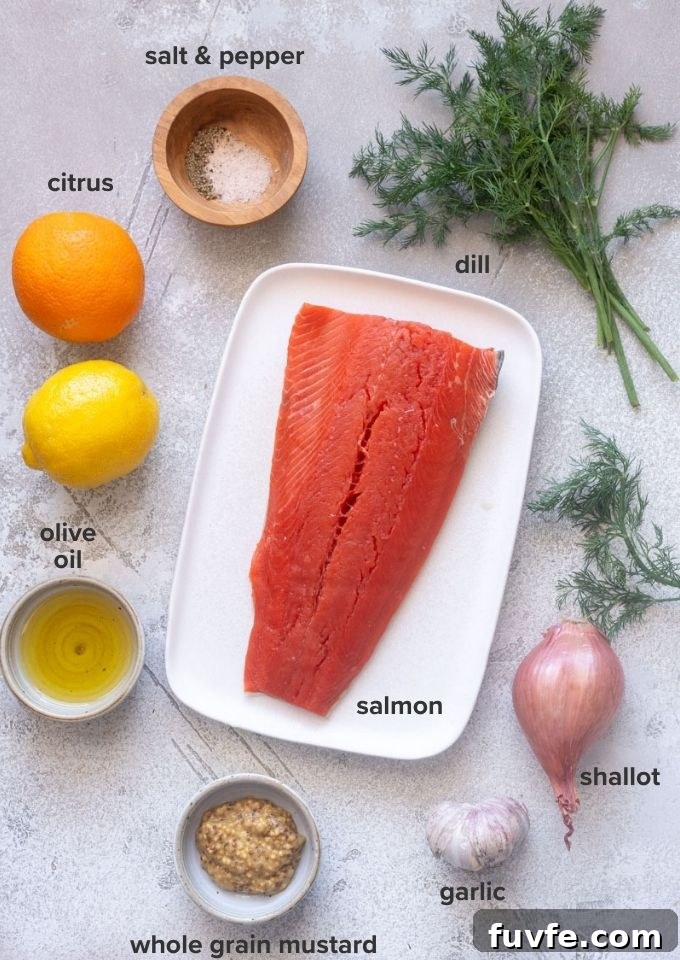
- Salmon (1 1/2 lbs.): Use a center-cut side for even cooking. Skin-on is recommended to help retain moisture.
- Whole grain Dijon mustard: Adds tang and helps emulsify the marinade. Regular Dijon works too.
- Olive oil: Keeps the salmon moist and adds richness.
- Garlic: Fresh garlic is best; if needed, substitute 1/2 teaspoon garlic powder for two cloves.
- Citrus: A mix of lemon and a sweet orange (Cara Cara or similar) provides bright acidity and gentle sweetness; other citrus like lime, mandarin, or grapefruit also work.
- Fresh dill: Adds a clean, herbaceous finish. Dried dill can be used in a pinch.
- Shallot (optional): Thinly sliced for a mild onion note and extra texture.
See the recipe card below for the exact ingredient amounts.
How to make slow roasted salmon
Roasting salmon at a low temperature (250°F / 120°C) allows the fillet to cook evenly and stay moist. The gentle heat produces a tender, flaky interior without drying the fish.
Pro tip: Cooking time depends on thickness. A thicker center-cut fillet may need closer to 25 minutes. For reliable results, use an instant-read thermometer and remove the salmon when it reaches 135°F (57°C) for a moist, slightly rosy center. If you prefer it more done, cook to 140–145°F (60–63°C).
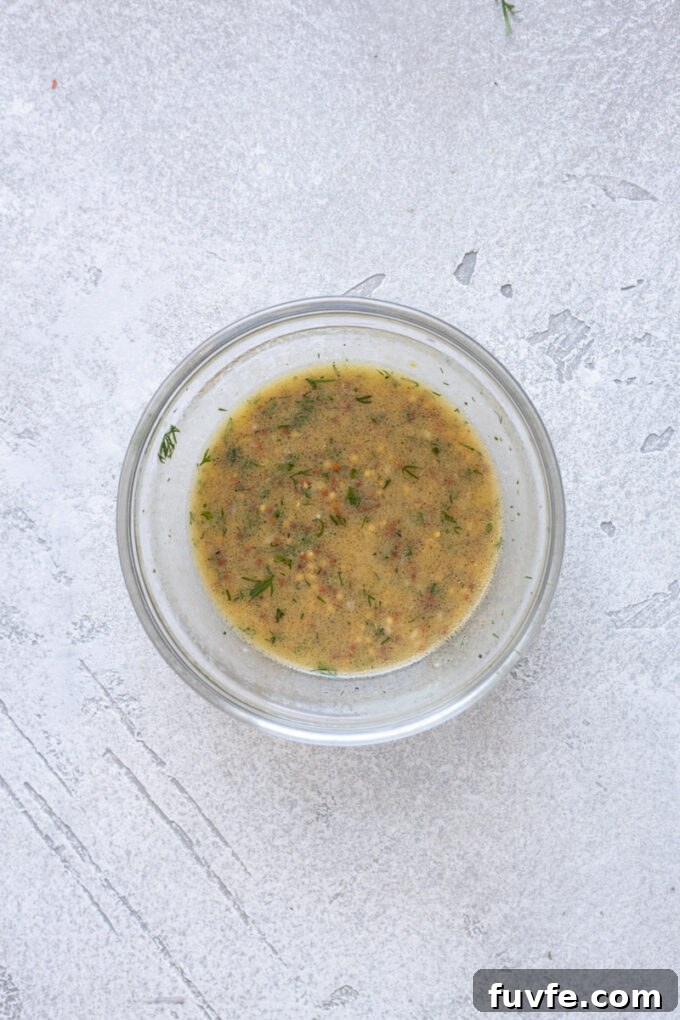
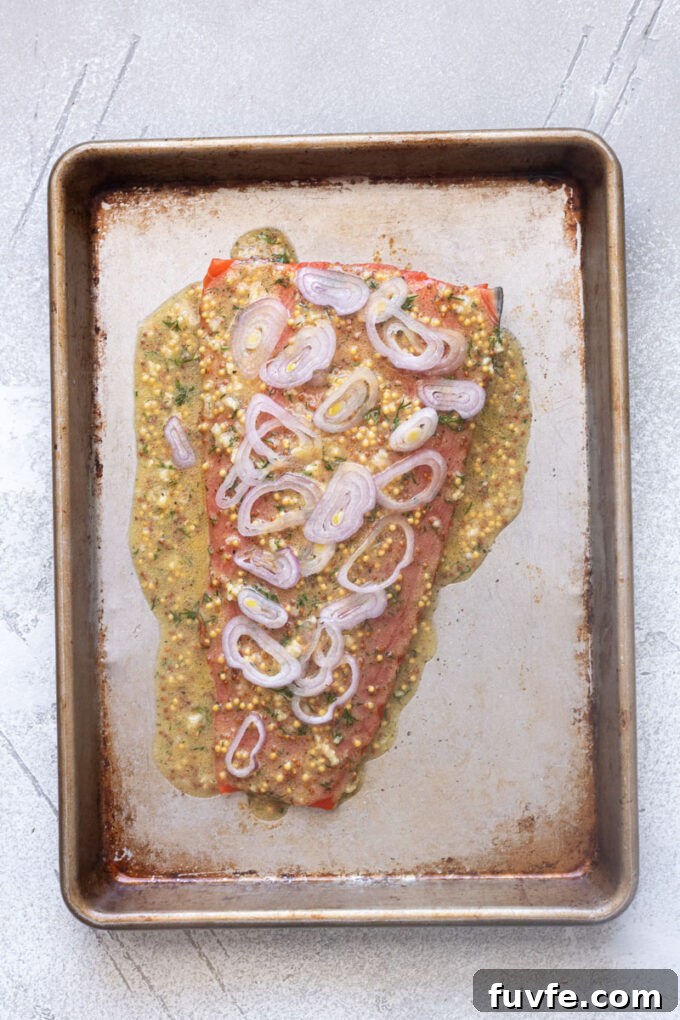
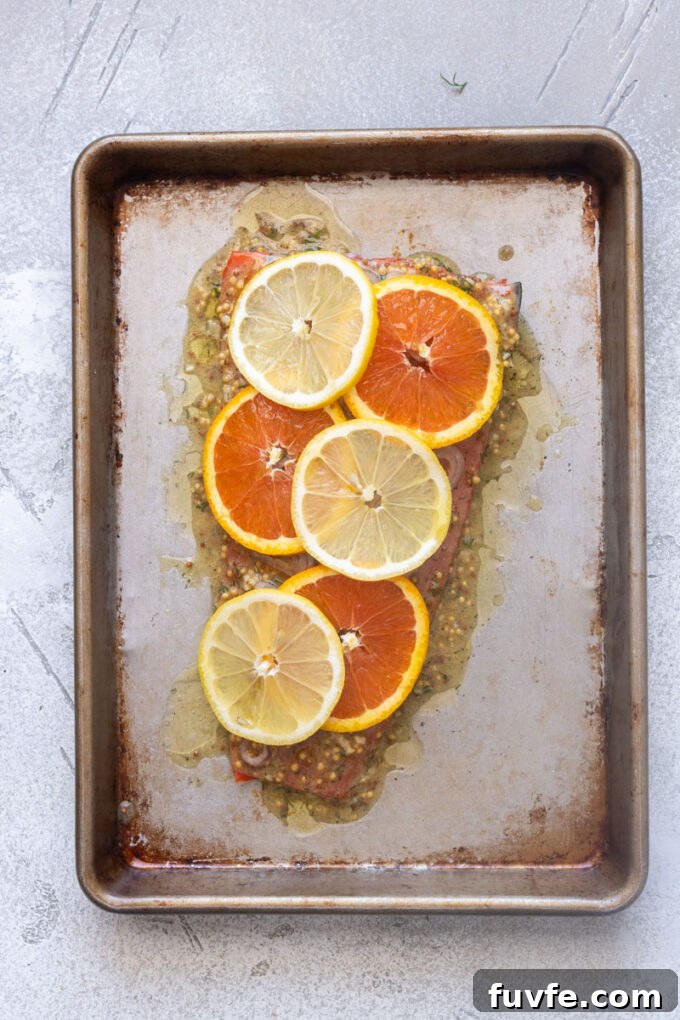
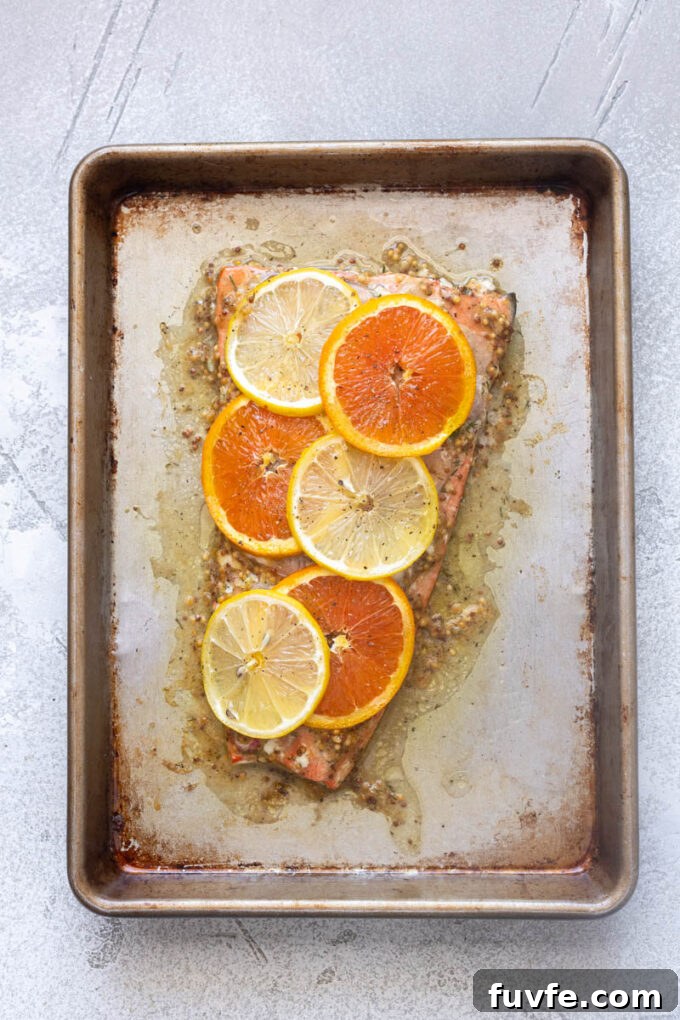
Complete step-by-step instructions are included in the recipe card below.
Tips for success
- Use an instant-read thermometer. This is the most accurate way to get the doneness you want.
- Keep the oven low. 250°F ensures a silky texture and prevents the fish from drying out.
- Cook skin-on salmon. The skin helps retain moisture and makes the fillet easier to handle; it can be removed after cooking if desired.
- Slice citrus thinly. Thin slices release flavor without overwhelming the fish.
- Allow a brief rest. Let the salmon sit for 3–5 minutes after roasting so the juices redistribute and the internal temperature evens out.
Recipe FAQs
Yes. Thaw it completely in the refrigerator and pat it dry before seasoning and roasting.
135°F (57°C) gives a moist, tender result. For firmer, more well-done salmon, aim for 140–145°F (60–63°C).
Yes. The salmon is delicious warm, at room temperature, or chilled, so it works well for meal prep or entertaining.
Serving suggestions
This citrus salmon pairs nicely with:
- Roasted or grilled vegetables.
- Cilantro-lime rice or garlic mashed potatoes.
- Whole grains like quinoa or farro.
- Light salads such as butter lettuce or a tricolor salad.
- Crusty bread to soak up the pan juices.
More salmon recipes you’ll love:
- Air fryer salmon
- Blackened salmon with pineapple salsa and coconut rice
- Simple canned salmon salad
- Crispy salmon patties with lemon-dill sauce
- Garlic butter baked salmon
- Salmon Niçoise salad
- Maple-orange teriyaki salmon bowls
Did you try this recipe? If so, leave a review below and tag @flavorthemoments on social media so I can see your version!
Slow Roasted Citrus Salmon
4 servings
Equipment
- Rimmed baking sheet (or similar baking pan)
Ingredients
- 1.5 lbs. salmon fillet (center cut, skin-on recommended)
- 4 tablespoons olive oil, plus more for drizzling
- 2 tablespoons whole grain Dijon mustard (or regular Dijon)
- 2 cloves garlic, minced
- 1 tablespoon fresh lemon juice (plus slices for topping)
- 1 tablespoon fresh orange juice (plus slices for topping)
- 2 teaspoons chopped fresh dill
- 1/4 teaspoon sea salt (plus black pepper to taste)
- 1 shallot, peeled and thinly sliced (optional)
Instructions
- 1. Preheat the oven to 250°F (120°C). Place the salmon on a rimmed baking sheet and blot it dry with paper towels. Season both sides with sea salt and black pepper.
- 2. In a small bowl, whisk together 4 tablespoons olive oil, 2 tablespoons whole grain Dijon mustard, 2 minced garlic cloves, 1 tablespoon lemon juice, 1 tablespoon orange juice, 2 teaspoons chopped fresh dill and 1/4 teaspoon sea salt.
- 3. Brush the Dijon-citrus mixture evenly over the top of the salmon. Scatter thinly sliced shallot over the fillet if using, then arrange thin lemon and orange slices on top. Drizzle a little extra olive oil over the citrus.
- 4. Roast the salmon in the preheated oven for about 20–25 minutes, or until the internal temperature reaches 135°F (57°C) for a moist, tender center. For a firmer texture, cook to 140–145°F (60–63°C).
- 5. Remove from the oven and let the salmon rest 3–5 minutes before serving so the juices redistribute. Serve and enjoy.
Notes
- Timing varies with thickness: Thicker center-cut fillets may take closer to 25 minutes.
- Keeping the skin on helps retain moisture. It can be removed after cooking if you prefer.
- Use any citrus you like: lemon, orange, mandarin, grapefruit, or lime all work well.
- Leftovers store in an airtight container in the refrigerator for up to 3 days.
Nutrition
Nutrition is estimated using a food database and should be used as a guideline only.
Did you try this recipe?
Tag @flavorthemoments with the hashtag #flavorthemoments on social media so I can see what you made!