Table of Contents
One of the most important — and sometimes overlooked — steps in sous vide cooking is the final sear. Whether you’re finishing a steak, roast, or chicken, the way you sear can transform texture and flavor. This guide focuses on achieving the best sear after sous vide, with practical tips for using a cast iron pan.
Note: this article emphasizes pan-searing with cast iron, a reliable method for developing a deep, even crust.
Why should we sear our food?
Searing adds texture, aroma, and complex flavor through the Maillard reaction — a browning process that occurs when amino acids and natural sugars react under high heat. That reaction creates the savory, caramelized notes we associate with well-seared meats, breads, and roasted vegetables. A quick, intense sear on a very hot surface gives meat a crisp exterior while preserving the juicy interior achieved by sous vide.
How do we make sure we get the best sear after the sous vide?
Follow these key steps for an optimal sear:
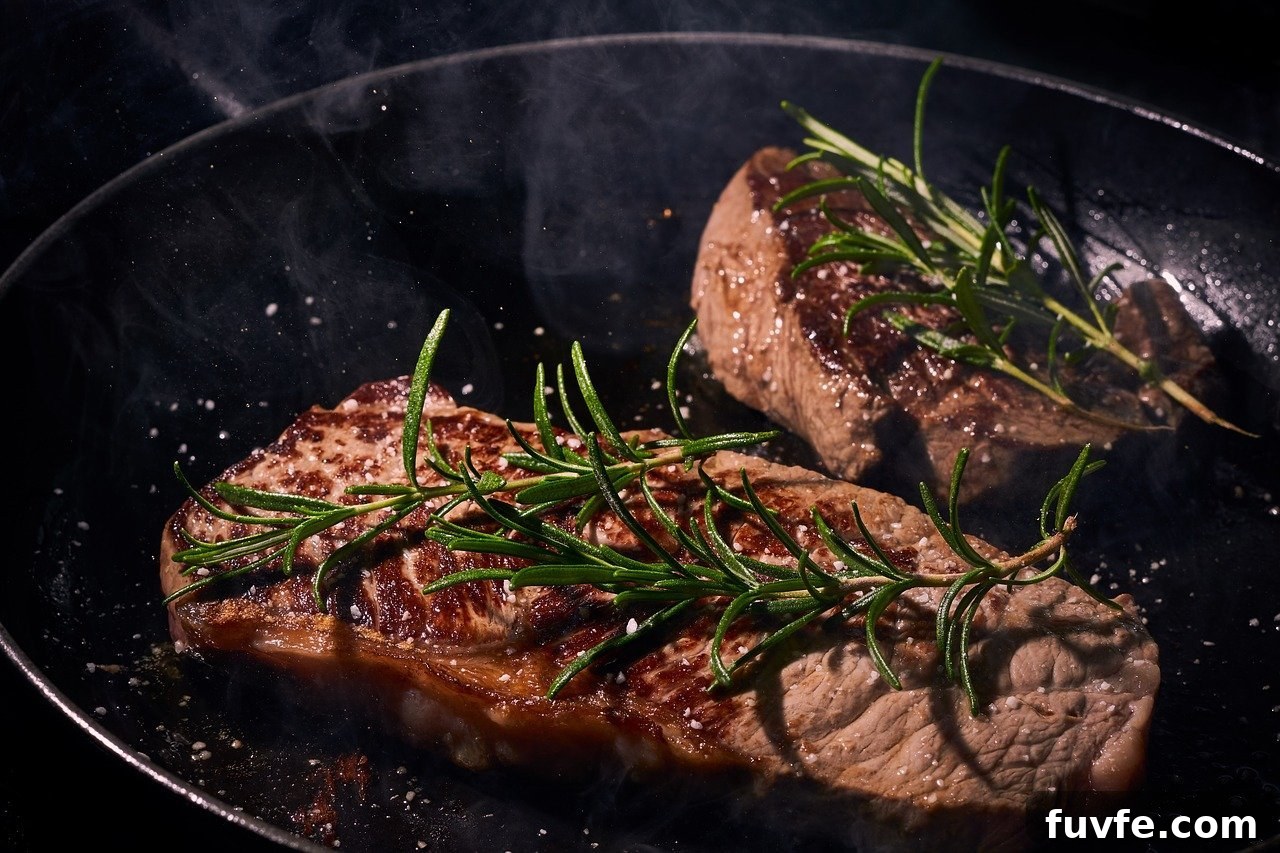
1. Get the pan extremely hot. A cast iron skillet should be smoking-hot before the meat touches it. Use an oil with a high smoke point — such as avocado oil or ghee — to reduce excessive smoking while allowing the surface to reach searing temperatures.
2. Dry the meat thoroughly. Pat the food completely dry with paper towels. Any surface moisture will produce steam and prevent a proper crust from forming. The drier the surface, the better the sear.
3. Use surface pressure if needed. A meat press or heavy spatula applied briefly helps ensure even contact with the pan and promotes an even crust.
4. Consider finishing tools. A culinary torch can be used in combination with the pan to target small areas, deepen color, or finish edges without overcooking the interior.
5. Time and rotation. Rotate the meat every 15 seconds or so and aim for a total sear time of about 1–2 minutes, depending on thickness and desired crust. The goal is quick surface browning without raising the core temperature significantly.
What other Searing Methods are good for the Sous Vide?
Grill
Grilling works well for finishing sous vide meat and is ideal for outdoor cooking. Preheat the grill on high with the lid closed so it reaches maximum heat. Lightly coat the meat with a thin layer of oil, then sear each side for roughly 45 to 90 seconds. Keep the sear short to avoid drying the interior; the sous vide process has already brought the meat to the desired doneness.
Frying
Deep or shallow frying delivers an evenly browned exterior while preserving a juicy center. Heat oil to about 375°F (190°C) and fry for 30 to 90 seconds until a golden crust forms. Because hot oil and water react violently, it is essential that the meat be completely dry before frying to prevent splattering and safety hazards.
Cooling
If you’re worried the sear might warm the interior too much, briefly chilling the meat can help. Placing the bagged or unbagged meat in the refrigerator or a quick stint in the freezer for a few minutes firms the outer layer so only the surface browns during searing, preserving the sous vide texture inside.
Flour
A light dusting of flour or cornstarch on the surface before searing can help accelerate browning and create a crisp, flavorful crust. Use a very thin, even coating so the crust forms quickly without becoming gummy or masking the meat’s natural flavor.
When done correctly, searing complements sous vide by adding the color, texture, and complex flavors that make a dish feel finished. Dry the meat, use high heat, and keep searing brief to retain the juicy interior you achieved by cooking sous vide.
Source: Maillard reaction — the chemical process responsible for browning and complex flavor formation in cooked foods.