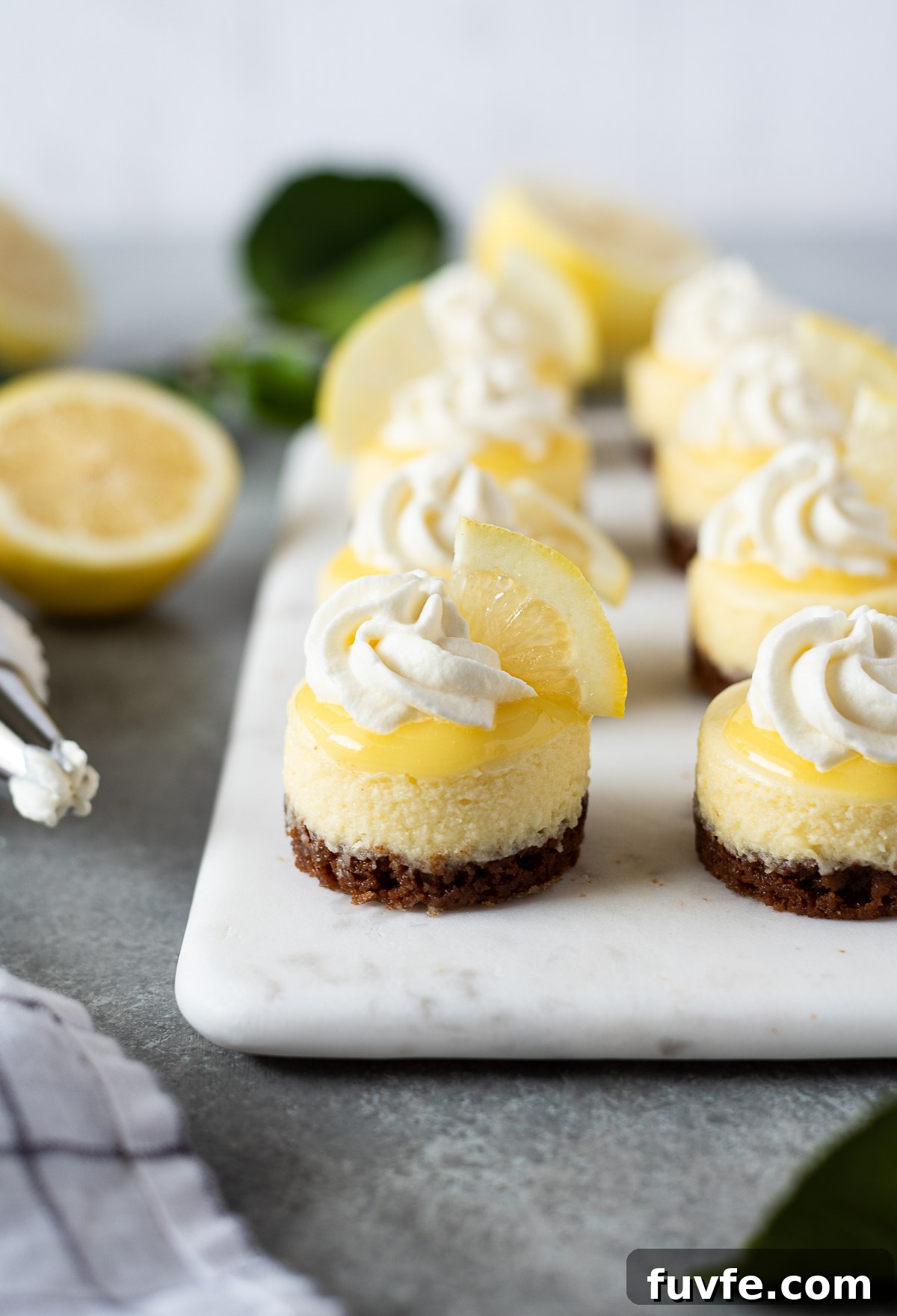
Mini Lemon Cheesecakes feature an ultra‑creamy lemon cheesecake filling set on a spicy gingersnap crust. Each bite is finished with bright lemon curd and a dollop of whipped cream for a perfectly balanced, elegant dessert ideal for holidays and entertaining.
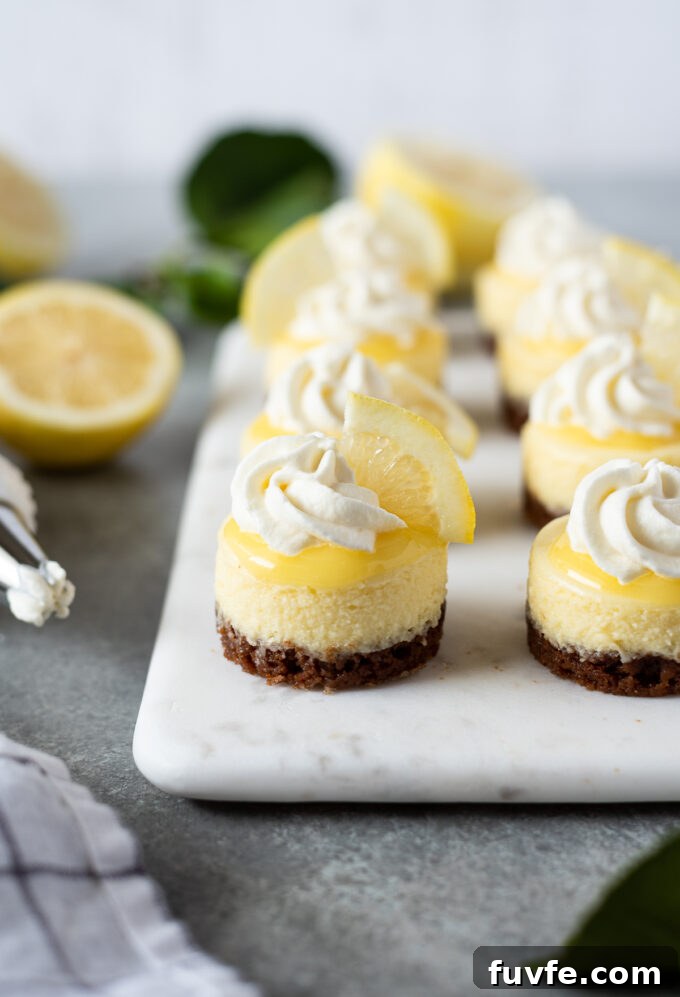
Why you’ll love this recipe
- Compact, individual cheesecakes that deliver big lemon flavor in a small package.
- Gingersnap crumb crust adds warmth and contrast to the tangy lemon filling.
- Mostly make‑ahead: you can bake, chill, and assemble these in advance.
- Flexible: substitute other citrus or cookie crumbs to suit dietary needs or flavor preferences.
Recipe ingredients
This recipe is straightforward and adaptable. Quantities below yield twelve mini cheesecakes.
- Gingersnap cookie crumbs — 1 cup, pulsed fine in a food processor. Graham crackers or other crisp cookies can be substituted.
- Unsalted butter — 4 tablespoons, melted, to bind the crust and add richness.
- Salt — a pinch (about 1/8 teaspoon) to round out flavors.
- Cream cheese — 8 ounces, full‑fat and softened to room temperature for the smoothest texture.
- Granulated sugar — 1/2 cup, to sweeten without overpowering the lemon.
- Egg — 1 large, for structure.
- Sour cream — 2 tablespoons; plain Greek yogurt can be used instead.
- Fresh lemon juice — 2 tablespoons, plus 1 tablespoon lemon zest for bright citrus flavor.
- Pure vanilla extract — 1 teaspoon.
- Lemon curd — about 1 cup, store‑bought or homemade (homemade cools quickly and spreads beautifully).
- Whipped cream — homemade or stabilized, to pipe or dollop on top.
See the instructions below for full method and timing.
How to make mini lemon curd cheesecakes
There are three simple components: the gingersnap crust, the lemon cheesecake filling, and the finishing lemon curd with whipped cream. Each element is easy to prepare, and most can be made ahead to streamline serving.
Pro tip: Bake and cool the cheesecakes, then refrigerate them in an airtight container. Prepare lemon curd and whipped cream ahead; assemble shortly before serving for the best texture and presentation.
Prepare the gingersnap crust
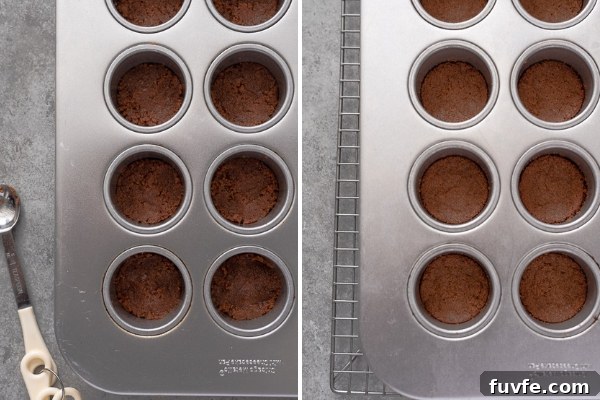
- Preheat the oven to 350°F (175°C). Place removable inserts into a 12‑cavity mini cheesecake pan and lightly spray or grease them.
- Combine 1 cup finely pulsed gingersnap crumbs with 1/8 teaspoon salt. Stir in the 4 tablespoons melted butter until evenly moistened.
- Drop about 1 tablespoon plus 1 teaspoon of the crumb mixture into each cavity. Press firmly with the back of a spoon to form a compact crust layer.
- Bake for 8–10 minutes on the middle rack until the crusts turn golden and fragrant. Let cool while you prepare the filling.
Prepare the lemon cheesecake filling
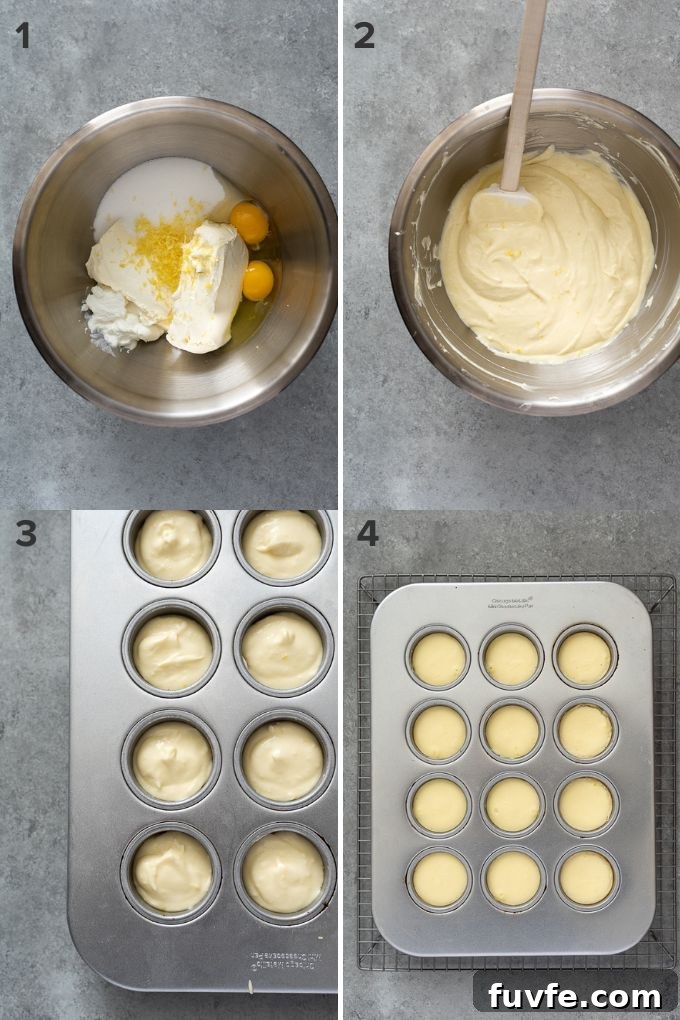
- In a medium bowl, beat 8 ounces softened cream cheese until smooth, about 1–2 minutes to remove lumps.
- Add 1/2 cup granulated sugar, 1 large egg, 2 tablespoons sour cream (or Greek yogurt), 2 tablespoons fresh lemon juice, 1 tablespoon lemon zest, and 1 teaspoon vanilla. Beat until just combined and silky; avoid overmixing.
- Divide the filling evenly among the 12 prepared crusts, filling each cavity nearly to the top but not overflowing.
- Bake on the middle rack for 10–15 minutes, until the edges are set and the centers are slightly wobbly. Start checking at 10 minutes as ovens vary.
Assemble the mini cheesecakes
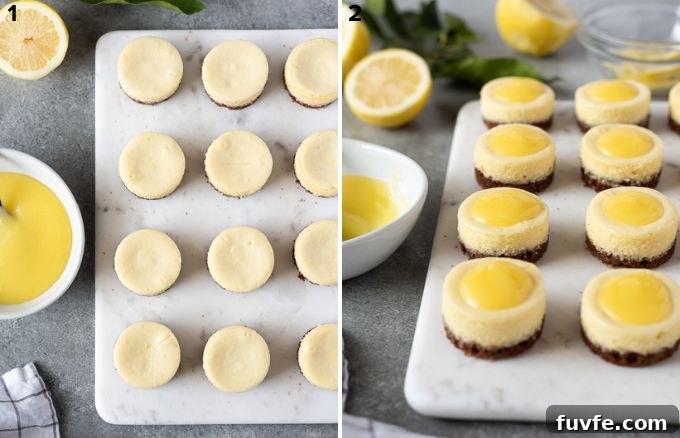
- Cool the cheesecakes on a wire rack for 20 minutes, then remove each from the pan by pushing up through the removable base or gently loosening with a thin knife. Transfer to the refrigerator and chill for at least 2 hours or overnight to fully set.
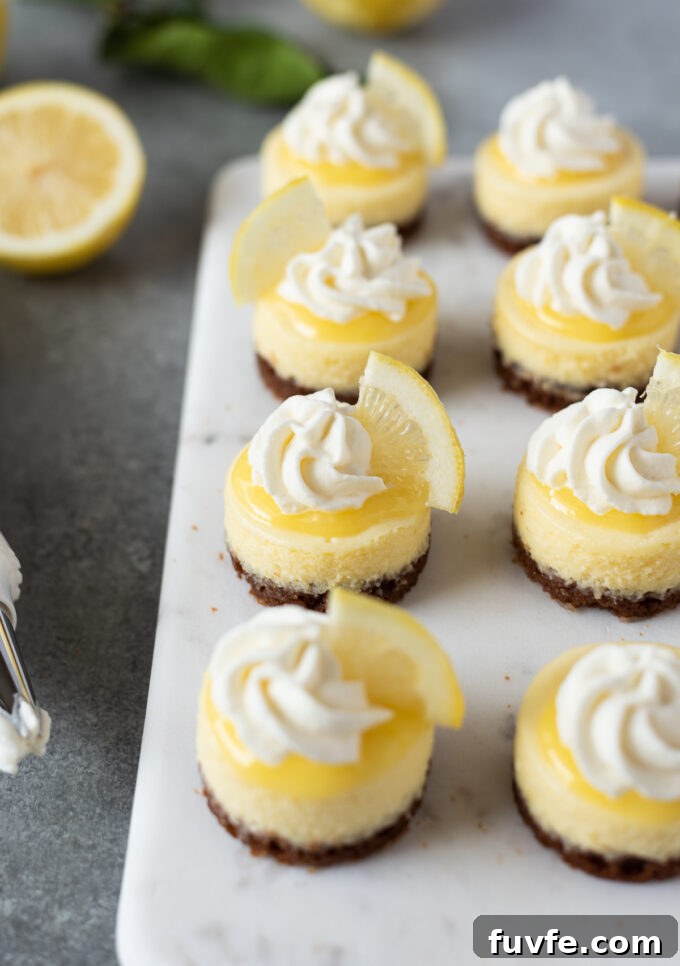
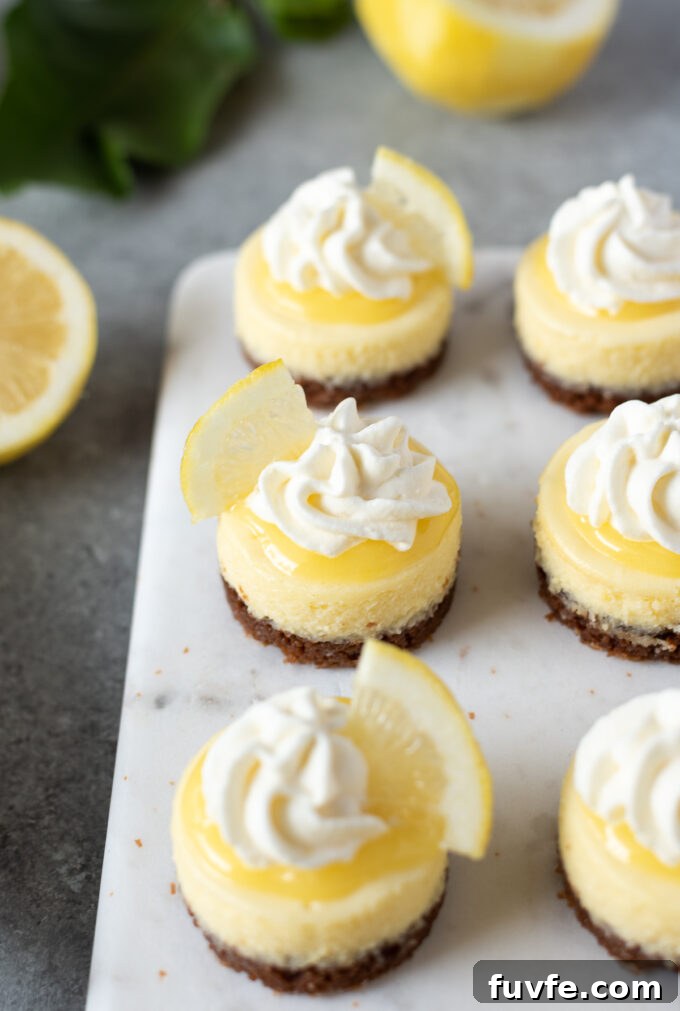
- When ready to serve, spoon a small dollop (about 1 teaspoon) of cooled lemon curd onto each cheesecake. Finish with a piped or spooned dollop of whipped cream and a sprinkle of reserved gingersnap crumbs for texture.
Recipe FAQs
A mini cheesecake pan with removable bottoms makes extraction easiest and prevents cracking. If you don’t have removable inserts, a standard mini muffin pan can work but removal will be trickier.
Can I use a regular muffin pan?
Yes, though the volume of each cavity is larger so bake time and filling quantities may need to be adjusted. Watch the centers closely for doneness.
How do I know when mini cheesecakes are done?
They are done when the edges are set and the centers still wobble slightly. They will firm up as they chill.
How long will they keep?
Stored in an airtight container in the refrigerator, assembled cheesecakes will keep up to five days. If you make whipped cream separately, add it just before serving for best texture.
Recipe notes
- Make‑ahead: Bake, cool, and refrigerate the cheesecakes and store lemon curd in the fridge. Assemble a few hours before serving for ease and freshness.
- Whipped cream: Whip just before serving, or use stabilized whipped cream if you need the topping to hold shape longer.
- Substitutions: Swap gingersnaps for graham crackers, digestive biscuits, or a gluten‑free cookie of your choice. Lemon may be substituted with lime, key lime, blood orange, or grapefruit for variety.
- Serving suggestions: Garnish with thin lemon or lime slices, a few zested strips, or a light dusting of extra cookie crumbs.
Recipe summary
Servings: 12 mini cheesecakes | Prep time: 45 mins | Cook time: 40 mins | Cooling time: 2 hrs 20 mins | Total time: about 3 hrs 45 mins
These mini lemon cheesecakes combine a spicy gingersnap crust with a bright, creamy lemon filling and a finishing touch of lemon curd and whipped cream. They are elegant, crowd‑pleasing, and perfect for holidays or any special occasion.
Note: This post was originally published in December 2014 and has been updated with new photos and refined text.