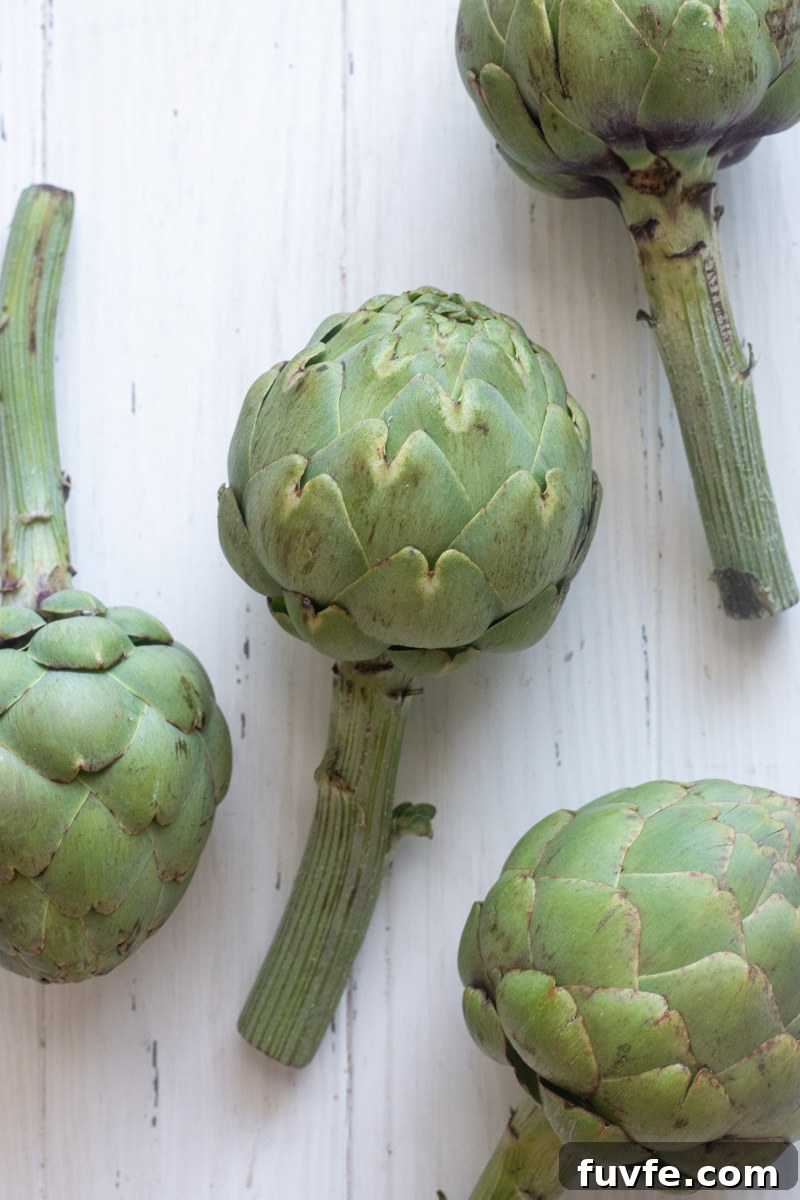
Learn how to prep an artichoke with these clear, step-by-step instructions. You’ll discover how to trim the stem, remove thorny tips, scoop out the choke, and get artichokes ready for steaming, roasting, grilling, or braising so you can enjoy them throughout the season.
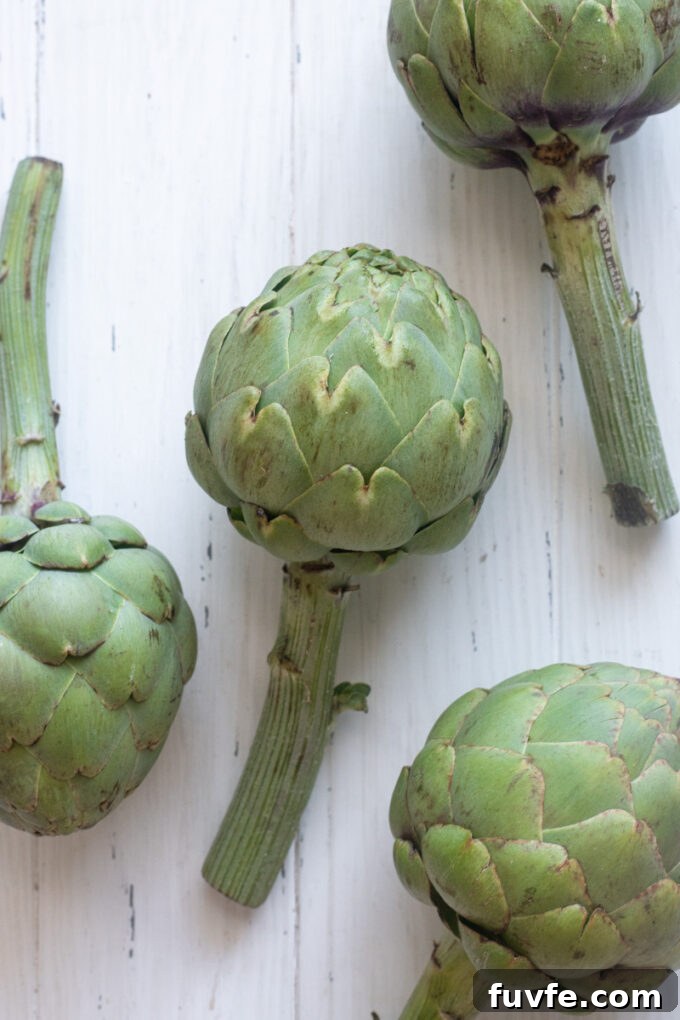
Artichokes might seem intimidating because of their thick leaves and thorny tips, but once you know the basics of trimming and cleaning them, they’re easy to prepare. This guide walks you through each step using straightforward directions and images so you can handle fresh artichokes with confidence.
Why you’ll love this tutorial
- Step-by-step guidance with photos to make prep simple.
- Clear instructions for trimming leaves and cutting the top.
- Explains the artichoke choke and when to remove it.
- Applies to steaming, roasting, grilling, or braising.
What you’ll need
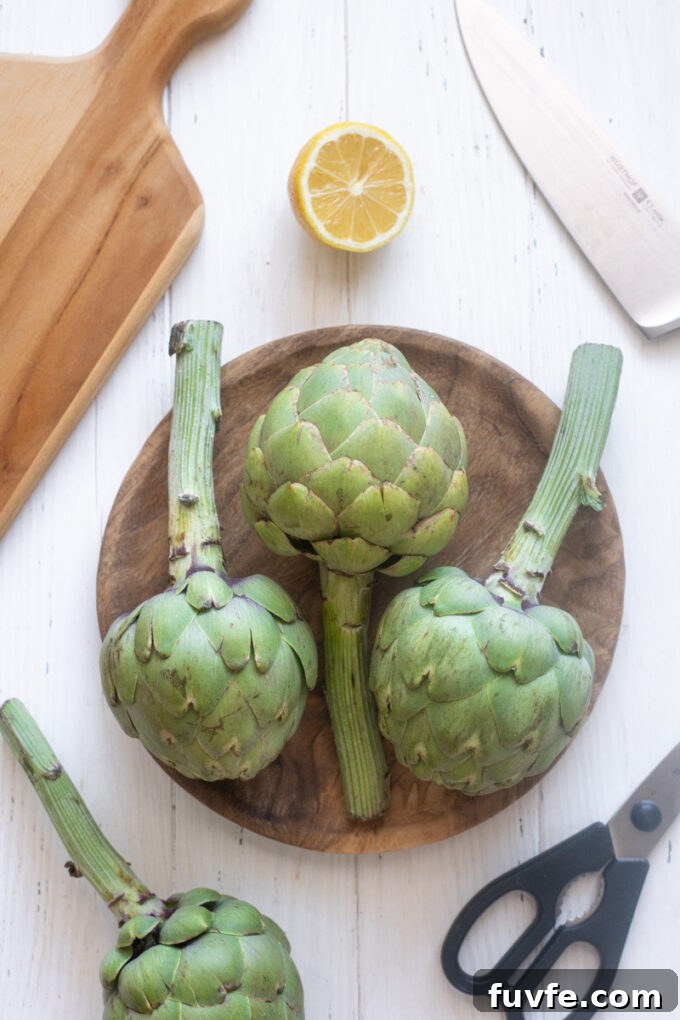
- Fresh globe artichokes: Choose firm heads with tightly closed leaves and a heavy feel for their size.
- Lemon: Rubbing cut surfaces with lemon prevents browning and keeps the flesh bright.
- Sharp chef’s knife: A sharp blade makes clean cuts through the tough top and stem.
- Kitchen shears: Useful for snipping the sharp tips from outer leaves.
- Spoon or melon baller: Handy for scooping out the fuzzy choke when halving artichokes.
How to prepare an artichoke step-by-step
Step 1: Trim the stem
Set the artichoke on a cutting board and slice off the very end of the stem so the artichoke sits flat. The stem itself is edible once peeled and can be cooked along with the head, so don’t discard it if you want to use it.
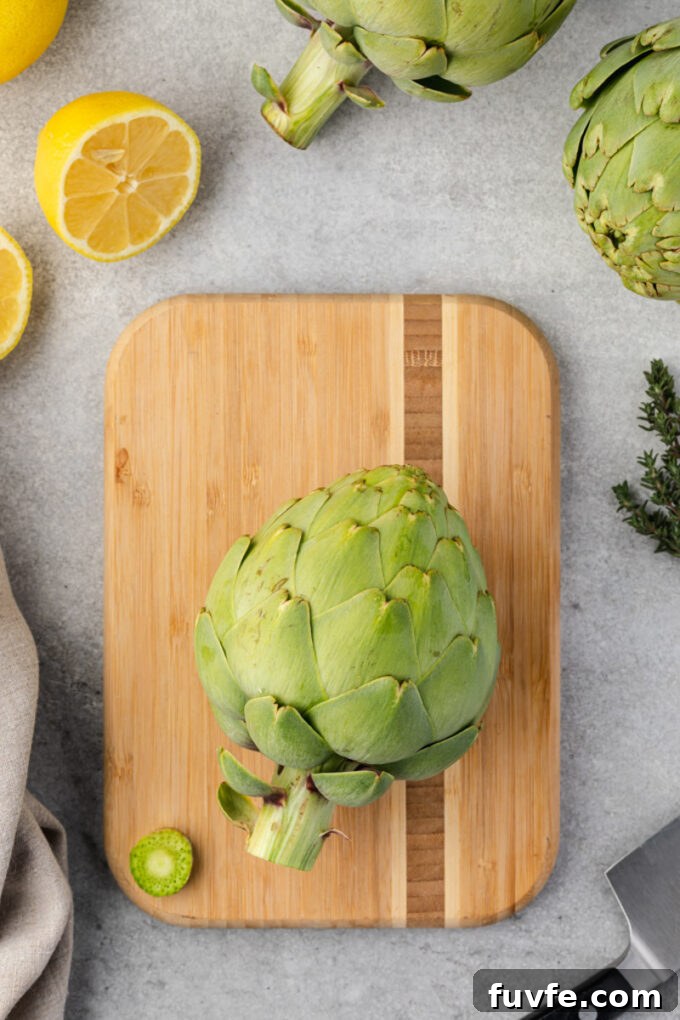
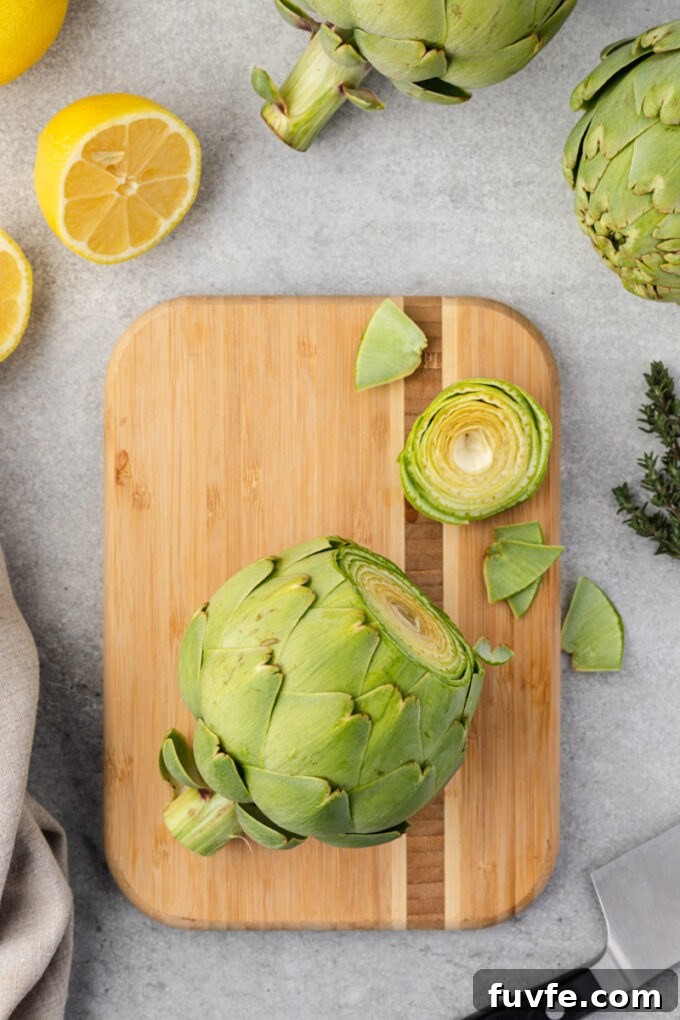
Step 2: Cut off the top
With a sharp knife, cut about 1/2 to 1 inch off the top of the artichoke. This removes the thorny tips and makes the heart and inner leaves easier to access.
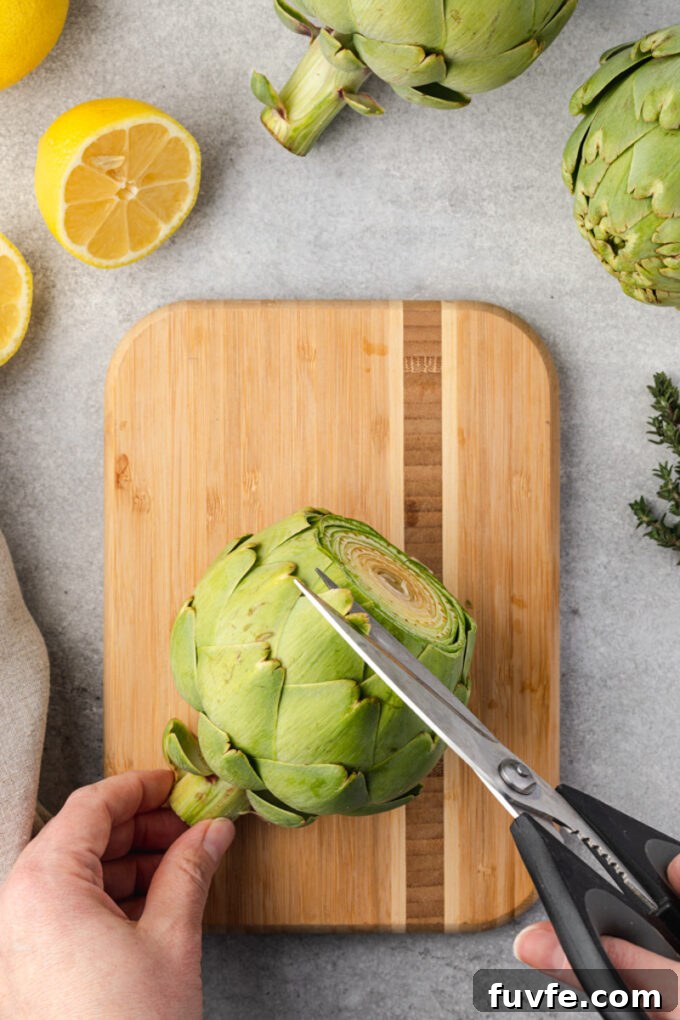
Step 3: Trim the leaf tips
Use kitchen shears to snip the sharp tips from the outer leaves. This is optional but makes the artichoke safer to handle and improves presentation.
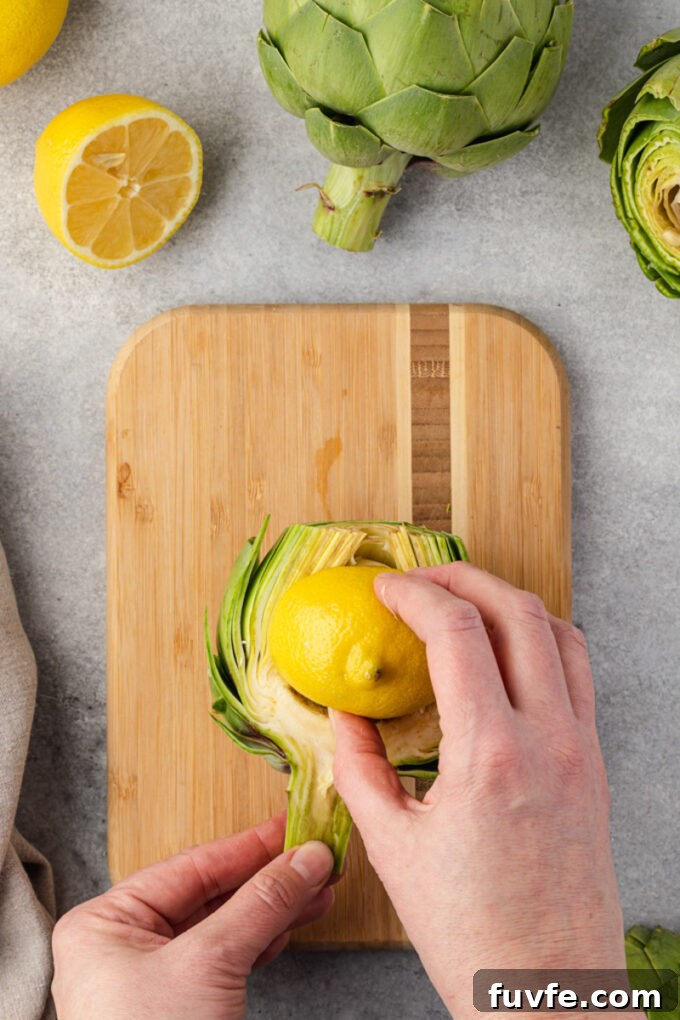
Step 4: Rub cut surfaces with lemon
Rub the exposed surfaces with lemon to slow oxidation and prevent browning. If you’re preparing multiple artichokes, place trimmed pieces in a bowl of lemon water until you’re ready to cook.
Decide how you’ll cook the artichoke
After trimming, your next move depends on the cooking method you choose. Below are common approaches and how prepping differs for each.
For steamed artichokes
Leave the artichoke whole after trimming. When steamed, the fuzzy choke is usually removed after cooking when you reach the center; the heart and base will be tender and easy to access.
For braised (Roman-style) artichokes
Roman-style artichokes are typically cooked whole after trimming. The leaves are opened slightly and the artichokes are braised with olive oil, garlic, and herbs until tender.
For roasted or grilled artichokes
If you plan to roast or grill, cut the artichoke in half and remove the choke before cooking so the interior can caramelize and absorb oil and seasonings.
How to remove the choke (for roasting or grilling)
Step 5: Cut the artichoke in half
Slice the trimmed artichoke lengthwise through the stem to expose the center and the fuzzy choke.
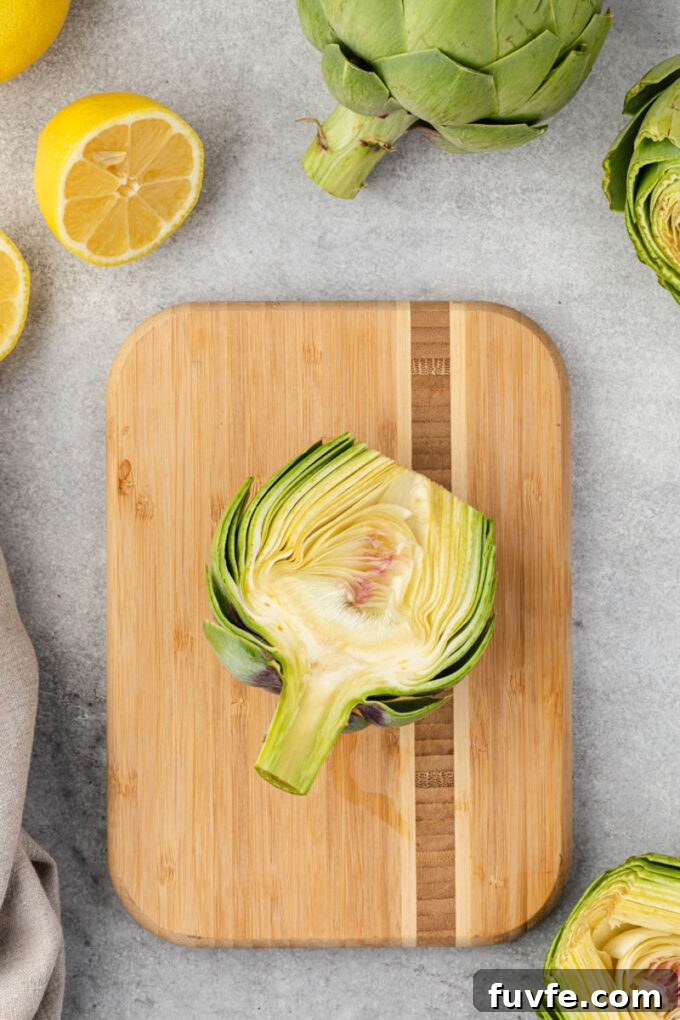
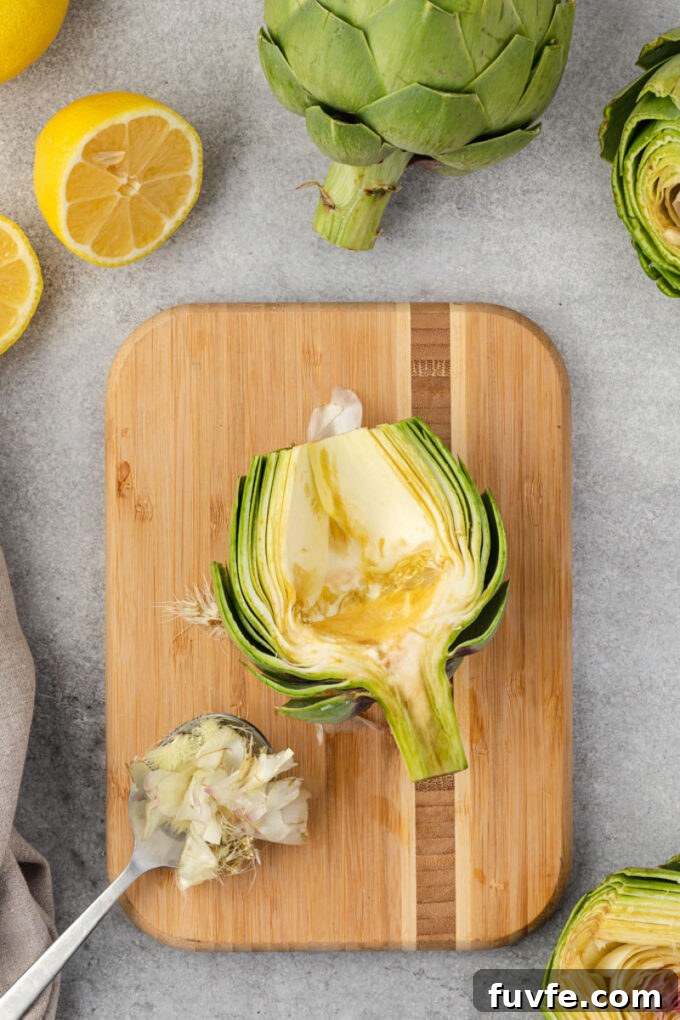
Step 6: Remove the choke
Use a spoon or melon baller to scoop out the fuzzy choke and any small, sharp inner leaves. Remove all the inedible fiber so the heart remains clean and tender.
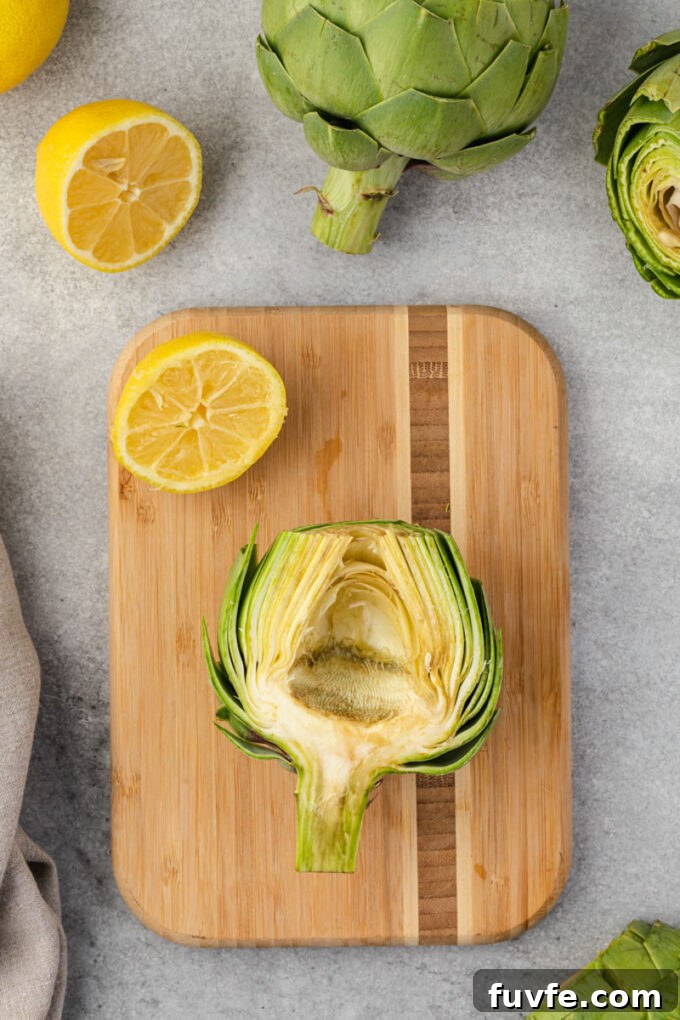
Step 7: Artichoke ready to cook
With the choke removed and surfaces rubbed with lemon, your artichoke halves are ready to be roasted, grilled, or braised. Brush with olive oil and season as desired before cooking.
Tips for prepping artichokes
- Keep your knife sharp for clean, safe cuts through the tough outer leaves and top.
- Rub all cut surfaces with lemon immediately to prevent discoloration.
- Kitchen shears make trimming the leaf tips quick and tidy.
- The stem is edible: peel it and cook it along with the artichoke or slice it for salads.
- If prepping several artichokes, store trimmed pieces in lemon water to maintain color.
How to cook artichokes
Trimmed artichokes can be prepared in many delicious ways. Here are a few classic methods:
Steamed artichokes
A simple, classic approach. Serve whole steamed artichokes with melted butter, garlic aioli, or a bright vinaigrette for dipping the leaves and heart.
Roasted artichokes
Halve and toss with olive oil, lemon, garlic, and herbs, then roast until the outer leaves are caramelized and the heart is tender. Roasting concentrates flavor and adds a pleasant char.
Braised (Roman-style) artichokes
Slowly braise trimmed artichokes in olive oil with garlic, herbs, and a splash of water or stock until tender. This traditional method produces extremely tender, flavorful results.
FAQs
Yes. Rinse artichokes under cold water and gently separate the leaves to remove dirt that can get trapped near the base.
The choke is the fuzzy, inedible center that sits above the heart. It becomes tough as the artichoke matures and should be removed before eating when the artichoke is halved or after cooking when the artichoke is steamed whole.
It depends on the method: remove the choke before roasting or grilling (when the artichoke is halved). For whole steamed or braised artichokes, the choke is often easier to remove after cooking.
Yes. Peel the tough outer layer of the stem to reveal the tender inner flesh, which is delicious when cooked.
Rub cut surfaces with lemon or place trimmed artichokes in lemon water until you’re ready to cook them.
Quick prep summary and simple recipe
Below is a concise recipe-style summary to follow when prepping one artichoke.
Ingredients
- 1 fresh globe artichoke
- 1/2 lemon, halved
Equipment
- Sharp chef’s knife
- Kitchen shears
- Spoon or melon baller
- Cutting board
Instructions
- Rinse the artichoke under cold water, gently separating the leaves to remove any dirt.
- Trim the stem end so the artichoke will sit flat; peel the stem if you plan to eat it.
- Slice 1/2–1 inch off the top to remove thorny tips.
- Optional: use shears to snip the sharp tips from the outer leaves for easier handling.
- Rub all cut surfaces with the lemon half to prevent browning.
- If roasting or grilling, cut the artichoke in half lengthwise and scoop out the fuzzy choke with a spoon; season and cook as desired.
- If steaming whole, steam until tender and remove the choke after cooking before serving.
Notes
- Prep time: about 10 minutes per artichoke, depending on size.
- Store trimmed artichokes in lemon water if you aren’t cooking them immediately.
- The stem is fully edible after peeling and can be cooked along with the head.
Nutrition (per artichoke)
Calories: 76 kcal; Carbohydrates: 18 g; Protein: 5 g; Fat: 0.3 g; Fiber: 8 g; Vitamin C: 44 mg. Nutrition is an estimate and provided for guidance only.
Did you try this guide? If so, leave a review or share how you served your artichokes on social media and tag the person who taught you — it’s a great way to inspire others.