
Learn how to poach eggs perfectly every time with these simple, reliable tips. Poached eggs are quick to make, feel elegant, and this guide includes exact cooking times for soft, medium and hard poached eggs so you can satisfy every preference.

Poached eggs are a comforting classic. For me, they bring back memories of my mom making them when I was under the weather—cutting into a silky yolk and dipping toast into it is one of life’s small pleasures. You don’t need special tools to make great poached eggs; a mesh strainer and a small bowl are all it takes.
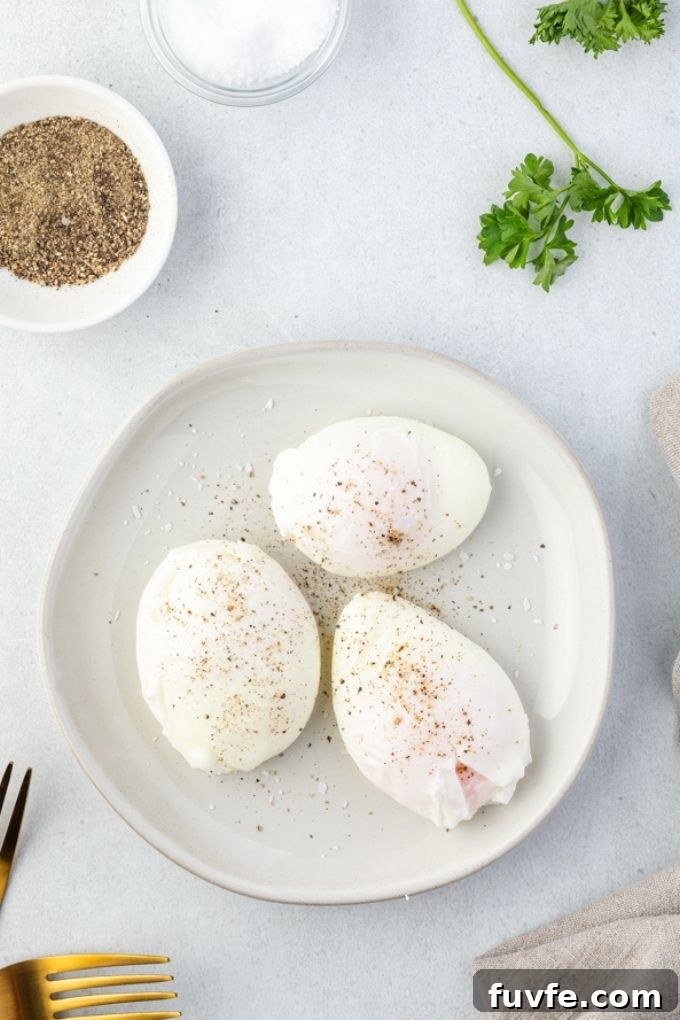
Why you’ll love this recipe:
- A foolproof method to make poached eggs that hold their shape and have a tender white.
- They look and taste special, yet are surprisingly easy and fast to prepare.
- Clear cooking times for soft, medium and hard poached eggs so you can get the texture you want.
- Versatile: great on toast, in eggs Benedict, over grain bowls or roasted vegetables.
Recipe ingredients
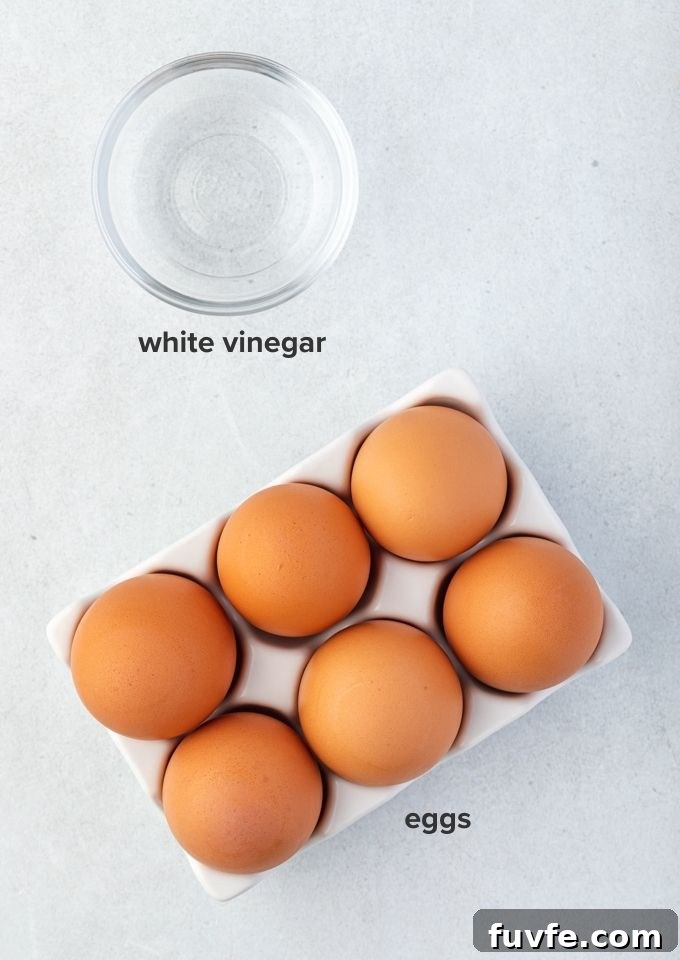
- Eggs — This method is based on large eggs. If your eggs are smaller or larger, adjust cooking time slightly.
- White distilled vinegar — A tablespoon per pot of water helps the egg white set and reduces wispy strands. Use white vinegar so it won’t affect the egg’s color or flavor.
- Salt and pepper for seasoning; fresh herbs like parsley for garnish (optional).
How to poach an egg
These straightforward steps will guide you to a neatly shaped poached egg with a silky yolk. No special equipment required.
Quick overview — see the full recipe and exact times below.
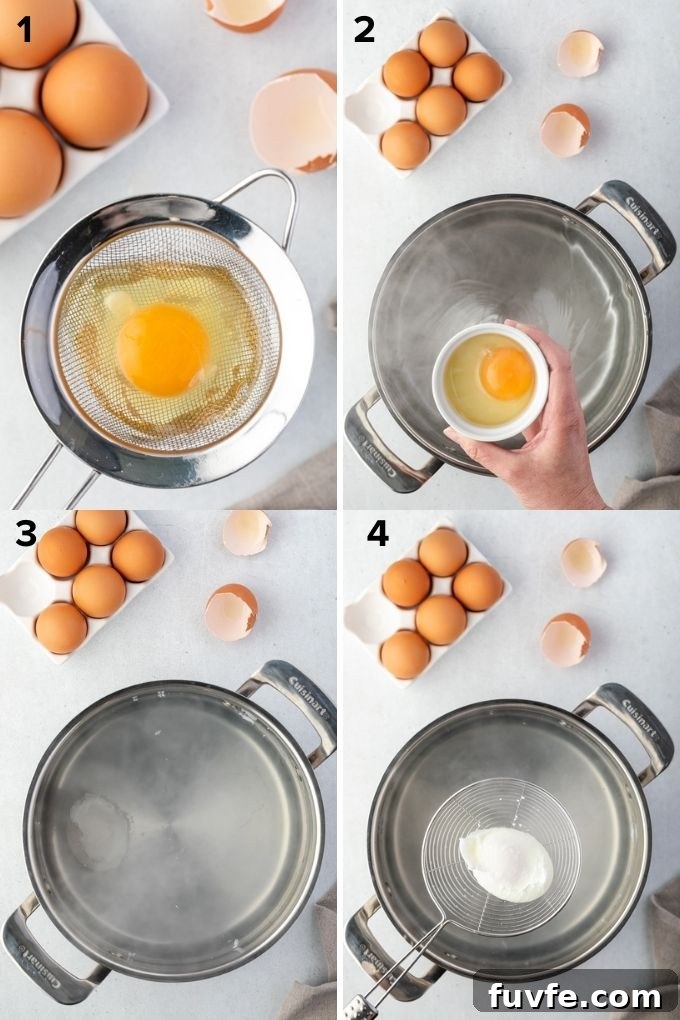
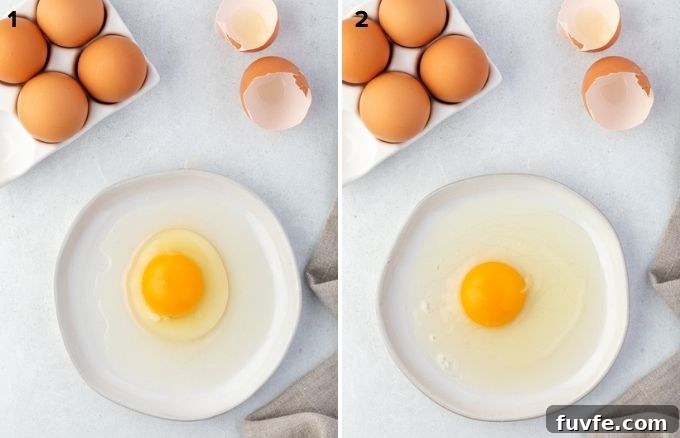
- Crack the egg into a mesh strainer over a bowl and let the very loose part of the white drain away. Then transfer the egg to a small ramekin or bowl.
- Bring a medium pot of water to a gentle simmer, then stir in the vinegar.
- Reduce heat so the water is barely moving, stir to create a slight circular motion, and gently slip the egg from the ramekin into the center of the swirl.
- Cook according to the timing below, then lift the egg out with a slotted spoon and drain on a paper towel or a clean dish towel-lined plate.
How long to poach an egg
Choose the cooking time that matches your preferred yolk consistency:
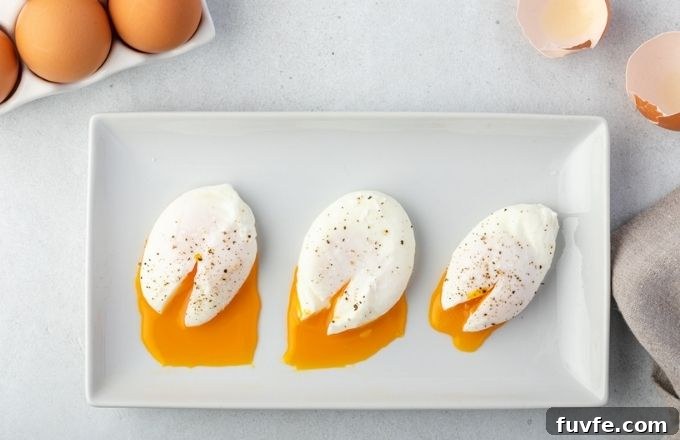
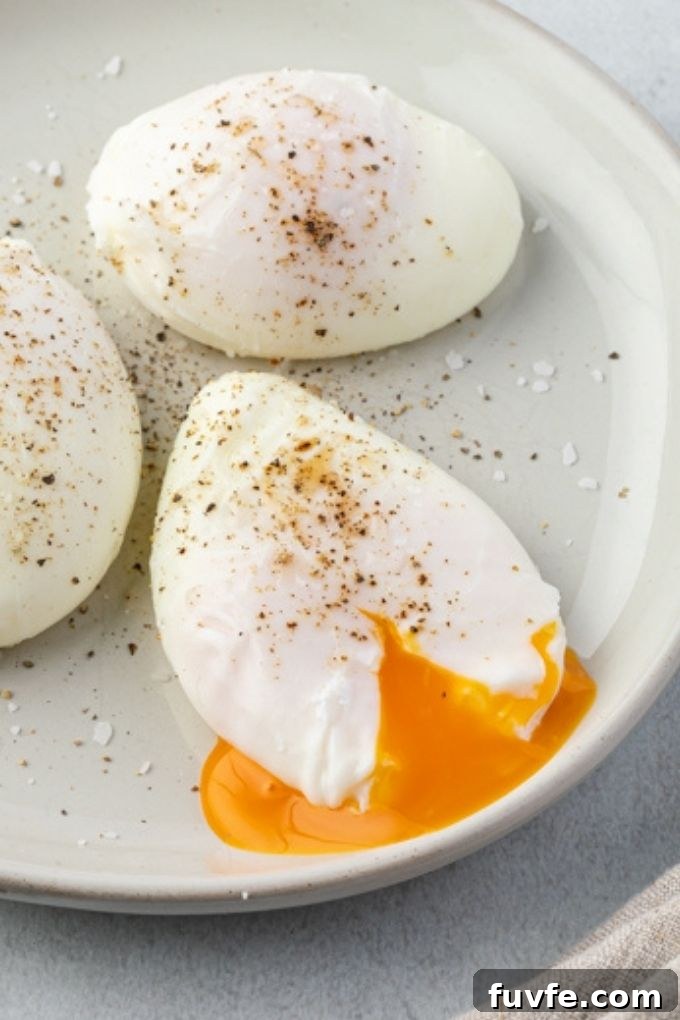
- Soft poached: 3 minutes — the yolk is runny and the white is set but tender.
- Medium poached: 4 minutes — the yolk is slightly thickened but still soft.
- Hard poached: 5 minutes — the yolk is fully set.
FAQs
Using a small amount of white vinegar helps the egg white coagulate more quickly, which minimizes wispy strands and gives a neater shape. The vinegar taste is not noticeable when you use a little.
Straining removes the thinnest part of the white that tends to spread in the water. Fresh eggs have firmer whites and will produce tighter, smoother poached eggs.
Yes, but for the best shape poach one egg at a time. If you need two, crack each into its own small bowl and add them to the water one after the other, keeping them near the center of the simmering vortex.
Yes. Cool the cooked eggs on a plate, then store them submerged in cold water in the refrigerator for up to 2 days. To reheat, place them in warm (not boiling) water until heated through, then drain and serve.
Serving suggestions
Poached eggs add instant elegance to many dishes. Try these ideas:
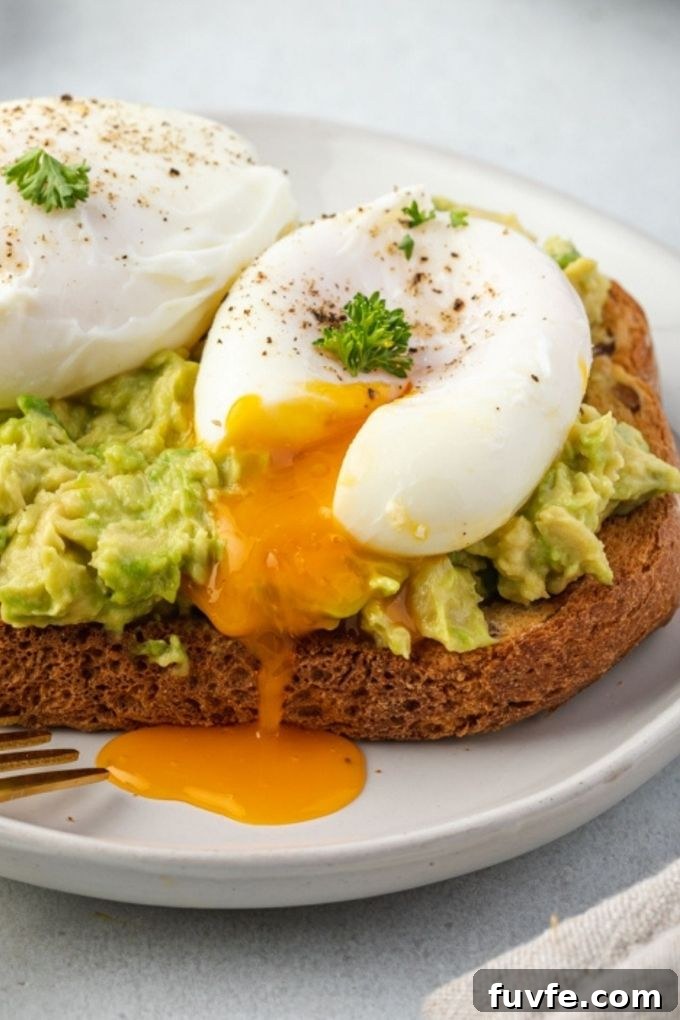
- Top buttered toast or avocado toast with a soft poached egg and a sprinkle of flaky salt.
- Use them in classic eggs Benedict or alongside sautéed greens for a simple brunch.
- Place a poached egg over grain bowls, roasted vegetables or baked sweet potatoes for added richness and protein.
- Serve with roasted or air-fried potatoes and a side of greens for a balanced, satisfying meal.
Recipe tips
- Pro tip: Strain the egg before poaching to remove excess watery white and reduce wisps.
- Use white distilled vinegar so the eggs won’t pick up color or an off taste.
- Fresher and colder eggs hold their shape better than older, room-temperature eggs.
- Adjust cooking times for medium or extra-large eggs if needed; the times above are for large eggs.
- If making ahead, store cooked eggs in cold water and reheat gently in warm water before serving.
Poached Eggs Recipe
Ingredients
- 1 large egg
- 1 tablespoon white vinegar
- Salt and pepper, to taste
Instructions
- Crack the egg into a mesh strainer and let the very loose part of the white drain away. Transfer the egg to a small ramekin.
- Bring a medium pot of water to a gentle boil. Stir in the tablespoon of white vinegar.
- Reduce heat so the water is barely simmering. Stir the water to create a gentle vortex, then carefully pour the egg from the ramekin into the center of the swirl.
- Cook for 3 minutes for soft, 4 minutes for medium, or 5 minutes for hard poached. Remove with a slotted spoon, drain briefly, then season and serve.
Notes
- Straining reduces wispy whites and helps produce a neater poached egg.
- White vinegar helps the white set without changing flavor; avoid colored vinegars.
- Cold, fresh eggs give the best results.
- Cooked poached eggs can be stored in cold water in the refrigerator for up to 2 days and reheated gently in warm water.
Nutrition (approximate)
Serving: 1 egg • Calories: 74 kcal • Protein: 6 g • Fat: 5 g • Carbohydrates: 1 g
Did you try this recipe? If so, leave a review below or share a photo of your poached eggs.
All recipes and images © Flavor the Moments (original source).