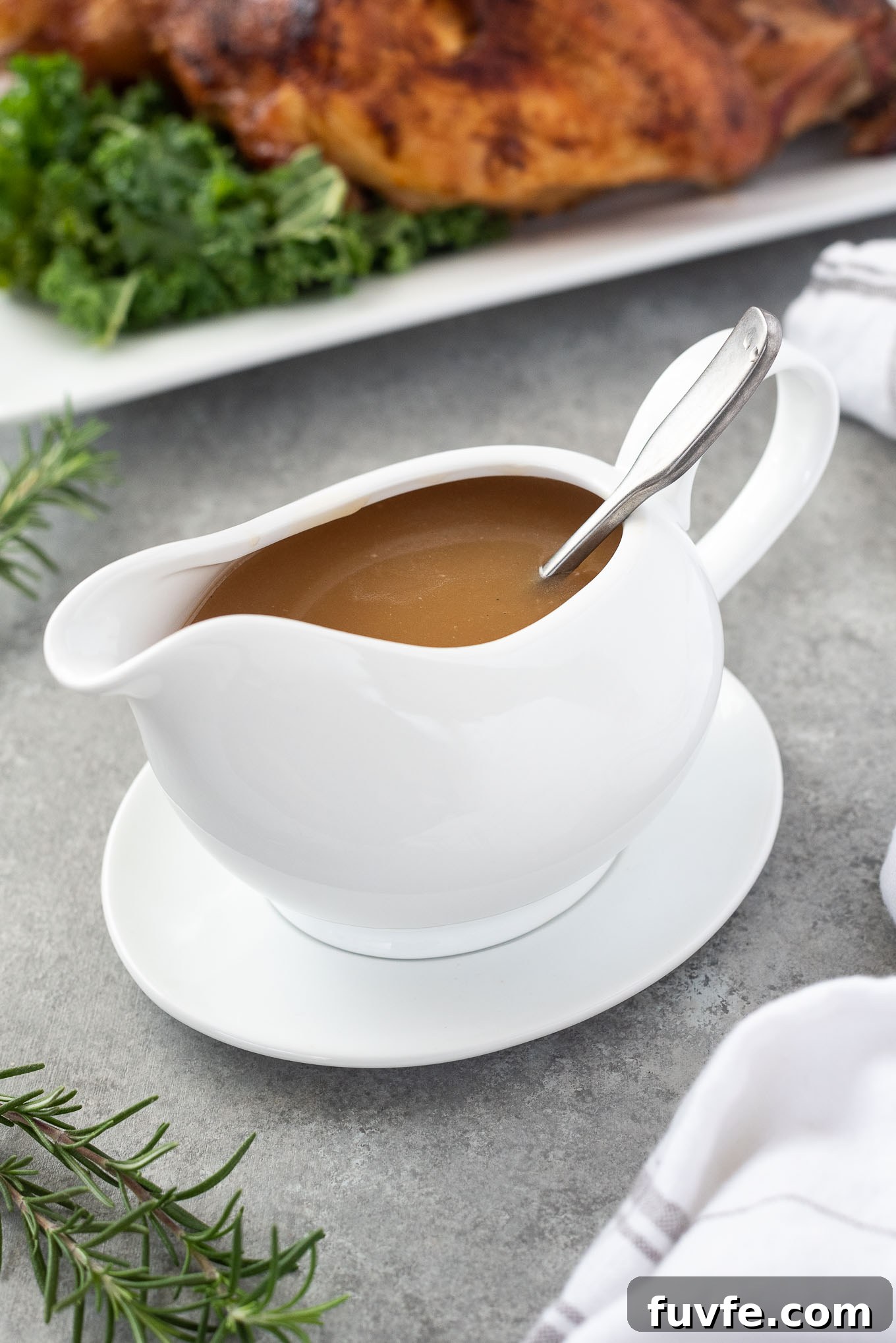
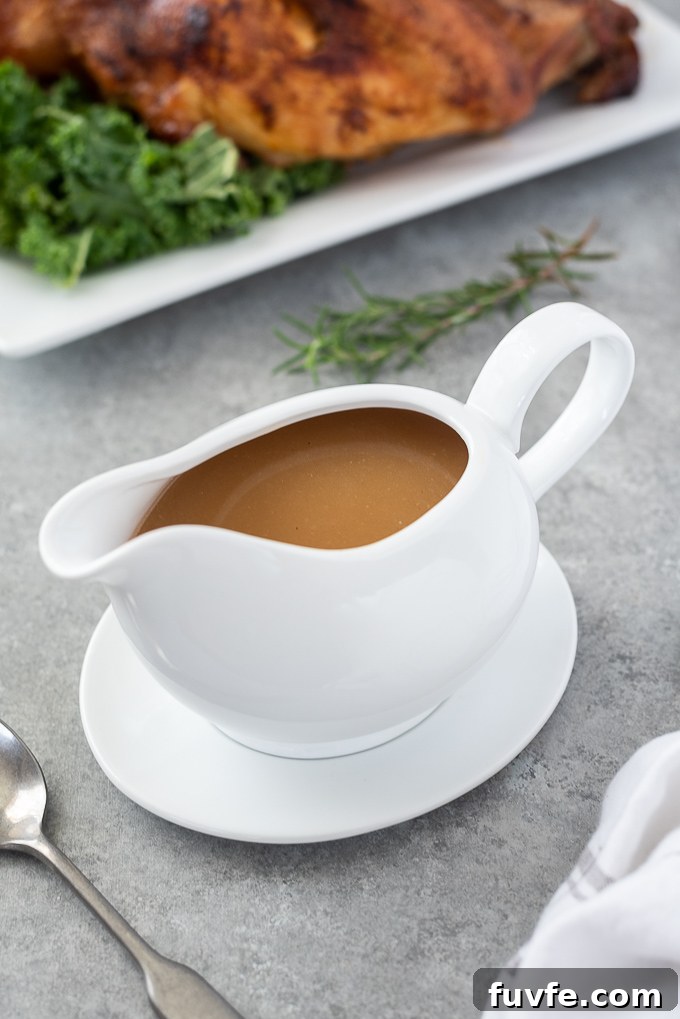
Easy Turkey Gravy Recipe is a practical guide to making rich, flavorful turkey gravy using pan drippings. The recipe includes options for a gluten-free version using cornstarch, instructions for a flour-based gravy (slurry or roux), plus make-ahead and reheating tips to keep Thanksgiving stress-free.
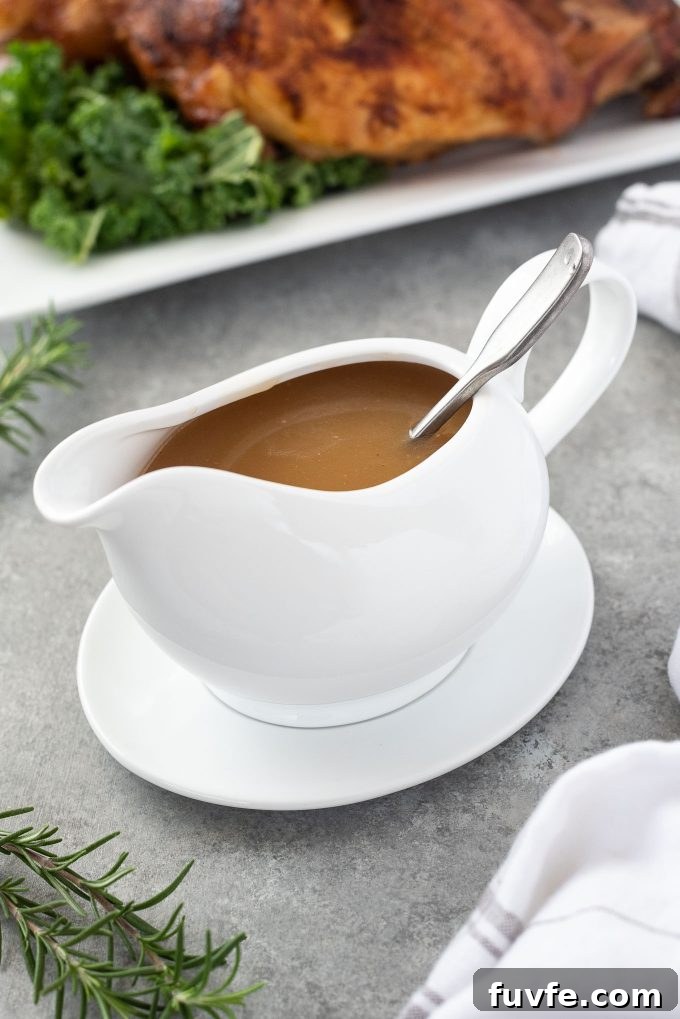
Gravy anxiety is real—especially when you’re trying to get everything right on a holiday meal. Standing at the stove while guests hover is not fun. This easy turkey gravy method takes the worry out of the process and helps you produce consistently delicious gravy with minimal effort.
I’ve tested this method multiple times—roasting turkeys and making stock and gravy to refine the steps—so you can rely on the technique whether you’re making a traditional flour-based gravy or a gluten-free cornstarch version.
Why you’ll love this recipe:
- This turkey gravy guide covers both cornstarch (gluten-free) and flour techniques (slurry or roux), so you can choose the method that works best for your needs.
- Clear make-ahead and reheating instructions let you prepare gravy days or weeks in advance, reducing last-minute kitchen stress.
- Tips to deepen flavor—deglazing the roasting pan with wine, bourbon, or sherry, adding giblets, or incorporating fresh herbs—are included to help you customize the gravy.
Recipe ingredients
- Drippings: Turkey drippings provide the base flavor. After removing the turkey from the pan, pour the drippings into a fat separator or measuring cup and let them sit so fat rises to the top.
- Fat: Skim the fat from the top of the drippings if you plan to use flour or make a roux-based gravy.
- Homemade stock: Homemade turkey stock delivers the best flavor and gives the gravy a silky mouthfeel thanks to gelatin from the bones. In a pinch, use turkey or chicken bone broth.
- Thickener: Use cornstarch (or arrowroot or potato starch) for a gluten-free gravy, or use all-purpose flour for a slurry or roux method.
- Optional add-ins: White wine, bourbon, or sherry to deglaze; chopped giblets; fresh herbs such as rosemary, thyme, or sage.
How to make gluten-free gravy
Making turkey gravy with a cornstarch slurry is quick and reliable. Cornstarch, arrowroot, or potato starch all work for thickening if you need a gluten-free option.
Make-ahead tip: Cool gravy completely and store in an airtight container for up to 3 days in the refrigerator or a few weeks in the freezer. If frozen, defrost overnight in the refrigerator. Reheat gently and thin with warm turkey stock as needed.
See the recipe card below for full measurements and step-by-step instructions.
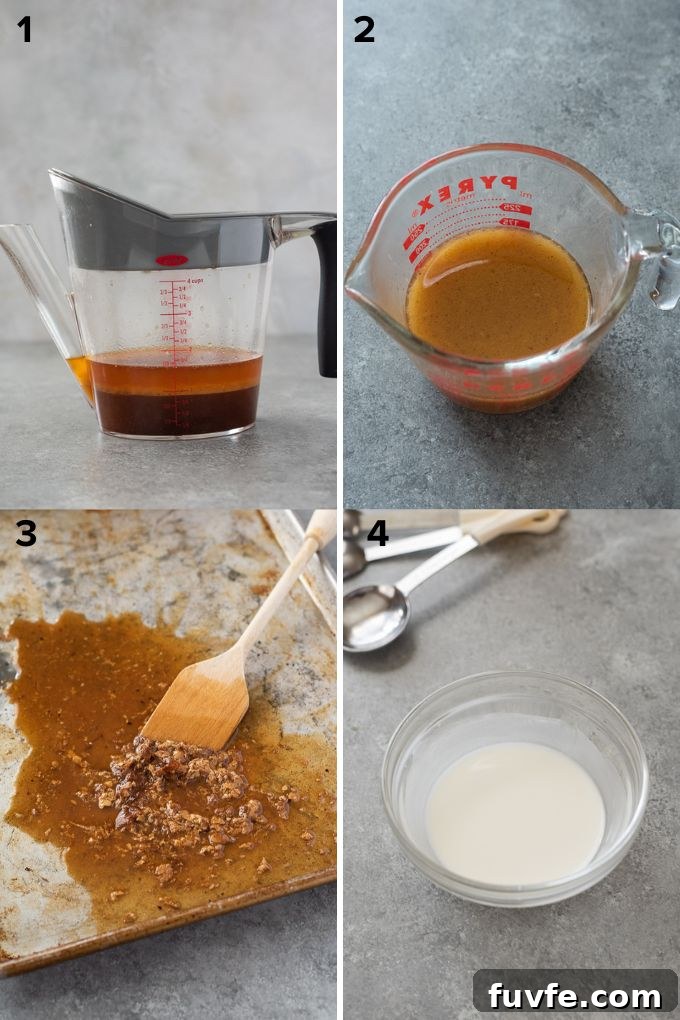
- Pour the turkey drippings from the pan into a fat separator or measuring cup and let them sit a few minutes so the fat separates.
- Skim off the fat and set the flavored drippings aside.
- Deglaze the roasting pan with 1/2 cup turkey stock (or with bourbon, sherry, or white wine reduced by half). Scrape the browned bits and add the liquid to the drippings, then heat the mixture in a medium saucepan over medium heat until it boils.
- Whisk together cornstarch and water to form a slurry. Reduce heat to medium-low and slowly whisk the slurry into the hot stock and drippings, whisking constantly to prevent lumps. Simmer until the gravy reaches your desired thickness.
How to make turkey gravy with flour
There are two common flour-based approaches: a roux or a flour slurry. Both produce excellent gravy; the roux has a slightly deeper, nuttier flavor from cooking the flour with fat first.
Roux-based gravy
- Cook equal parts flour and turkey fat (or butter) for 1–2 minutes over medium heat until lightly browned and fragrant.
- Slowly whisk in the turkey drippings and stock to avoid lumps. Bring to a boil for 1–2 minutes, then reduce the heat and simmer until the gravy thickens.
Flour slurry
- Bring the turkey drippings and stock to a boil over medium heat.
- Whisk together equal parts flour and water until smooth. Reduce heat to medium-low and slowly whisk the flour slurry into the hot liquid, simmering until the gravy thickens.
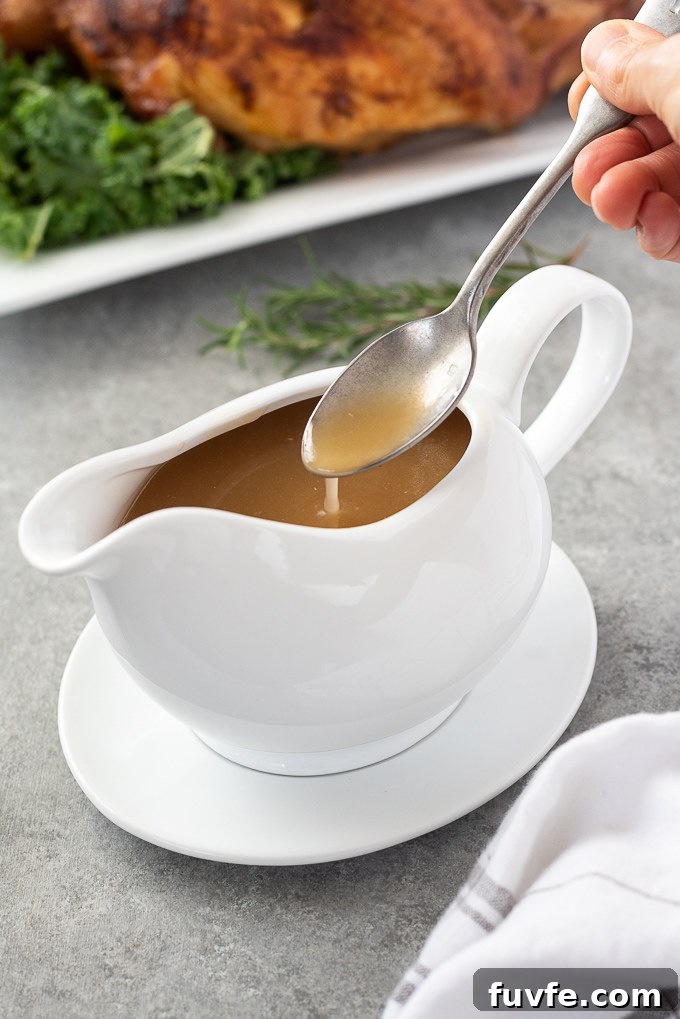
FAQs
Drippings are the juices and fats released from the turkey while it roasts. They add concentrated savory flavor and help give gravy a silky mouthfeel.
A fat separator is ideal. Alternatively, pour the drippings into a measuring cup and let them sit; the fat will rise to the top and can be skimmed off.
Using turkey drippings and homemade turkey stock provides the deepest flavor—stock adds body and silkiness. Deglazing the roasting pan with wine, bourbon, or sherry, or adding chopped giblets and fresh herbs, will further enhance the gravy.
Yes. Cool gravy completely and store in an airtight container for up to 3 days in the refrigerator or several weeks in the freezer. Thaw in the fridge if frozen, then reheat gently and thin with warm turkey stock as needed.
Recipe tips
- Make ahead: Cool gravy completely, store airtight in the refrigerator for up to 3 days or freeze for a few weeks. Thaw overnight in the refrigerator and reheat gently, thinning with warm stock as necessary.
- Roasting a turkey a few weeks before a big meal allows you to make stock and gravy ahead, which reduces stress on the holiday.
- Yield varies with cooking time—about 2 1/2 cups for a thicker gravy or up to 3 cups for a thinner gravy.
- Strain drippings and pan bits for a smoother consistency if desired.
- Customize: Simmer giblets (neck, gizzard, heart, liver) for about an hour, chop, and add for a traditional giblet gravy. Fresh chopped rosemary, sage, or thyme are great additions.
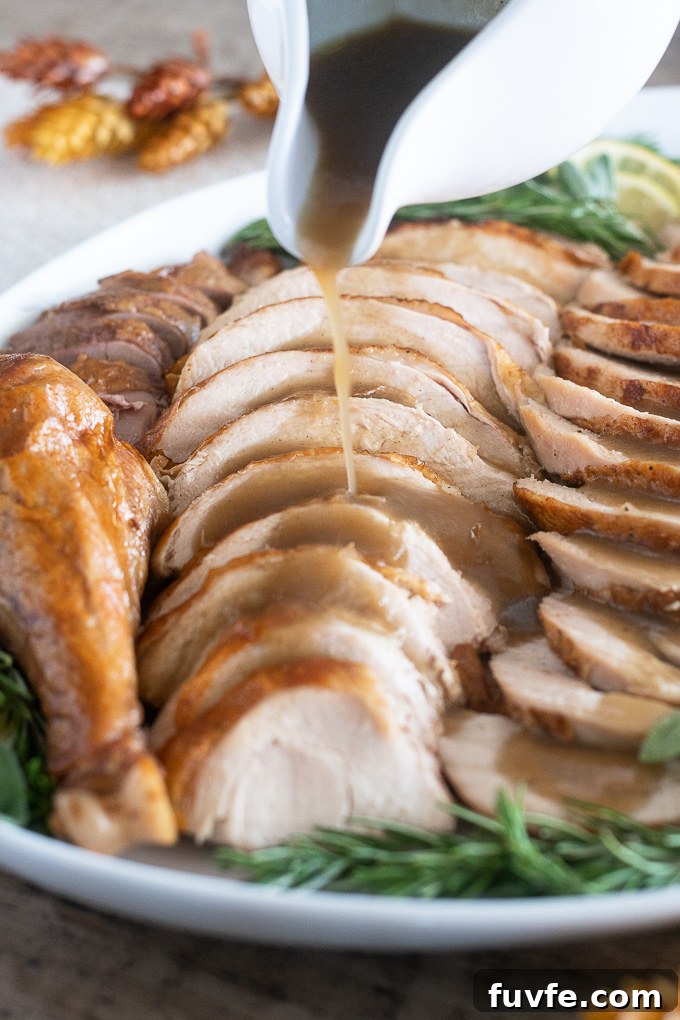
More Thanksgiving recipes you’ll love:
- Best Thanksgiving recipes (collection)
- Cranberry orange sauce
- Dry-brined orange rosemary roast turkey
- Green bean casserole with crispy fried shallots
- Homemade dinner rolls (recipe by Joy Food Sunshine)
- Simple herb garlic roasted turkey breast
- Easy slow cooker stuffing
- Perfect spatchcock turkey
- Maple orange sweet potato casserole with oat-pecan streusel
- Yukon Gold garlic mashed potatoes
Did you try this recipe? If so, be sure to leave a review below and tag @flavorthemoments on Facebook or Instagram.

Easy Turkey Gravy Recipe
12
servings
Pin Recipe
Leave a Review »
Equipment
- OXO Fat Separator
- OXO 9″ Wire Whisk
Ingredients
- 1 cup turkey drippings (if you have less than 1 cup, use more turkey stock to reach the volume)
- 2 cups homemade turkey stock, divided
- Salt and pepper, to taste
Cornstarch Slurry
- 3 tablespoons cornstarch + 3 tablespoons water
Flour slurry
- 6 tablespoons flour + 6 tablespoons water
Roux
- 6 tablespoons flour + 6 tablespoons fat from drippings (use butter to make up any shortfall)
Instructions
-
Remove the turkey from the pan and pour the drippings into a measuring cup or gravy separator. Let stand for a few minutes to allow the fat to rise to the top.
1 cup turkey drippings
-
Place the roasting pan over 1–2 burners on medium heat. Deglaze with 1/2 cup turkey stock and scrape up browned bits, then pour into the drippings. Alternatively, deglaze with 1/2 cup alcohol (white wine, bourbon, or sherry) and reduce by half. Proceed using cornstarch slurry, flour slurry, or roux.
2 cups homemade turkey stock
Gravy with Cornstarch (gluten free):
- Skim the fat from the top of the turkey drippings and discard.
- Place the turkey drippings and stock in a medium saucepan and bring to a boil over medium heat.
- Combine cornstarch and water until smooth. Reduce heat to medium-low and slowly whisk the slurry into the hot liquid, whisking constantly to prevent lumps. Simmer until desired thickness is reached.
- Remove from heat and season with salt and freshly ground black pepper to taste.
Gravy with flour (slurry):
- Skim the fat from the drippings and discard.
- Bring the drippings and stock to a boil over medium heat.
- Combine flour and water until smooth. Reduce heat to medium-low and slowly whisk the flour slurry into the hot liquid, simmering until the gravy thickens.
- Remove from heat and season to taste with salt and pepper.
Gravy with flour (roux):
- Skim 6 tablespoons of fat from the drippings and place in a saucepan. If you have less than 6 tablespoons, add butter to compensate. Add the flour and cook over medium heat for 1–2 minutes, stirring until lightly browned and fragrant.
- Slowly whisk in turkey stock to prevent lumps. Bring to a boil and boil 1–2 minutes longer, then reduce heat and simmer until the gravy reaches desired thickness.
- Remove from heat, season with salt and pepper, and serve warm.
Notes
- Make-ahead: Cool gravy completely, store airtight for up to 3 days in the refrigerator or a few weeks in the freezer. Thaw overnight in the refrigerator if frozen and reheat gently, thinning with warm stock as needed.
- Roasting a turkey a few weeks before the holiday to make stock and gravy saves time and gives you another turkey meal.
- Yield depends on cooking time: about 2 1/2 cups for thicker gravy or 3 cups for a thinner gravy.
- For a smoother gravy, strain drippings and pan bits before finishing.
- Customize: Simmer giblets (neck, gizzard, heart, liver) about one hour, chop, and add for giblet gravy. Fresh chopped herbs such as rosemary, sage, or thyme are excellent additions.
Nutrition
Nutrition is estimated using a food database and is intended as a guideline.
Did you try this recipe?
Be sure to tag @flavorthemoments and use the hashtag #flavorthemoments on Instagram so I can see what you made!