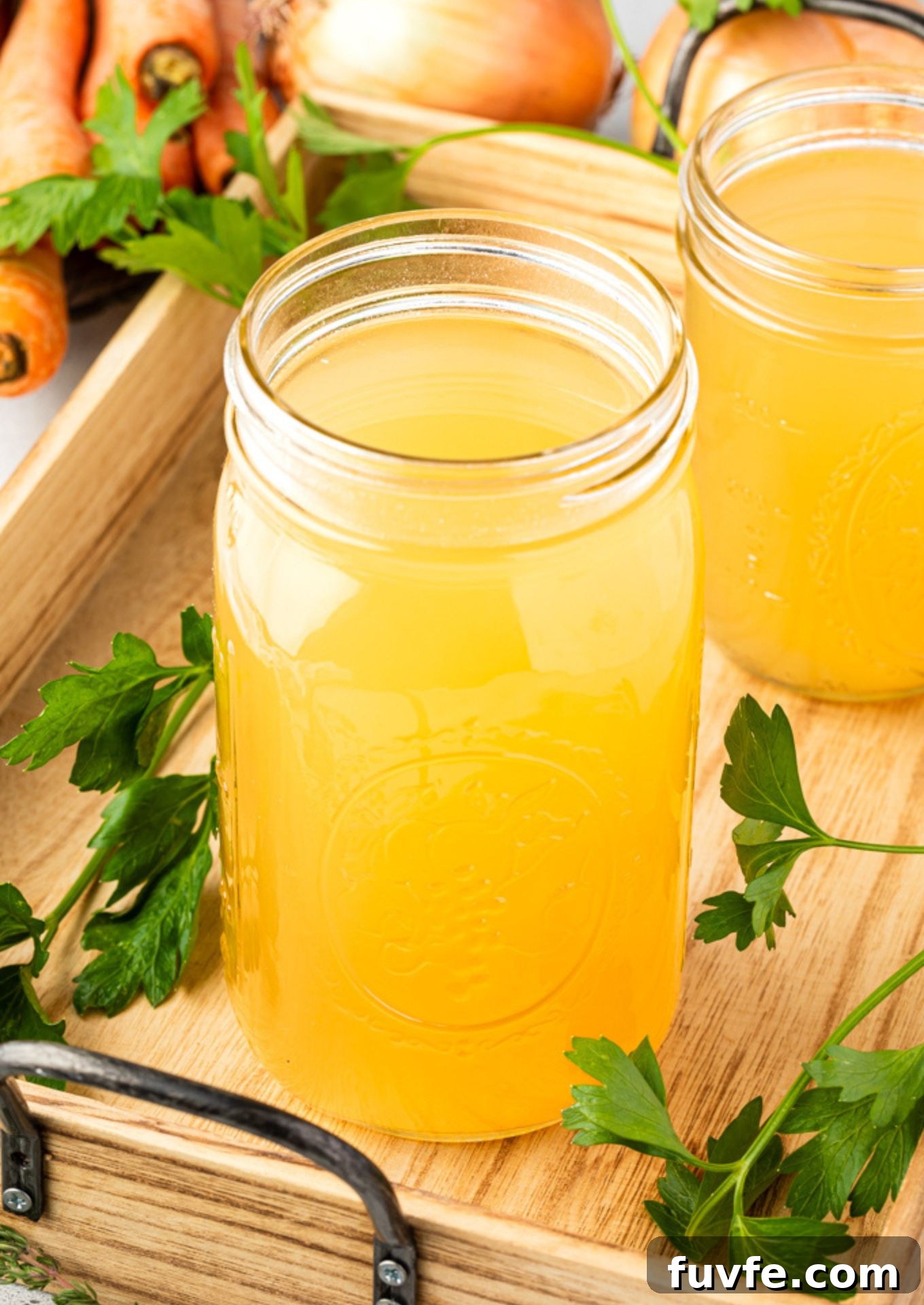
This homemade chicken stock brings instant depth and restaurant-quality flavor to everyday dishes. In this guide you’ll learn how to make rich, flavorful chicken stock on the stovetop or in a slow cooker using simple ingredients. The result is fresher tasting and silkier than most store-bought stocks, and it freezes beautifully for future use.

When made from bones and aromatics, homemade chicken stock extracts collagen and flavor during simmering, yielding a silky mouthfeel and a rounded taste you won’t find in most commercial products. It’s also economical: use leftover bones, backs, wings, necks or a roasted carcass that might otherwise be discarded. Whether you make a light “white” stock from raw parts or a deeper “brown” stock from roasted bones, the process is simple and forgiving.
Table of contents
- Why you’ll love this recipe
- Chicken stock ingredients
- Ingredient notes
- How to make a bouquet garni
- How to make chicken stock
- FAQs
- How to use chicken stock
- Recipe notes
- More chicken recipes you’ll love
Why you’ll love this recipe
- Full, fresh flavor: simmered bones and aromatics release collagen and minerals that give homemade stock a rich, silky mouthfeel.
- Economical and eco-friendly: make stock from leftover parts or a carcass instead of throwing them away.
- Versatile: use it in soups, stews, sauces, risottos, rice dishes, gravies and mashed potatoes to boost flavor and texture.
- Freezer-friendly: portion and freeze for quick use—stock keeps well for months when frozen.
Chicken stock ingredients
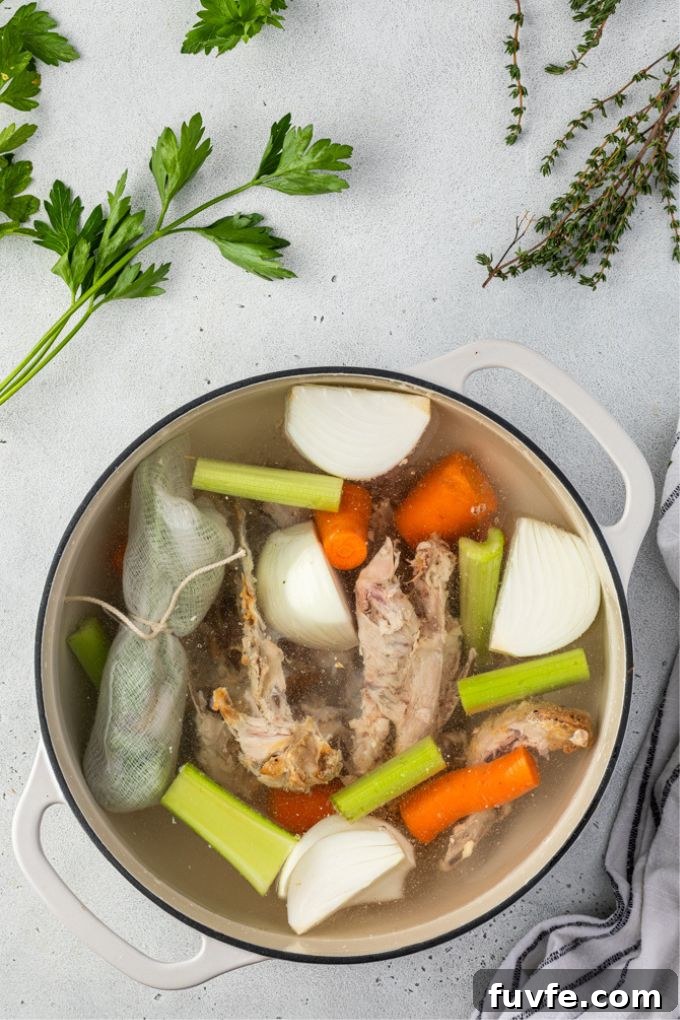
Chicken stock requires only a few basic ingredients. Choose raw parts for a lighter white stock or roasted bones/carcas for a deeper brown stock.
Ingredient notes
- Chicken parts: Use backs, necks, wings and other bones. These release collagen and minerals that thicken and enrich the stock. Save and freeze bones from roasted birds to accumulate enough for a batch.
- Vegetables: A classic mirepoix of onion, carrot and celery adds natural sweetness and depth. Rough-chop so they release flavor without needing fine dicing.
- Aromatics: Bay leaf, peppercorns, parsley and fresh thyme add complexity. Tie them in cheesecloth as a bouquet garni for easy removal, or add them loose and fish them out at the end.
How to make a bouquet garni
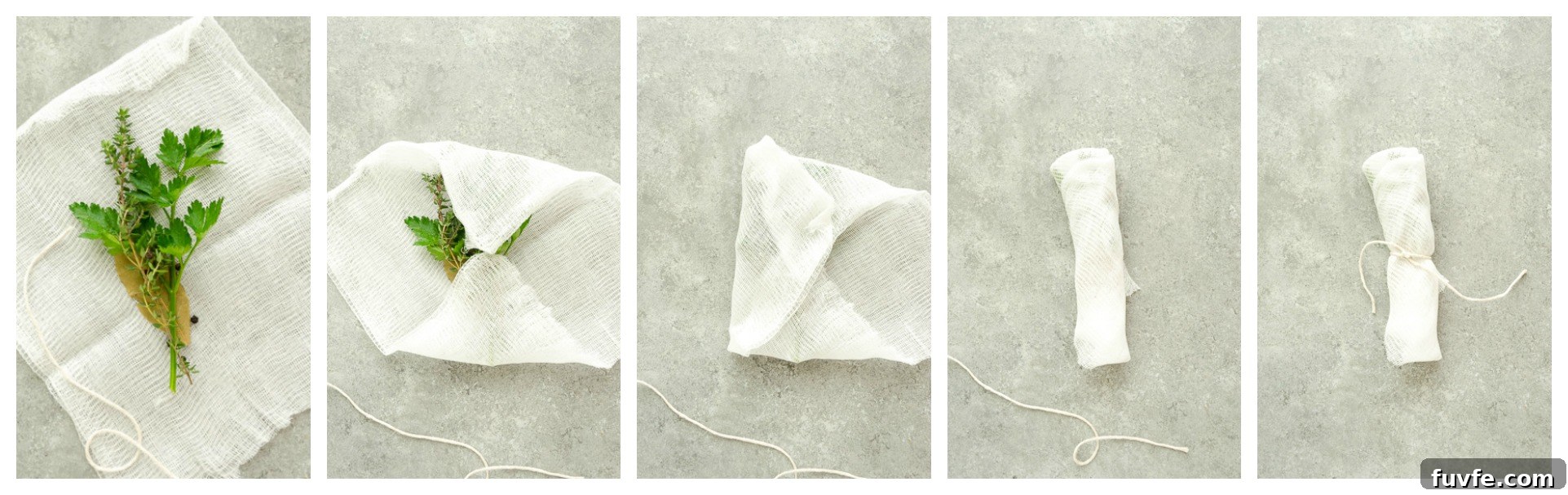
A bouquet garni is a small bundle of herbs that infuses stock, soups and stews with concentrated flavor while making cleanup simple. For this stock, use parsley stems, thyme sprigs, a bay leaf and a few whole peppercorns.
To assemble, place the herbs and spices in the center of a double square of cheesecloth, fold the edges over, and tie securely with kitchen twine. Drop the bundle into the pot at the start of simmering and remove before straining.
How to make chicken stock
Homemade chicken stock is easy and forgiving. You can make it on the stovetop or in a slow cooker. The goal is a long, gentle simmer to extract flavor without clouding the stock.
Pro tip: If using raw chicken parts, skim any surface scum as the stock begins to simmer. This keeps the liquid clearer and prevents excess fat from emulsifying into the stock. After cooling, skim remaining fat before storing.
Basic stovetop method (summary)
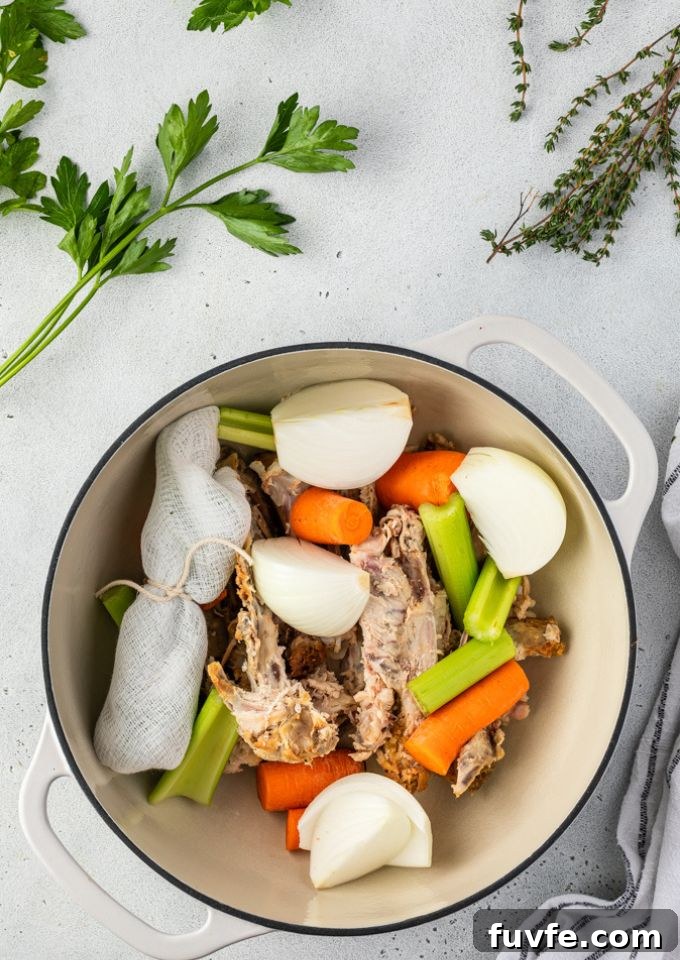
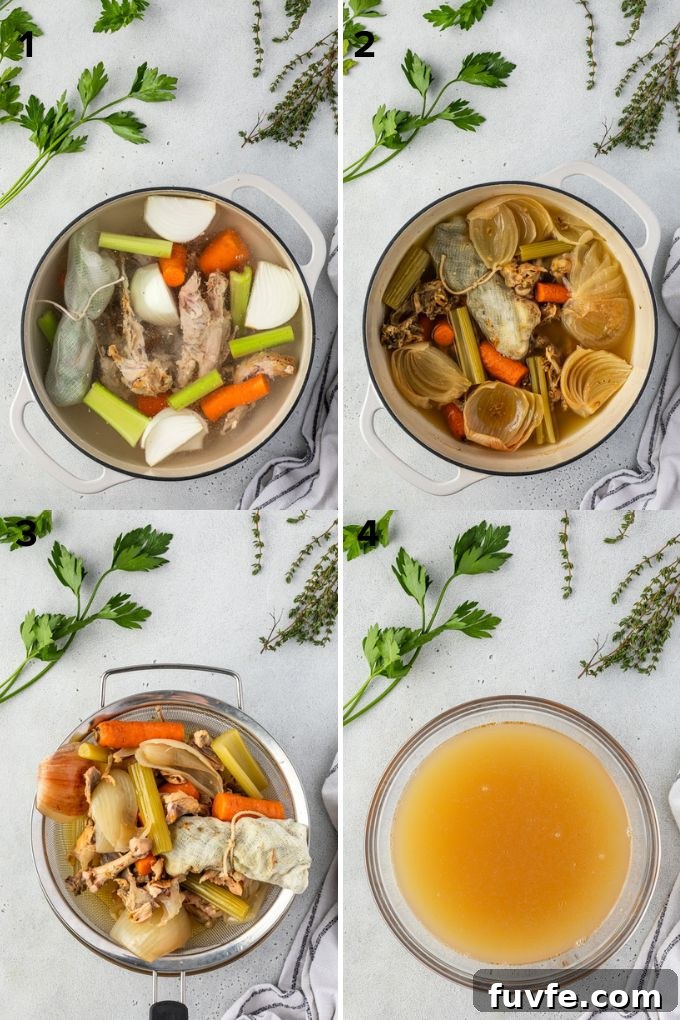
- Trim excess fat from chicken parts or carcass as desired. Place chicken, onion, carrot, celery, thyme, parsley, bay leaf and peppercorns in a large stockpot. If using a bouquet garni, enclose the herbs in cheesecloth.
- Add cold water to cover the ingredients by about 2 inches.
- Bring to a gentle boil, then reduce heat to maintain a low simmer. Simmer uncovered for about 4 hours, skimming any foam that rises to the surface.
- Carefully strain the stock through a fine-mesh strainer into a large bowl. Let it cool to room temperature, then refrigerate. Once chilled, remove any solidified fat from the surface, portion and refrigerate or freeze.
FAQs
Chicken stock is a savory liquid made by simmering chicken bones or carcass with vegetables and herbs. It is used as the foundation for soups, sauces, stews and other dishes.
Broth is typically made from meat and is lighter in body. Stock is made primarily from bones; the simmered collagen gives it a thicker, more gelatinous texture and a fuller mouthfeel.
Yes. A rotisserie or roasted chicken carcass makes excellent brown stock. If not using the carcass right away, refrigerate it for up to 2 days or freeze until you’re ready to make stock.
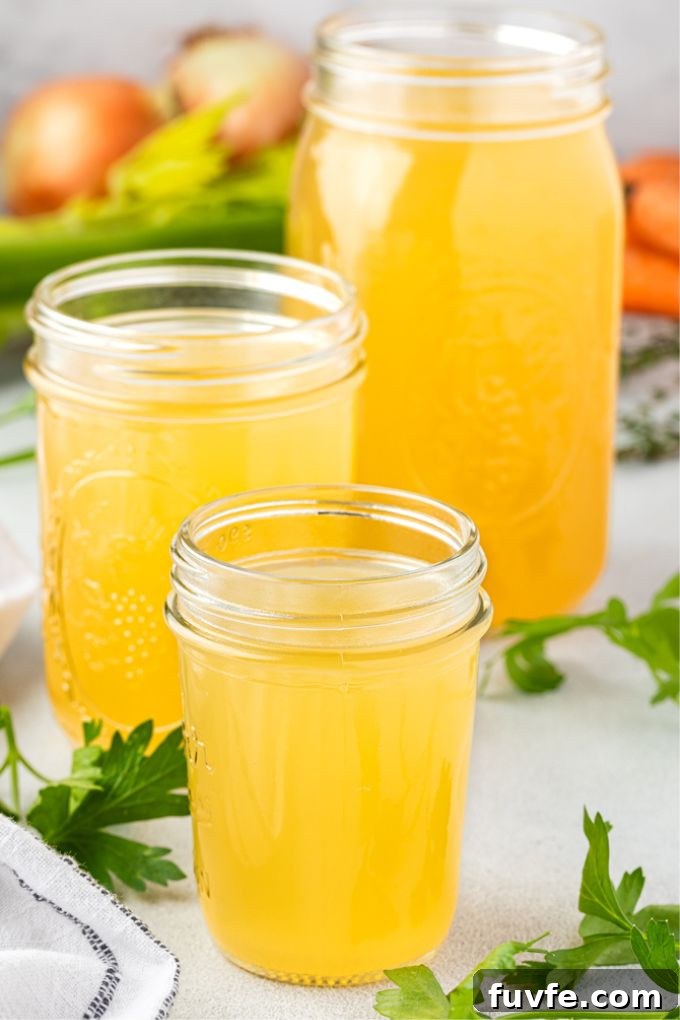
Absolutely. Portion stock into airtight containers or ice cube trays and freeze for up to 3 months for best quality.
How to use chicken stock
Homemade stock improves almost any savory recipe. Use it to:
- Build flavor in soups like lemon chicken or chicken tortilla soup.
- Cook risotto or pilafs instead of water for added depth.
- Deglaze pans to make pan sauces for meats and poultry.
- Enrich stews, gravies and mashed potatoes.
Recipe Notes
- White stock: Use raw parts and skim scum during the first hour of simmering to keep the stock clear.
- Brown stock: Roast bones first for a deeper, roasted flavor.
- Storage: Refrigerate for up to 5 days or freeze up to 3 months. Portion into usable amounts before freezing for convenience.
- Slow cooker method: Place all ingredients in a slow cooker and cook on low for 8–10 hours. Strain, cool, and skim fat before storing.
More chicken recipes you’ll love
- Chicken vegetable soup (use homemade stock for best flavor)
- Instant Pot chicken and rice
- Shredded chicken for tacos or salads
- Cheesy Mexican rice bake
- Slow cooker chicken tortilla soup
Note: This post was originally published in February 2017 and updated with a stovetop method and slow cooker instructions. The photos and text have been revised for clarity and ease of use.
Simple recipe summary
Combine 4 lbs. of raw chicken parts or a roasted carcass with 1 large peeled and quartered onion, 1 large carrot cut into large pieces, 1 large stalk celery cut into pieces, 2 sprigs fresh thyme, 2 sprigs flat-leaf parsley, 1 bay leaf and 6 whole peppercorns. Add cold water to cover by about 2 inches. Bring to a boil, reduce to a gentle simmer and cook uncovered for roughly 4 hours, skimming surface foam as needed. Strain, cool, remove fat, then refrigerate or freeze in portions.

Did you try this recipe? If so, leave a review below or share a photo to show how you used your homemade stock.
All recipes and images © Flavor the Moments.