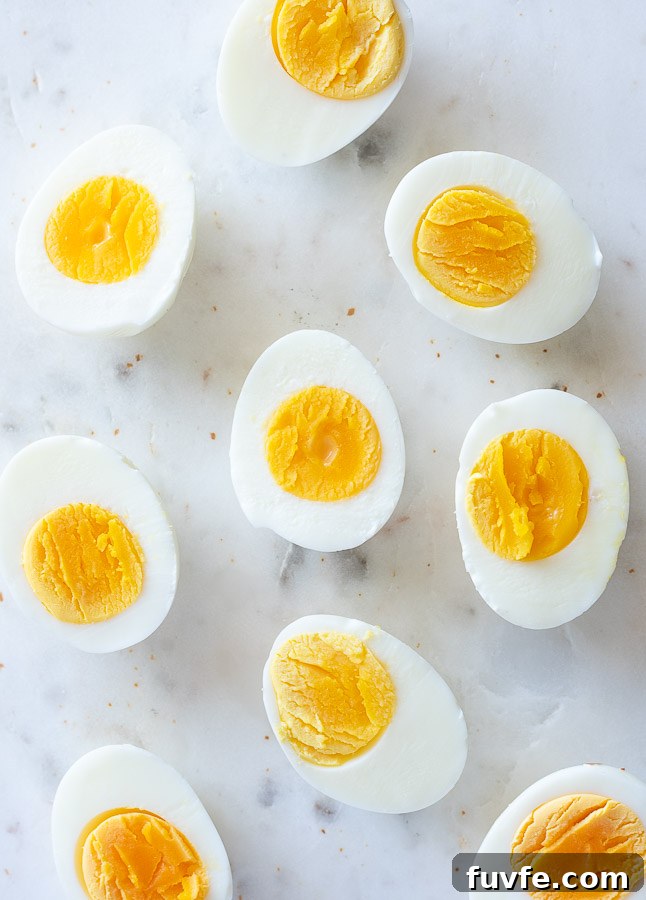
Learn how to make hard boiled eggs with reliably soft, creamy yolks every time. These straightforward, step-by-step instructions will help you cook eggs that are perfect for breakfasts, snacks, salads, deviled eggs, and more.
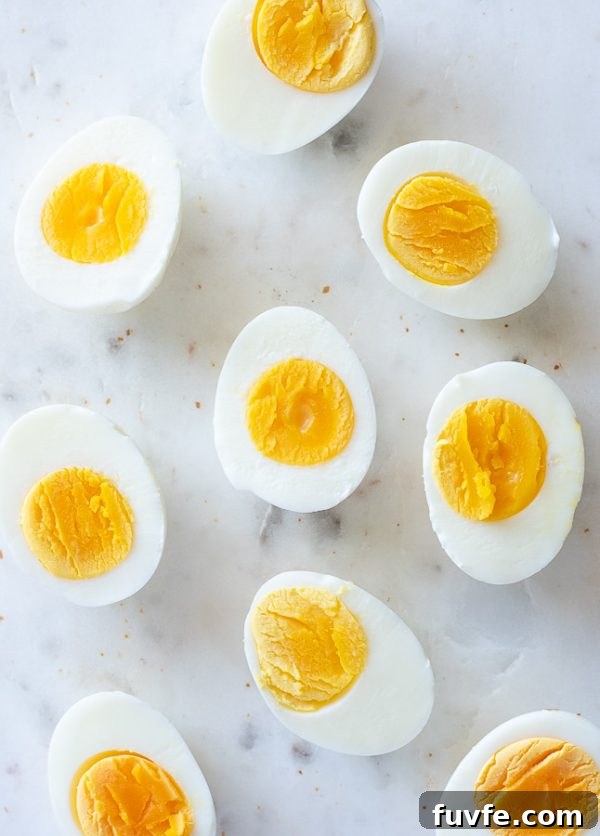
I make hard boiled eggs regularly because they are an easy, portable source of protein and a great ingredient for recipes such as French-style egg salad, bacon deviled eggs, and Niçoise-style salads. When prepared correctly, hard boiled eggs have tender whites and soft, creamy yolks — far removed from the chalky, overcooked versions many of us remember.
This guide covers a gentle stovetop method that minimizes cracking, gives timing for soft, jammy, and fully set yolks, and explains the best way to cool and peel your eggs. If you prefer a no-water method, you can also cook eggs in an air fryer using a different technique.
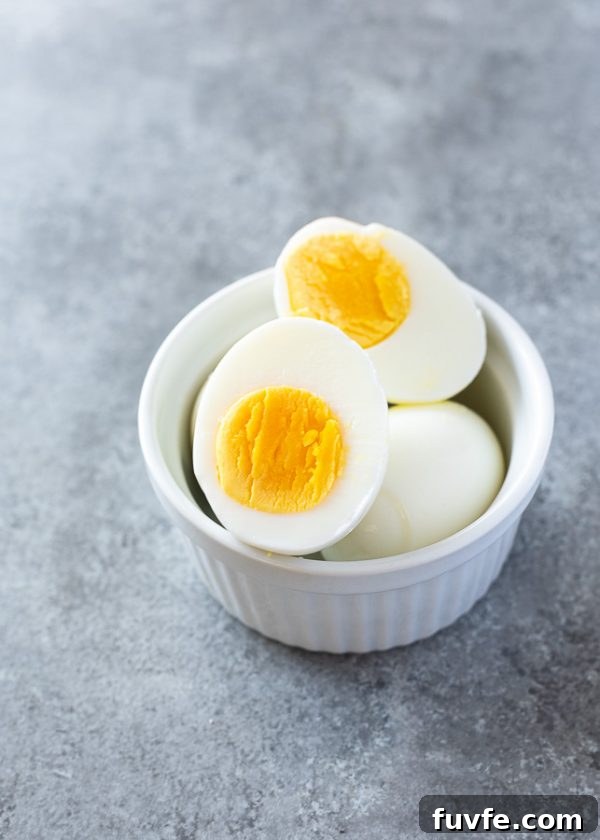
Why you’ll love this recipe
- A reliable, foolproof method for perfect eggs every time.
- Clear timing to achieve the exact yolk texture you prefer.
- A gentle cooking process that reduces cracked shells during cooking.
- Practical tips to make peeling fast and easy.
Tips for perfect boiled eggs
- Choose slightly older eggs, not ultra-fresh ones. Fresher eggs can be harder to peel because the inner membrane clings to the shell. Eggs that are about 1–2 weeks old usually peel more easily.
- Use large eggs for consistent timing. The cooking times in this guide are based on large eggs; very small or extra-large eggs will vary.
- Cook gently. Bring the water to a rolling boil with the lid on, then remove the pot from heat and let the eggs finish cooking off the heat. This gentler approach helps prevent cracking.
- Give the eggs room. Use a pot large enough to hold the eggs in a single layer with a little space to shift; they’ll cook more evenly this way.
- Cool in an ice bath. Immersing eggs in ice water stops the cooking process immediately and makes peeling much easier.
How to hard boil eggs
Cooking eggs is simple, but following a consistent method yields dependable results. The gentle method described here reduces the chance of cracked shells and produces a range of yolk textures depending on how long you let the eggs rest off the heat.
Pro tip: Removing the pot from the burner as soon as the water reaches a rolling boil and allowing the eggs to steam in the covered pot produces better results than boiling them vigorously the whole time.
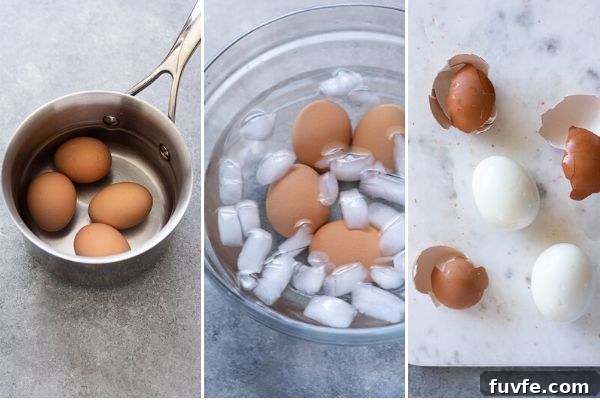
- Place eggs in a saucepan in a single layer. Add enough cold water to cover the eggs by about 1 inch.
- Cover the pan and heat over medium-high heat until the water reaches a rolling boil — you’ll see steady steam and the lid may rattle.
- As soon as the water boils, remove the pan from the heat and keep it covered. Let the eggs sit in the hot water for 8–12 minutes depending on the desired doneness (see timing below).
- Transfer the eggs to a bowl of ice water and chill 5–10 minutes until cool. Cooling stops cooking and helps with peeling.
- Peel immediately if you plan to use them, or store unpeeled eggs in the refrigerator for up to one week.
How long to cook hard boiled eggs
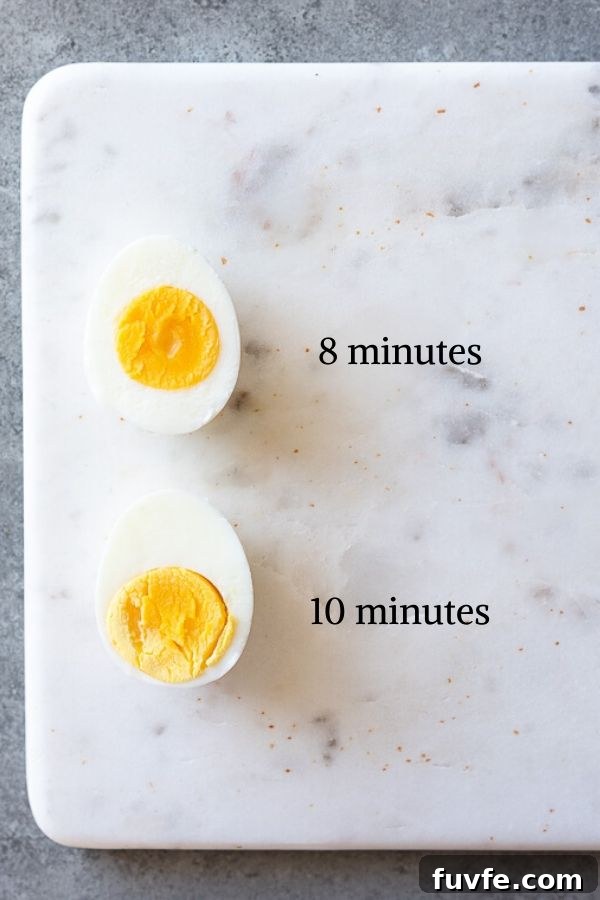
Once the water reaches a rolling boil, remove the pot from heat and let the eggs rest covered. Use the following as a guideline for doneness:
- 8 minutes: Soft, very creamy yolk (jammy).
- 10 minutes: Slightly soft center, firmer edges.
- 12 minutes: Fully set yolk, firm and crumbly.
- More than 12 minutes: Yolk may develop a gray-green ring and become dry, though still safe to eat.
Recipe FAQs
Yes. Eggs sometimes crack as the air pocket expands and the shell stresses. Cracked boiled eggs are still safe to eat, but it’s best to consume them the same day for optimal freshness.
Chill the eggs in an ice bath for several minutes after cooking. Crack the shell all over, then roll the egg gently to separate the membrane before peeling from the wider end where the air pocket is largest.
Store unpeeled hard boiled eggs in the refrigerator for up to one week. If peeled, keep them in a covered container and use within a few days for best texture.
Recipe Notes
- Egg age: Eggs aged 1–2 weeks are easiest to peel because the white contracts slightly away from the shell.
- Egg size: Times are based on large eggs; adjust slightly for smaller or larger eggs.
- Timing guide: 8 minutes for soft, creamy yolks; 10 minutes for slightly soft centers; 12 minutes for fully set yolks.
- You can cook any number of eggs as long as they fit in a single layer with a little room to move.
- Refrigerate unpeeled hard boiled eggs up to one week.
More egg recipes you’ll love:
- Bacon and egg muffins
- Bacon and egg casserole
- Crustless broccoli quiche
- Creamy egg salad with dill
- Ham and cheese frittata
- Poached eggs
Did you try this recipe? If so, leave a review below and tag @flavorthemoments on social media to share your results.
Perfect Hard Boiled Eggs
8 eggs
Ingredients
- 8 large eggs preferably 1–2 weeks old for easier peeling
Instructions
- Place the eggs in a medium saucepan in a single layer and add cold water to cover by about 1 inch.
- Cover the pan and heat over medium-high until the water reaches a full rolling boil.
- Remove the pan from heat, keep it covered, and let the eggs sit in the hot water for 8–12 minutes depending on how you like the yolk.
- Transfer eggs to a large bowl of ice water and chill 5–10 minutes until cool.
- Peel if using right away, or store unpeeled in the refrigerator for up to one week.
Notes
- Older eggs are easier to peel because the white shrinks slightly away from the shell.
- Cooking times are based on large eggs; adjust if your eggs differ in size.
- Timing guide: 8 minutes for soft, creamy yolks; 10 minutes for slightly soft centers; 12 minutes for fully set yolks.
- Cook any number of eggs provided they fit in a single layer in the pot.
- Store hard boiled eggs in the fridge up to one week.
Nutrition
Nutrition is an estimate for guidance only.