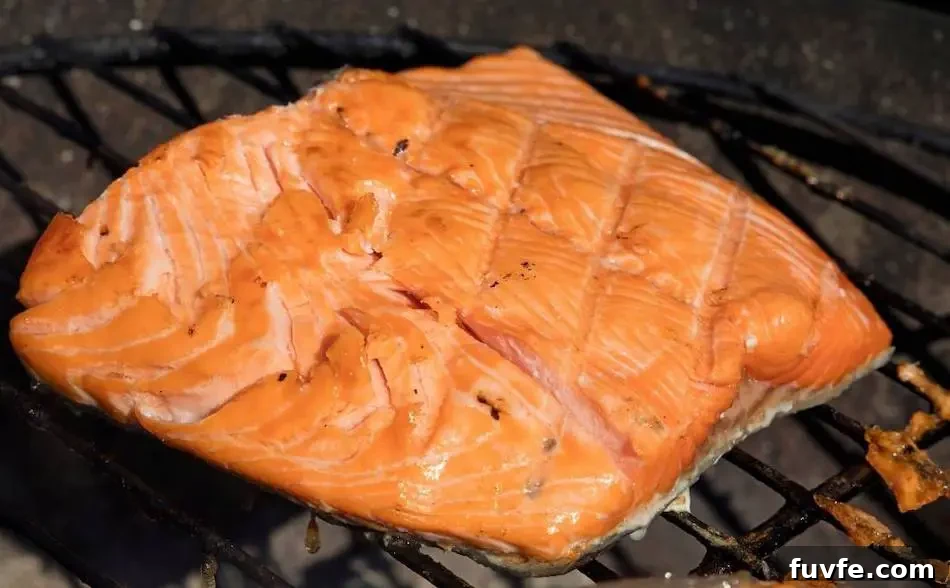
Smoking salmon is a flavorful, accessible way to elevate this popular fish. This guide explains the key temperatures, cook times, brining, wood choices, and practical tips to help you smoke salmon reliably and deliciously.
Typical cook times vary with temperature and fish size: Smoking at 220°F usually takes about one hour, while lower-temperature smoking around 170–180°F can take several hours and produce a stronger smoke character. Always handle and cook salmon safely and verify doneness with a thermometer.
| Temperature | Cook Time | Flavor | Texture |
|---|---|---|---|
| 180°F | 5 hours | More smoky | Moist |
| 220°F | 1 hour | Less smoky | Crispy skin (if skin is left on) |
Key Points
- Smoking time depends on smoker temperature and the size or thickness of the salmon.
- Expect roughly 1 hour at 220°F and closer to 5 hours at 170–180°F for a deeper smoke flavor.
- Temperature affects both texture and smoke intensity: higher temps shorten cook time and can crisp skin; lower temps increase smoke absorption and moisture retention.
- There’s flexibility—salmon can be smoked between about 170°F and 220°F—but avoid the unsafe “danger zone” near 140°F where bacteria multiply quickly.
For a basic wet brine you will need salt, sugar and water. Dissolve the salt and sugar in water, submerge the salmon for about two hours (no longer), then remove, pat dry and allow the surface to air-dry for up to two hours to form a pellicle. This tacky surface helps smoke adhere and improves color and flavor.
To smoke on a kettle grill, use charcoal and add a few chunks of wood for smoke. Start a chimney with several briquettes, place lit coals to one side of the unlit pile, let the grill stabilize, and adjust vents to control temperature. Aim for the target temperature range and add wood shortly before placing the fish on the grate.
Smoking Salmon Between 170°F and 220°F
You can successfully smoke salmon anywhere from about 170°F to 220°F. The main trade-offs are time and texture. Lower temperatures maximize smoke flavor and keep the flesh moist but require more time; higher temperatures cook the fish more quickly and can give crispy skin if left on. For safety, avoid cooking in the 140°F danger zone where bacterial growth is a concern.
Salmon at 220°F
Smoking at 220°F is fast—roughly an hour for many fillets—and yields less pronounced smoke flavor because the fish spends less time exposed to smoke. If the skin remains on, it will also become crispy at this temperature.
Salmon at 170°F
At around 170°F the salmon will spend considerably more time in the smoker—several hours—absorbing more smoke and developing deeper flavor while staying moist. The downside is the skin will not crisp the way it does at higher temperatures.
Smoked Salmon on a Kettle Grill
Slow smoked salmon with charcoal and wood
20 minutes
5 hours
10 minutes
5 hours 30 minutes
Ingredients
- Salmon
- 1 cup of salt
- 1/4 cup of sugar
- 1 gallon of water
Instructions
- The Brine
Dissolve the sugar and salt in water. Place the salmon in the brine for about 2 hours (no longer). Remove, pat dry, and place on a rack to air-dry for up to 2 hours so a pellicle forms. - Smoking The Salmon
Set up a kettle grill with charcoal. Light a small batch of coals in a chimney starter and add them to one side of the unlit coals. Adjust vents to control air flow and give the grill time to stabilize. Target 250–275°F if following this specific kettle-grill method. Add a few chunks of mild wood and place the salmon on the grate once temperature is steady.
Nutrition Information:
Amount Per Serving:
Calories: 117
Measure With a Thermometer
Always use reliable thermometers and avoid trusting built-in smoker gauges, which can be inaccurate. A quality thermometer is essential, especially when cooking at lower temperatures. Use an instant-read thermometer for quick checks and consider a dual-probe monitor if you want to track both smoker and fish temperatures simultaneously.
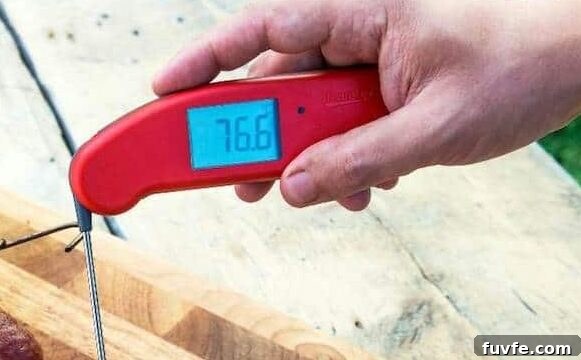
When is it Done? How To Tell When Salmon Is Cooked
Two reliable ways to judge doneness:
- Internal temperature: The USDA recommends cooking fish to an internal temperature of 145°F. Use an instant-read thermometer and check the thickest part of the fillet.
- Flakiness and surface ooze: Cooked salmon will flake easily and often produces a small amount of white protein (albumin) on the surface when nearly done.
When smoking, always prioritize internal temperature over time because smoking times vary with thickness, temperature, and smoker performance.
Skin On or Skin Off?
Both approaches work; choose based on texture and handling preferences.
- Skin on: Helps the fillet hold together, adds texture and flavor, and will crisp at higher temperatures.
- Skin off: Allows smoke to penetrate the entire piece more evenly but can make the fillet more fragile to handle.
Best Wood For Salmon
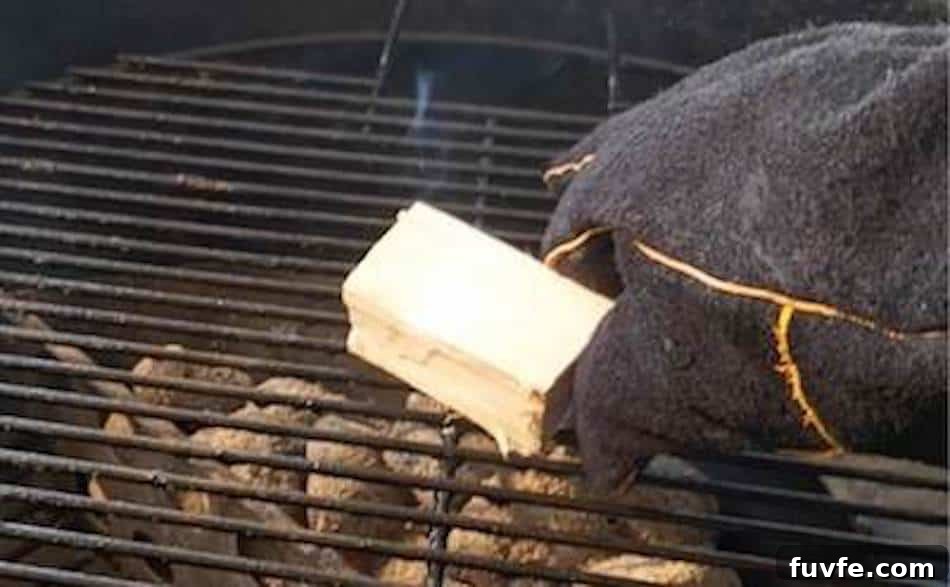
Choose mild, fruit woods for salmon. Apple and cherry are excellent choices for their subtle, sweet profiles. Pecan and maple are also good options. Avoid strong woods like hickory and mesquite unless used sparingly and blended with milder woods, as they can overpower the fish.
Should You Brine Salmon?
Brining helps flavor the fish and reduces moisture loss. Two common methods:
- Dry brine: Sprinkle kosher or sea salt on both sides, refrigerate for at least 2 hours. This seasons and firms the flesh.
- Wet brine: Dissolve salt (and optionally sugar) in water and submerge the salmon. Typical wet-brine times vary; for the simple recipe in this guide, soak no longer than 2 hours to avoid over-salting and to preserve texture.
Wet Brining the Salmon
A practical wet-brine: dissolve 1 cup of salt and 1/4 cup of sugar in 1 gallon of water. Soak the salmon up to about 2 hours, remove, pat dry, and air-dry until a pellicle forms—usually an hour or two but not longer than two hours. The pellicle improves smoke adhesion and final appearance.
- Brine recipe: 1 cup salt and 1/4 cup sugar per gallon of water.
- Soak no longer than 2 hours, then pat dry and air-dry for about an hour.
- Apply a glaze in the final 10 minutes of cooking if desired; choose a glaze that complements fish and avoid burning it.
Apply a Glaze
Brush a glaze on the salmon during the last 10 minutes of cooking. Use a sauce that complements fish—Asian-style or sweet glazes work well—but apply near the end to prevent burning and allow the glaze to set.
The Science Behind Smoking Salmon
Smoking changes flavor, color, and texture through heat, moisture loss, and chemical reactions from smoke compounds. Understanding these basics helps you control the outcome: lower heat increases smoke uptake and moisture retention; higher heat shortens cook time and alters texture, especially the skin.
Recommended tools
Essential tools for consistent results include a reliable meat thermometer (instant-read and/or multi-probe), a stable grill or smoker, and quality charcoal and woods. These items help you monitor temperature and manage smoke for the best smoked salmon.
Meat Thermometers – Your Most Important Tool
A good thermometer is indispensable when smoking fish. Use an instant-read for spot checks and consider a dual-probe or wireless monitor when controlling smoker temperature and tracking internal temperature simultaneously. Cooking to temperature, not time, ensures safety and the best texture.