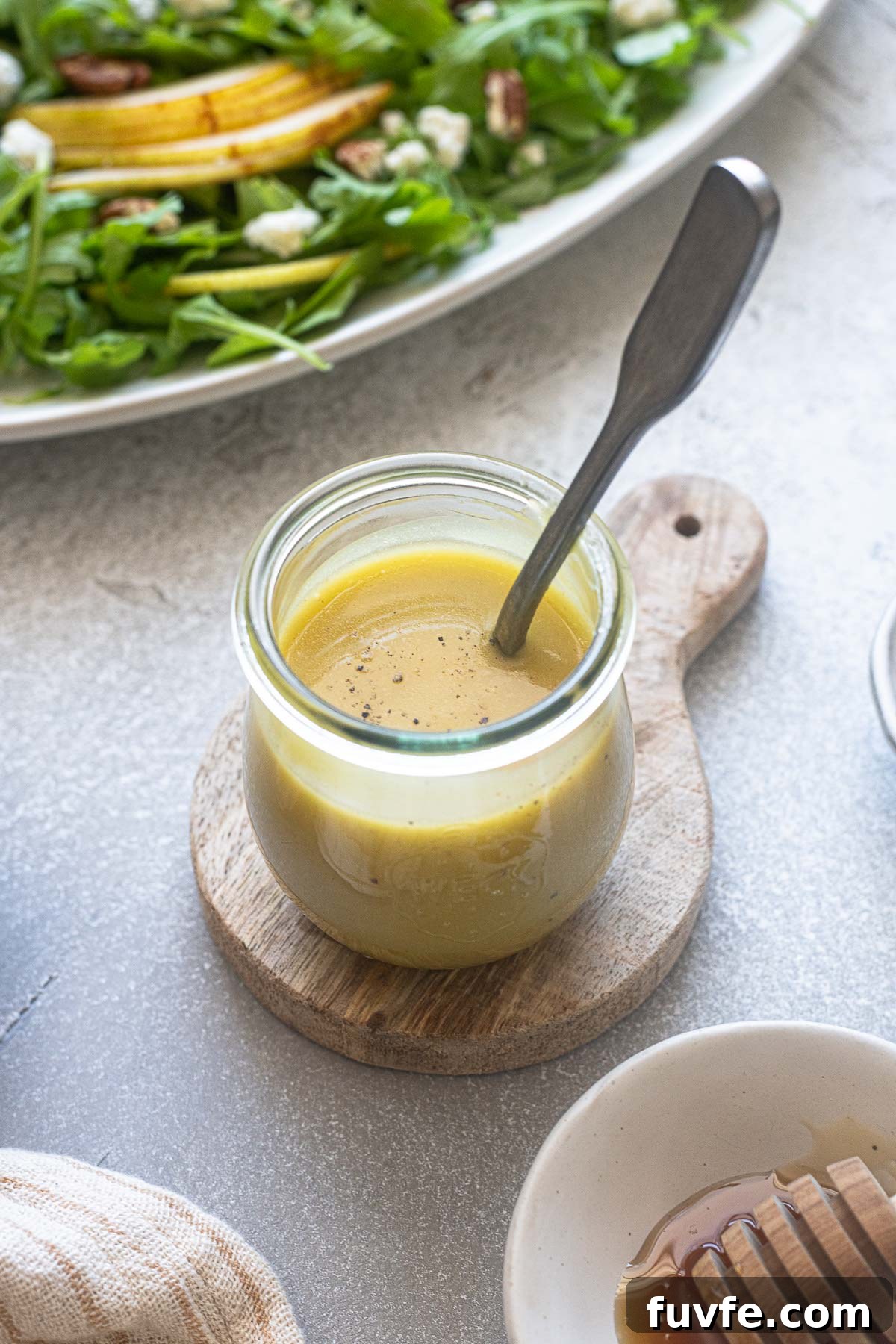
This Honey Champagne Vinaigrette brightens any salad with a light, tangy finish and a touch of sweetness. Made from just a few simple ingredients—extra virgin olive oil, champagne vinegar, honey and Dijon mustard—this vinaigrette comes together in minutes and tastes much fresher than store-bought dressings. It’s excellent on leafy salads and pairs beautifully with fruit, nuts and soft cheeses.
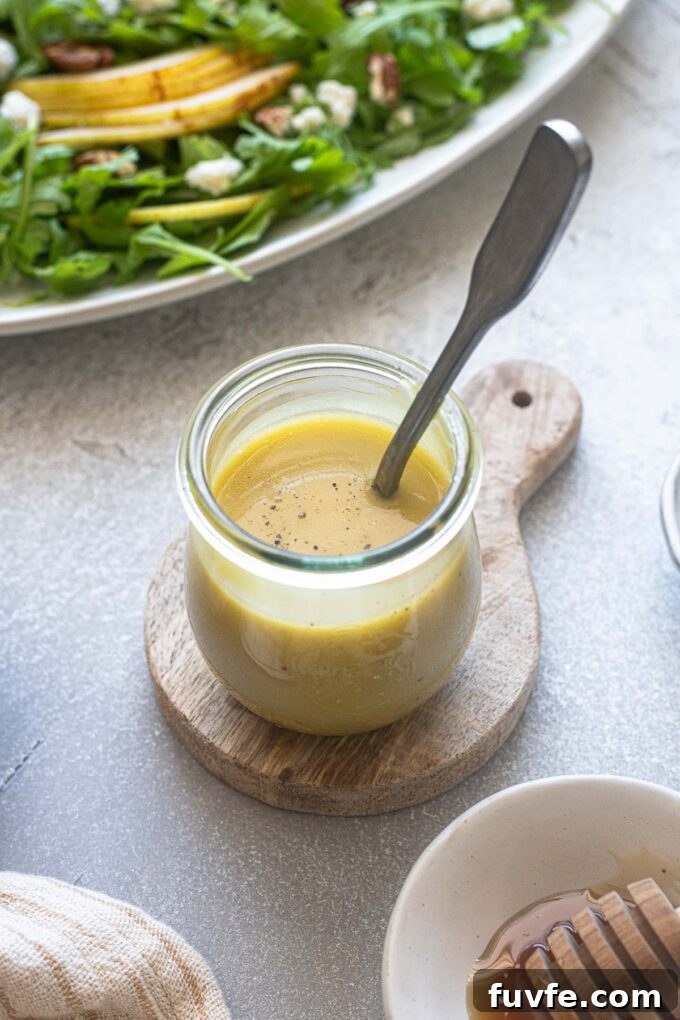
I keep a rotation of homemade salad dressings on hand because a simple, well-made vinaigrette transforms a bowl of greens into a memorable dish. This Honey Champagne Vinaigrette is one of my favorites: it’s delicate enough for light salads yet versatile enough to finish roasted vegetables or grain bowls.
The dressing balances acidity and sweetness without becoming cloying. The champagne vinegar offers a refined, fruity acidity, honey provides gentle sweetness, Dijon adds savory depth, and extra virgin olive oil rounds everything out with richness.
I especially enjoy this vinaigrette on salads that include pears, berries, toasted nuts, or creamy cheeses like feta or blue cheese, but it’s equally good simply tossed with mixed greens. It stores well in the refrigerator and is easy to prepare whenever you need a quick, flavorful dressing.
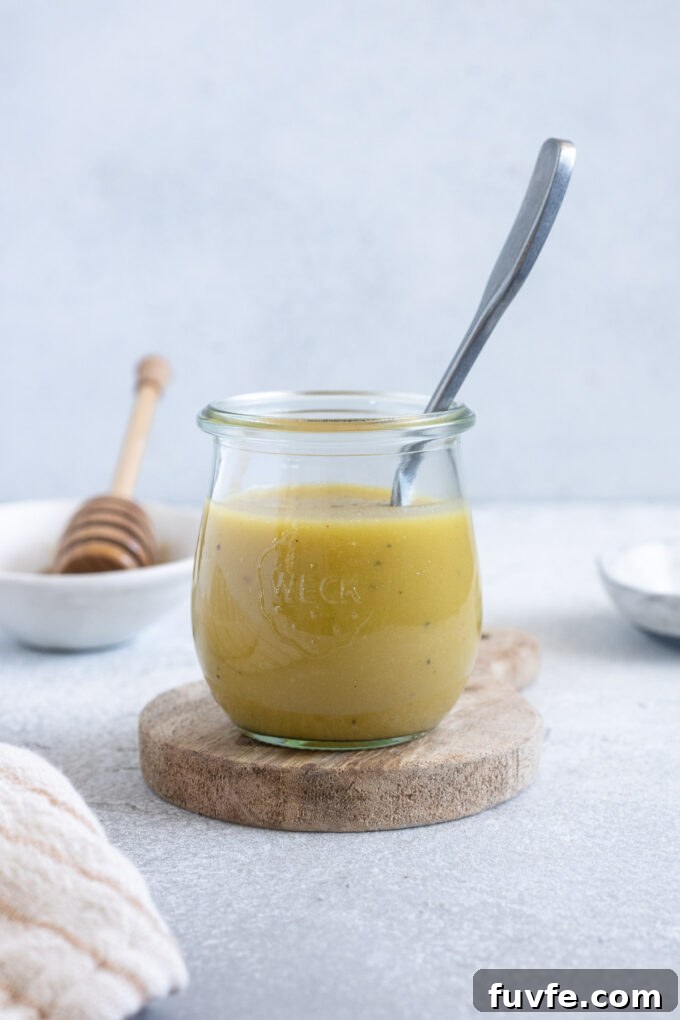
Why you’ll love this recipe
- Light and refreshing: the vinaigrette is bright without overpowering the salad.
- Balanced flavor: sweet honey, tangy champagne vinegar and savory Dijon combine for a harmonious dressing.
- Quick and simple: only a few pantry ingredients and under five minutes to make.
- Versatile: works well with fruit-forward salads, nutty grain bowls and roasted vegetables.
Recipe ingredients
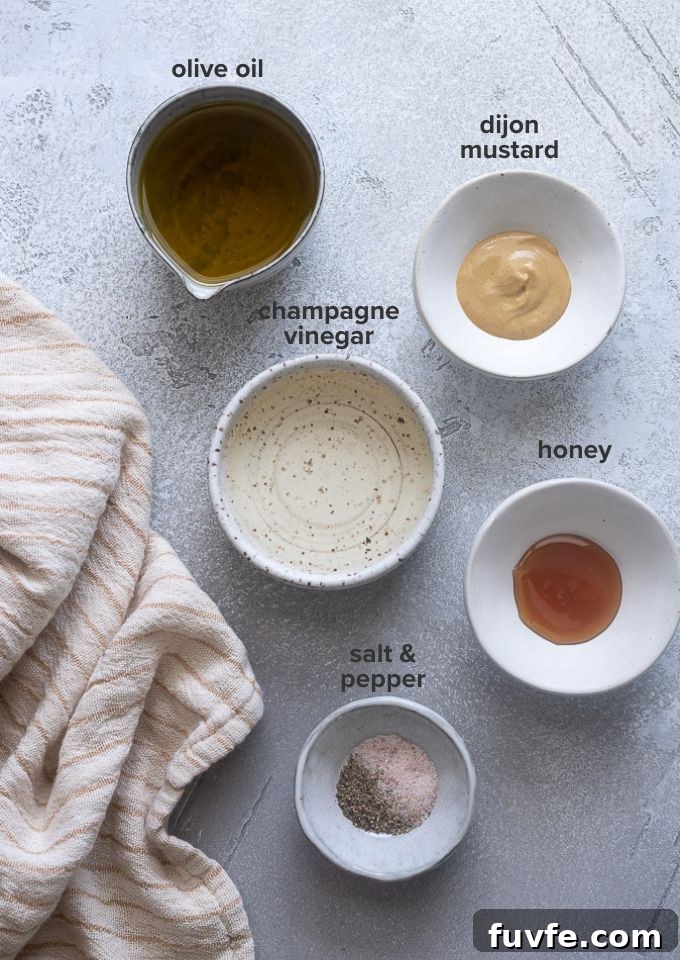
- Extra virgin olive oil: Use good-quality EVOO for the best flavor. It provides a smooth mouthfeel and fruity notes that complement the vinegar.
- Champagne vinegar: Delicate and slightly fruity, champagne vinegar gives the dressing its refined acidity. If unavailable, a light white wine or white balsamic vinegar can be used.
- Honey: Adds natural sweetness and helps balance the acidity. Maple syrup can be substituted if you prefer.
- Dijon mustard: Adds savory depth and helps emulsify the oil and vinegar for a cohesive dressing.
- Salt and pepper: Adjust to taste to bring all the flavors together.
See the recipe section below for exact quantities and the full instructions.
How to make champagne vinegar dressing
Making this vinaigrette is straightforward: combine the ingredients, shake or whisk until emulsified, and adjust seasoning. The result is a silky, flavorful dressing that clings nicely to greens and ingredients.
Pro tip: If the dressing has been chilled, set it at room temperature for about 30 minutes and shake or whisk vigorously before serving to restore the emulsion.
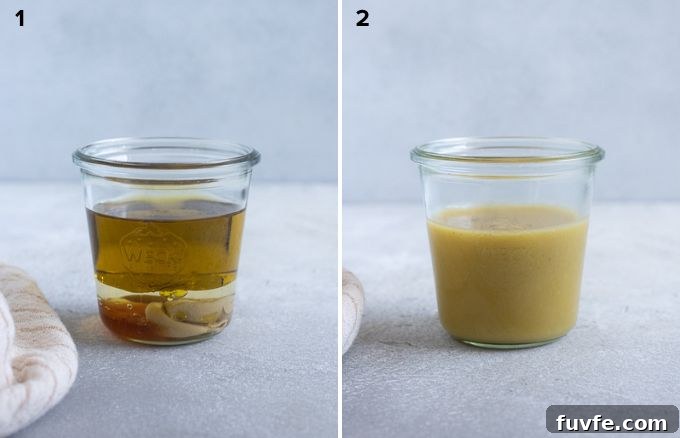
- Combine all ingredients in a jar with a tight-fitting lid or in a small bowl.
- Shake or whisk vigorously until the mixture is emulsified. Taste and adjust salt, pepper or honey as needed. Serve immediately or chill and use within two weeks.
Recipe FAQs
Champagne vinegar is delicate and slightly fruity with gentle acidity. It’s milder and more refined than stronger vinegars like balsamic or apple cider vinegar, making it ideal for light dressings.
If you don’t have champagne vinegar, white wine vinegar or white balsamic are good substitutes. They are slightly different in acidity and flavor but still yield a pleasant, light vinaigrette.
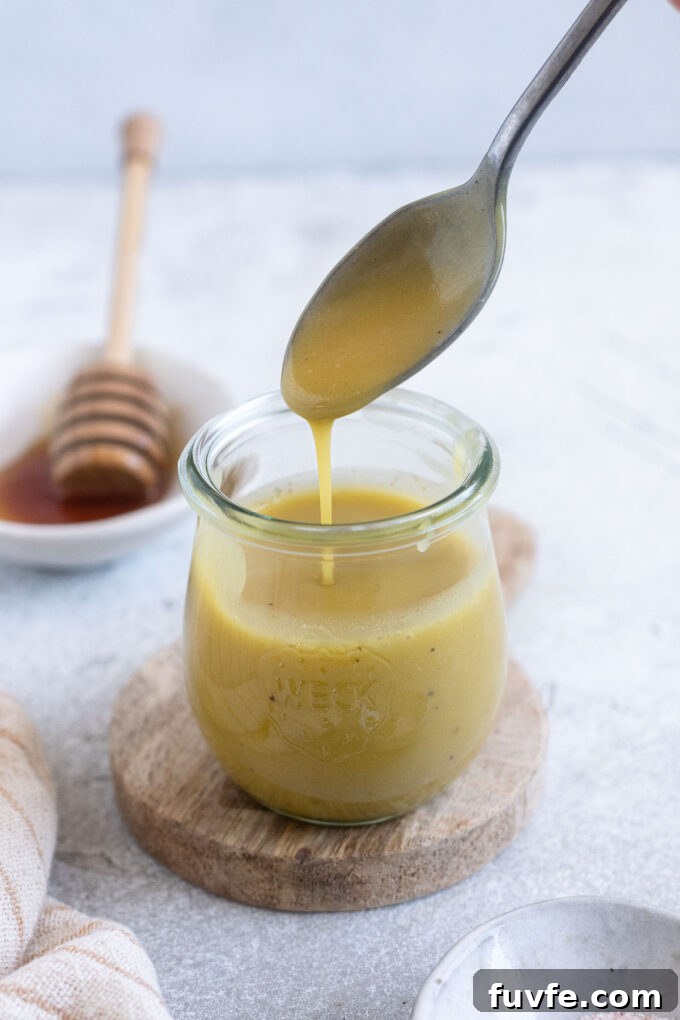
Stored in an airtight container in the refrigerator, this vinaigrette will keep for up to two weeks. Shake or whisk before using, as separation is natural.
Serving suggestions
This champagne vinaigrette can dress many dishes. It elevates green salads, fruit and nut salads, and even simple vegetable sides.
Pro tip: In many recipes that call for a white wine or apple cider vinaigrette, champagne vinaigrette can be used as a refined substitute.
- Toss with mixed greens and sliced pear, toasted nuts and crumbled cheese for a bright, balanced salad.
- Dress a three-bean salad or a vinegar-style coleslaw for a lighter finish.
- Drizzle over grilled or roasted vegetables, such as asparagus or zucchini, just before serving.
- Use as a finishing touch on grain bowls or to add brightness to roasted root vegetables.
Recipe notes
- Temperature tip: Allow chilled dressing to come to room temperature for about 30 minutes and shake well to re-emulsify.
- Substitutions: white balsamic or white wine vinegar can replace champagne vinegar if needed.
- For more savory depth, add 1 tablespoon finely chopped shallot or 1 small garlic clove, minced, and pulse in a food processor for a smoother texture.
- Store in a sealed jar in the refrigerator for up to two weeks; always shake before using.
More salad dressing recipes you’ll love
- Raspberry vinaigrette dressing
- Greek salad dressing
- Honey mustard dressing
- Homemade Italian dressing
- Louie-style dressing
- Red wine vinaigrette
- Lemon vinaigrette
Did you try this recipe? If so, leave a review below and tag @flavorthemoments on social media so I can see your creations.
Honey Champagne Vinaigrette
Ingredients
- 1/2 cup extra virgin olive oil
- 1/4 cup champagne vinegar
- 2 tablespoons honey
- 1 tablespoon Dijon mustard
- 1/4 teaspoon sea salt or to taste
- 1/8 teaspoon black pepper or to taste
Instructions
-
Place all ingredients in a jar with a tight-fitting lid or a small mixing bowl.1/2 cup extra virgin olive oil, 1/4 cup champagne vinegar, 2 tablespoons honey, 1 tablespoon Dijon mustard, 1/4 teaspoon sea salt, 1/8 teaspoon black pepper.
-
Shake or whisk vigorously until the dressing is fully emulsified. Taste and adjust salt, pepper or honey as needed. Serve immediately or chill until ready to use.
Notes
- Pro tip: If the dressing chills and separates, bring it to room temperature and shake well before serving.
- Substitute champagne vinegar with white balsamic or white wine vinegar if desired.
- For extra flavor, add 1 tablespoon finely chopped shallot or 1 small minced garlic clove and process briefly.
- Store in the refrigerator in a sealed jar for up to two weeks.
Nutrition
Calories: 92 kcal,
Carbohydrates: 3 g,
Fat: 9 g
Nutrition is estimated and provided as a guideline for informational purposes.