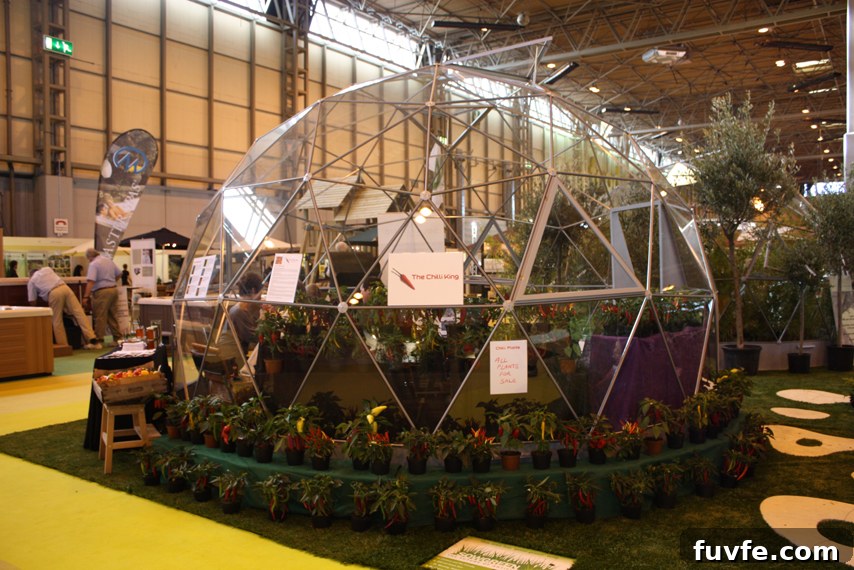
Thank you to everyone who visited The Chilli King stand at Grand Designs Live. It was a pleasure to meet so many of the names we’ve been corresponding with by email over the past months and to hear about your chilli-growing experiences in person.
The level of interest in growing chillies at a mainstream event like Grand Designs Live was striking. Many visitors told us they had attempted to grow chillies at home within the last couple of years. Even though the UK weather has not been ideal for chilli cultivation recently, a surprising number of growers reported successful crops and enthusiastic results.
For those who struggled this season, it was encouraging to hear how determined you are to try again next year. Growing chillies can be rewarding but unpredictable, and persistence often brings better harvests. If you bought seeds from our stand, we recommend checking our growing guides and articles for tips on improving germination, plant care, feeding, and protecting plants from adverse weather.
We also want to extend our thanks to SolarDome for providing one of their striking glass domes for the show. If you remember television from the eighties and nineties, SolarDome is the company behind the iconic domes used in popular shows—only this dome was filled with chillies rather than tokens!
Events like Grand Designs Live are invaluable for connecting with home growers, sharing practical advice about chilli varieties, and discovering which cultivars perform best in domestic gardens and conservatories. Hearing your first-hand experiences—about seed selection, sowing times, compost mixes, greenhouse or indoor setups, and pest management—helps us tailor our seed selections and advice to real-world conditions.
If you’re aiming for a better chilli season next year, here are a few concise reminders based on questions we heard at the show:
- Start seeds early under heat or use a propagator to improve germination and speed up growth.
- Choose a balanced feeding schedule and avoid overwatering; well-drained compost helps prevent root problems.
- Use protection such as polytunnels, glass domes, or indoor grow lights when the weather turns cool.
- Rotate crops and monitor for common pests like aphids and spider mites to protect plant health.
Finally, thank you again to everyone who stopped by, shared stories, and asked questions. Your enthusiasm for growing chillies is inspiring, and we look forward to seeing many of you at future events and hearing about your successes next season.