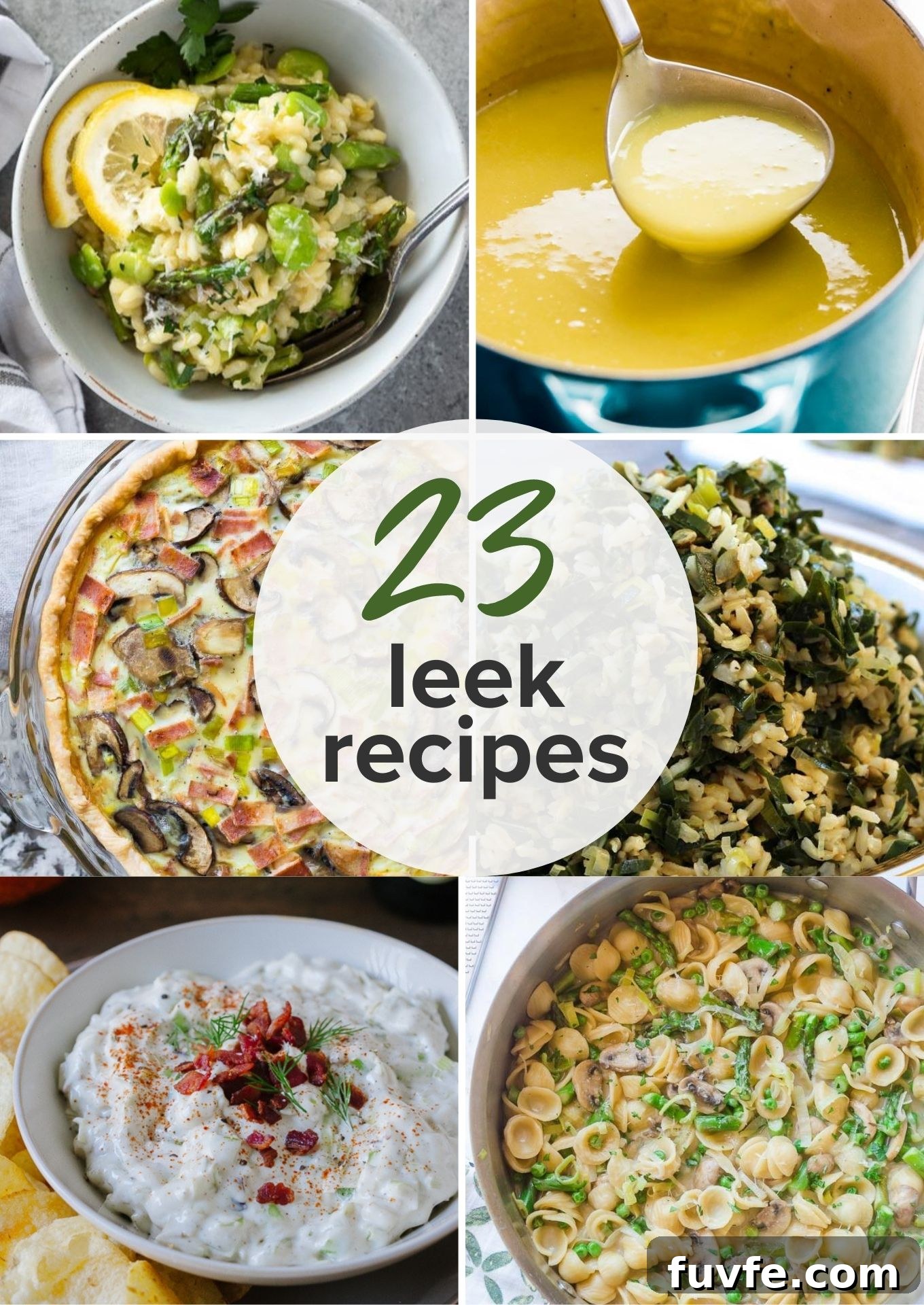
Celebrate leek season with this curated collection of 23 leek recipes and a practical produce guide. Inside you’ll find favorite dishes like potato leek soup, mushroom risotto, creamy pastas, frittatas, and easy side dishes, plus clear guidance on choosing, cleaning, storing, and cutting leeks.
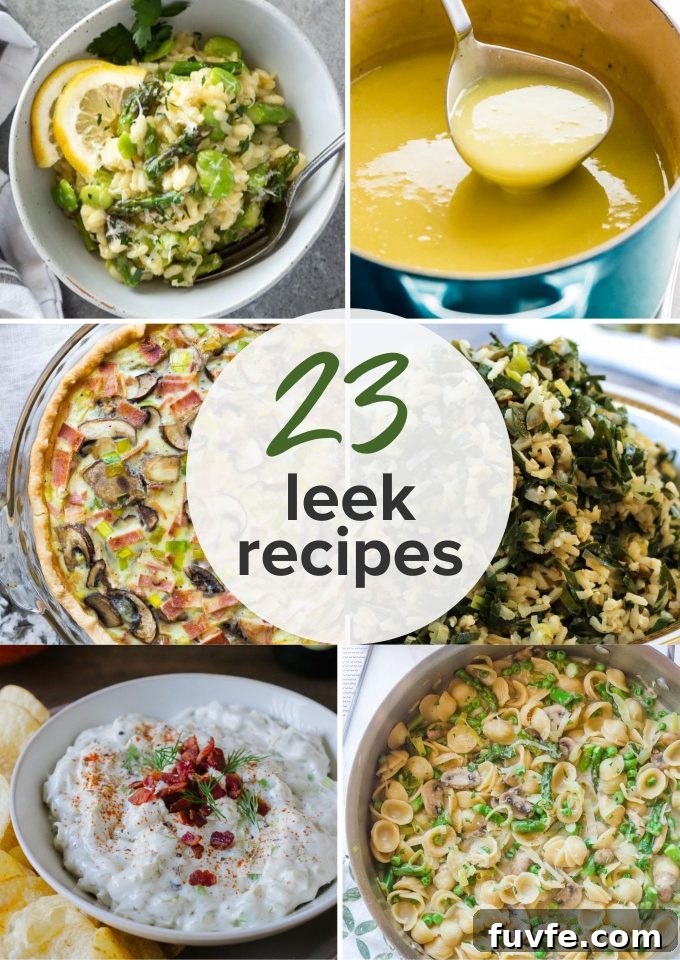
Leeks bring a subtle, sweet onion flavor that enhances soups, sautés, bakes, and more. Their mild profile makes them versatile: they can be the star of a comforting potato leek soup or a supporting note in risottos, pastas, and salads. Because leeks are less familiar to some home cooks than common onions, they are often underused. This guide and recipe roundup aim to change that by showing simple ways to prepare and enjoy leeks in everyday cooking.
Whether you want fast weeknight meals, make-ahead brunch options, or elegant dinner dishes, these recipes showcase how leeks add flavor and texture while remaining delicate and well-balanced in a wide range of cuisines.
If you enjoy seasonal produce, you might also like these roundups:
- April seasonal produce guide
- Butternut squash recipes
- Cabbage recipes
- Chicory recipes
- Delicata squash recipes
- Fennel recipes
- March seasonal produce guide
- May seasonal produce guide
- Radish recipes
- Swiss chard recipes
FAQs
Leeks are part of the allium family, which includes onions and garlic. Unlike onions, which form round bulbs, leeks grow as long cylindrical stalks made up of bundled leaf sheaths. They resemble oversized green onions, commonly measuring 1–2 inches in diameter and several inches long.
The tender white and light green sections are most commonly used raw or cooked. Dark green tops are edible but tougher and often reserved for making homemade vegetable stock or for long-cooked preparations.
Leeks have a mild, sweet onion flavor—less sharp than common onions. Their subtle aroma and delicate sweetness make them excellent when sautéed, roasted, or simmered, adding depth without overpowering other ingredients.
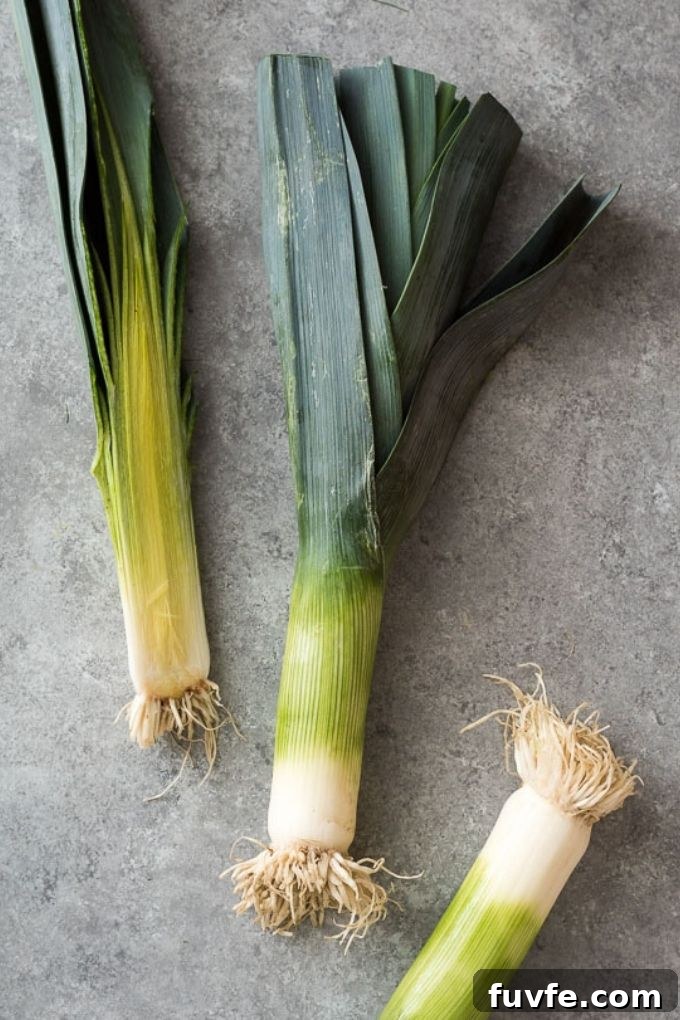
Select leeks that are firm and straight with no obvious discoloration, wilting, or cracks. Choose untrimmed leeks when possible—the green tops help preserve freshness. Younger, thinner leeks have a more delicate flavor; aim for those around 1/2 to 1 1/2 inches in diameter with at least a couple of inches of pale stalk to use in cooking. Store unwashed, untrimmed leeks in the refrigerator’s vegetable drawer for up to one to two weeks, depending on freshness. Freezing is generally not recommended for whole raw leeks because the texture and flavor can degrade.
Leeks provide many of the same nutrients and benefits found in other alliums. They are sources of vitamins A, C, and K and provide minerals such as iron and calcium. Alliums are also known for health-promoting compounds associated with reduced disease risk.
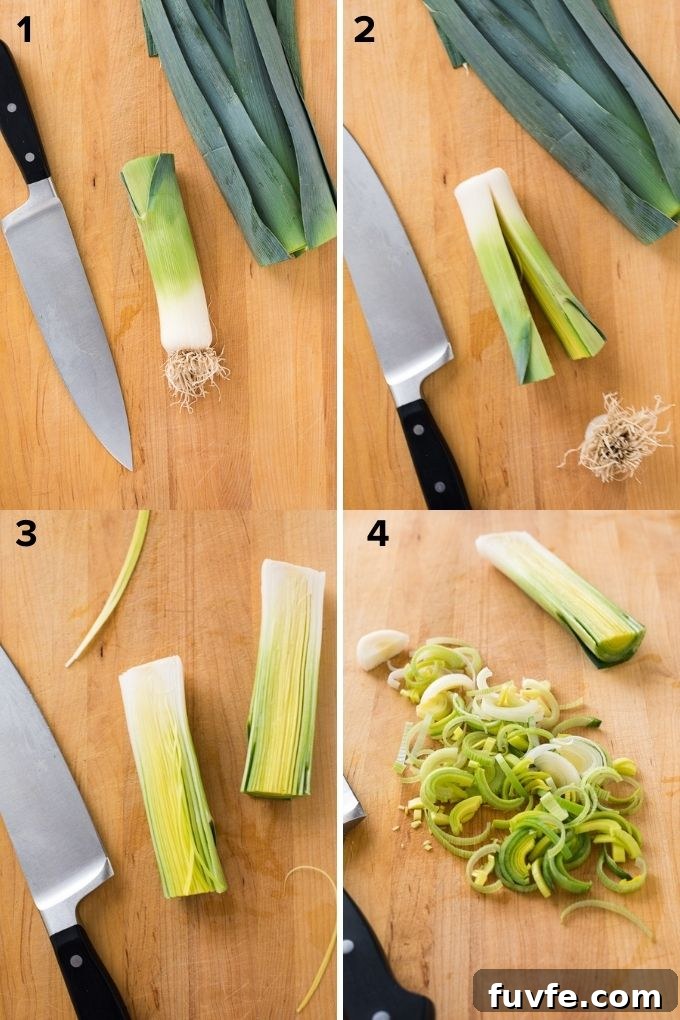
1. Remove and discard the dark green tops.
2. Trim the root end, leaving the base intact so layers hold together. Slice each leek lengthwise.
3. Rinse thoroughly by fanning the layers under cold running water to remove any grit, then blot dry.
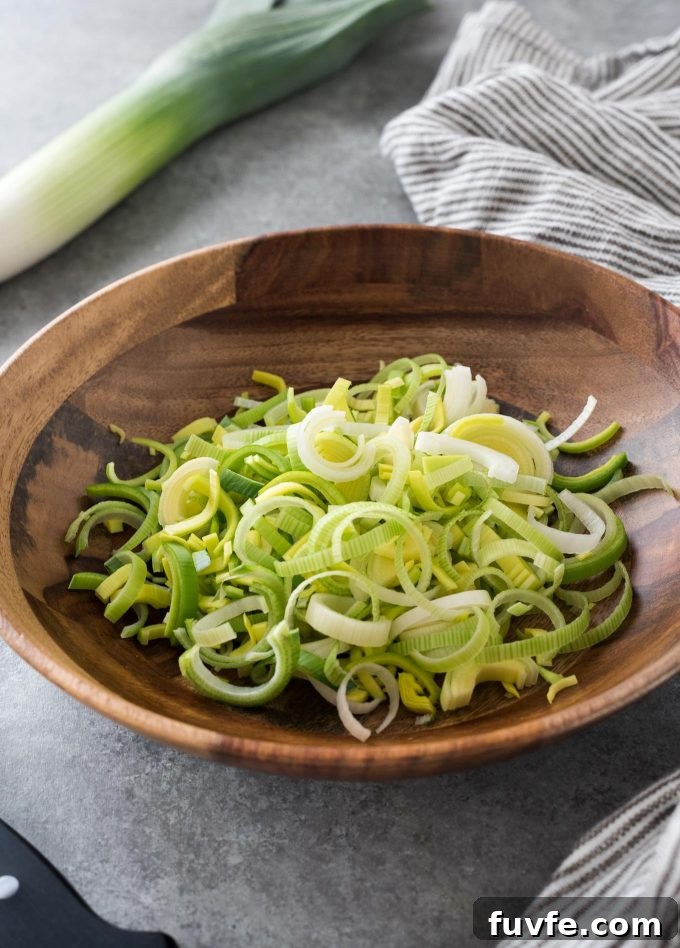
4. Lay each half cut-side down and slice into thin half-moons. Use prepared leeks within one to two days for best flavor and texture.
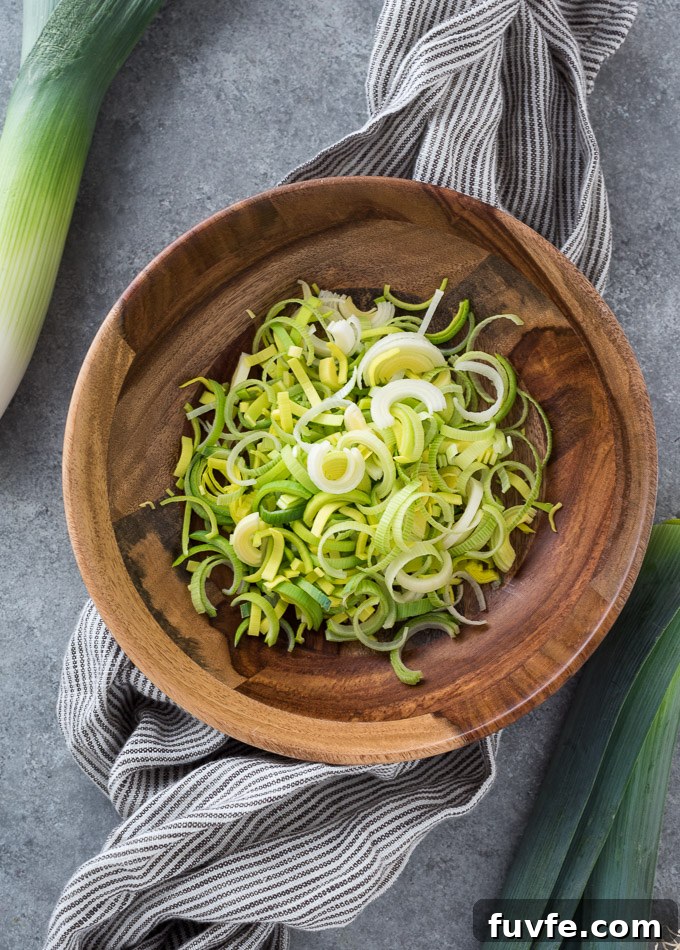
23 Leek Recipes
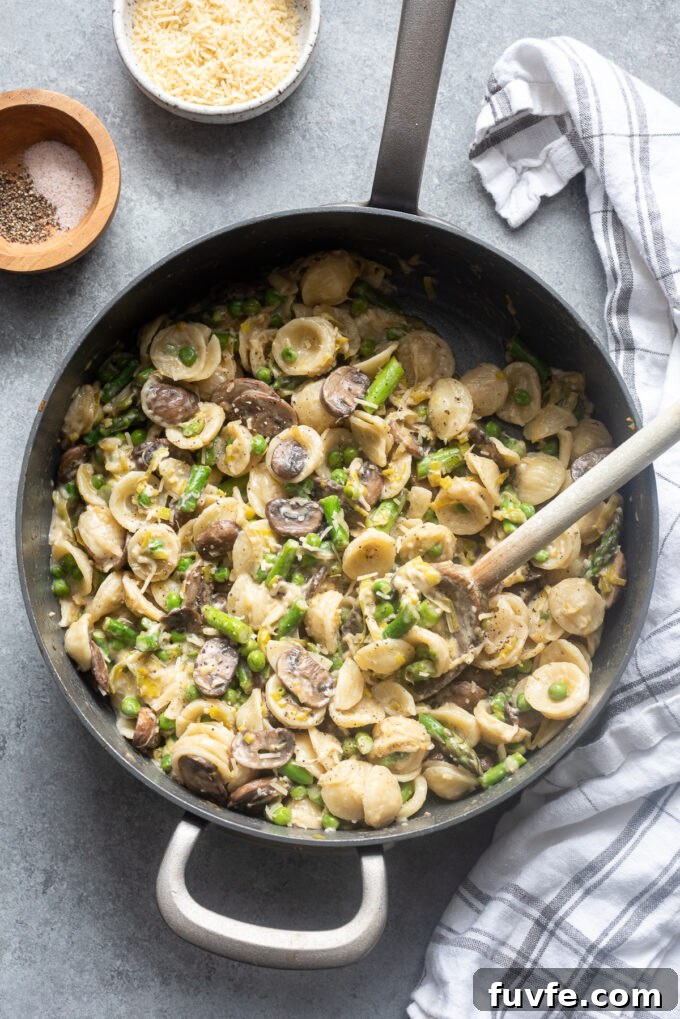
One Pot Spring Pasta Primavera
Get the Recipe

Bacon Leek Dip
Get the Recipe
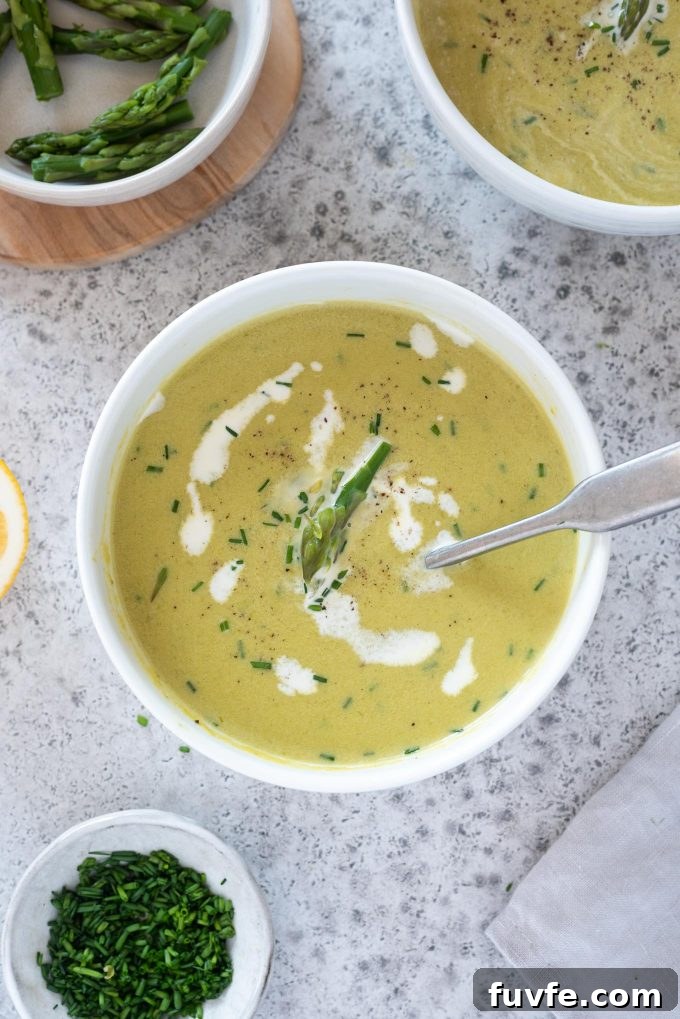
Creamy Asparagus Leek Soup
Get the Recipe

Bacon Mushroom Make-Ahead Quiche (Dairy-Free)
Get the Recipe

Creamy Butternut Squash Potato Leek Soup
Get the Recipe
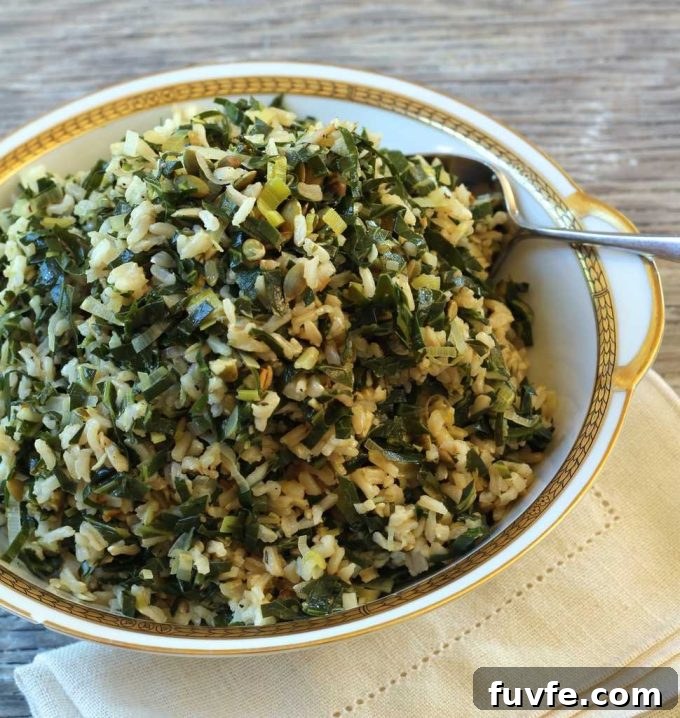
Dirty Rice with Collards and Leeks (Vegan, GF)
Get the Recipe
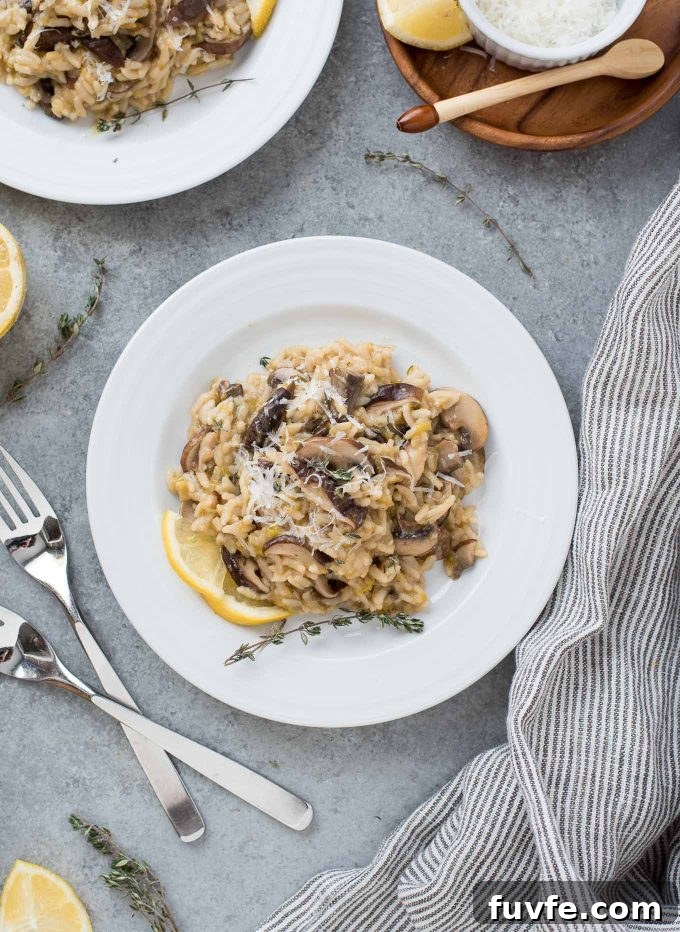
Instant Pot Mushroom Risotto
Get the Recipe

Autumn Vegetable Soup
Get the Recipe
References:
- Food facts and general allium information (sources consulted).
- General articles on leeks and their health compounds.
- Published encyclopedia-style references on leeks and culinary use.