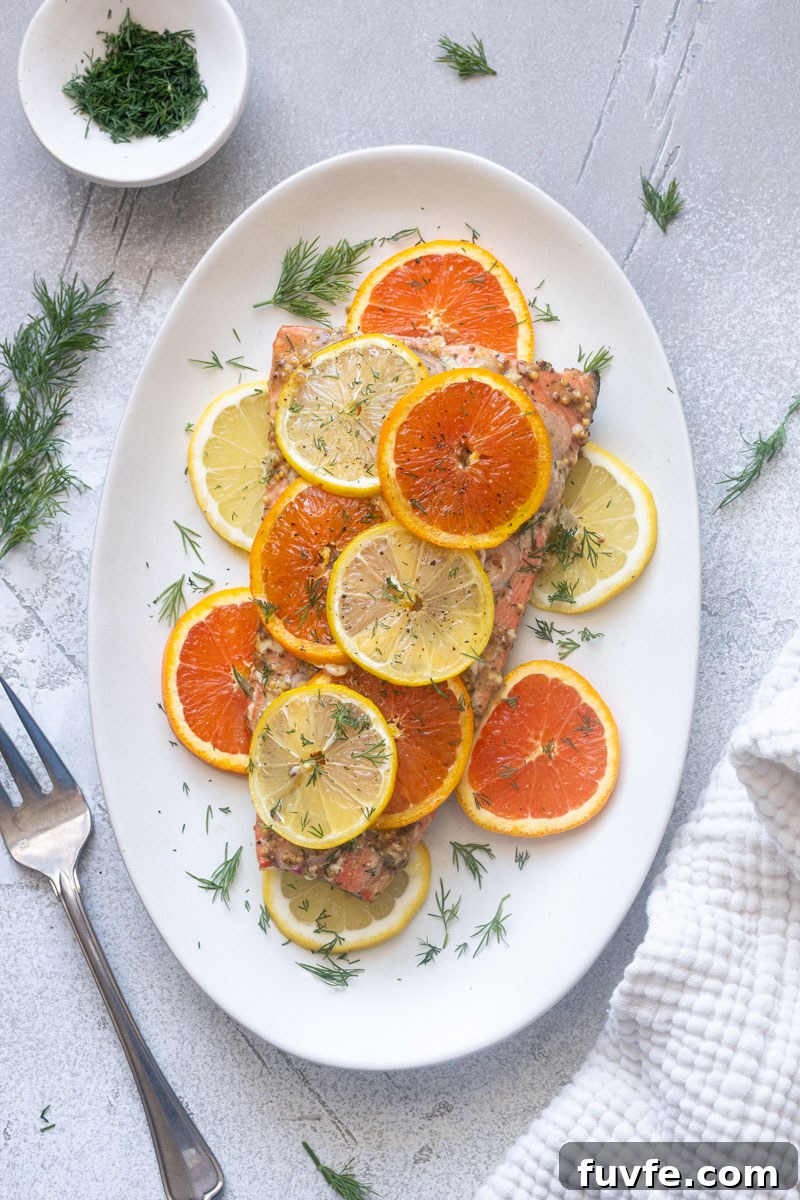
If you want a reliable way to make succulent, tender salmon, Slow Roasted Citrus Salmon is a simple method that delivers every time. The fish is roasted slowly at a low temperature with olive oil, whole grain Dijon, garlic, fresh citrus and dill. The result is moist, silky salmon with a bright, balanced flavor that’s elegant enough for guests and easy enough for weeknight dinners.
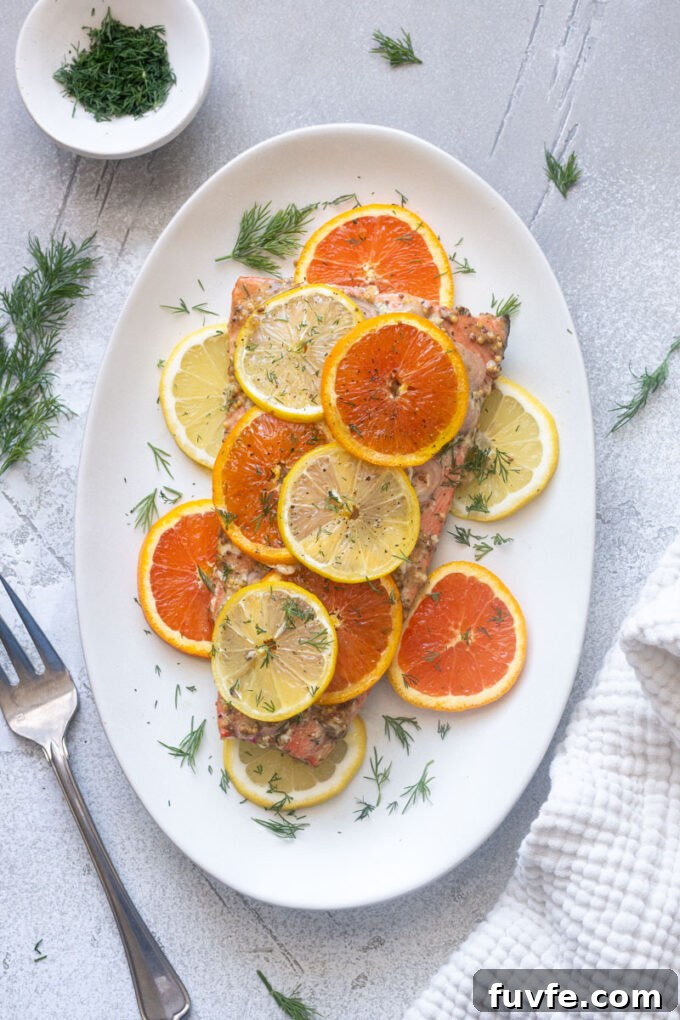
Salmon is one of the most versatile proteins in the kitchen — quick to cook, adaptable to many flavors, and a dependable favorite at the table. This slow roasted version highlights fresh citrus and herbs while keeping the interior buttery and tender thanks to the gentle cooking temperature.
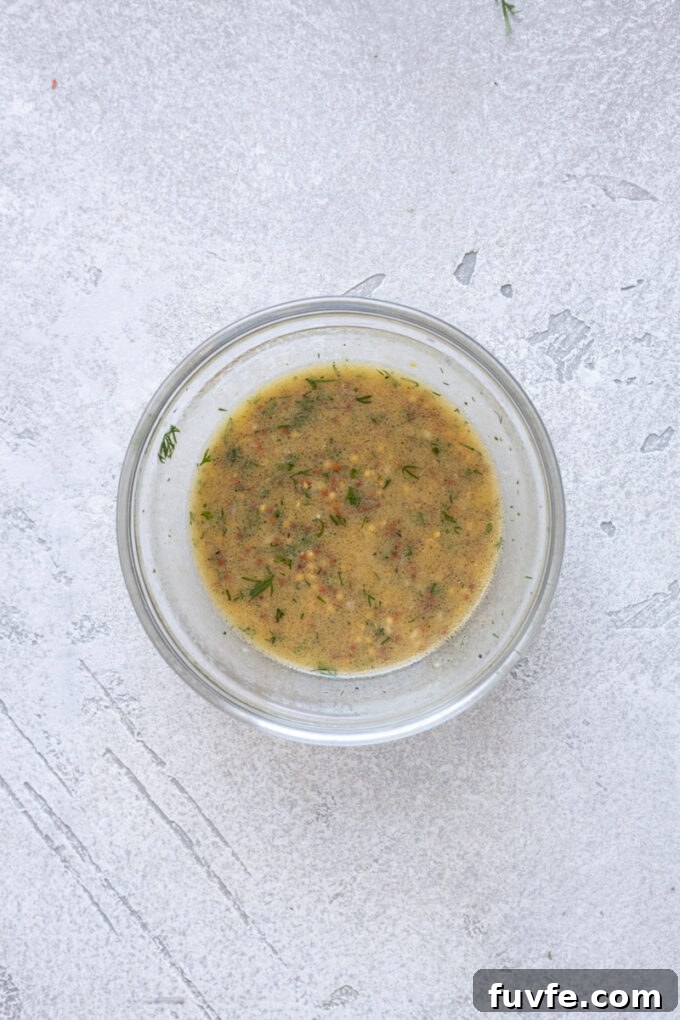
The citrus-Dijon marinade is straightforward: olive oil, whole grain Dijon mustard, minced garlic, fresh lemon and orange juice, and chopped dill. A few thin citrus slices and a few slices of shallot on top add aroma and subtle sweetness as the fish roasts.
This recipe is a low-effort way to produce an impressive main dish for spring or summer dinners. It pairs beautifully with simple greens, grains, or roasted vegetables and works well hot, warm or chilled for leftovers.
Why you’ll love this recipe
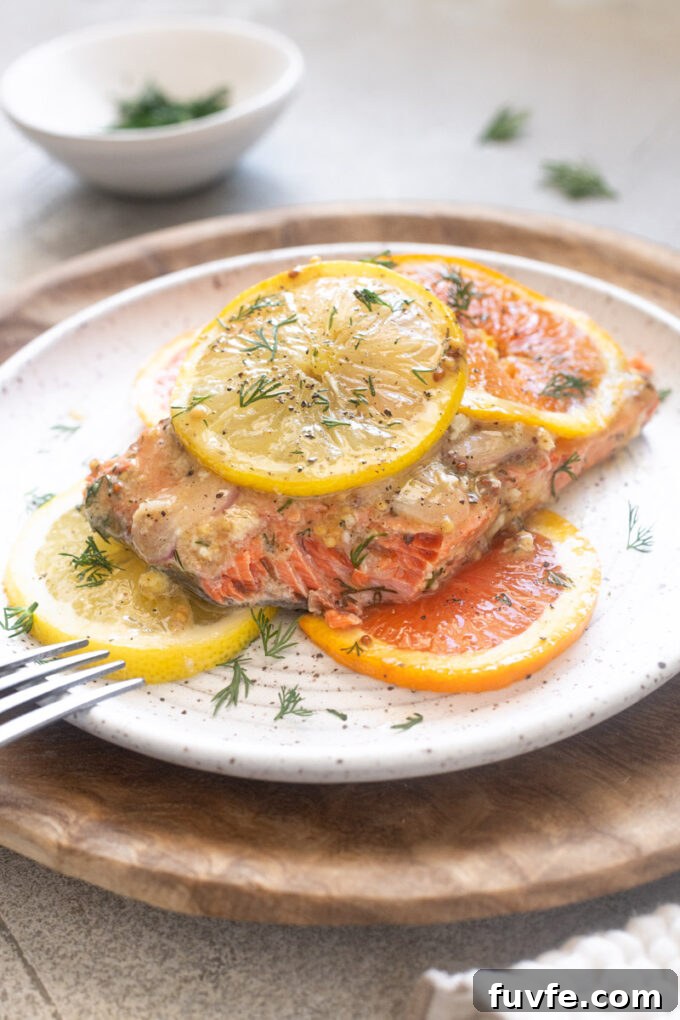
- Perfectly tender every time – Slow roasting at low heat makes it easy to avoid overcooking.
- Fresh, vibrant flavor – Citrus, Dijon and dill brighten the fish without masking its natural taste.
- Easy but impressive – Minimal hands-on prep, great for entertaining.
- Healthy and satisfying – High in protein and made with whole-food ingredients.
- Versatile – Serve warm, at room temperature, or chilled over a salad.
Recipe ingredients
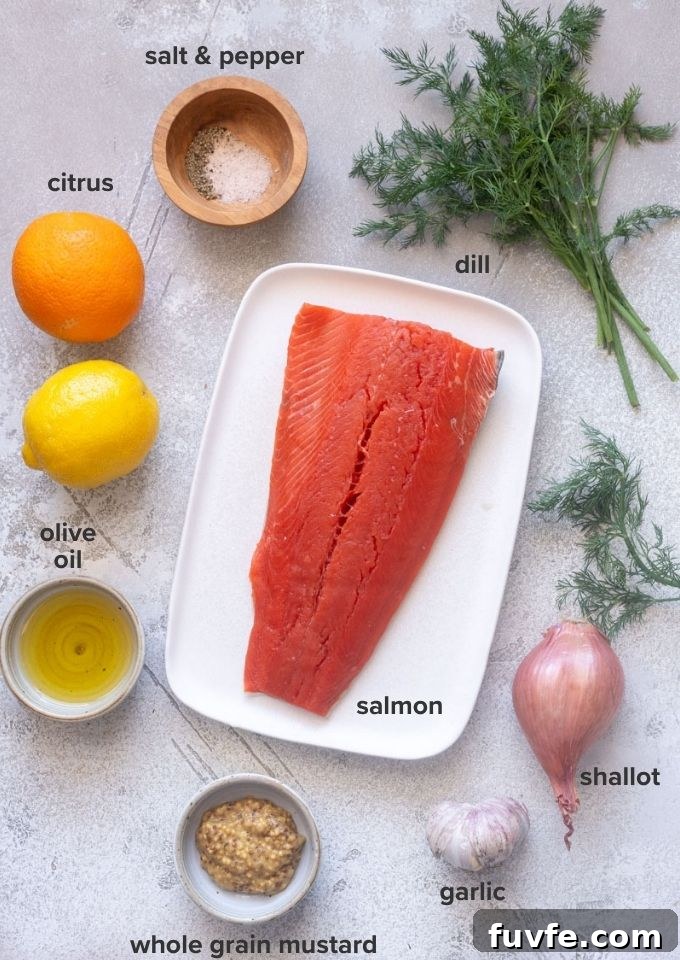
- Salmon (1 1/2 lbs.): A center-cut side cooks most evenly. Skin-on helps retain moisture and can be removed after cooking if desired.
- Whole grain Dijon mustard: Adds tang and texture to the sauce; regular Dijon works if you don’t have whole grain.
- Olive oil: Keeps the fish moist and rounds out the flavors.
- Garlic: Fresh minced garlic gives savory depth; substitute 1/2 teaspoon garlic powder if necessary.
- Citrus: A mix of lemon and orange gives sweet-tart balance; use any citrus you prefer.
- Fresh dill: Bright, herbaceous finish that complements citrus. Dried dill can be used in a pinch.
- Shallot (optional): Thin slices add a mild onion note and a touch of texture.
Full ingredient amounts and details are included in the recipe card below.
How to make slow roasted salmon
Roasting salmon at 250°F (about 120°C) lets the center heat slowly, yielding a silky, flaky texture without drying the fish. The gentle heat preserves moisture so the salmon remains tender and buttery.
Pro tip: Cooking time depends on the thickness of the fillet. Thicker center-cut pieces may take closer to 25 minutes. For consistent results, remove the salmon when an instant-read thermometer registers 135°F for moist, medium doneness; cook to 140–145°F if you prefer it firmer.
Step-by-step instructions are in the recipe card below.
Tips for success
- Use an instant-read thermometer. It’s the most reliable way to hit the desired doneness.
- Keep the oven low. 250°F ensures a silky interior and helps prevent overcooking.
- Cook skin-on. The skin helps retain juices and can be easily removed after cooking.
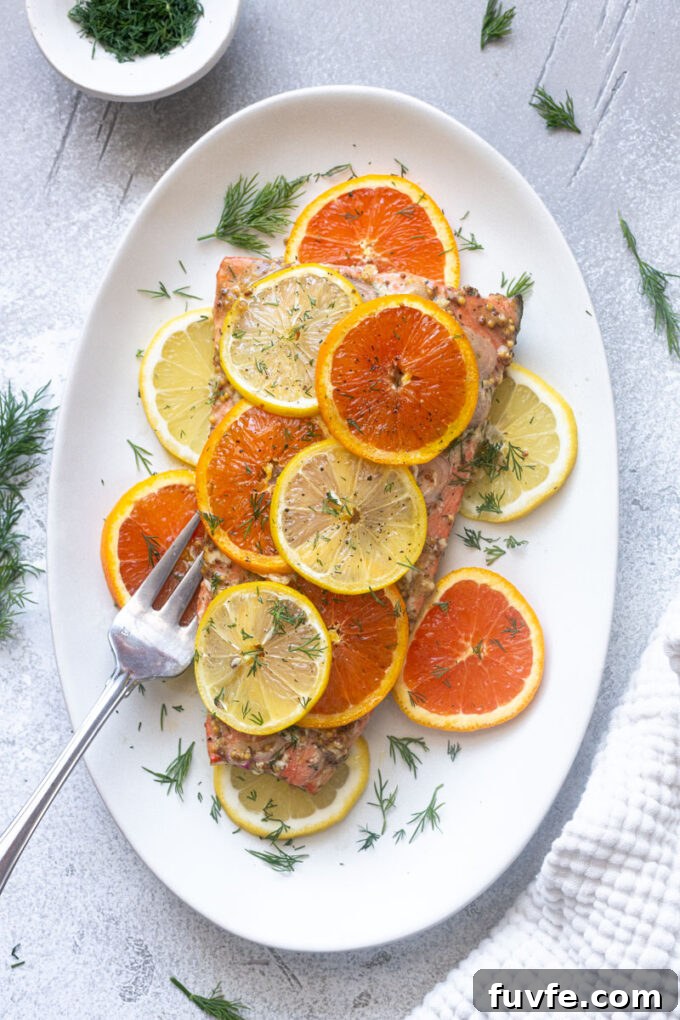
- Slice citrus thinly. Thin slices impart flavor without overwhelming the fish.
- Let the fish rest briefly. A 5-minute rest allows the juices to redistribute and the temperature to rise slightly.
Recipe FAQs
Yes. Thaw completely and pat dry before seasoning and roasting.
For moist, tender salmon remove from the oven at about 135°F. For firmer, more well-done fish, cook to 140–145°F.
Yes. The salmon is delicious warm, at room temperature, or chilled, making it suitable for meal prep or entertaining.
Serving suggestions
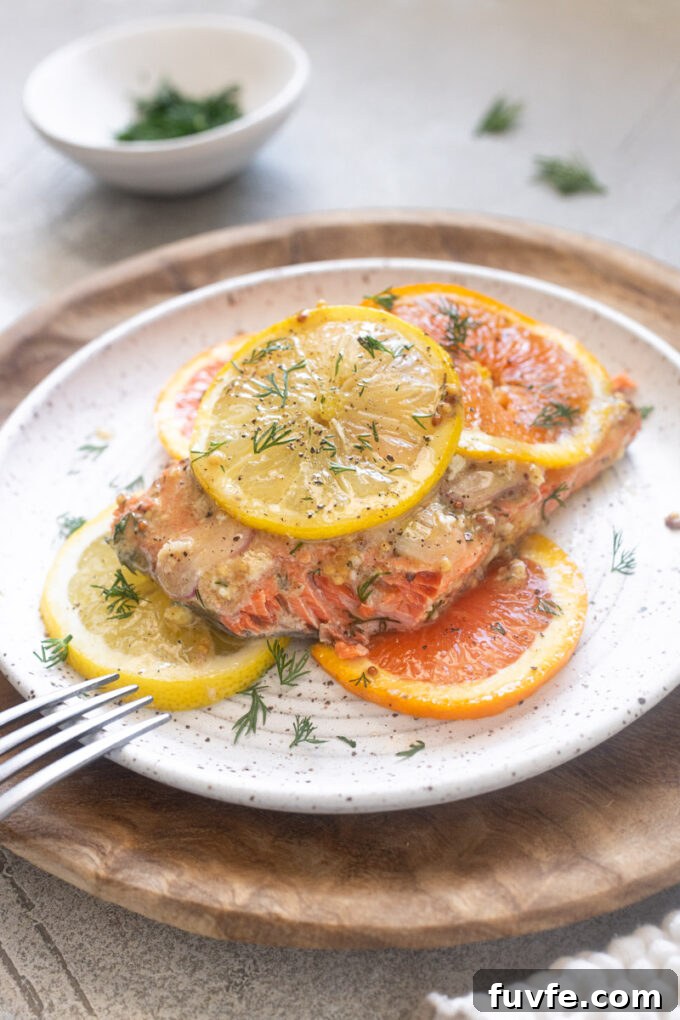
This citrus salmon goes well with roasted or grilled vegetables, simple grains like quinoa or farro, lemony rice, or a crisp green salad. Crusty bread is also lovely for soaking up any juices.
More salmon recipes you’ll love:
- Air fryer salmon
- Blackened salmon with pineapple salsa
- Canned salmon salad
- Crispy salmon patties
- Garlic butter baked salmon
- Salmon Niçoise salad
- Maple orange teriyaki salmon bowls
Did you try this recipe? If so, please leave a review below and tag @flavorthemoments on social media so I can see what you made!
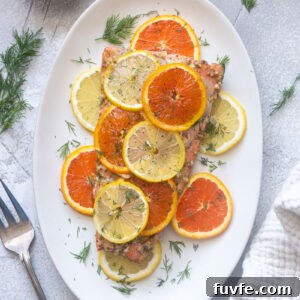
Slow Roasted Citrus Salmon
Equipment
- Rimmed baking sheet or roasting pan
- Instant-read thermometer (recommended)
Ingredients
- 1.5 lbs salmon fillet (center cut, skin-on recommended)
- 4 tablespoons olive oil, plus extra for drizzling
- 2 tablespoons whole grain Dijon mustard (or Dijon)
- 2 cloves garlic, minced
- 1 tablespoon fresh lemon juice, plus slices for topping
- 1 tablespoon fresh orange juice, plus slices for topping
- 2 teaspoons chopped fresh dill
- 1/4 teaspoon sea salt
- 1 shallot, peeled and thinly sliced (optional)
Instructions
- Preheat the oven to 250°F (about 120°C). Place the salmon on a rimmed baking sheet and blot it dry with paper towels. Season both sides with salt and pepper.
- In a small bowl, whisk together the olive oil, whole grain Dijon, minced garlic, lemon juice, orange juice, chopped dill and the 1/4 teaspoon sea salt until combined.
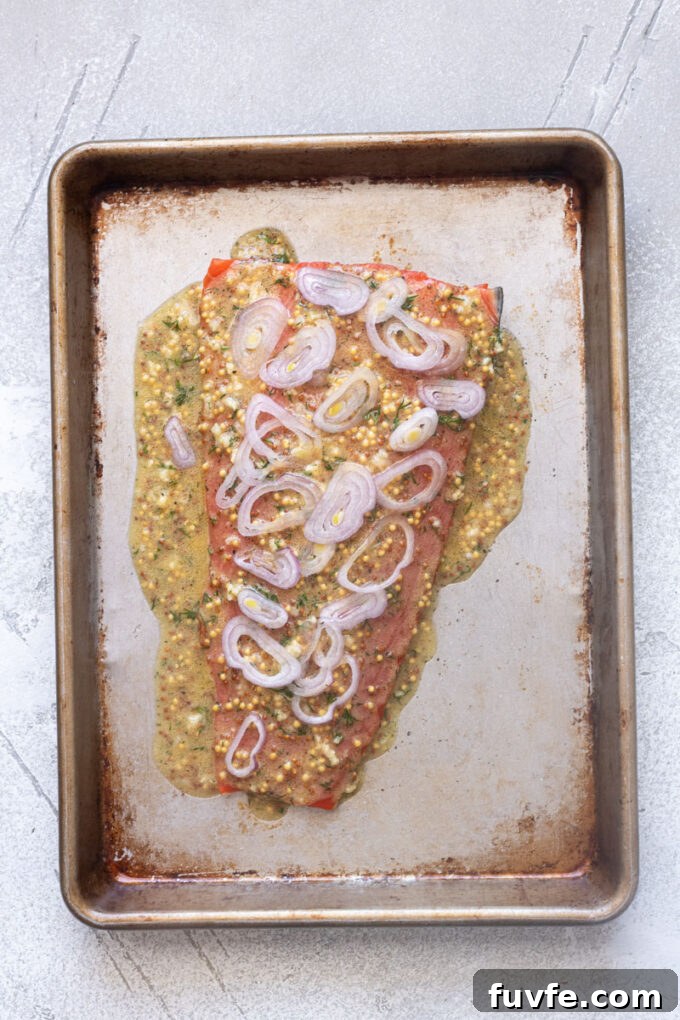
- Brush the mixture evenly over the top of the salmon. Scatter the thin shallot slices over the fish if using, then arrange lemon and orange slices on top. Drizzle a little extra olive oil over everything.
- Roast in the preheated oven for 20–25 minutes, depending on thickness. Remove the salmon when the internal temperature reaches about 135°F for moist, tender salmon. For a firmer texture, cook to 140–145°F.
- Let the salmon rest for about 5 minutes before serving to allow the juices to redistribute. Serve warm or at room temperature.
Notes
- Cooking time varies with thickness; thicker center-cut fillets can take closer to 25 minutes.
- Skin-on salmon retains more moisture and peels away easily after cooking if you prefer to remove it.
- Use any citrus you enjoy—lemon, orange, mandarin, grapefruit or lime all work well.
- Leftovers keep in an airtight container in the refrigerator for up to 3 days.
Nutrition
Estimated per serving: Calories: 379 kcal, Carbohydrates: 3 g, Protein: 34 g, Fat: 25 g, Saturated Fat: 4 g, Potassium: 885 mg, Sodium: 304 mg. Nutrition is an estimate for informational purposes only.