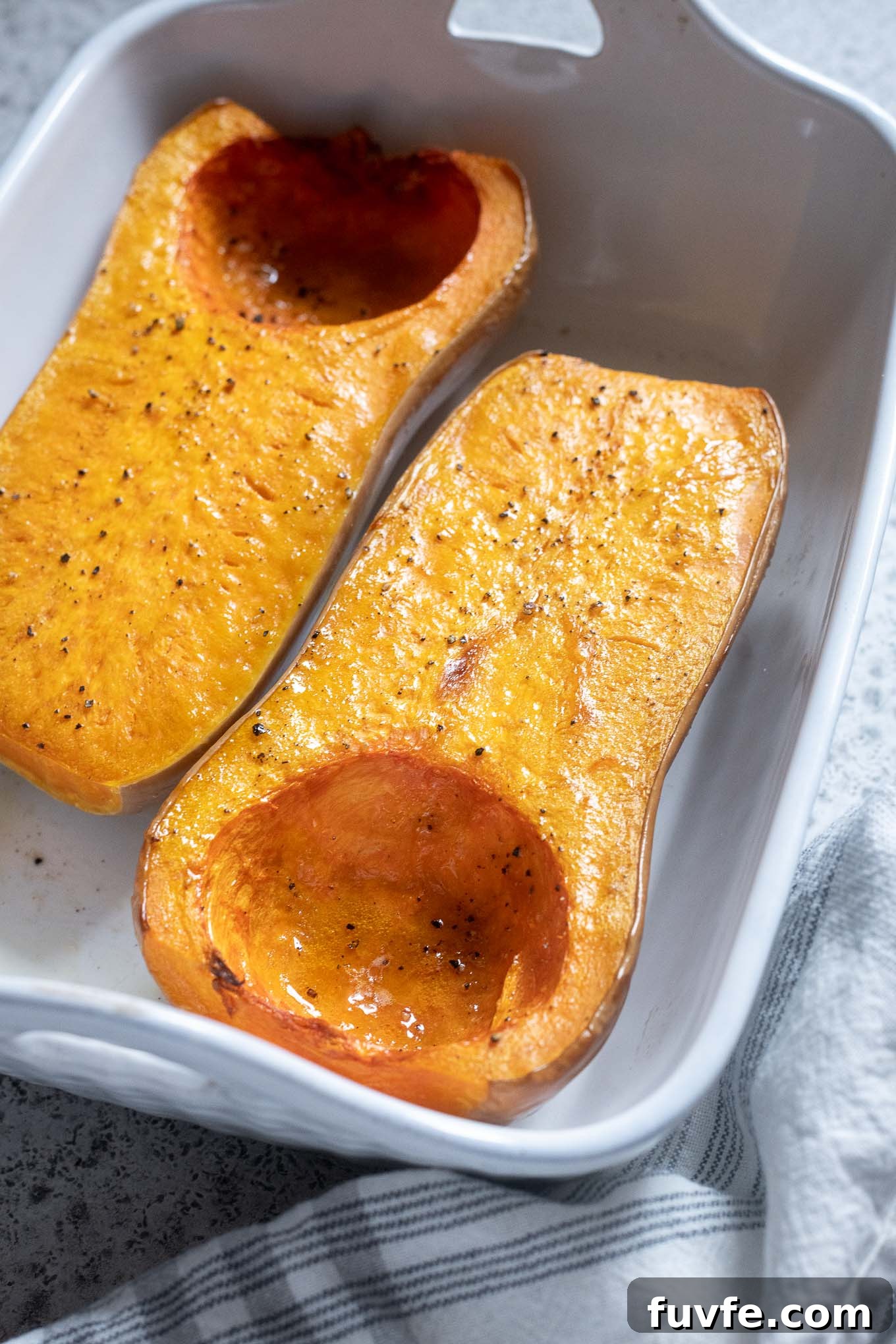
Roasted Whole Butternut Squash is an easy, reliable way to prepare butternut squash for a wide variety of dishes. This guide shows how to halve a squash safely, roast it until the flesh is tender and velvety, and use the cooked squash as purée, mashed flesh, or an ingredient in soups, baked goods, and savory mains.
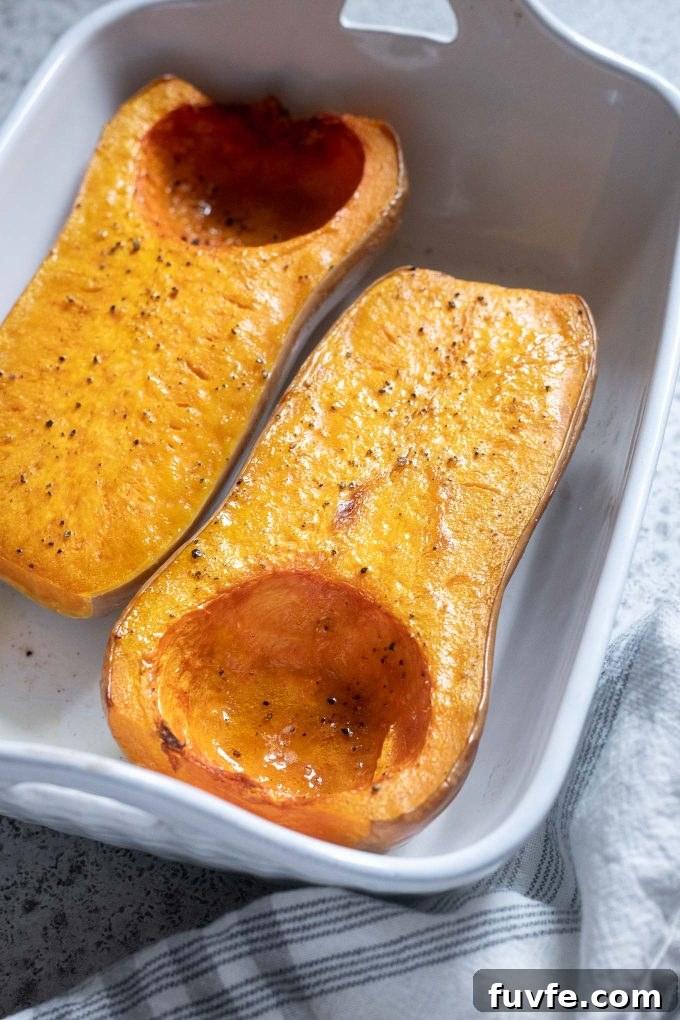
Butternut squash has long been a favorite ingredient for its naturally sweet, nutty flavor and smooth texture when cooked. Roasting the squash halves concentrates that sweetness and produces a silky flesh that’s far superior to canned purée for most recipes.
Instead of peeling and dicing, roasting the whole squash halves saves time and preserves moisture. After roasting you can scoop the flesh directly from the skin, mash it, or purée it smooth for use in muffins, pies, soups, risottos, and casseroles.
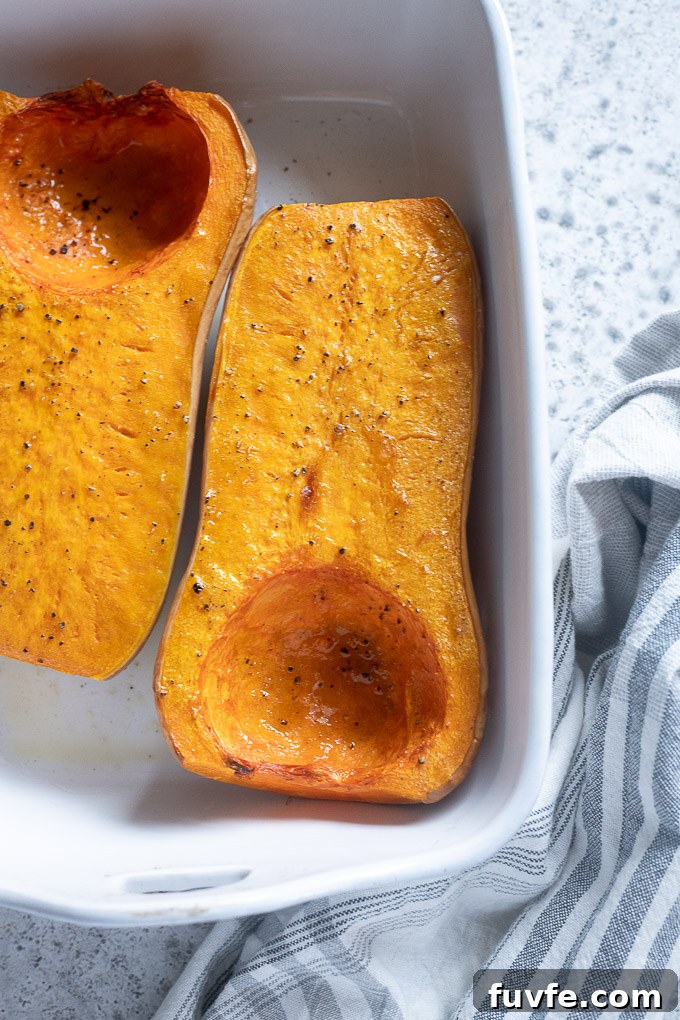
Why you’ll love this recipe:
- Roasted whole butternut squash yields a tender, velvety texture and a fresh flavor that easily beats store-bought purée.
- Minimal prep — about 10 minutes — for roughly 3 cups of cooked flesh from a 3 lb squash.
- Extremely versatile: use the squash as purée for baking, mash it into savory dishes like chili or risotto, or fold it into soups and casseroles.
- Refrigerates well for up to 5 days and can be frozen for up to 3 months for meal prep.
Recipe ingredients
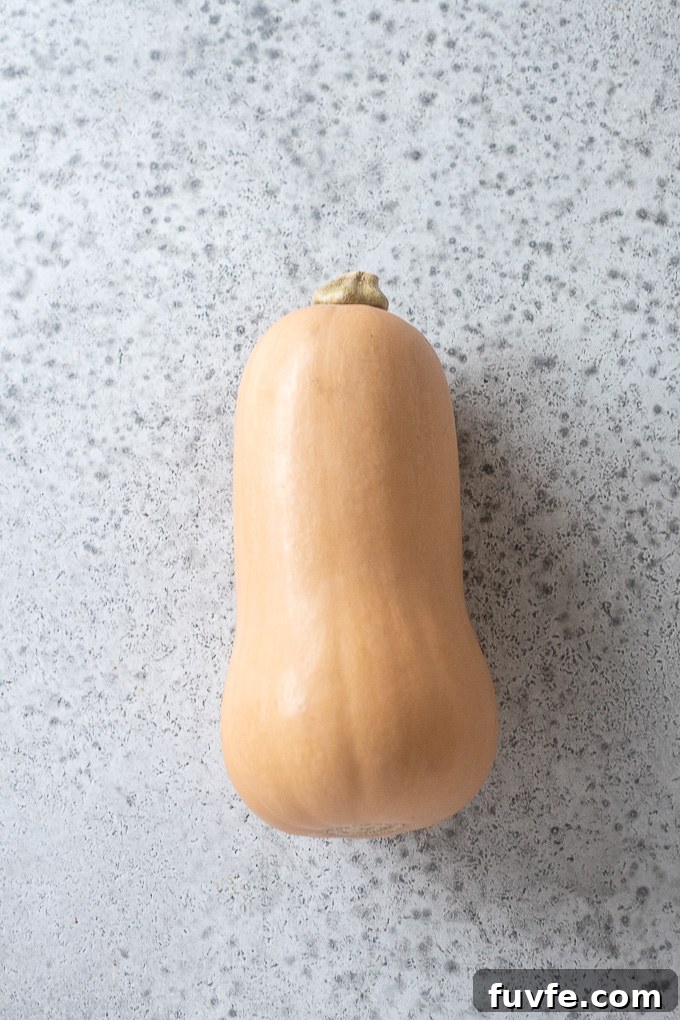
- Butternut squash — choose a firm, heavy squash with smooth skin and no soft spots. A 3 lb squash yields about 3 cups of cooked flesh.
- Olive oil — enough to brush the cut surfaces (about 2 tablespoons).
- Salt and black pepper — season to taste. Optional: a pinch of cinnamon, nutmeg, or smoked paprika for variation.
How to make this recipe
Roasting butternut squash halves is straightforward, though cutting the squash in half can feel intimidating the first few times. There are two safe approaches: stand-and-saw or lay-and-rock. Choose the one you find most comfortable.
Pro tip: Check for doneness after 45–50 minutes, since oven temperatures and squash sizes vary. Smaller squash may be done closer to 40 minutes.
Follow these simple steps to roast the squash:
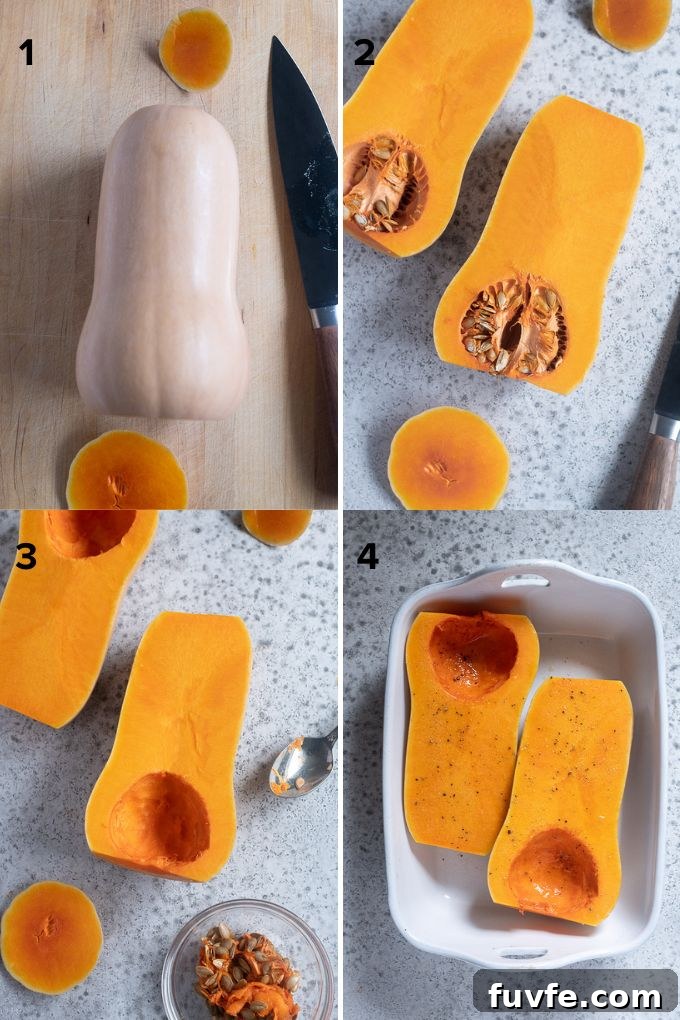
- Preheat the oven to 400°F (about 200°C). Trim the top and bottom of the squash so it sits securely.
- Either stand the squash upright and cut down the middle with a sharp knife using a gentle rocking motion, or lay it on a cutting board and cut lengthwise from the longer end with a steady rocking motion.
- Scoop out seeds and stringy pulp with a spoon.
- Place the halves cut-side up on a rimmed baking sheet or in a baking dish. Brush the cut surfaces with olive oil and sprinkle with salt and pepper.
- Bake uncovered about 50–60 minutes, or until the flesh is very tender and a knife slips in easily. Remove from the oven and allow to cool slightly, then scoop the flesh into a bowl.

Recipe FAQs
No. Roasting the squash halves without peeling saves time. After roasting you can easily scoop the tender flesh from the skin.
A 3 lb squash halved will typically take about 50–60 minutes at 400°F to become very tender. Check earlier if the squash is smaller.
Store cooled squash in an airtight container in the refrigerator for up to 5 days. Mashed or puréed squash freezes well for up to 3 months.
Serving suggestions
The roasted flesh can be used in many ways:
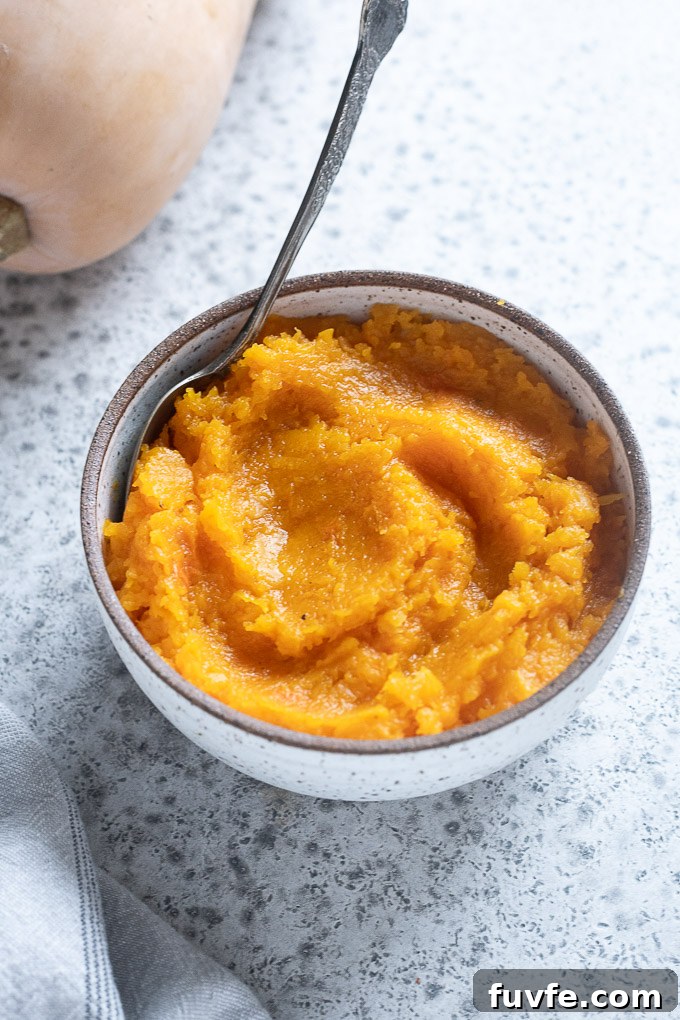
- Mash or purée and use it in place of canned pumpkin in soups, chili, or baking.
- Stir mashed squash into risotto, grain bowls, or mashed potatoes for added creaminess and flavor.
- Use puréed roasted squash as a base for muffins, scones, quick breads, or pies.
- Combine with cream and spices for a smooth soup, or fold into casseroles and gratins for depth and color.
Recipe notes
- Pro tip: Check the squash for doneness after 40–50 minutes depending on size and oven differences.
- A 3 lb butternut squash yields roughly 3 cups of cooked flesh.
- To make purée: transfer scooped flesh to a blender or food processor and blend until smooth. If needed, add a tablespoon or two of water to reach the desired consistency.
- Use mashed squash as-is for savory dishes, or sweeten and spice the purée for baking.
- Refrigerate cooked squash in an airtight container up to 5 days or freeze puréed squash up to 3 months.
More butternut squash ideas
- Use puréed roasted squash in quick breads, muffins, or pancakes.
- Stir into soups such as squash-and-pear or potato-leek soup.
- Add cubes of roasted squash to salads, grain bowls, or enchiladas for a sweet, tender element.
- Mash with butter, maple syrup, and warm spices for an easy side dish.
Did you try this recipe? If so, leave a review and share how you used your roasted squash.

Roasted Whole Butternut Squash
Ingredients
- 3 lb butternut squash, washed and dried
- 2 tablespoons olive oil
- 1/2 teaspoon salt, or to taste
- 1/4 teaspoon black pepper, or to taste
Instructions
- Preheat oven to 400°F. Trim the top and bottom of the squash so it sits flat.
- Carefully cut the squash in half lengthwise using a steady rocking motion.
- Scoop out seeds and pulp with a spoon.
- Place cut-side up on a rimmed baking sheet or in a baking dish. Brush with olive oil and season with salt and pepper.
- Bake uncovered 50–60 minutes until very tender and a knife inserts easily. Cool slightly, then scoop out the flesh into a bowl.
- Use immediately or store as noted below.
Notes
- Check for doneness earlier with smaller squash (around 40 minutes).
- One 3 lb squash yields about 3 cups of cooked flesh.
- Purée the flesh in a blender or food processor for baking or freezing.
- Refrigerate cooked squash up to 5 days; freeze puréed squash up to 3 months.
Nutrition (per serving, estimated)
Calories: 108 kcal · Carbohydrates: 20 g · Protein: 2 g · Fat: 4 g · Fiber: 3 g · Vitamin A and C present.