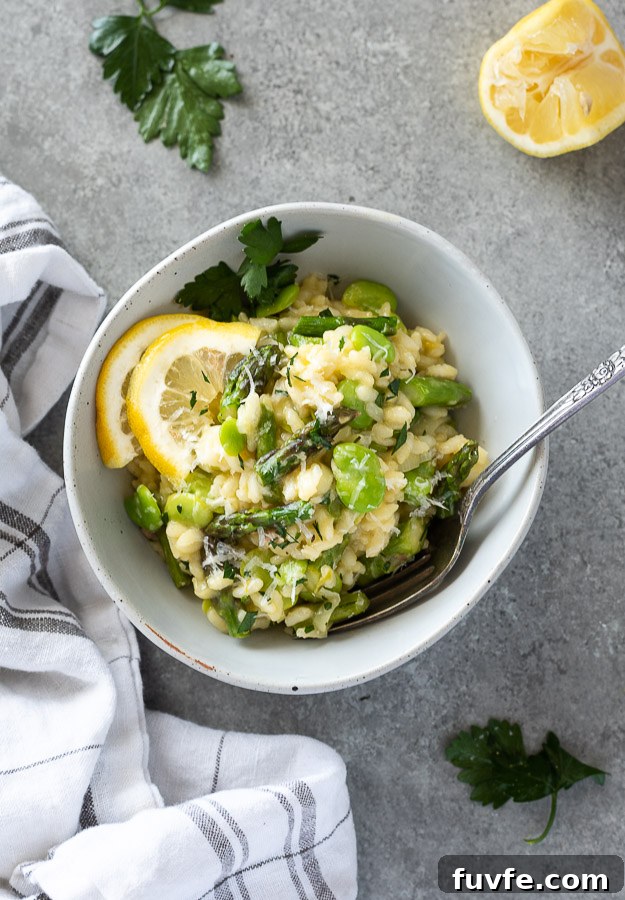
Spring Vegetable Risotto combines creamy parmesan risotto with bright spring vegetables like asparagus, leeks, and fava beans. It’s a comforting vegetarian main or a flavorful side that pairs well with roasted or grilled proteins.
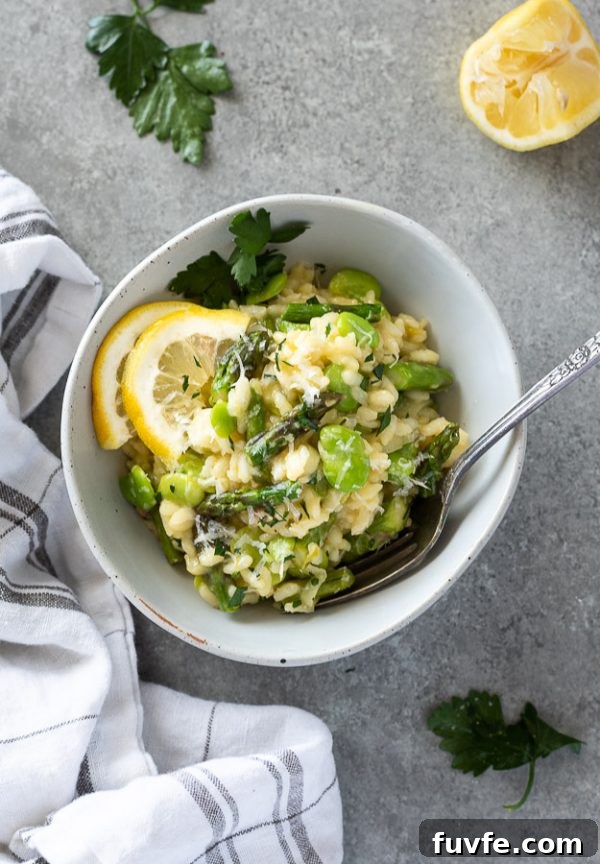
Risotto is one of the most rewarding rice dishes to make at home. Using Italian short-grain arborio rice and the classic method of adding warm stock in small increments produces a lusciously creamy texture without any cream. This version highlights spring produce — tender asparagus, mild leeks, and sweet fava beans — finished with lemon and parmesan for brightness and depth.
Though risotto requires some attention while cooking, the technique is simple and dependable. Stirring encourages the rice to release starch, resulting in the characteristic creamy consistency while the grains remain slightly firm at the center for the ideal al dente bite.
If you prefer an even easier approach, risotto can be adapted to other methods, but the stovetop technique below gives the best control for texture.
Why you’ll love this recipe
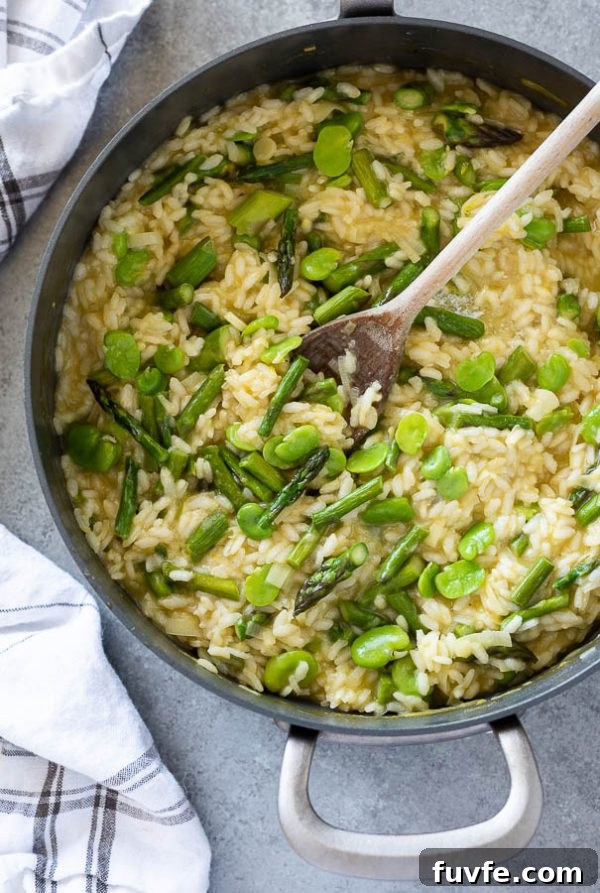
- This spring risotto is rich and creamy thanks to the starchy arborio rice, yet the grains stay pleasantly al dente.
- Seasonal vegetables — asparagus, leeks, and fava beans — give fresh flavor and texture, complemented by garlic, lemon, and parmesan.
- Made in a single pan, it’s an approachable vegetarian meal but versatile as a side.
- Easy to adapt: substitute peas for fava beans, omit dairy for a vegan version, or add mushrooms or herbs to suit your tastes.
Recipe ingredients
A short list of pantry-friendly ingredients makes this risotto easy to prepare. Quantities are below for a recipe that serves six.
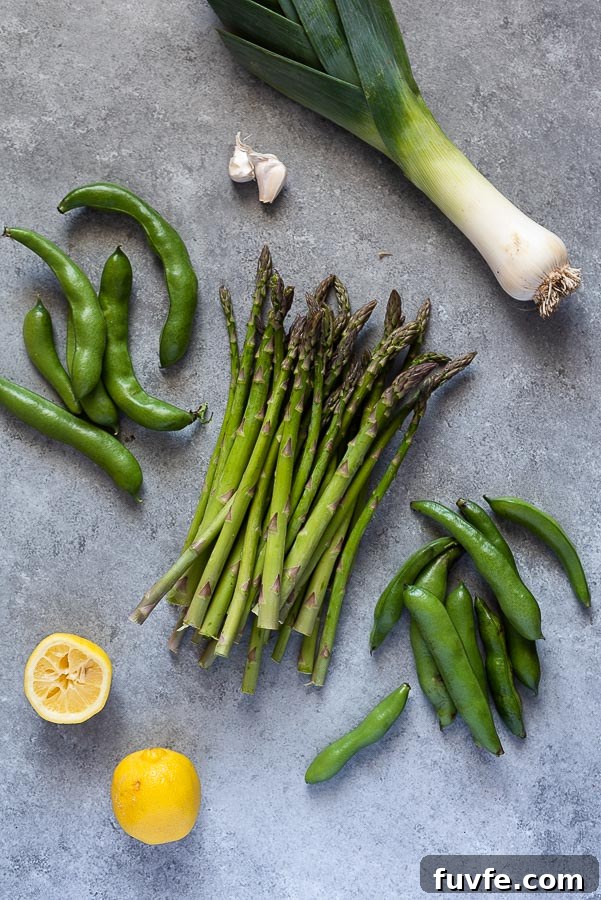
- Arborio rice – short-grain rice that releases starch for a creamy finish.
- Asparagus – fresh, trimmed and cut on the bias into bite-sized pieces. Mushrooms or other spring vegetables work well if asparagus is unavailable.
- Fava beans – cooked and shelled. Fresh or frozen peas make an excellent substitute.
- Leeks – cleaned and thinly sliced (white and light green parts); onions or shallots can be used instead.
- Garlic – minced, for savory depth.
- Lemon zest and juice – adds bright acidity to balance richness.
- Vegetable stock – warm stock is used to cook the rice; stock adds more flavor than water.
- Butter – optional, for a silkier finish; omit for dairy-free versions.
- Parmesan cheese – grated, provides umami and creaminess; omit to keep the dish vegan.
Full ingredient list with exact amounts is provided further down in the recipe section.
How to make this recipe
Follow these steps for a creamy, well-textured spring risotto. The key is to keep the stock warm and add it gradually while stirring.
Pro tip: The risotto is ready for more stock when you can draw a line through the rice with a wooden spoon and the liquid holds its shape.
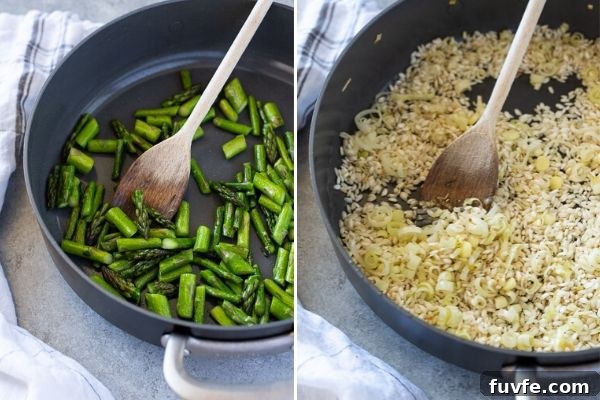
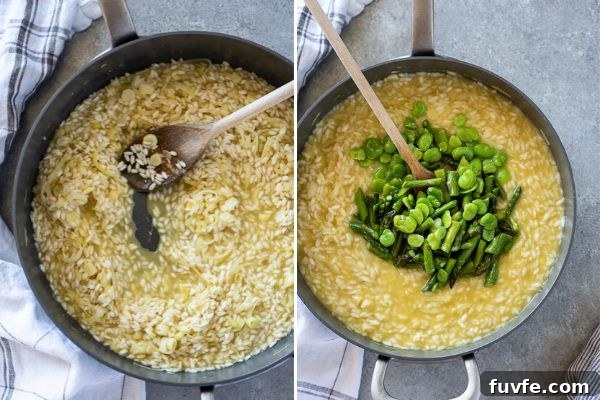

- Bring the vegetable stock and water to a gentle boil, then lower the heat to keep it warm in a saucepan.
- In a large sauté pan, heat 1 tablespoon olive oil over medium heat. Cook the asparagus for 2–4 minutes until crisp-tender, then transfer to a bowl.
- Add the remaining oil to the pan and sauté the sliced leeks 2–4 minutes until softened. Stir in the minced garlic for about 30 seconds, then add the arborio rice and toast for 1–2 minutes until fragrant.
- Pour in one ladleful of warm stock (about 1/2 cup) and stir frequently. When the liquid is mostly absorbed, add another ladleful. Continue this process until the rice is creamy and al dente.
- Stir the asparagus and fava beans into the risotto during the final minute of cooking to heat them through without overcooking.
- Remove the pan from the heat, mix in lemon zest, lemon juice, butter, and parmesan. Season with salt and pepper to taste and serve immediately.
Recipe FAQs
Proper risotto is creamy yet slightly firm in the center (al dente). The gradual addition of hot stock and frequent stirring coax starch from the rice, creating the silky sauce while preserving the grain’s bite.
Yes — fresh or frozen peas are a simple and tasty substitution.
Adding warm broth keeps the pot temperature steady and helps the rice cook evenly. Cold liquid will lower the pan temperature and slow the cooking process.
A general rule is about 4 cups of liquid per 1 cup of arborio rice. For this recipe, the stock-to-water ratio is adjusted to suit the 1 1/2 cups of rice used.
Yes. If you want the classic approach, add 1/2 cup dry white wine after toasting the rice and cook it down until mostly evaporated before adding stock.
Serving suggestions
This risotto pairs beautifully with a crisp green salad, roasted vegetables, or slices of crusty bread for mopping up the sauce. For a heartier meal, serve alongside grilled chicken, pan-seared fish, or roasted tofu.
- A simple mixed green salad with a lemon vinaigrette brightens the plate.
- Roasted mushrooms or blistered cherry tomatoes add extra umami and color.
- Top with a drizzle of good olive oil and a few shavings of parmesan for presentation.
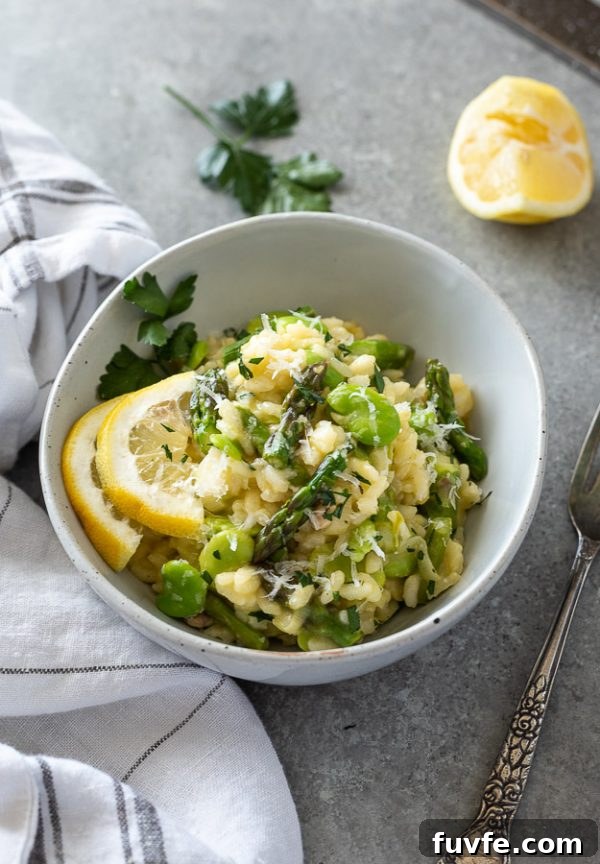
Recipe notes
- Prep tip: Chop and measure vegetables ahead of time so the cook time goes smoothly.
- Cook fava beans in advance and keep them chilled until needed. Peas are a fine substitute and save prep time.
- For a wine-forward risotto, add 1/2 cup dry white wine after toasting the rice and reduce it before beginning to add stock.
- To make this vegan, omit the butter and parmesan and finish with a little extra olive oil and a squeeze of lemon.
- Risotto is best served fresh but will keep in the refrigerator for up to 3 days; gently reheat with a splash of stock or water to restore creaminess.
More risotto recipes you’ll love
- Pumpkin risotto with bacon
- Short rib risotto with mushrooms
Spring Vegetable Risotto
This risotto blends creamy parmesan rice with asparagus, leeks, and fava beans for a satisfying springtime dish.
Ingredients (serves 6)
- 4 cups low sodium vegetable stock
- 2 cups water
- 3 tablespoons olive oil, divided
- 1 bunch asparagus, trimmed and sliced on the bias into 1″ pieces
- 1 large leek, light green and white parts, halved and thinly sliced
- 2 cloves garlic, minced
- 1 1/2 cups arborio rice
- 1 cup cooked fava beans (or peas)
- 1 lemon, zested and juiced
- 1/4 cup freshly grated parmesan
- 1 tablespoon softened unsalted butter (optional)
- Salt and freshly ground black pepper to taste
Instructions
- Place the stock and water in a saucepan and bring to a boil over medium heat. Reduce heat to low and keep warm.
- Heat 1 tablespoon olive oil in a large sauté pan over medium heat. Add the asparagus and cook until crisp-tender, 3–4 minutes. Remove and set aside.
- Add the remaining 2 tablespoons olive oil to the pan. Cook the leek until softened, about 2 minutes. Add the garlic and cook 30 seconds more. Stir in the arborio rice and toast for 1–2 minutes.
- Slowly add one ladleful (about 1/2 cup) of warm stock to the rice, stirring frequently. Add more stock each time the liquid is mostly absorbed. Continue until the rice is al dente and the mixture is creamy.
- Stir in the asparagus and fava beans during the last minute of cooking to heat through.
- Remove from heat. Stir in lemon zest, lemon juice, parmesan, and butter (if using). Season with salt and pepper. Serve immediately.
Notes
- Prep vegetables ahead to speed up cooking.
- Substitute peas for fava beans if preferred.
- Add 1/2 cup dry white wine after toasting the rice and reduce before starting stock additions for a traditional flavor.
- Store leftovers refrigerated for up to 3 days; reheat gently with extra stock.
Nutrition (per serving, approximate)
Calories: 218 • Carbohydrates: 24 g • Protein: 5 g • Fat: 10 g • Fiber: 3 g
All recipes and images © Flavor the Moments. This recipe was originally published in April 2016 and has been updated with new photos and step-by-step guidance.