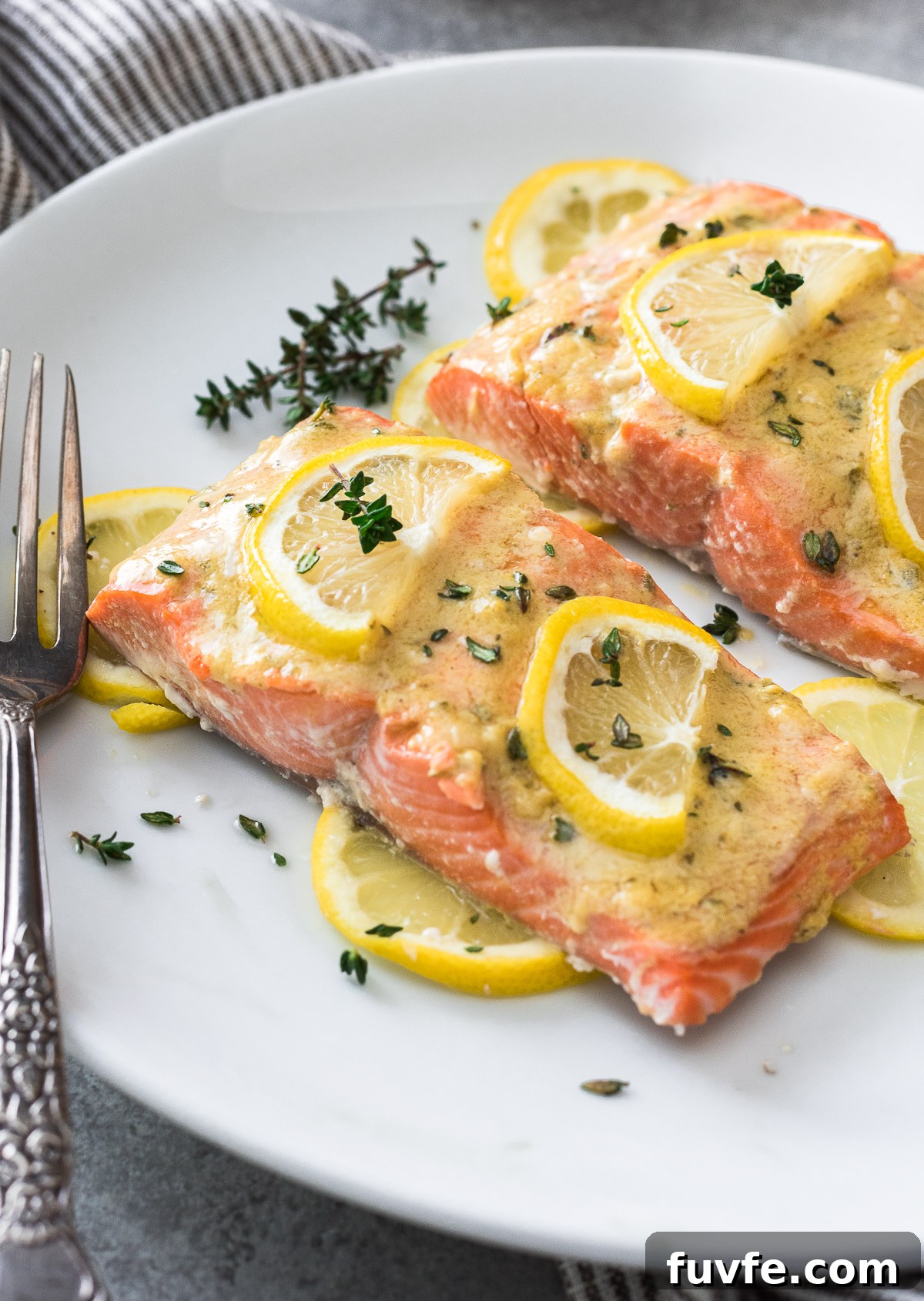
This Baked Lemon Dijon Salmon is a fast, flavorful dinner that comes together in about 20 minutes. Tangy Dijon mustard, fresh lemon, garlic and thyme combine into a bright, savory sauce that keeps the salmon tender and juicy. It’s an easy, healthy weeknight meal that pairs well with many sides.
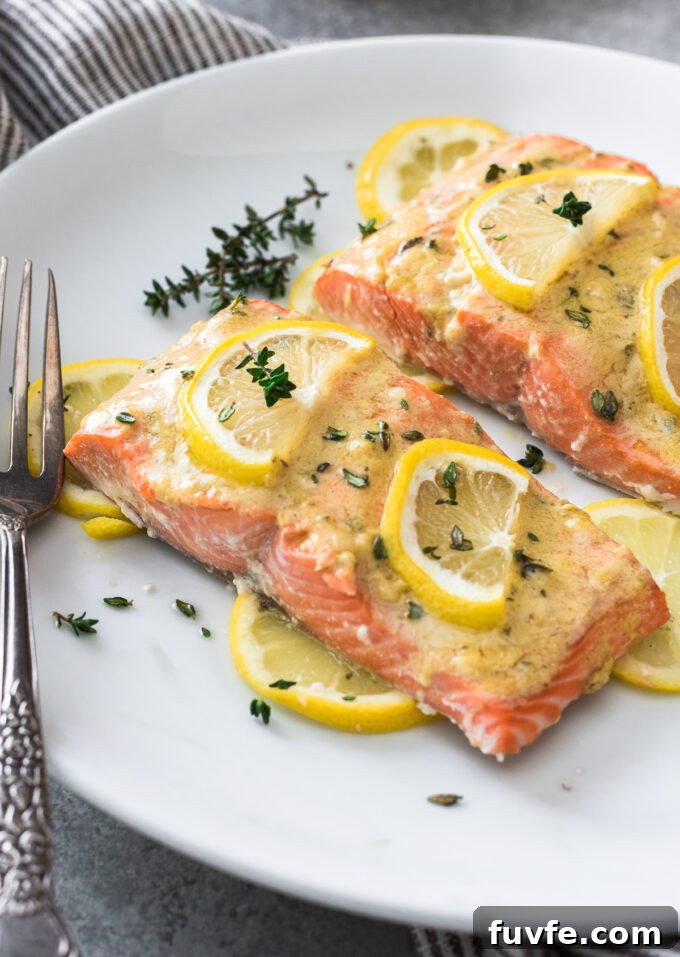
If your household likes salmon the way mine does, you’ll appreciate recipes that are quick, reliable, and full of fresh flavor. This oven-baked Lemon Dijon Salmon checks all those boxes. The Dijon sauce requires only a few pantry staples and a minute to whisk together, and it can be used as a quick marinade or a finishing sauce.
The combination of tangy mustard, bright lemon, and a touch of garlic gives the salmon a lively flavor without overpowering the fish. Fresh thyme adds an herbal note that complements the citrus and mustard. This dish is versatile: serve it with roasted vegetables, a grain, or a simple salad for an easy weeknight dinner or a light weekend meal.
Why you’ll love this recipe
- Ready in about 20 minutes, perfect for busy weeknights.
- Uses simple pantry ingredients you likely already have.
- Bright, tangy flavor balances the richness of the salmon.
- Works well for meal prep or leftovers.
- Pairs with many side dishes, from grains to salads and roasted vegetables.
Recipe ingredients
These ingredients are common and easy to customize. Substitutions and small adjustments won’t change the core flavors.
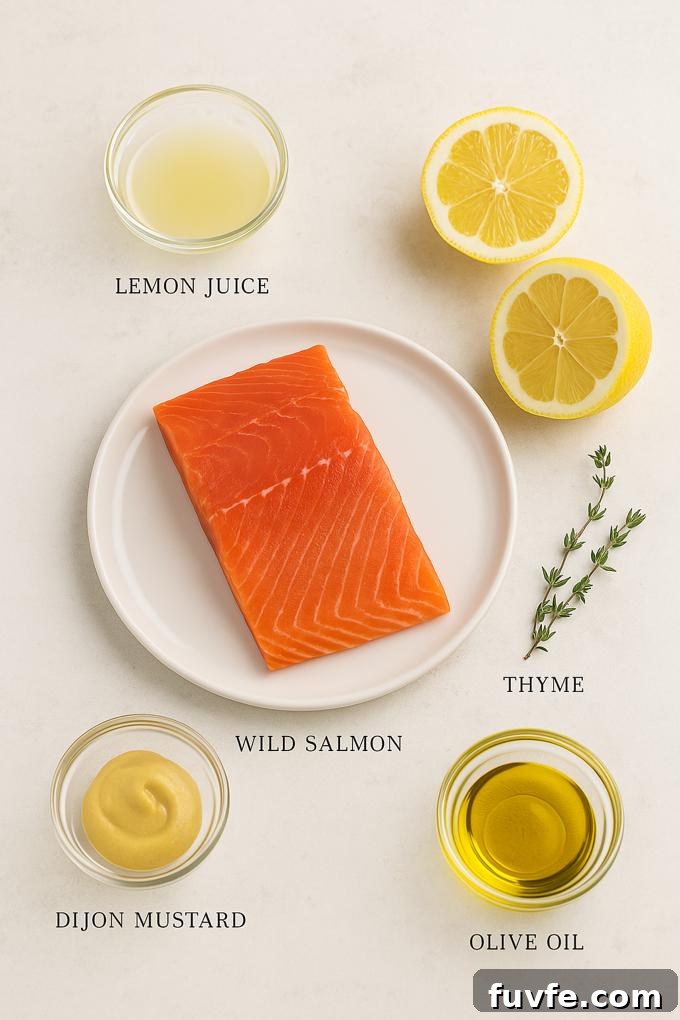
- Salmon — fresh wild-caught is ideal for flavor and sustainability. If using frozen fillets, thaw in the refrigerator overnight and pat dry before cooking.
- Olive oil — extra virgin works nicely; substitute another neutral cooking oil if preferred.
- Dijon mustard — provides a tangy, slightly spicy base. Coarse or stone-ground mustard can be used if preferred.
- Garlic — one clove, minced, adds savory depth without overpowering.
- Lemon — use fresh lemon juice for the sauce and lemon slices to roast on top of the fillets; a little lemon zest can be added for extra brightness.
- Thyme — fresh thyme is best; substitute 1/2 teaspoon dried thyme if needed, or try another herb you like.
- Salt and pepper — to taste.
See the recipe card below for quantities and a printable format of ingredients and instructions.
How to make this recipe
Hands-on prep takes only a few minutes, and the cooking is hands-off. The key to great baked salmon is timing: don’t overcook and use fillets of similar thickness for even results.
Pro tip: As a general guideline, plan for about 10 minutes of baking per inch of thickness for salmon cooked to medium. Use a thermometer for precise doneness: 125–135°F for medium, 145°F for well done.
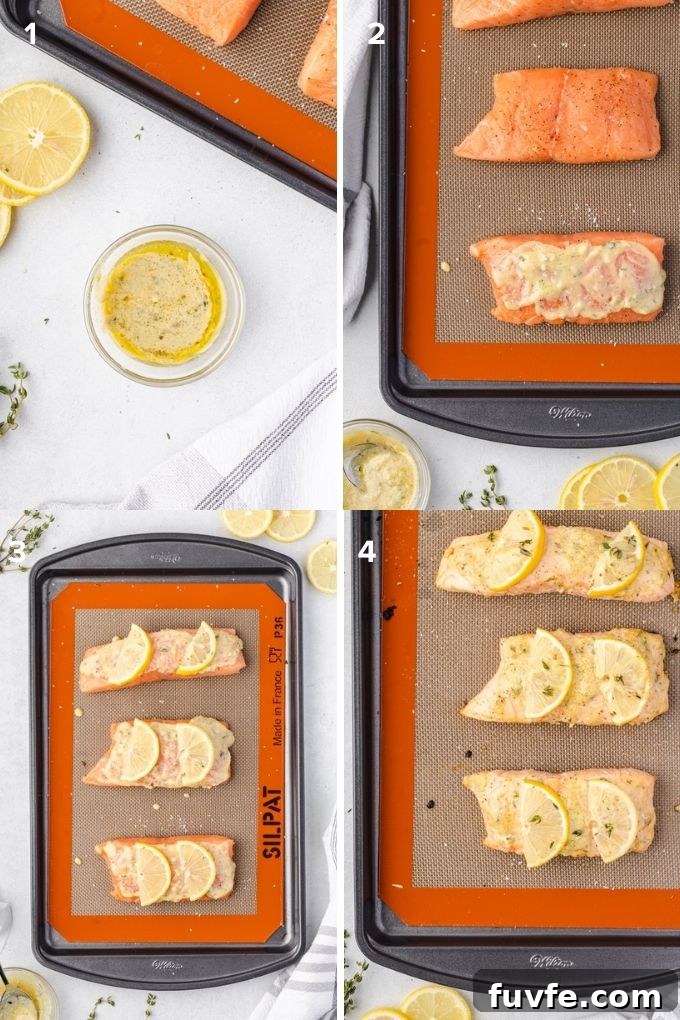
- Preheat and prepare. Preheat the oven to 400°F. Line a rimmed baking sheet with foil or a silicone mat. Pat the salmon fillets dry with a paper towel and season lightly with salt and freshly ground black pepper.
- Mix the Dijon sauce. In a small bowl whisk together the olive oil, Dijon mustard, fresh lemon juice, minced garlic, and thyme until smooth.
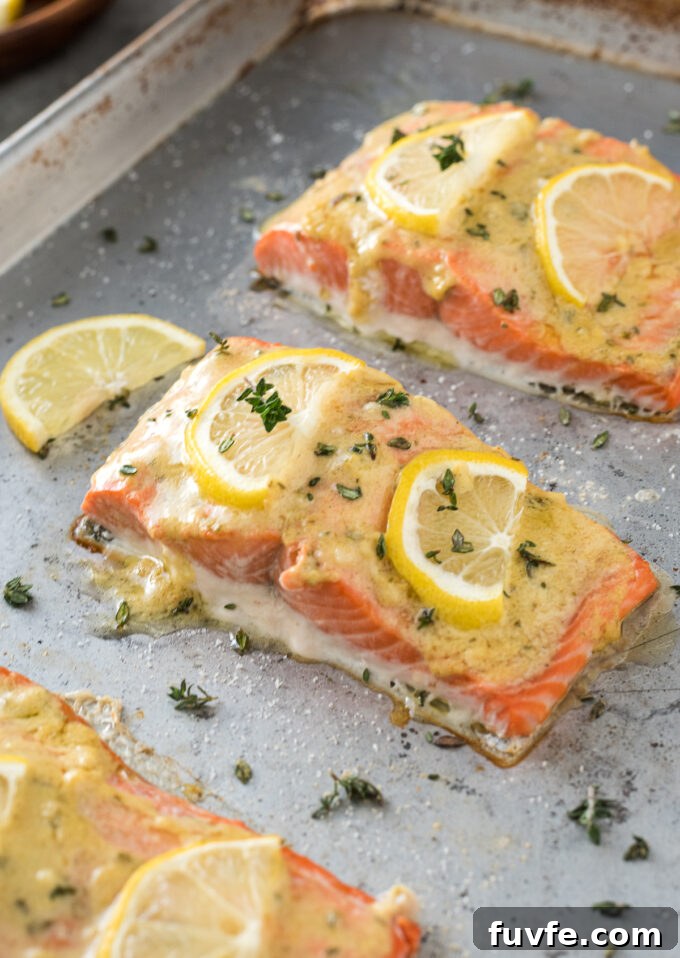
- Start baking. Spoon about half of the sauce over the top of the fillets, arrange lemon slices on each piece, and place on the prepared baking sheet. Bake for 8–10 minutes, depending on thickness.
- Finish and serve. Remove the salmon from the oven, spoon the remaining sauce over the fillets, then return to the oven for 3–5 minutes more until the fat renders and the fish flakes easily with a fork. Serve immediately.
Tips for perfect baked salmon
- Don’t overcook: salmon is best when slightly pink in the center and still moist.
- Use a meat thermometer: 125–135°F for medium doneness, 145°F if you prefer fully cooked fish.
- Choose even-sized fillets: similar thickness ensures consistent cooking time.
- Pat dry before seasoning: this helps the sauce stick and promotes even browning.
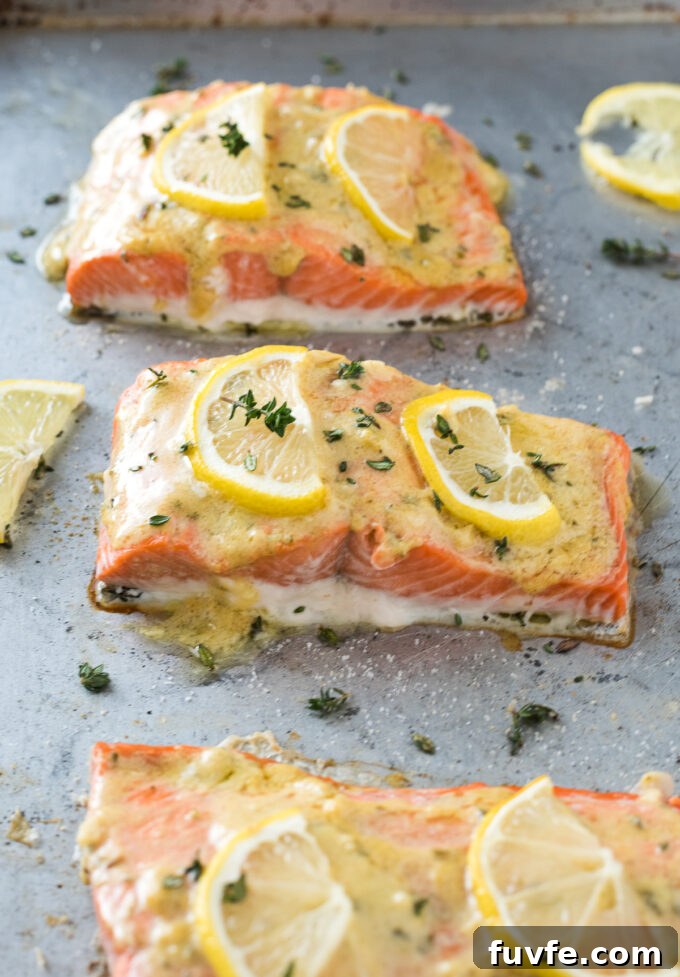
- Apply sauce in two stages: a partial coating before baking and the rest near the end yields concentrated flavor and a glossy finish.
Recipe FAQs
Cooking time depends on thickness. A practical rule is about 10 minutes per inch of thickness. For a 1″ fillet, 10–12 minutes will yield medium doneness with a slightly pink center; 15 minutes will cook it through. The salmon is done when a thermometer reads 145°F in the thickest part, although many cooks prefer removing it earlier for a juicier texture.
Yes. Dijon has a sharp, nuanced flavor, but stone-ground, whole-grain, or even a mild honey mustard can be used depending on taste. Each will change the character of the sauce slightly, but the dish will remain delicious.
Yes, use thawed salmon that has been fully defrosted in the refrigerator overnight. Pat it very dry with paper towels to remove excess moisture before seasoning and baking.
Serving suggestions
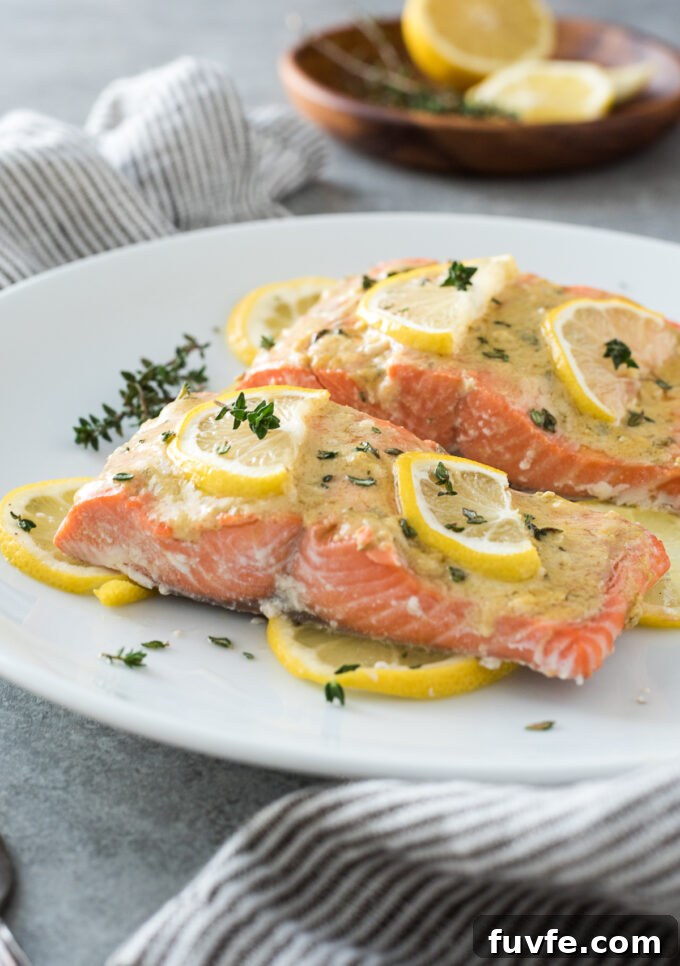
This baked lemon Dijon salmon works well with many sides. Consider serving it with roasted vegetables, steamed greens, or a simple grain to soak up the sauce.
- Pair with coconut rice or creamy mashed cauliflower for a comforting plate.
- Roasted or air-fried vegetables, such as asparagus, green beans or mixed root vegetables, make a colorful accompaniment.
- During warmer months, serve with a tomato and corn salad or a chilled orzo salad for a light, seasonal meal.
- Flake the salmon over a green salad with strawberries and feta, or add it to a composed asparagus salad for an elegant lunch or light dinner.
Recipe notes
- Sheet pan option: Turn this into a sheet-pan supper with potatoes and vegetables. Add the salmon during the last 15 minutes of cooking so it finishes at the same time as the vegetables.
- The Dijon sauce doubles as a marinade or a finishing glaze for chicken or pork.
- This dish reheats well; portion it with grains and vegetables for easy meal prep lunches or dinners.
More easy seafood dinners you’ll love
- Air fryer salmon
- Blackened salmon with pineapple salsa and coconut rice
- Mediterranean baked cod
- Teriyaki salmon bowls
- Crispy salmon patties with lemon-dill sauce
- Salmon Niçoise salad
Did you try this recipe? If so, leave a review below and tag @flavorthemoments on social media to share your version.
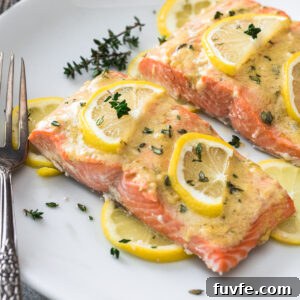
Baked Lemon Dijon Salmon
Ingredients
- 1 1/2 lb. wild salmon fillets
- 1 tablespoon extra virgin olive oil
- 1 tablespoon Dijon mustard
- 1 clove garlic, minced
- 1 tablespoon fresh lemon juice, plus lemon slices for topping
- 1 teaspoon chopped fresh thyme (or 1/2 teaspoon dried)
- Salt and freshly ground black pepper, to taste
Instructions
- Preheat the oven to 400°F. Place the salmon fillets on a foil- or silicone-lined rimmed baking sheet. Pat the fillets dry and season with salt and pepper.
- Whisk together olive oil, Dijon mustard, minced garlic, lemon juice and thyme in a small bowl.
- Spoon half of the lemon-Dijon mixture over the salmon, top each fillet with lemon slices, and bake for 8–10 minutes depending on thickness.
- Remove from the oven, spoon the remaining sauce over the fillets, and return to the oven for another 3–5 minutes or until the fish flakes easily with a fork. Serve warm.
Notes
- Adjust cooking time based on fillet thickness; about 10 minutes per inch is a useful guideline.
- The sauce can be mixed ahead of time and stored in the refrigerator for several days.
- To make a sheet-pan dinner, cook root vegetables or potatoes first and add the salmon during the last 15 minutes of roasting.
Nutrition (estimated)
Serving size: 6 ounces. Calories: 277 kcal; Carbohydrates: 1 g; Protein: 34 g; Fat: 14 g.