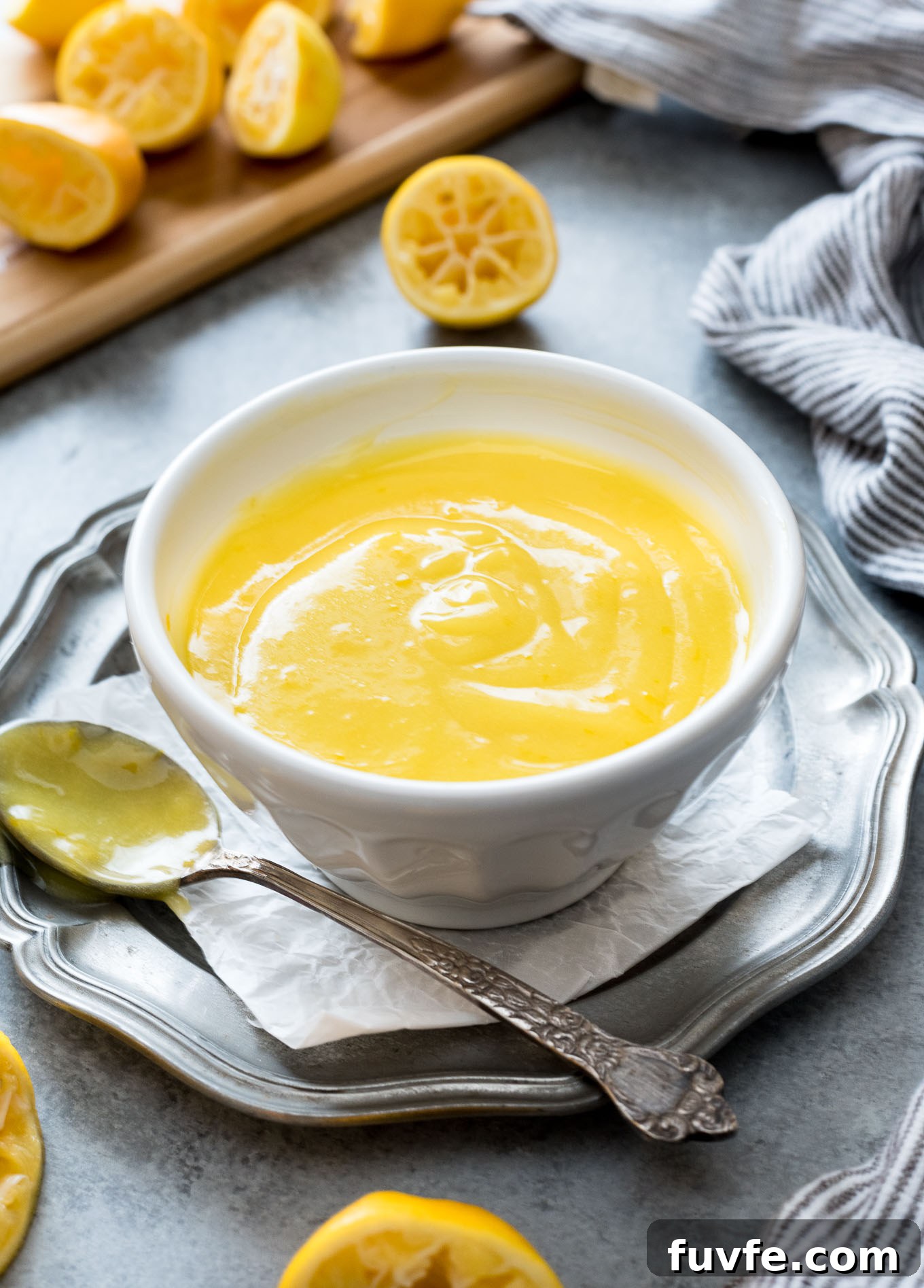
When life gives you lemons, make Lemon Curd. This silken, tangy spread is bursting with fresh lemon flavor and works beautifully on scones, as a pie or tart filling, or as a topping for cheesecakes and pancakes. It’s simple to make at home and far fresher and brighter than anything from a jar.
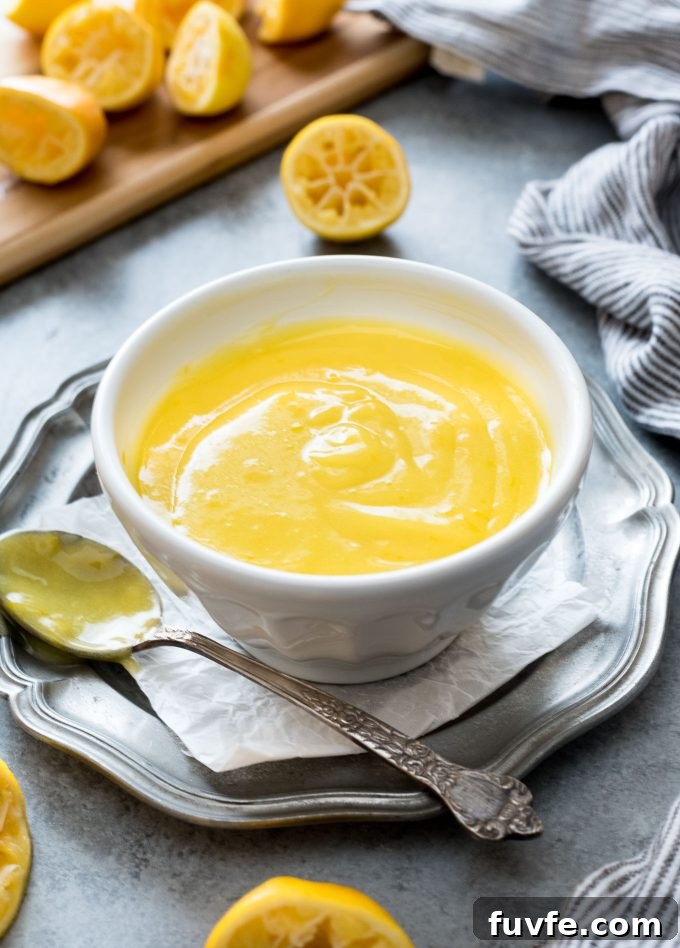
I often reach for lemons to brighten both savory and sweet recipes, but desserts tend to win out. Homemade lemon curd is one of my favorite ways to concentrate that bright citrus flavor into something rich and luxurious. Unlike many recipes that lean overly sweet or buttery, this version keeps the lemon the star so you get a clean, vibrant tang with balanced sweetness.
The method is straightforward: sugar, eggs and lemon juice are cooked gently over simmering water so the eggs don’t scramble. Constant whisking transforms the mixture into a custard with the texture of sour cream in about ten minutes. After cooking, the curd is strained to remove any bits, then butter and lemon zest are stirred in for silkiness and depth. The curd thickens as it cools and can be stored in the refrigerator.
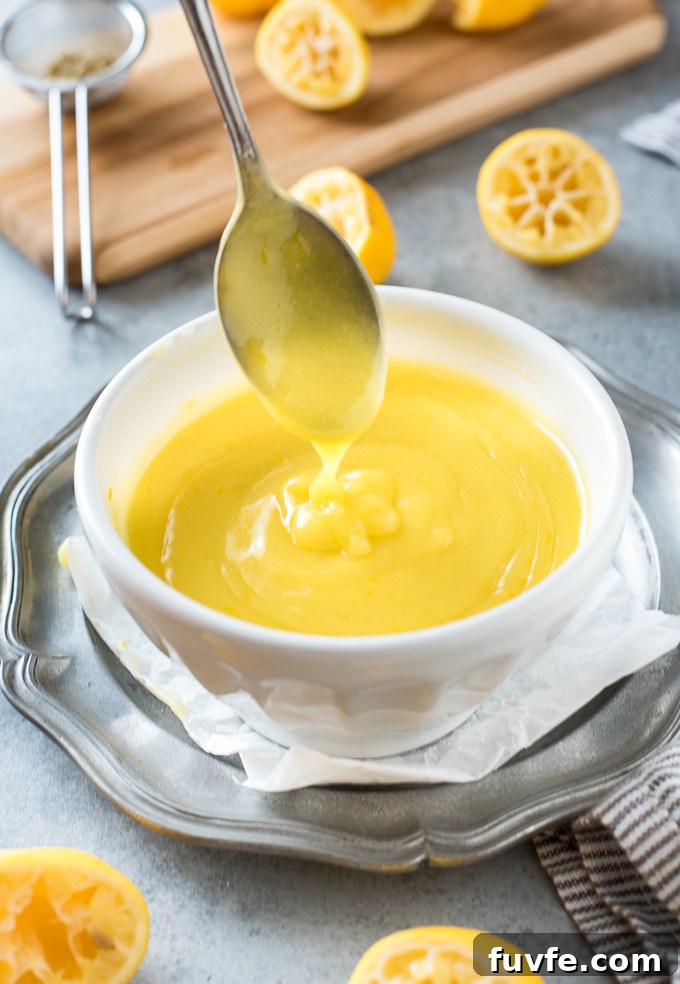
Once chilled, you can spoon it onto scones, swirl it into yogurt, fill tarts, layer it in cakes, or simply eat it by the spoonful.
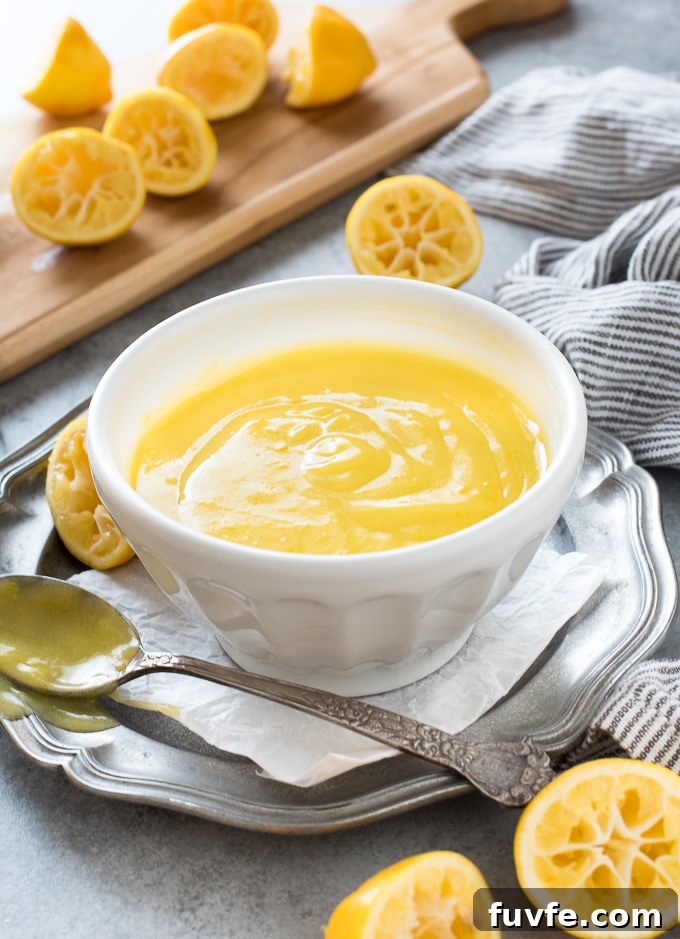
Why you’ll love this recipe
- Rich, silky texture with bright, fresh lemon flavor that outshines store-bought curd.
- Versatile: use it on scones, pancakes, waffles, or as a filling for pies, tarts and cakes.
- Make the zest and juice ahead of time to speed up preparation.
- Easy to adapt to other citrus such as limes, Meyer lemons, oranges or blood oranges.
Recipe Ingredients
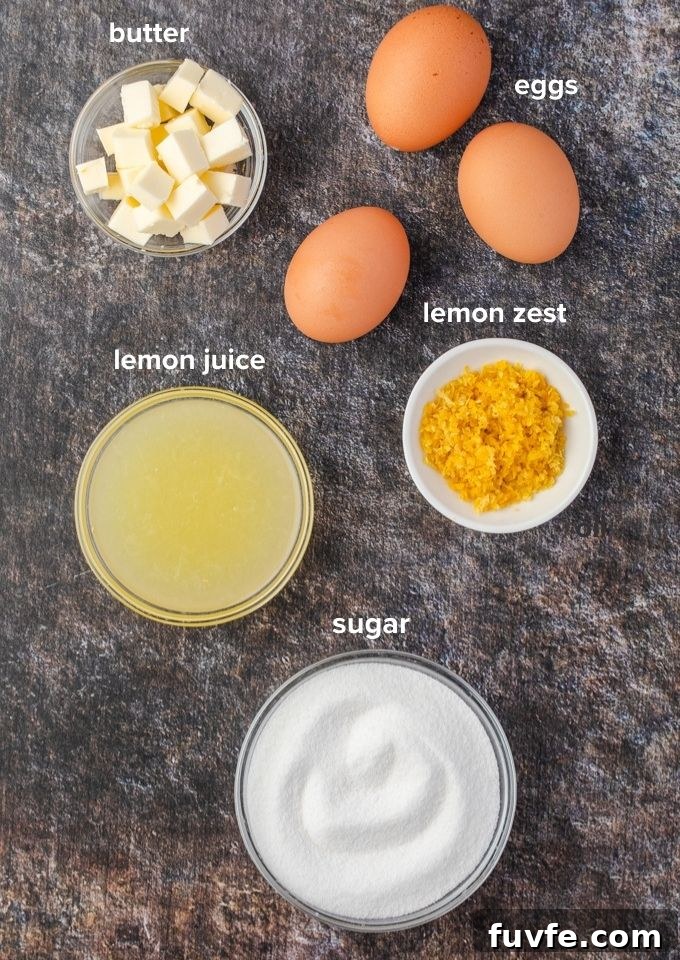
- Lemons — fresh lemon juice and lemon zest give the curd its bright citrus character. You can substitute other citrus if desired.
- Sugar — balances the lemon’s acidity.
- Eggs — provide structure and richness to the curd.
- Butter — a few tablespoons make the curd silky and mellow the tartness; add more if you prefer a richer curd.
See the recipe card further down for exact quantities and full instructions.
How to make this recipe
This lemon curd is made in just a few steps and only a handful of ingredients. Zest and juice your lemons, have a fine mesh strainer and a heatproof bowl ready, and plan to whisk constantly while the curd cooks.
Pro tip: Cook the curd gently in the top of a double boiler to prevent the eggs from scrambling. If you don’t have a double boiler, place a heatproof bowl over a pan of simmering water.
Full instructions appear in the recipe card below.
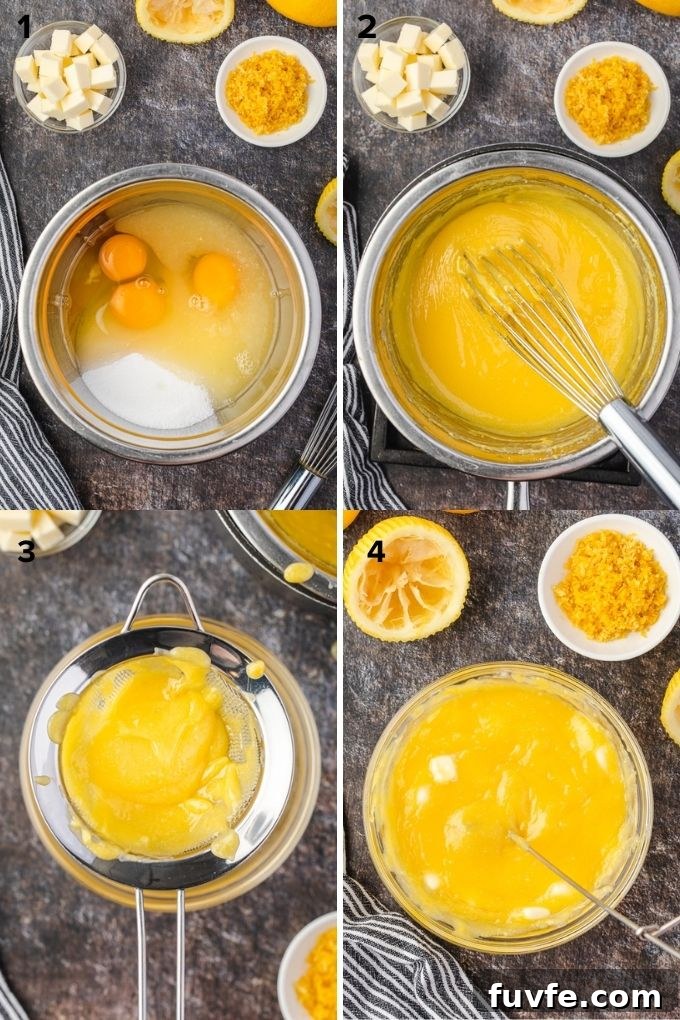
- Whisk together sugar, eggs and lemon juice in a heatproof bowl. Set the bowl over gently simmering water and whisk constantly until the mixture thickens to the texture of sour cream, about 10 minutes.
- Pour the curd through a fine mesh strainer into a clean bowl to remove any cooked egg bits.
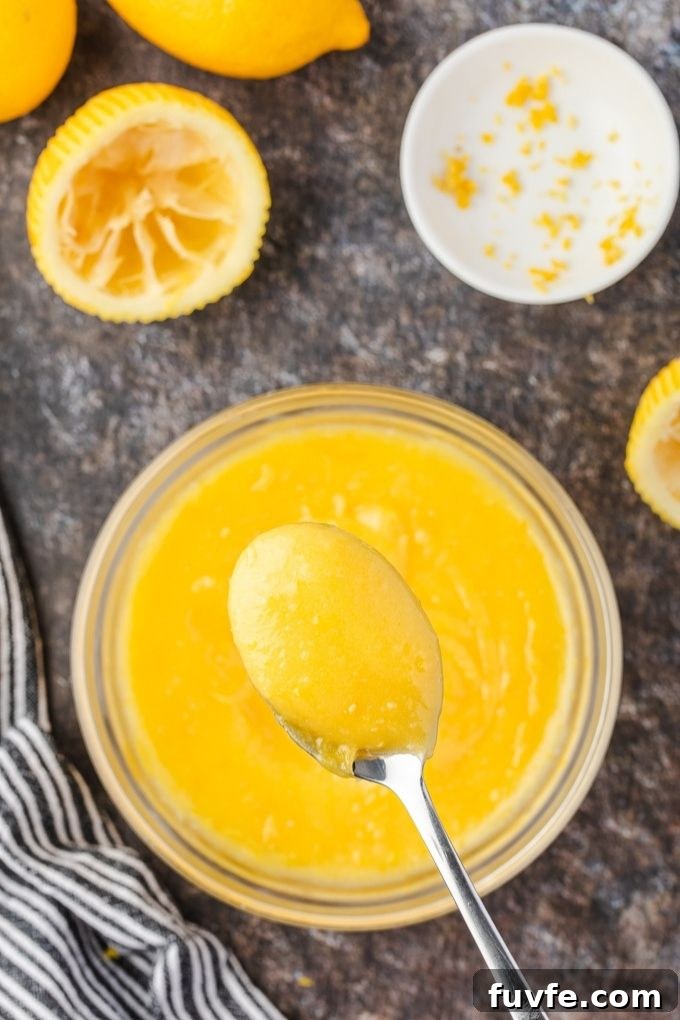
- Stir in cubed butter until melted, then stir in lemon zest. Cover the surface with plastic wrap to prevent a skin from forming and allow to cool at room temperature; it will thicken as it cools.
Recipe FAQs
Lemon curd is a thick, creamy preserve made from lemon juice, eggs, sugar and butter. It’s used as a spread, topping or filling for many desserts and pastries.
This curd contains fresh lemon juice and zest, sugar, eggs and a small amount of butter to enrich and smooth the texture.
Use lemon curd on scones, toast, pancakes, waffles, yogurt or as a filling for cakes, tart shells and cheesecakes.
Stored in an airtight container in the refrigerator, lemon curd stays fresh for up to two weeks.
Serving suggestions
There are countless ways to serve lemon curd. It pairs perfectly with scones and gingerbread, adds brightness to pancakes and waffles, and makes an excellent filling for sweet tart dough. Use it as a topping for small cheesecakes or spoon it into jars for giftable treats.
Recipe tips
- Gentle heat: Cook the curd over simmering water to avoid curdled eggs. If you don’t have a double boiler, place a heatproof bowl over a saucepan with about 2 inches of simmering water.
- Have your butter cut and lemon zest measured before you finish cooking—the final steps go quickly.
- If you see tiny bits of cooked egg while it’s still thin, lower the heat; those bits will be removed when you strain the curd.
- Press plastic wrap directly onto the surface of the cooled curd to prevent a skin from forming.
More lemon desserts you’ll love:
- Greek butter cookies
- Glazed lemon donuts
Did you try this recipe? If so, leave a review below and tag @flavorthemoments on social media so I can see your creations.

Lemon Curd
Cook Time: 10 mins ·
Total Time: 20 mins
Ingredients
- 3/4 cup granulated sugar
- 3 large eggs
- 1/2 cup fresh lemon juice (about 2–3 lemons), strained to remove seeds and pulp
- 3 tablespoons unsalted butter, cut into small chunks (add more to taste)
- 1 1/2 tablespoons lemon zest
Instructions
- Whisk together the sugar, eggs and lemon juice in a stainless steel or heatproof bowl. Place the bowl over a pan of simmering water and whisk constantly so the eggs don’t scramble. Cook until the mixture thickens to the consistency of sour cream, about 10 minutes. If you see bits of egg and it’s not thick enough, reduce the heat.
- Remove from heat and pour the curd through a fine mesh strainer into a small bowl to remove any lumps.
- Stir in the butter until fully melted, then add the lemon zest. The curd will thicken as it cools. If you prefer a richer curd, add more butter to taste.
- Press plastic wrap directly onto the surface of the curd to prevent a skin from forming, then refrigerate once cooled. Store in an airtight container.
Notes
- Pro tip: Cook gently in the top of a double boiler to prevent curdling. For a makeshift double boiler, simmer about 2 inches of water in a sauté pan and set a heatproof bowl on top.
- Juice lemons up to a few days in advance or freeze lemon juice for longer storage.
- Try other citrus such as lime, Meyer lemon, orange or blood orange for different flavor profiles.
- Serve chilled. The curd keeps in an airtight container in the refrigerator for up to two weeks.
Nutrition
Nutrition is estimated using a food database and intended as a guideline only.