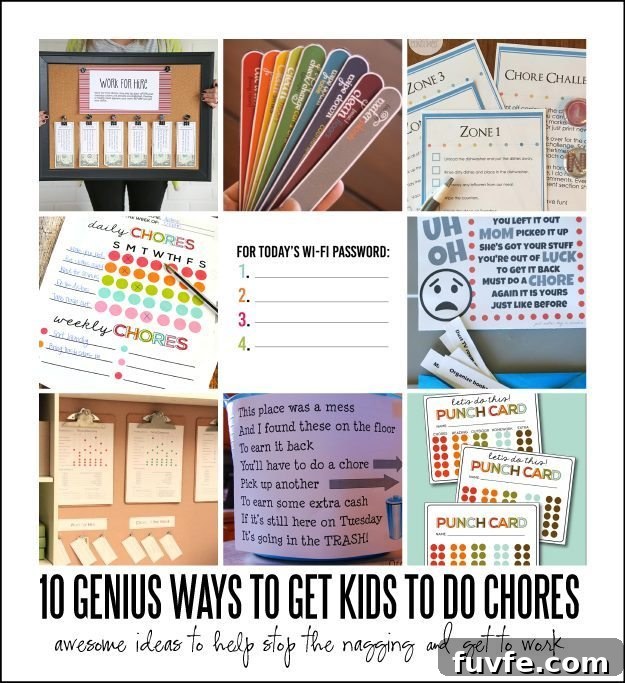
Chores for kids can feel like the bane of a parent’s existence. It’s hard work—especially at the start—but worth the effort. Getting children involved helps them learn responsibility, build life skills, and eases the load on parents. Below are practical, kid-tested ideas to make chores more effective, engaging, and less of a battle.
When kids don’t pitch in, parents often end up doing everything, which breeds frustration. It’s tempting to continue doing tasks yourself because it’s faster, but that robs children of learning basic skills. Below are ten strategies that help children take on chores willingly and consistently.
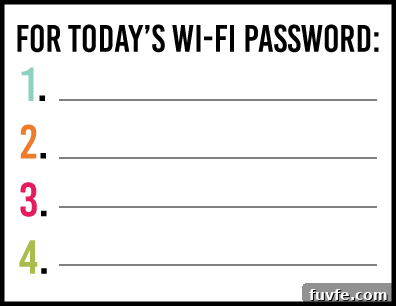
Today’s Wi-fi Password:
Use the wi-fi password as an incentive for older kids. List daily chores on a printable board and reveal the wi-fi code once the tasks are completed. This is especially effective with school-age children who value screen time or internet access. Laminate the printable and change chores daily with a dry-erase marker for flexibility.
Work for Hire:
Create a “work for hire” list of extra chores that can be done after regular daily responsibilities are finished. Use a clean, attractive board to list extra tasks and possible rewards. This teaches that extra effort can earn extra benefits and helps children understand the value of additional work.
Chore Bucket:
A chore bucket system helps kids take ownership of messy rooms and shared spaces. Place chore prompts or tasks in a bucket and have children draw a task when it’s time to clean. This shifts responsibility back to the child and removes the guesswork of what should be done.
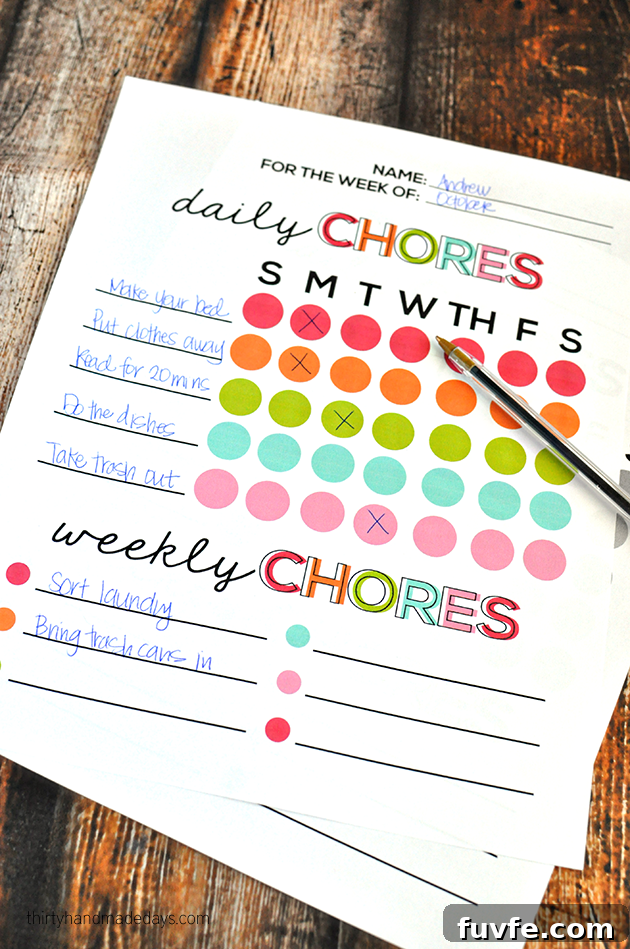
Daily Chore Chart:
A simple, colorful chore chart keeps expectations clear and consistent. Use a printable chart that lists daily tasks and lets kids check off completed items. Visual trackers help children understand routines and celebrate accomplishments.
Toy Jail:
A toy jail encourages responsibility for personal belongings. When toys are left out, place them in a designated “jail.” Kids quickly learn that leaving things strewn about means temporary loss of toys, which can reduce repeat messes.
Printable Punch Cards:
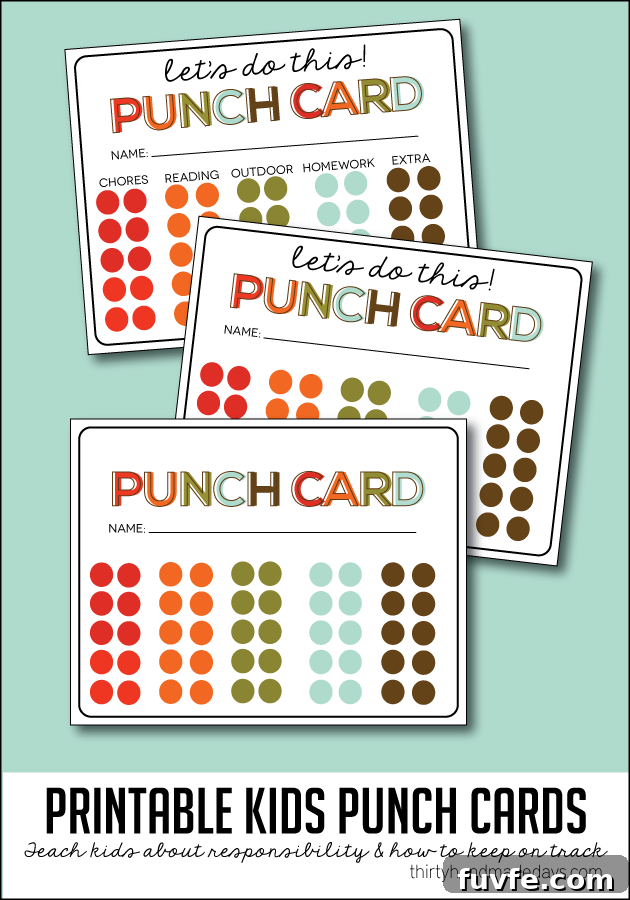
Punch cards work well for tracking repeated chores or rewarding consistent effort. Create cards with a set number of punches required for a chosen reward. You can customize the tasks on the card and agree on the reward with your child.
Organized Chore System:
A thoughtful chore system breaks tasks into clear steps and assigns responsibilities. Systems that include checklists, schedules, and shared expectations reduce confusion and make it easier for children to follow through.
Uh Oh Bucket:
Similar to toy jail, an “Uh Oh” bucket is a friendly reminder that items left out will be placed in a holding spot. This visual cue helps kids see the consequence of leaving things unattended and encourages tidiness.
Chore Sticks:
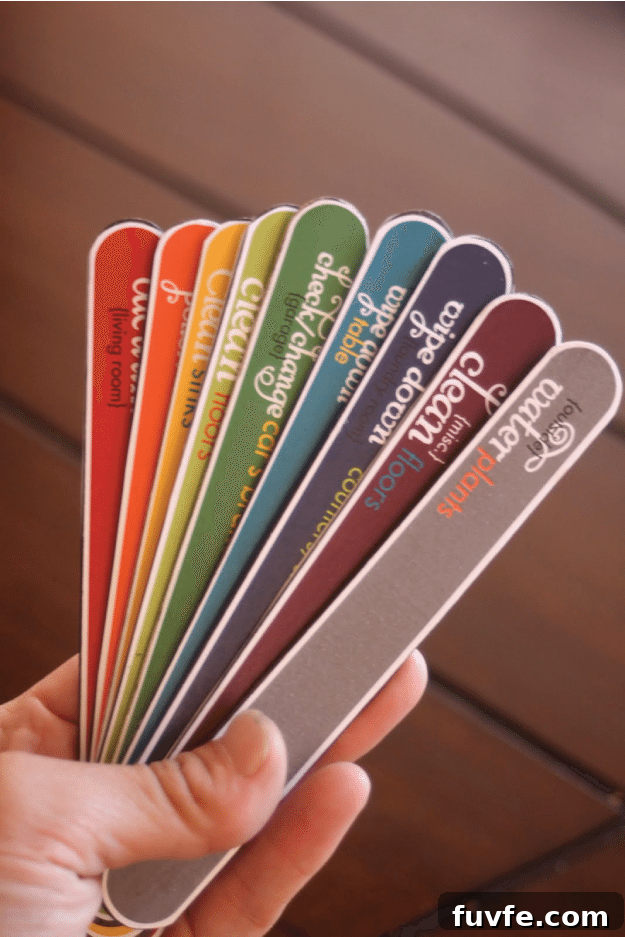
Chore sticks are a classic and low-tech tool: write chores on popsicle sticks and have kids draw sticks to determine tasks. Decorative or colorful sticks can make the process fun and feel less like a chore.
Chores in Zones:
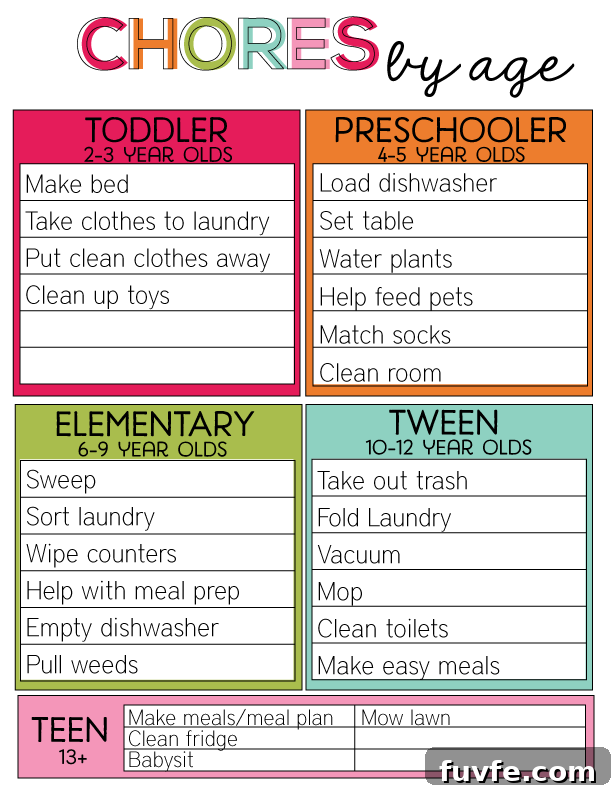
Divide the home into zones and assign each child responsibility for a zone. Rotating zones periodically keeps tasks fresh and helps children learn to care for different areas of the home. Experiment to find the zone structure and schedule that works best for your family.
Finally, do what works for your family. Parenting is challenging, and there’s no single right way to manage chores. Try different systems, be consistent, and adjust as needed. The goal is to teach children responsibility, teamwork, and basic life skills while keeping the home functioning.
Make sure to check out these related posts:
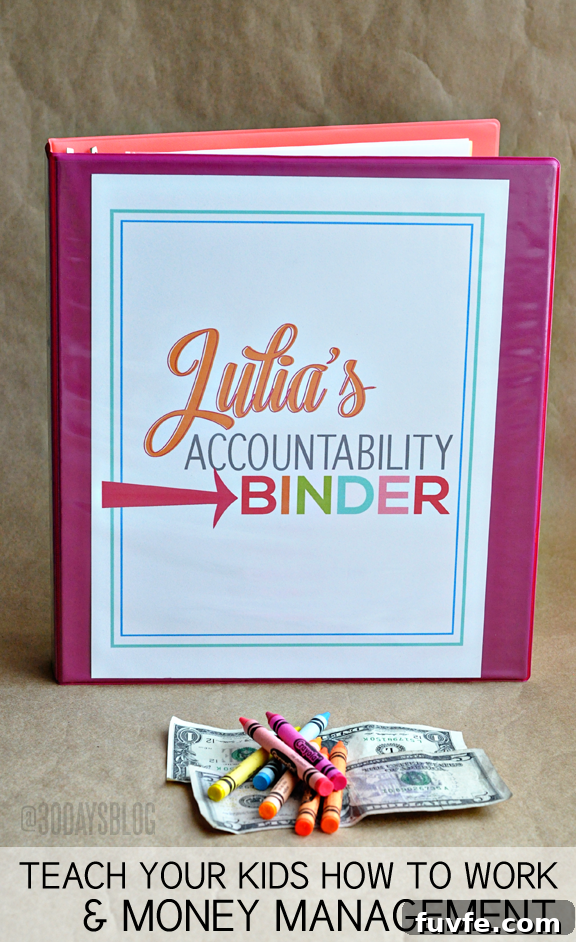
Teach kids about work and money with an accountability binder to track chores, goals, and rewards.